wayground logo

Free Printable Worksheets

Font size

S
M
L
XL
Worksheets

Chemistry Final Review

Total questions: 266

Worksheet time: 6hrs 35mins

Name
Class
Date
1.

Particles in an atom that are neutral and have no charge are 

a)

ions 

b)

electrons 

c)

neutrons 

d)

protons 

2.

If the number of protons equal the number of _____, the atom will have no charge

a)

protons

b)

neutrons

c)

electrons

d)

nucleus

3.

The subatomic particle with a negative charge is the

a)

electron

b)

proton

c)

neutron

d)

nucleus 

4.

What is the atomic number?

a)

the number of protons

b)

the number of protons and neutrons

c)

the number of neutrons

d)

the number of protons and electrons

5.

What is the mass number?

a)

the number of protons

b)

the number of protons and neutrons

c)

the number of neutrons

d)

the number of protons and electrons

6.

An atom with an unequal number of protons and electrons is said to be a(n) ___.

a)

radioactive particle

b)

isotope

c)

ion

d)

molecule

7.

Ions are: 

a)

atoms with a positive or negative charge

b)

atoms with no charge

c)

atoms with ONLY a positive charge

d)

atoms with ONLY a negative charge

8.

How many neutrons does the isotope of lithium have?

a)

8

b)

3

c)

4

d)

5

9.

How many protons does this isotope of titanium have?

a)

48

b)

22

c)

26

d)

70

10.

The state(s) of matter that takes the shape of its container is....(Choose the BEST answer)

a)

Gas

b)

Solid

c)

Liquid/Gas

d)

Liquid

11.

The state of matter with the molecules with the LOWEST amount of energy is....

a)

Gas

b)

Solid

c)

Liquid

12.

Which is the following is NOT a sign of a chemical change?

a)

Releasing a gas

b)

Change in temperature (due to breaking of bonds)

c)

Changing state of matter

d)

Production of sound/light

13.

Thermal energy transfers energy....

a)

From colder to hotter material

b)

From hotter to colder material

14.

Signs that a chemical change has occurred include

a)

a change in color

b)

the release of bubbles

c)

the production of an odor

d)

all of the above

15.

All the elements on the left side of the periodic table are called..

a)

Metals

b)

Metalloid

c)

Nonmetals

16.

A substance that is made up of one type of atom is called an:

a)

atom

b)

element

c)

compound

d)

mixture

17.

Where on the periodic table are the metalloids found?

a)

Right Side

b)

Along the Zig Zag Line

c)

Left Side

d)

Bottom

18.

Silicon is a semiconductor and has properties of both metals and nonmetals. What type of element is Silicon? 

a)

Metal

b)

Nonmetal

c)

Metalloid

d)

Pretty

19.

Nonmetals are located in what section of this periodic table?

a)

Blue

b)

Yellow

c)

Pink

20.

In the compound 2H2, the H stands for 

a)

Helium 

b)

Hydrogen

21.

H2

a)

Element

b)

Compound

22.

CO2

a)

Element

b)

Compound

23.

CaCo3

a)

Element

b)

Compound

24.

H2O

a)

Element

b)

Compound

25.

Where are electrons of an atom found?

a)

Nucleus

b)

Electron Cloud

c)

Some are in the nucleus and some in the electron cloud.

d)

They are moving everywhere.

26.

A negatively charged subatomic particle....

a)

proton

b)

neutron

c)

electron

d)

quark

27.

How many protons does Carbon have?

a)

3

b)

4

c)

5

d)

6

28.

Density is...

a)

the amount of mass in an object

b)

the amount of space an object takes up

c)

the amount of mass in a given space

d)

the weight of an object

29.

Burning a piece of paper 

a)

Chemical Change 

b)

Physical Change 

30.

Melting Ice 

a)

Chemical Change 

b)

Physical Change 

31.

How many ATOMS are in the following compound:  C2H4O2

a)

2

b)

8

c)

1

d)

4

32.

What is the symbol for chlorine?

a)

C

b)

Ch

c)

Ce

d)

Cl

33.

Which of these elements has a symbol which DOES NOT include a letter from its name?

a)

iron

b)

helium

c)

magnesium

d)

zinc

34.

The density of water at STP is 

a)

.1 g/cubic cm

b)

10g/cubic cm

c)

1.0 g/cubic cm

d)

0 g/cubic cm

35.

In a liquid, the molecules have a definite shape and a definite volume

a)

True 

b)

False

36.

Mixing salt and water 

a)

Chemical Change 

b)

Physical Change 

37.

Milk turning sour

a)

Chemical Change

b)

Physical Change 

38.

What is the symbol for the element Neon?

a)

Na

b)

Ne

c)

He

d)

N

39.

A _________ is a substance made of two or more DIFFERENT elements chemically combined. 

a)

mixture

b)

compound

c)

substance 

40.

A mixture can be separated by ________ means. 

a)

physical

b)

chemical

41.

Which of the following is NOT a mixture? 

a)

NaCl + H2O

b)

C6H12O6 + H2O

c)

C6H12O6

d)

SiO2 +H2O

42.

Salt Water 

a)

Compound 

b)

Mixture 

43.

Has properties different than the elements that make it up 

a)

Compound 

b)

Mixture 

44.

If the number of electrons in an element changes, a new element is formed 

a)

True 

b)

False 

45.

These are the two subatomic particles located inside the nucleus of an atom 

a)

Protons and Electrons 

b)

Protons and Neutrons 

c)

Electrons and Neutrons 

d)

Neutrons and ions 

46.

To what family of elements do the elements helium, neon, and argon belong to?

a)

Halogens

b)

Actinides

c)

Noble gases

d)

Transition metals

47.

What are the name of the atoms of the same element that have a different number of neutrons ?

a)

Allotropes

b)

Ions

c)

Anions

d)

Isotopes

48.

The substances listed on the right side of a chemical equation are the

a)

Yields

b)

Reactants

c)

Products

d)

Precipitates

49.

An ionic bond is:

a)

a metal bonded to a nonmetal

b)

a nonmetal bonded to a nonmetal

c)

a metal bonded to a metal

50.

The substances listed on the left side of a chemical equation are the

a)

Products

b)

Coefficients

c)

Precipitates

d)

Reactants

51.
In chemical reactions, what does the principle of conservation of mass mean?
a)
Matter is not created or destroyed.
b)
The total mass of the reactants is greater than the total mass of the products.
c)
The total mass of the reactants is less than the total mass of the products.
d)
Matter is not changed.
52.
How many Oxygen (O) atoms are in 2C2HO8Cl2
a)
2
b)
16
c)
8
d)
5
53.

How many Hydrogen (H) atoms are in NH3O5

a)
3
b)
4
c)
5
d)
1
54.
In the following equation, what are the products?
HCl + Zn → H2 + ZnCl2
a)
HCl + Zn
b)
H2 + ZnCl2
c)
Zn → H2
d)
the stuff on the outside
55.
Which number should go in the blank?
_ H2 + O2 -> 2 H2O
a)
1
b)
2
c)
3
d)
0
56.
Which number should go in the blank?
2 Na+ _ Cl2 -> 2 NaCl
a)
1
b)
2
c)
3
d)
0
57.
Which number should go in the blank?
Mn + _ HNO3 → Mn(NO3)2 + H2
a)
1
b)
2
c)
3
d)
0
58.
Which number should go in the blank?
Al(NO3)3 + _  NaOH -> Al(OH)3 + 3 NaNO3
a)
1
b)
2
c)
3
d)
0
59.
H2 + O2 -> 2 H2O
Which kind of reaction is this?
a)
synthesis
b)
decomposition
c)
single displacement
d)
double displacement
60.
Mn + _ HNO3 → Mn(NO3)2 + H2
Which kind of reaction is this?
a)
synthesis
b)
decomposition
c)
single displacement
d)
double displacement
61.
FeS + HCl ---> FeCl2 + H2S
Which kind of reaction is this?
a)
synthesis
b)
decomposition
c)
single displacement
d)
double displacement
62.
H2CO3 → H2O + CO2
Which kind of reaction is this?
a)
synthesis
b)
decomposition
c)
single displacement
d)
double displacement
63.

An example of a physical change is:

a)

melting of a metal

b)

burning of paper

c)

mixing two compounds and getting a precipitate

d)

creating a smell after mixing two compounds
64.
Particles in an atom that are neutral and have no charge are 
a)
negatrons 
b)
electrons 
c)
neutrons 
d)
protons 
65.
Left of zigzag line
a)
metals
b)
nonmetals
c)
metalloid
66.
Elements with similar properties
a)
Periods
b)
Groups
67.
Where are electrons?
a)
Nucleus
b)
Orbits
68.
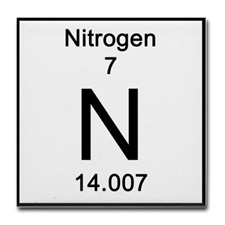
What is the number of protons that the element in this image contain?
a)
14
b)
7
c)
15
d)
18
69.
What is the atomic mass of "F"
a)
9
b)
18
c)
17
d)
19
70.
The positive particles of an atom are 
a)
electrons 
b)
positrons 
c)
neutrons 
d)
protons 
71.

The central region of an atom where its neutrons and protons are is its 

a)
nucleus 
b)
electron cloud
c)
core 
d)
center 
72.
Something that is made up of only one kind of atom is known as _________________.
a)
a molecule
b)
a compound
c)
an element
d)
a proton
73.
A "group" is a ____________ on the periodic table.
a)
column
b)
row
74.
A "period" is a ____________ on the periodic table.
a)
column
b)
row
75.
Helium, neon, argon, krypton, xenon, and radon are known as  _____________.
a)
halogens
b)
noble gases
c)
metalloids
d)
transition elements
76.
How many elements are represented in the compound?
Na2CO3
a)
1
b)
2
c)
3
d)
4
77.
Is salt (NaCI) a compound or a element
a)
Compound
b)
element
78.
Is melting butter for popcorn a chemical or physical change?
a)
chemical
b)
physical
79.
Which is a chemical change?
a)
freezing fruit juice
b)
slicing a potato
c)
boiling water
d)
copper metal turning green
80.
How many elements are in the this compound?
H2CO4N5
a)
11
b)
4
c)
12
d)
5
81.
How many TOTAL atoms are in this compound?
H2C3O4N5
a)
5
b)
14
c)
15
d)
19
82.
How many elements are present in this compound?
Mg2As3COHNi2
a)
2
b)
4
c)
6
d)
10
83.
How many molecules of Carbon Dioxide?
6CO2
a)
12
b)
2
c)
6
d)
8
84.

5H2O
How many atoms of Hydrogen?

a)
2
b)

1

c)
10
d)
5
85.
The rings around the nucleus of an atom are called...
a)
energy levels
b)
electron circles
c)
proton levels
d)
neutron clouds
86.
What is the atomic number of Carbon-13 (C)?
a)
13
b)
12.01
c)
6
d)
26
87.
What is the mass number of Chlorine-37 (Cl)?
a)
17
b)
37
c)
7
d)
35.45
88.
How many neutrons would Potassium-41 (K) have?
a)
22
b)
19
c)
41
d)
1
89.
Rows ⋘---⋙ on the periodic table indicate the number of...
a)
groups
b)
energy levels
c)
valence electrons
d)
total electrons
90.
An element in period 2, group 3 would have how many valence (outer) electrons?
a)
3
b)
2
c)
5
d)
8
91.
A particle of the same element with a different mass due to gaining or losing neutrons is called...
a)
ion
b)
electron
c)
atom
d)
isotope
92.
When becoming an ion, an element with 6 valence (outer) electrons would have a charge of...
a)
2-
b)
2+
c)
6-
d)
6+
93.
a)
Chlorine wants to lose 7 electrons
b)
Chlorine wants to gain 1 electron
c)
Chlorine is stable
94.
a)
This is an ionic bond with electrons shared
b)
This is an ionic bond with electrons transferred
c)
This is a covalent bond with electrons shared
d)
This is a covalent bond with electrons transferred
95.
a)
This molecule would be named PCl3
b)
This molecule would be named ClP3
c)
This molecule would be named PCl
d)
This molecule would be named PCl3
96.
What bonds to make an ionic bonds?
a)
metals and metals
b)
metals and nonmetals
c)
nonmetals and metalloids
d)
nonmetals and nonmetals
97.
a)
The starred side represents the products
b)
The starred side represents the reactants
c)
The starred side represents a nuclear reaction
98.
This rule states that the energy cannot be gained or lost in a chemical reaction...
a)
Law of Conservation of Mass
b)
Theory of Relativity
c)
Law of Conservation of Energy
d)
Theory of Energy Saving 
99.
This rule says that the amount of atoms in the reactants is equal to the amount of atoms in the products...
a)
Conservation of Energy
b)
E=MC2
c)
Conservation of Mass
d)
Rule of 8
100.
During an endothermic reaction, energy will be...
a)
released
b)
absorbed
c)
destroyed
d)
created
101.
In an _____________ reaction, the reactants will have more energy than the products. 
a)
exothermic
b)
endothermic
c)
chemical
d)
activation 
102.
Activation energy is needed during what part of a chemical reaction?
a)
to end a chemical reaction
b)
during a chemical reaction
c)
to start a chemical reation
103.
A(n) _____ is a unique substance that forms when two or more elements combine chemically.
a)
element
b)
compound
c)
mixture
d)
all of the above
104.
Which of these elements is a metal?
a)
argon
b)
carbon
c)
iron
d)
hydrogen
105.
If I have a block of wood with a density of 0.5 g/cmand I cut it in half, the density of one of the halves of wood would now be. . . 
a)
0.25 g/cm3 
b)
1.0 g/cm3
c)
0.5  g/cm3
d)
5.0  g/cm3
106.
Which of the following represents a physical change?
a)
burning a candle
b)
lighting a match
c)
mixing a batch of lemonade
d)
baking a cake
107.
Which of the following is typically a good conductor of heat?
a)
Metal
b)
Nonmetal
c)
Metalloid
108.
What do we call a chemical substance made up of 2 or more different types atoms bonded together?
a)
formula
b)
atom
c)
subscript
d)
compound
109.
When __________ form, the elements lose there individual chemical properties and take on new properties.
a)
compounds
b)
atoms
c)
subscript
d)
formula
110.
Which of the following is an example of a chemical reaction?
a)
Water evaporating from a pot on a hot stove
b)
Sand being removed from sea water by filtration
c)
A spoonful of sugar dissolving in a glass of water
d)
A white solid forming when two clear liquids are poured together
111.
What happens when chemical bonds break and new bonds form?
a)
a physical change
b)
a chemical reaction
c)
matter is destroyed
d)
surface area increases
112.
water boiled and turns to vapor
a)
physical change
b)
chemical change
113.
after 3 substances are mixed, an odor emits
a)
chemical change
b)
physical change
c)
thermal energy is used
114.
baked cookies are chemical change because
a)
thermal energy is used
b)
the cookies change shape
c)
a new substance is produced
115.
When the candle was lit, a pool of liquid wax formed in the area around the wick, and then spilled over the side and resolidified. Does this observation refer to a physical change or a chemical change? Explain.
a)
A chemical change. The substance was still wax, but it changed to a liquid and then back to a solid.
b)
A physical change. The substance was still wax, but it changed to a liquid and then back to a solid.
c)
A chemical change. The substance changed from a chemical liquid to solid wax.
d)
A physical change. The substance was still wax, but it changed to a solid and then back to a liquid.
116.
The flame from the candle gives off black smoke. Does this statement describe evidence for a physical change or a chemical change? Explain.
a)
A chemical change. The black smoke is evidence that a new substance is not forming which means a chemical change occurred.
b)
A physical change. The black smoke is evidence of the formation of a new substance, which means a chemical change occurred.
c)
A chemical change. The black smoke is evidence of the formation of a new substance, which means a chemical change occurred.
d)
A physical change. The black smoke is evidence of a solid turning into a gas
117.
When heated, oxygen reacts with copper to form copper oxide:
If this reaction occurs in a sealed container, will the mass of the container and everything in it increase, decrease, or stay the same and why?
a)
The mass will stay the same because the number of each kind of atom stays the same.
b)
The mass will increase because a new kind of molecule is formed.
c)
The mass will decrease because two substances combine to form one substance.
d)
More information is needed to tell if the mass will change.
118.

The atoms and molecules that interact with each other are called?

a)

Atoms

b)

Reactants

c)

Chemistry

d)

Products

119.

Atoms and molecules produced by the reaction are called?

a)

Atom

b)

Reactants

c)

Chemistry

d)

Products

120.
What are the products of the chemical reaction pictured?
a)
CH4 and CO2
b)
CH4 and O2
c)
CO2 and H2O
d)
O2 and H2O
121.
Consider the chemical equation CH4 + 2 O2 → CO2 + 2 H2O. In this equation, CH4 is a
a)
product
b)
reactant
c)
displacement
122.
 What is the mass number of this element?
a)
5
b)
27
c)
32
d)
59
123.
The particles with no charge in an atom are the _______.
a)
electrons
b)
neutrons
c)
protons
d)
protons and neutrons
124.
# neutrons + # protons = ___
a)
atomic number
b)
Atomic thing
c)
Mass Number
d)
Valence Electrons
125.
How many electrons would an atom of Krypton have?
a)
83.80
b)
36
c)
12
d)
none
126.
Luster is ___________
a)
A.  the way light is reflected off a surface.
b)
A.  how well a piece of matter conducts electricity. 
c)
A.  the capability of being drawn out into thin wires or threads.
d)
A.  the capability of being hammered out thin.
127.
The group number tells us how many _________ there are in an element.
a)
groups
b)
valence electrons
c)
energy levels
d)
chemicals
128.
The ________________ tells you how many energy levels are used in an element.
a)
group number
b)
atom
c)
protons
d)
period number
129.
The element Tellurium has the atomic mass of 127.60 and its atomic number is 52. How many neutrons are in the element Tellurium?
a)
179.60
b)
127.60
c)
52
d)
76
130.
The inner energy level can only hold ______ electrons.
a)
1
b)
0
c)
2
d)
18
131.
The largest amount of electrons the 3rd energy level can hold is?
a)
18
b)
unlimited amount
c)
2
d)
8
132.
How many valence electrons do elements in group 17 have in their outer energy level?
a)
7
b)
17
c)
1
d)
0
133.
The teacher heats a pot of water. Once the water reaches 100 degrees Celsius, which point has the water reached?
a)
boiling point
b)
melting point
c)
freezing point
d)
evaporating point
134.
Appearance, texture, and density are classified as
a)
physical properties
b)
chemical properties
c)
magnetic properties
d)
thermal properties
135.
Mario pours three different liquids into a beaker. He notices the layers settle at different depths in the beaker.
Based on the picture, which property of the liquids is Mario most likely studying?
a)
density
b)
length
c)
mass
d)
volume
136.
Which difference between water and ice results in ice floating on cold water?
a)
heat
b)
shape
c)
density
d)
volume
137.
A examples of a physical property of matter that can be observed without changing the identity of the matter is
a)
flammability
b)
reactivity
c)
solubility
d)
ability to rust
138.
The substance that is dissolved in a solution
a)
Solute
b)
Solvent
c)
Solution
d)
Solubility
139.
The temperature at which a liquid changes into a gas
a)
boiling point
b)
melting point
c)
freezing point
d)

condensing point

140.
The liquid that dissolves another substance in a solution.
a)
Solute
b)
Solvent
c)
Solution
d)
Solubility
141.
Molecules in this state of matter move slowly and vibrate near each other
a)
solid
b)
liquid
c)
gas
142.
Molecules in this state of matter move very fast and are far apart
a)
solid
b)
liquid
c)
gas
143.
This state of matter has a definite volume and definite shape
a)
solid
b)
liquid
c)
gas
144.
This state of matter has a definite volume, but not a definite shape
a)
solid
b)
liquid
c)
gas
145.
This state of matter does not have a definite volume or shape
a)
solid
b)
liquid
c)
gas
146.
Two samples of gold must have the same
a)
length
b)
volume
c)
mass
d)
density
147.
AB + CD →AD + CB
a)
Double Replacement
b)
Single Replacement
c)
Synthesis
d)
Decomposition
148.
Identify this type of reaction,
Cl2 + 2KI -->  I2 + 2KCl
a)
Synthesis
b)
Single displacement
c)
Double displacement
d)
Decomposition
149.
2 C5H5 + Fe --> Fe(C5H5)2 
a)
single displacement
b)
double displacement
c)
decomposition
d)
synthesis
150.
2 RbNO3 + BeF2 --> Be(NO3)2 + 2 RbF
a)
single displacement
b)
double displacment
c)
decomposition
d)
synthesis
151.
Which of the following is an example of synthesis?
a)
Na + Br--> NaBr
b)
KClO--> KCl + O2
c)
HgO + Cl2-->HgCl + O2
d)
Cl2 + NaBr --> NaCl + Br2
152.
Which of the following is the general formula for a decomposition reaction?
a)
A + B  → AB
b)
AB → A + B
c)
AB + C → AC + B
d)
AB + CD → AC + BD
153.
2 AgNO3 + Cu --> Cu(NO3)2 + 2 Ag 
a)
single displacement
b)
double displacement
c)
decomposition
d)
synthesis
154.
A + BC →B + AC
a)
Single Replacement
b)
Decomposition
c)
Double Replacement
d)
Synthesis
155.
NO2 →N2 + O2
a)
Synthesis (combination)
b)
Decomposition
c)
Single replacement
d)
Combustion
156.
Mg + N2 →Mg3N2
a)
Synthesis (combination)
b)
Decomposition
c)
Single replacement
d)
Combustion
157.
2NaCl →2Na +Cl2
a)
Synthesis Reaction
b)
Decomposition Reaction
c)
Single Displacement Reaction
d)
Double Displacement Reaction
158.
 C + O→ CO2
a)
Synthesis Reaction
b)
Decomposition Reaction
c)
Single Displacement Reaction
d)
Double Displacement Reaction
159.
The following is what type of reaction:
NH3 + HCl  → NH4Cl
a)
Synthesis
b)
Decomposition
c)
Single Replacement Replacement
d)
Double Replacement Replacement
160.
Photosynthesis is an example of a
a)
physical change
b)
chemical change
161.
Adding baking soda and vinegar together and it fizzes and creates carbon dioxide.
a)
Chemical
b)
Physical
162.
Which is a chemical change?
a)
freezing fruit juice
b)
slicing a potato
c)
boiling water
d)
copper metal turning green
163.
Which of the following describes a precipitate?
a)
a liquid forms when a block of metal is heated
b)
a solid forms when one liquid is poured into another
c)
a gas forms when a solid is placed in a liquid
d)
bubbles form when an acid is poured on a rock
164.
During Photosynthesis energy is absorbed. What kind of reaction is it?
a)
Physical
b)
Exothermic
c)
Endothermic
d)
Photothermic
165.
In an exothermic reaction, energy is _________.
a)
Released
b)
Absorbed
c)
Stored
d)
Doubled
166.
4Si + S8 --> 2Si2S4
a)
Synthesis
b)
Decomposition
c)
Single displacement
d)
Double displacement
167.
3Ca + 2AlCl3 --> 3CaCl2 + 2Al
a)
Synthesis
b)
Decomposition
c)
Single diplacement
d)
Double displacement
168.
3KOH + H3PO4 --> K3PO4 + 3H2O
a)
Synthesis 
b)
Decomposition
c)
Single displacement
d)
Double displacement
169.
2Pb(NO3)2 --> 2PbO + 4NO2 + O2
a)
Synthesis 
b)
Decomposition
c)
Single displacement
d)
Combustion
170.

Balancing a chemical equation so that the same number of atoms of each element is found in both the reactants and the products is an example of?

a)

Activation energy

b)

The law of conservation of energy

c)

The law of conservation of mass

d)

A double-displacement reaction

171.
What type of reaction is the equation C + O→ CO2?
a)
Synthesis Reaction
b)
Decomposition Reaction
172.
Cu + 2Ag(NO3) → 2Ag + Cu(NO3)
a)
Decomposition Reaction
b)
Single Displacement Reaction
c)
Double Displacement Reaction
173.
Consider the chemical equation CH4 + 2 O2 → CO2 + 2 H2O. In this equation, CH4 is a
a)
product
b)
reactant
174.
Consider the equation 4 Fe+3 O2 → 2 Fe2O3 . In this equation, 3 O2 is a
a)
product
b)
reactant
175.
Which generalized equation represents a synthesis reaction?
a)
A + BC → AC+ B
b)
A + B → AB
c)
AB → A + B
176.
2 NH3+ 1 H2SO4 ----> 1 (NH4)2SO4
a)
Synthesis (or combination)
b)
Single displacement
c)
Double displacement
177.
Pb + FeSO4 ----> PbSO4 + Fe
a)
Synthesis (or combination)
b)
Decomposition
c)
Single displacement
d)
Double displacement
178.

This type of reaction 2 NO2 ---> 2 O2 + N2

is called

a)

Single Replacement

b)

Decomposition

c)

Combustion

179.

Identify the type of chemical reaction

a)

Synthesis

b)

Decomposition

c)

Single replacement

d)

Double replacement

e)

Combustion

180.

Identify the type of chemical reaction

a)

Synthesis

b)

Decomposition

c)

Single replacement

d)

Double replacement

e)

Combustion

181.

Identify the following chemical reaction.

3 HBr + 1 Al(OH)3 ----> 3 H­2O + 1 AlBr3

a)

Synthesis (or combination)

b)

Decomposition

c)

Single displacement

d)

Double displacement

182.
2 NH3+ 1 H2SO4 ----> 1 (NH4)2SO4
a)
Synthesis (or combination)
b)
Decomposition
c)
Single displacement
d)
Double displacement
183.
Pb + FeSO4 ----> PbSO4 + Fe
a)
Synthesis (or combination)
b)
Decomposition
c)
Single displacement
d)
Double displacement
184.
Na3PO4 + 3 KOH ----> 3 NaOH + K3PO4
a)
Synthesis (or combination)
b)
Decomposition
c)
Single displacement
d)
Double displacement
185.

What type of reaction is the following:
C11H24+17O2> 11CO2 + 12H2OC_{11}H_{24}+17O_2->\ 11CO_2\ +\ 12H_2O  

a)

Combination

b)

Decomposition

c)

Single Replacement

d)

Double Replacement

e)

Combustion

186.

Ionic or covalent?

CH4

a)

covalent

b)

ionic

187.

Ionic or covalent?

CaCl2

a)

ionic

b)

covalent

188.

Ionic or covalent?

NH3

a)

ionic

b)

covalent

189.

Name this compound.

Na3N

(a)  

190.

Name this compound.

LiOH

(a)  

191.

Name this compound.

Fe(OH)3

(a)  

192.

Name this compound.

ZnCl2

(a)  

193.

what's the name?

SiO2

(a)  

194.

what's the name?

P2O5

(a)  

195.

what's the name?

SBr2

(a)  

196.

what's the formula?

carbon monoxide

(a)  

197.

what is the name of CCl4?

a)

carbon tetrachloride

b)

monocarbon tetrachloride

c)

tetracarbon monochloride

d)

carbon chloride

198.

What is the name of the compound SO2

a)

Monosulfate oxide

b)

Sulfur Dioxide

c)

Monosulfur dioxide

199.

What is the name of the compound P2O5

a)

Pentaphosphorus dioxide

b)

Phoshphide dioxide

c)

Diphosphorus pentoxide

200.

What is the name for MgF2 ?

a)

magnesium fluoride

b)

manganese Phosphide

c)

magnesium(III) fluoride

d)

magnesium fluoride(II)

201.
What is the charge on the calcium ion?
a)
1+
b)
2+
c)
2-
d)
1-
202.
Which is a transition metal?
a)
cesium
b)
iron
c)
helium
d)
tellurium
203.
Select the correct formula for sulfur hexachloride
a)
S2Cl6
b)
S6Cl
c)
SCl6
d)
SF6
204.
Name the compound CaF2
a)
calcium difluoride
b)
calcium (II) fluoride
c)
calcium fluorite
d)
calcium fluoride
205.

NaBr

a)

Bromide sodide

b)

Sodium bromide

c)

Sodium bromate

d)

Sodium bromite

206.
What is the formula for Potassium Fluoride? 
a)
KF
b)
K2F
c)
KF2
d)
none of the above
207.
C3O8
a)
Tricarbon Octoxide
b)
Carbon Octoxide
c)
Carbon Oxide
d)
Carbon (VIII) Oxide
208.
P2O5
a)
Phosphorus Oxide
b)
Pentaphosphorus Dioxide
c)
Diphosphorous pentoxide
d)
Phosphoric Oxygen
209.
What is the formula for calcium phosphide?
a)
CaP
b)
Ca2P3
c)
Ca3P2
d)
Ca2P
210.
What is the formula for calcium oxide? 
a)
Ca2O2
b)
Ca2O
c)
CaO
d)
CaO2
211.
What is the formula for Calcium phosphate? 
a)
CaPO4
b)
Ca3(PO4)2
c)
Ca2PO4
d)
CaP
212.
Name the following:
Mg3P2
a)
Magnesium Phosphide
b)
Magnesium Phosphorus
c)
Magnamide Phosphide
d)
Magnamide Phosphorus
213.
What is the formula for lead (II) iodide
a)
PbI
b)
PbI2
c)
Pb2I
d)
LbI2
214.
What is the name of BaO?
a)
barium (II) oxide
b)
barium oxide
c)
barium oxygen
d)
barium (I) oxide
215.

A sample of gas with a volume of 30.0 mL at 25.0oC is heated to 50.0oC. What is the new volume of the gas?

a)

60.0 mL

b)

15.0 mL

c)

27.5 mL

d)

32.5 mL

216.
What is standard temperature?
a)
0K
b)
0oC
c)
173 K
d)
173.15 K
217.
In order to convert to Kelvin, you add ______ to the Celsius measurement.
a)
372
b)
273
c)
237
d)
732
218.
What is 50 °C in Kelvin?
a)
223
b)
323
c)
100
d)
50
219.
If 200 mL of a gas at 27°C is cooled to -33°C at a constant pressure, the volume will be
a)
250 mL
b)
204 mL
c)
196 mL
d)
160 mL
220.
You have a gas that has a pressure of 2 ATM and a volume of 10L.  What would be the new volume if the pressure was changed to 1 ATM?
a)
5 L
b)
20 L
c)
It would stay at 10L
d)
1 L
221.
If a balloon is cooled what will happen to the volume?
a)
Volume will increase
b)
Volume will decrease
c)
Volume will not change
d)
Balloon freezes to death
222.

The element Bromine (Br) has ​ (a)   Valence Electrons. The atom has ​ (b)   Energy levels (Shells)

Choose from the below words
7
4
17
14
5
223.

Match the following

a)

proton

1.

lives in the nucleus & positively charge

b)

electron

2.

lives in the cloud & negatively charge

c)

neutron

3.

lives in the nucleus & no charge

d)

valence electron

4.

lives in the last ring & negatively charge

e)

nucleus

5.

where protons & neutrons are found and largest mass

224.

Match the subatomic particle to its charge

a)

Proton

1.

Positive

b)

Neutron

2.

Neutral

c)

Electron

3.

Negative

225.

The diagram shows arrangement of particles in a

a)

Solid

b)

Liquid

c)

Gas

226.

What state of matter does the picture below represent?

a)

solid

b)

liquid

c)

gas

d)

plasma

227.

Match the following

a)
1.

Solid

b)
2.

Liquid

c)
3.

Gas

228.

Match the following

a)

Gas

1.

A state of matter with no definite shape or volume

b)

Solid

2.

A state of matter that has a definite shape and a definite volume

c)

Liquid

3.

A state of matter with a definite volume but no definite shape

229.
Each column in the periodic table is called a _________ .
a)

period

b)

group

c)

cluster

d)

unit

230.

How many periods are on the periodic table?

a)

5

b)

6

c)

7

d)

8

231.

Each horizontal row on the periodic table is called a what?

(a)  
Choose from the below words
Group
Row
Period
Family
232.

Calcium is in Period 4, Group 2 on the Periodic Table of elements. Calcium is a ​ (a)   .

Choose from the below words
Metal
Non Metal
Metalloid
233.

match the following

a)
Metal
1.

Ag

b)
Nonmetal
2.

S

c)
Metalloid
3.

Ge

d)

noble gas

4.

Ne

234.

In 3P2O5, there are ​ (a)   phosphorus (P) atoms and ​ (b)   oxygen (O) atoms.

Choose from the below words
6
15
8
3
12
21
235.

Match the following symbols to their meaning.

a)

\rightarrow

1.

yields or produces

b)

++

2.

and or reacts with

c)

\leftrightarrow

3.

reversible reaction

236.

Iron + Copper Oxide -----> Iron Oxide + Copper

is an example of a​ (a)   reaction

Choose from the below words
displacement
electrolysis
combustion
hydrolysis
bioleaching
237.

Match the following ion to its correct ionic charge

a)

Fluorine

1.

1-

b)

Oxygen

2.

2-

c)

Nitrogen

3.

3-

238.

Match the symbol and charge to the correct metal Cation

a)

Chromium (II)

1.

Cr2+

b)

Copper (I)

2.

Cu+

c)

Titanium(II)

3.

Ti2+

d)

Mercury (II)

4.

Hg2+

e)

Lead (IV)

5.

Pb4+

239.
A wave with a large wavelength will have a ______ frequency and _____ energy
a)
high, low
b)
high, high
c)
low, high
d)
low, low
240.
Which section of the spectrum is the ONLY one we can see?
a)
X-rays
b)
Visible Light
c)
Gamma Rays
d)
Ultraviolet Rays
241.
As the frequency of an electromagnetic wave increases, the amount of energy in that wave...
a)
increases.
b)
decreases.
c)
stays the same.
242.
High frequency waves have _________ wavelengths.
a)
varying
b)
long
c)
the same
d)
short
243.
The distance between two crests or two troughs of a wave is called:
a)
frequency
b)
amplitud
c)
wavelength
d)
hertz
244.
The height of the wave from the rest position is known as the _____________.
a)
amplitude
b)
crest
c)
trough
d)
wavelength
245.
What are electromagnetic waves?
a)
sound waves
b)
electric & magnetic fields (energy) that travel through empty space very quickly
c)
Someone's name
d)
things like longitudinal waves
246.

Which electromagnetic radiation has the greatest frequency?

a)

Radio waves

b)

Visibile light

c)

Infrared

d)

X-rays

247.

What is the correct order of the visible light spectrum starting with the longer wavelength?

a)

Red, yellow, orange, blue, violet, indigo

b)

Violet, indigo, blue, green, yellow, orange, red

c)

Green, yellow, blue, indigo, red, orange

d)

Red, orange, yellow, green, blue, indigo, violet

248.

Scientists observed a celestial object emitting a wavelength of 3 x 10⁻¹⁰m. What type of telescope did the scientists have to use to view this?

a)

Radio wave

b)

Infrared ray

c)

X-ray

d)

Gamma Ray

249.

Who proposed that electrons are only found in specific, discrete circular orbits around the nucleus?

a)

Albert Einstein

b)

Erwin Schrodinger

c)

Ernest Rutherford

d)

Niels Bohr

250.

If n = 3, what is the maximum number of electrons that can fit in this shell?

a)

2

b)

8

c)

18

d)

32

251.

How many d orbitals make up the d subshell?

a)

1

b)

5

c)

3

d)

7

252.

What orbital is shown in the picture?

a)

s orbital

b)

p orbital

c)

d orbital

d)

f orbital

253.

Heisenberg's Uncertainty Principle states that it is impossible to know both the ___________ and the __________ of a particle at the same time.

a)

velocity, position

b)

velocity, energy

c)

position, energy

d)

velocity, speed

254.

This states that no two electrons will have the same 4 quantum numbers in an atom or molecule. The two electrons of the same orbital must have opposite spin states.

a)

Pauli exclusion principle

b)

Hund's rule

c)

Aufbau principle

d)

None of the above

255.

What states that electrons fill the lowest energy orbitals/levels first before occupying higher energy levels?

a)

Pauli exclusion principle

b)

Hund's rule

c)

Aufbau Principle

d)

None of the above

256.
What atom matches this electron configuration?
1s22s22p63s23p64s23d10
a)
Zinc
b)
Copper
c)
Nickel
d)
Germanium
257.
What electron configuration matches an oxygen atom?
a)
1s22s22p63s2, 3p64s23d104p5
b)
1s22s22p4
c)
1s22s22p6
d)
1s22s22p63s23p64s23d1
258.
The electron configuration of an atom is 1s22s22p6.  The number of electrons in the atom is 
a)
3
b)
6
c)
8
d)
10
259.
Which electron configuration belongs to Chlorine (Cl)?
a)
1s2s2p3s3p5
b)
1s2s2p3s3p6
c)
1s2s2p3s3p7
260.
How many electrons can the d sublevel hold?
a)
14
b)
10
c)
2
d)
6
261.
How many electrons can the s sublevel hold?
a)
14
b)
10
c)
2
d)
6
262.

Choose the correct shortcut configuration for iodine.

a)

[Ar]4s24d104p5

b)

[Kr]5s24d105p5

c)

[Xe]5s25d105p5

d)

none of the above

263.
How many electrons can the s sublevel hold?
a)
14
b)
10
c)
2
d)
6
264.

What element has the following electron configuration: 1s2 2s2 2p6 3s2?

a)

Ca+2

b)

Ca

c)

Mg

d)

Na

e)

Ar

265.

Choose the correct electron configuration for Krypton (Kr).

a)

1s2 2s2 2p6 3s2 3p6 4s8 3d8

b)

1s2 2s2 2p6 3s2 3p6 4s2 3d8 4p3

c)

1s2 2s2 2p6 3s2 3p6 4s2 3d8 4p6

266.

Match the elements with their electron configuration! (3 minutes)

a)

1s2 2s2 2p3

1.

Nitrogen, N

b)

1s2 2s2 2p6 3s2 3p3

2.

Phosphorus, P

c)

1s2

3.

Helium, He

d)

1s2 2s2 2p6 3s2 3p6

4.

Argon, Ar

e)

1s2 2s2 2p6 3s2 3p6 4s2 3d5

5.

Manganese, Mn