
 Worksheets
Diabetes/Cell Membranes
Total questions: 50
Worksheet time: 29mins
Name
Class
Date
1.
Autoimmune disease
a)
Type 1 Diabetes
b)
Type 2 Diabetes
2.
What is released by the pancreas when blood sugar is low?
a)
glucose
b)
glucagon
c)
insulin
d)
glycogen
3.
5% of our liver mass is attributed to this polysaccharide.
a)
insulin
b)
cellulose
c)
glycogen
d)
starch
4.
Why do type 1 diabetics pee a lot?
a)
low blood sugar
b)
because they are taking in too much insulin
c)
too much sugar in the blood
d)
side effect of the medication
5.
Lifestyle choices that prevent Type 2 diabetes.
I. Eating a diet high in fat
II. Eating a diet high in protein and low in carbs
III. Drinking diet pop
IV. Exercise
V. Eating foods high in fiber
I. Eating a diet high in fat
II. Eating a diet high in protein and low in carbs
III. Drinking diet pop
IV. Exercise
V. Eating foods high in fiber
a)
II and V
b)
I, II, III, IV, and V
c)
II, IV, and V
d)
I, III
6.
The type of cells that make glucagon.
a)
alpha cells of pancreas
b)
beta cells of pancreas
c)
liver
d)
brain
7.
Identify symptoms associated with Type I Diabetes
I. Weight gain
II. Decreased urination
III. Feeling hungry
IV. Feeling thirsty
V. Weight loss
VI. Hyperactivity
I. Weight gain
II. Decreased urination
III. Feeling hungry
IV. Feeling thirsty
V. Weight loss
VI. Hyperactivity
a)
All of these
b)
I, III, V, VI
c)
III, IV, and V
d)
II, IV, VI
8.
Identify which of these would result due to constantly high insulin levels.
I. Weight loss
II. Type 2 Diabetes
III. Type 1 Diabetes
IV. Insulin Resistance
V. Harder to lose weight
VI. Feeling full
I. Weight loss
II. Type 2 Diabetes
III. Type 1 Diabetes
IV. Insulin Resistance
V. Harder to lose weight
VI. Feeling full
a)
II
b)
All of these
c)
I, II, IV, and VI
d)
II, IV, V
9.
Type of diabetes characterized by insulin resistance
a)
Type I
b)
Type II
10.
Out of the following, this is a treatment for Type 1 diabetes.
I. A diet low in carbs
II. Exercise
III. Insulin
IV. Anti-viral drugs
V. Warmer climates
I. A diet low in carbs
II. Exercise
III. Insulin
IV. Anti-viral drugs
V. Warmer climates
a)
All of these
b)
I, II, III, and V
c)
III
d)
III and V
11.
Symptoms--
Elevated blood pressure
Continual slightly elevated blood sugar
Hard to lose weight
Always hungry
Based on only these, diagnose this patient
Elevated blood pressure
Continual slightly elevated blood sugar
Hard to lose weight
Always hungry
Based on only these, diagnose this patient
a)
Normal
b)
Type I
c)
Type II
12.
Type 1 diabetes accounts for ____ of all cases.
a)
10%
b)
25%
c)
50%
d)
90%
13.
Hypoglycemia is a ____ level of glucose in the blood.
a)
decreased
b)
elevated
14.
The term diabetes is translated as ____.
a)
honey
b)
run through a siphon
15.
What year did insulin start being used in the treatment of diabetes?
a)
1918
b)
1921
c)
1930
d)
1952
16.
Hypoglycemia is also known as ____.
a)
Diabetic Coma
b)
Insulin Shock
17.
What hormone is produced in the pancreas that raises blood sugar?
a)
Insulin
b)
Glucagon
c)
Ketones
d)
Glucose
18.
Diabetic Retinopathy is an example of a ____ abnormality.
a)
Macrovascular
b)
Microvascular
19.
Type II diabetes is also known as "adult-onset" diabetes.
a)
True
b)
False
20.
______ is the fuel for the body that is manufactured from the food we eat.
a)
Insulin
b)
Glucagon
c)
Glucose
d)
Glucosamine
21.
Gestational diabetes ends after...
a)
breast feeding
b)
delivery
c)
the second trimester
d)
embryonic period
22.
What is low blood sugar called?
a)
Hypoglycemia
b)
Hyperglycemia
23.
What is high blood pressure called?
a)
Hyperglycemia
b)
Hypoglycemia
24.
What is one activity you can do to help prevent diabetes?
a)
drink coke
b)
eat lots of candy
c)
exercise
25.
This is the name of the simple sugar that is found in your blood?
a)
water
b)
glucose
c)
sodium
d)
sugar
26.
Which of the following are symptoms of diabetes?
a)
blurred vision
b)
fatigue
c)
dizziness
d)
all of these are symptoms.
27.
Which gland controls blood sugar levels?
a)
Ovaries
b)
Lungs
c)
Pancreas
d)
Pituitary
28.
What is one activity you can do to help prevent diabetes?
a)
drink coke
b)
eat lots of candy
c)
exercise
29.
This is the name of the simple sugar that is found in your blood?
a)
water
b)
glucose
c)
sodium
d)
sugar
30.
Diabetes means:
a)
Blood sugar is too low
b)
Blood sugar levels go up and down
c)
Blood sugar remains high
d)
Blood sugar passes into the cells
31.
Glucose molecules is used by the cells to provide _____________ for the cells.
a)
sugar
b)
insulin
c)
energy
d)
heat
32.
If there is not enough insulin to signal the cells it means that:
a)
The pancreas does not function correctly
b)
The cells don't react to the insulin
c)
The insulin is not working
d)
The immune system is weak
33.
Children who have diabetes from birth suffer from:
a)
Type X diabetes
b)
Type 00 diabetes
c)
Type 2 diabetes
d)
Type 1 diabetes
34.
A phospholipid has 2 parts. What are they called?
a)
Hydrophilic Head, Hydrophobic Tail
b)
Hydrophobic Head, Hydrophilic Tail
35.
A ______________ is composed of a phosphate and glycerol head and 2 fatty acid chain tails.
a)
phospholipid
b)
Carbohydrate
c)
Cholesterol
d)
Protein
36.
"Water Fearing"
a)
Hydrophobic
b)
Hydrophilic
c)
Hydroelectric
d)
Hydroloric
37.
Describes the arrangement of the cell membrane as bendable and made of many parts.
a)
The Fluid Mosaic Model
b)
The Major Mobility Model
c)
The Crazy Cell Model
d)
The Maze Model
38.
___________ have 2 functions in the cell membrane.
1.) They act like gatekeepers, only let certain things in.
2.) Enzyme receptors embedded in the membrane.
1.) They act like gatekeepers, only let certain things in.
2.) Enzyme receptors embedded in the membrane.
a)
Carbohydrates
b)
Proteins
c)
Phospholipids
d)
Cholesterol
39.
___________ form the two layers of the cell membrane.
a)
Carbohydrates
b)
Proteins
c)
Phospholipids
d)
Cholesterol
40.
It forms a boundary between the inside of the cell and the outside of the cell.
a)
Cell Membrane
b)
Lipid Cleric Layer
c)
Membrane Gate
d)
Protein Receptors
41.
Something is ___________ ____________
when some molecules can cross the membrane while others cannot.
when some molecules can cross the membrane while others cannot.
a)
Selectively (or Semi) Permeable
b)
Totally Transparent
c)
Liquid Licorice
d)
Heavily Patrolled
42.
why do cells move things in and out?
a)
they are bored
b)
why not
c)
homeostatis, yo!
d)
kittens
kittens
kittens
43.

This picture represents which type of cellular transport?
a)
passive transport
b)
endocytosis
c)
exocytosis
d)
osmosis
44.
A cell in a hypotonic solution will
a)
swell
b)
shrink
c)
stay the same size
d)
impossible to tell
45.
What are two types of passive transport?
a)
endo and exocytosis
b)
cookies and milk
c)
active and passive
d)
Osmosis and diffusion
46.
In what direction do particles naturally diffuse?
a)
Up the concentration gradient
b)
Down the concentration gradient
c)
Across the concentration gradient
d)
Over the river and through the woods
47.
Osmosis is the movement of _____ across a membrane.
a)
food
b)
energy
c)
oxygen
d)
water
48.
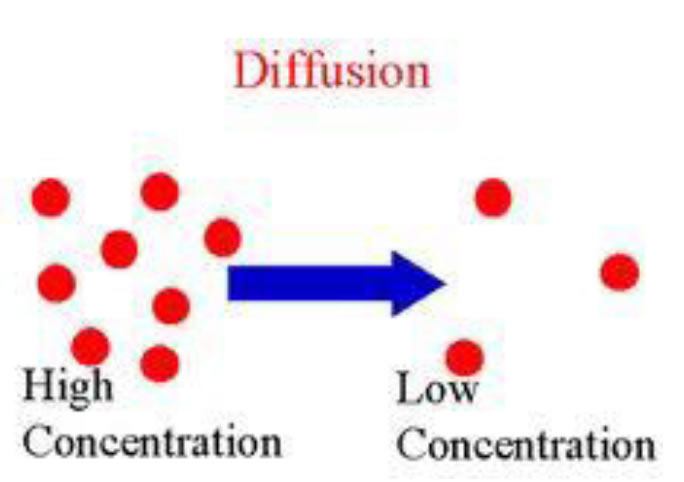
Movement of particles from high to low concentration.
a)
Passive Transport
b)
Active Transport
49.
Passive transport requires no
a)
concentration gradients
b)
osmosis
c)
motion
d)
energy
50.

The picture is an example of _________________.
a)
osmosis
b)
isotonic
c)
diffusion
d)
active transport
100 %

