wayground logo

Free Printable Worksheets

Font size

S
M
L
XL
Worksheets

WMJH 6th Grade Weak TEKS for STAAR Review

Total questions: 138

Worksheet time: 2hrs 26mins

Name
Class
Date
1.
The long hike up to the mountains was grueling.
a)
loud
b)
tiring
c)
easy
2.
I was so parched, I drank an entire glass of water in one gulp.
a)
hungry
b)
thirsty
c)
sleepy
3.
The parking lot was so congested, it took half an hour to get out.
a)
empty
b)
hot
c)
crowded
4.
The conspicuous man wore a purple wig and large sunglasses.
a)
easily noticed
b)
beautiful
c)
sleeping
5.
The rain ran down the road. 
a)
alliteration
b)
metaphor
c)
simile
d)
idiom
6.
The wind whistled through the trees during the storm. 
a)
personification
b)
simile
c)
metaphor
d)
idiom
7.
He was a car speeding through the streets is an example of...
a)
Simile
b)
Metaphor
c)
Hyperbole
d)
Alliteration
8.
Imagery appeals to the ______________.
a)
brain
b)
senses
c)
animals
d)
memory
9.
What is writing or speech that is  not meant to be taken literally?
a)
Hyperbole 
b)
Figurative Language 
c)
Sensory Language 
d)
Metaphor 
10.
Analyze the meaning:
"Miranda's face was brighter than the sun when she saw John walk into the room."
a)
Miranda dislikes John and wants revenge.
b)
Miranda has a sunburnt face.
c)
Miranda has feelings for John, and is happy that he is there.
d)
John slapped Miranda across the cheek when he walked in the room.
11.
Analyze the meaning:
"All eyes on me just like the center ring in a circus."
a)
She is going to a circus.
b)
The class is as chaotic as a circus.
c)
She enjoys having everyone look at her, to be the center of attention.
d)
She is shy and wishes no one would look at her.
12.
What's the meaning of this personification?
"The camera loves me!"
a)
Photography is one of my hobbies.
b)
I own an expensive camera.
c)
Photos of me are always really good. 
d)
I like to visit art museums.
13.
What's the meaning of this hyperbole?
"Shawn would move mountains for Angela."
a)
Shawn and Angela like to climb mountains together.
b)
Shawn paints pictures of mountain scenes.
c)
Shawn would do anything for Angela.
d)
Angela is really pretty. 
14.
Why does an author use symbolism in their literary piece?
a)
To convey deeper meanings about a topic or subject
b)
To show the importance of symbols
15.
Why do people use figurative language?
a)
To make their writing interesting and visual, or to emphasis an idea and make a point.
b)
To be grammatically correct.
c)
To structure their writing into paragraphs.
d)
Because Beyonce uses it in her songs. 
16.
What is the speaker's or the author's attitude toward his subject called?
a)
tone 
b)
mood
c)
point of view 
17.
What type of figurative language is shown?
She was so sad that all the tears she cried filled up a lake.
a)
hyperbole
b)
oxymoron
c)
alliteration
d)
onomatopoeia
18.
When summarizing a story you must include...
a)
Everything that happened
b)
The most significant information
c)
An Inference
d)
My background knowledge
19.
Summaries help me...
a)
understand what I'm reading
b)
write about what I read
c)
include the key points of a text
d)
all of the above
20.
When some people think about Texas, they think of cowboys on the open range-herding cattle up a dusty trail. However, Texas has much more than open prairie with large herds of cows. There are the mountains of West Texas, the piney hills of east Texas, and the emerald waters off the coast of Padre Island. Texas also has large coastal harbors with numerous sailboats, powerboats, inland lakes, rivers, swamps of southeast Texas with alligators and other exotic wildlife.
The Summary of this passage is:
a)
There are a lot of cows in Texas.
b)
There are many different, varied parts of Texas.
c)
 Texas is one of the biggest states in the United States.
d)
 There are alligators in the swampland of southeast Texas.
21.
Tomorrow is Jill's birthday. She is excited because she gets to pick where she will eat dinner. Will it be Mexican food at the Big Enchilada House? Or will it be fried chicken at the Chicken Shack, or a big cheeseburger at Al's Hamburger Palace. She just couldn't decide. Then there was always the Pizza Shop with that great pepperoni pizza. How would she ever decide? Maybe she would just flip a coin.
The Summary of this passage is:
a)
Jill has many restaurants to choose from for her birthday.
b)
 Jill loves Mexican food.
c)
The Pizza Shop has the best pizza in town.
d)
 Jill will choose a place by flipping a coin.
22.
It started when they got to the bears. Peter felt tired and his stomach hurt. He dragged himself over to see the elephants, which were eating from a stack of hay. Normally, the elephants were his favorite. Without much interest, Peter followed his classmates to the camels, which were busy swatting flies with their tails. Peter knew he should be having fun at the zoo, but he just felt terrible and all he wanted to do was lie down and rest. Even the lions and tigers did not interest him now. 
The Summary of this passage is:
a)
Peter's favorite animals were the elephants.
b)
The camels were swatting flies with their tails.
c)
 It was really hot at the zoo.
d)
Peter didn't enjoy the zoo because he felt really bad.
23.

Which one of the following is NOT a part of a summary?

a)

using your own words

b)

summary being shorter than the text

c)

exact words from the text

d)

including main ideas or events only

24.

When writing a summary, you should ask yourself: "Do you need this information to understand the text?"

a)

True

b)

False

25.

A summary includes the following:

a)

key people or characters, the central idea, and supporting details

b)

opinions, background, and direct quotes from the text

c)

central idea, supporting details, and text evidence

d)

the point, evidence, and explanation

26.

A written summary should be 3-5 sentences long.

a)

True

b)

False

27.

You should only include the main events or ideas from the passage when writing a summary.

a)

True

b)

False

28.

A summary should include opinion statements.

a)

True

b)

False

29.
This type of writing considers similarities and differences.
a)
description
b)
compare & contrast
c)
order & sequence
d)
cause & effect
30.
In this type of writing, the reader will see words/phrases such as because, as a result of, and due to.
a)
cause & effect
b)
problem & solution
c)
order & sequence
d)
compare & contrast
31.
In this type of writing the reader will find words/phrases such as a problem is, solve,or solution.
a)
cause & effect
b)
problem & solution
c)
order & sequence
d)
compare & contrast
32.
This type of writing gives information step-by-step.
a)
cause & effect
b)
problem & solution
c)
order & sequence 
d)
compare & contrast
33.
This type of writing is usually in chronological order.
a)
cause & effect
b)
problem & solution
c)
order & sequence
d)
compare & contrast
34.
Students who are frequently absent often have lower average grades than those who have good attendance. When they are out of the classroom, students do notget to see a teacher’s lessons. Even if they attend extra help, it’s usually much shorter and less detailed than the actual lesson. In addition, frequently absent students often miss tests or other assignments and don’t always make up the work.
a)
problem & solution
b)
order & sequence 
c)
compare & contrast
d)
cause & effect
35.
While oranges and lemons are both citrus fruits that grow on trees, they are different colors and have very different tastes.
a)
description
b)
compare & contrast
c)
order & sequence 
d)
problem & solution
36.
Students who are frequently absent often have lower average grades than those who have good attendance. When they are out of the classroom, students do notget to see a teacher’s lessons. Even if they attend extra help, it’s usually much shorter and less detailed than the actual lesson. In addition, frequently absent students often miss tests or other assignments and don’t always make up the work.
a)
problem & solution
b)
order & sequence 
c)
compare & contrast
d)
cause & effect
37.
Horses eat hay and oats.
a)
Fact
b)
Opinion
38.
We get milk and other dairy products from cows.
a)
Fact
b)
Opinion
39.
Chocolate milk tastes better than white milk.
a)
Fact
b)
Opinion
40.
Spiders have 8 legs.
a)
Fact
b)
Opinion
41.
It's easy to learn to write your name.
a)
Fact
b)
Opinion
42.
Apple computers are easier to learn to use than Windows computers.
a)
Fact
b)
Opinion
43.
A fact is a statement that is true and can be verified objectively, or proven.
a)
True
b)
False
44.
An opinion, however, is a statement that holds an element of belief; it tells how someone feels. 
a)
True
b)
False
45.
A type of fantasy that uses science and technology, such as robots, time machines, etc.
a)
Science Fiction
b)
Poetry
c)
Historical Fiction
d)
Nonfiction
46.
A story using made-up characters and events that could happen in real life.
a)
Realistic Fiction
b)
Historical Fiction
c)
Science Fiction
d)
Traditional Literature
47.
A fictional story that takes place in a particular time period in the past.  Often the setting is real, but the characters are made up from the author’s imagination.
a)
Realistic fiction
b)
Traditional Literature
c)
Historical Fiction
d)
Science Fiction
48.
Texts that provide facts about a variety of topics, such as sports, animals, science, history, careers, travel, geography, space, weather, etc.
a)
Fiction
b)
Historical Fiction
c)
Realistic Fiction
d)
Informational Text
49.
1-2 words the story is about
a)
Theme
b)
Topic
50.
1-2 sentences containing the lesson of the story
a)
Theme
b)
Topic
51.
Dogs are man's best friend!
a)
Theme
b)
Topic
52.
Dogs
a)
Theme
b)
Topic
53.
The ______ of a text is its central message or lesson learned by the character.
a)
Theme
b)
Topic
54.
Making an educated guess based on information in the text
a)
Theme
b)
Inference
55.
Stand by your friends in good and bad times. 
a)
topic
b)
theme statement
56.
One way you could figure out the theme is to...
a)
Skim through the story
b)
Just read the beginning of the story
c)
Think about what the character has learned
d)
Read the ending of the story
57.
What is the main difference between THEME and MAIN IDEA. 
a)
Theme is a universal lesson, and main idea is what a story is about.
b)
Theme is what a story is about, and main idea is the universal lesson it teaches.
58.
What is the theme of this story?
a)
Don't steal.
b)
Look both ways before crossing the street. 
c)
Necessity is the mother of invention. 
d)
One good turn deserves another.
59.
What is the theme of this story? 
a)
Don't steal. 
b)
Don't judge others. You don't know what they are capable of. 
c)
Being beautiful is the most important thing.
d)
Swans are prettier than ducks.
60.
When a story is told from the first-person point of view, the reader —
a)
knows only what the narrator knows
b)
must guess who the narrator is
c)
does not learn about the characters in the story
d)
views the characters as friends
61.
The purpose of an argument is to —
a)
persuade the reader to think or act in a certain way
b)
provide instructions for completing a task
c)
present rules that people must obey
d)
advertise a product or service
62.
True or False? There can be many themes found in one story.
a)
True
b)
False
63.
The story's time and place is
a)
tone
b)
plot
c)
setting
d)
voice
64.
Which point of view has a narrator that is outside the story and uses "him/her," "he/she," or "they/their"?
a)
First person point of view
b)
Second person point of view
c)
Third person point of view
d)
Fourth person point of view
65.
What is the "mood" of  a story?
a)
Emotions audience feels from a given passage.
b)
The time and place of the story.
c)
The summary of events of the story.
d)
The lesson the reader learns from the story.
66.
What is the "tone" of a story?
a)
The feeling the passage evokes from the reader
b)
The author, narrator, or speaker's attitude toward a subject
c)
The time and place of the story
d)
The summary of events in the story
67.
Which tone is represented in the following passage?
"Wow! With a top speed of one hundred fifty miles per hour, that car can almost fly!"
a)
Annoying
b)
Excited
c)
Calm
d)
Scary
68.
Julia was waiting nervously for her test.
What is the mood?
a)
Dramatic
b)
Afraid
c)
angry
d)
Approving
69.
What is normally included in an introduction?
a)
Characters, setting, and an opening situation
b)
Characters, setting, and the climax
c)
Setting, point of view, resolution
d)
Setting, conflict, and point of view
70.
Cinderella is kind, sweet, and charming, while her step sisters are mean and cruel.  How are Cinderella and her step sisters different?
a)
They both want to marry the prince.
b)
The step sisters are kind, but Cinderella is not.
c)
Cinderella is kind, but her step sisters are not.
71.
what does it mean to compare things?
a)
look at differences
b)
look at similarities
72.
what does it mean to contrast things?
a)
look at differences
b)
look at similarities 
73.
Historical context..
a)
deals with events that happened in the past and how they affect stories.
b)
describes where people are from and how they interact with each other.
c)
deals with peoples ideas and beliefs about the world and how people should live in it.
74.
Social Context...
a)
deals with events that happened in the past and how they affect stories.
b)
describes where people are from and how they interact with each other.
c)
deals with peoples ideas and beliefs about the world and how people should live in it.
75.
Cultural Context...
a)
deals with events that happened in the past and how they affect stories.
b)
describes where people are from and how they interact with each other.
c)
deals with peoples ideas and beliefs about the world and how people should live in it.
76.
This part of plot introduces the characters and the setting
a)
Rising Action
b)
Conflict
c)
Exposition
d)
Resolution
77.
At the end of the exposition, before moving on to the next part of a plot, we usually see the ______ or problem of the story introduced.
a)
Conflict
b)
Resolution
c)
Drama
d)
Aggressor
78.
This part of plot describes how important events unfold, and how the story develops.  The character will be trying to solve their problem, but will not find a solution.
a)
Exposition
b)
Climax
c)
Resolution
d)
Rising Action
79.
This the described at the turning point in the story.  This is when the story usually has the greatest suspense, or when the problem feels like it is at its worst.  
a)
Rising Action
b)
Falling Action
c)
Climax
d)
Resolution
80.
This part of plot describes the events that continue AFTER the climax, where a solution to the major problem is being found and worked out for the character.
a)
Exposition
b)
Rising Action
c)
Falling Action
d)
Conflict
81.
This part of plot describes how the story is wrapped-up and all loose ends and resolved, any remaining small problems are solved, and we are left with a sense of closure.  
a)
Falling Actions
b)
Climax
c)
Resolution
d)
Exposition
82.
A drama, or a play is a passage that tells a story using _______________ characters say to each other.
a)
songs
b)
lines
c)
books
d)
jokes
83.
A drama is intended to be __________________ for an audience.
a)
performance
b)
comedy
c)
tragedy
d)
fun
84.
A list of characters that appear in the play or drama is called a ______________________. They are also written in the brochure or program of the play.
a)
group
b)
crowd
c)
cast
d)
people
85.
This is the written text of a play.
a)
script
b)
papers
c)
book
d)
text
86.
Stage directions are the words written that appear in parentheses throughout the play and these words tell the characters how to _________________.
a)
do the play
b)
use dialogue
c)
act
d)
sing
87.
There are four ingredients in a good Drama.  They include:
a)
actors, script, acts and scenes
b)
stage directions, plays, singing and dancing
c)
characters, cast, setting and drama
d)
dialogue, setting, conflict and plot
88.
tells us the topic of the text
a)
title
b)
table of contents
c)
glossary
89.
What is a caption?
a)
words that describe what is happening in a picture
b)
a word that stands out
c)
a picture
d)
what page you can find information on
90.
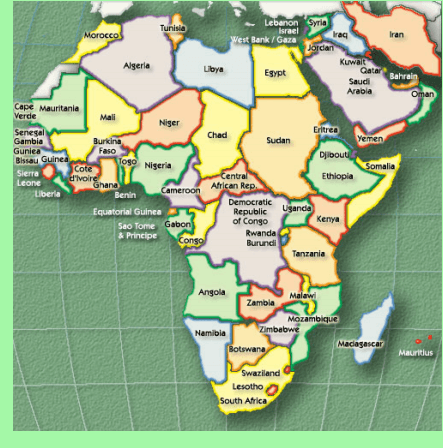
This is a ________________.
a)
caption
b)
diagram
c)
map
d)
label
91.
What is the text feature?
a)
glossary
b)
diagram
92.
What is the text feature?
a)
table of contents
b)
label
93.
What is the text feature?
a)
photo
b)
caption
94.
What is the text feature?
a)
caption
b)
map
95.

The skill that this question is asking me to use is...

a)

Summarizing

b)

Describing Characters

c)

Context Clues

d)

Main Idea

96.

The skill involved in this question is...

a)

Knowing how to use a dictionary

b)

Context Clues

c)

Main Idea

d)

Drawing Conclusions

97.

To answer this question a good reader will...

a)

Use the strategy SWBST

b)

Use the context in paragraph 10 to guess the meaning

c)

Look up the word in the dictionary

d)

Identify the details that support the main idea

98.

The skill included in this question is...

a)

Summarizing

b)

Sequencing

c)

Using Context Clues

d)

Drawing Conclusions

99.

The question is asking me to...

a)

Summarize the story

b)

Use context clues to guess the meaning of unfamiliar words

c)

Identify a detail that supports the main idea

d)

Put the events of the story in order

100.

The question is asking me to...

a)

Describe the characters of a story and their relationships

b)

Summarize the story including the main events only

c)

Identify the main idea and details

d)

Tell which one happened in the story

101.

The reader needs to...

a)

Decide which sentence can be found in the text

b)

Use evidence to prove that Judy is upset

c)

Describe Judy's brother

d)

Analyze the sequence of the story

102.

This question is asking me to identify the...

a)

Main Idea

b)

Theme or lesson

c)

Characters

d)

Sequence

103.
To study something in a systematic and careful way
a)
evidence
b)
analyze
c)
integrate
d)
distinguish
104.
To break soemthing down into parts
a)
Articulate
b)
Evaluate
c)
Analyze
d)
Determine
105.
To understand or find meaning
a)
Comprehend
b)
Infer
c)
Organize
d)
Analyze
106.
To find value; judge
a)
Evaluate
b)
Analyze
c)
Organize
d)
Suggest
107.
To arrange or classify
a)
Organize
b)
Evaluate
c)
Infer
d)
Compare
108.
To sum up
a)
Analyze
b)
Summarize
c)
Retell
d)
Explain
109.
Most important point the author makes.
a)
Central Idea / Main Idea
b)
Structure
c)
Conclusion
d)
Details
110.
A unified idea, the message the author is trying to make
a)
Theme
b)
Details
c)
Structure
d)
Tone
111.
Figures of speech used to make meaning clearer
a)
Conclusion
b)
Figurative Language
c)
Stanza
d)
Rhetoric
112.
The author's attitude or outlook
a)
Tone
b)
Mood
c)
Connections
d)
Argument
113.
Organization of text
a)
Argument
b)
Structure
c)
Illustrations
d)
Details
114.
To find; point out
a)
Analyze
b)
Contrast
c)
Identify
d)
Refer
115.
words that characters speak
a)
dialogue
b)
speech
c)
direction
d)
announcement
116.
restate a passage in your own words
a)
summarize
b)
supporting details
c)
figurative language
d)
paraphrase
117.
Which of the following sets of words deal mostly with the sense of SMELL?
a)
aromatic, fresh, scented
b)
hot, cold, flowery
c)
fluorescent, translucent, transparent
d)
syncopated, rhythmic, shrill
118.
The sun gleamed as bright as a lamp.
a)
smell
b)
touch
c)
taste
d)
see
119.
She spoke of fruit so sugary.
a)
smell
b)
taste
c)
touch
d)
hear
120.
My teeth chattered as the temperature dropped.
a)
hear
b)
hear and touch
c)
see and smell
d)
taste
121.
What is "sensory language"?
a)
language that connects to the five senses (sight, sound, smell, taste, touch) to create an image or description.
b)
language that has been censored (censorship)
c)
language that is not very descriptive
d)
language that is unfamiliar to the reader
122.
Why do authors use sensory language?
a)
It is a way for a writer to help the reader see or connect with their story
b)
All stories must have sensory language or they become poems.
c)
without censorship, kids may be exposed to bad writing.
d)
nobody knows for sure, but it probably has to do with the STAAR test
123.

On June 26 Francis Collins, head of the Human Genome Project, and Craig Venter, head of Celera Genomics, announced that they had completed thereading of a "rough draft" of the human genome - the complete set of human DNA.

Which answer choice paraphrases the text?

a)

On June 26 two scientists stated they had finished the initial reading of the human genome.

b)

It was announced by two researched that they had read the first reading of the complete set of human DNA.

124.

He felt uneasy, but he didn't know why.

a)

fearful

b)

anxious

125.
Which of the following statements about SUMMARIZING is true?
a)
The Summary is a thought that is true but is not in the passage.
b)
The Summary is what the passage is mostly about.
c)
 The Summary is specific, detailed information contained in the passage.
d)
The Summary is always found in the first sentence of the passage.
126.
When some people think about Texas, they think of cowboys on the open range-herding cattle up a dusty trail. However, Texas has much more than open prairie with large herds of cows. There are the mountains of West Texas, the piney hills of east Texas, and the emerald waters off the coast of Padre Island. Texas also has large coastal harbors with numerous sailboats, powerboats, inland lakes, rivers, swamps of southeast Texas with alligators and other exotic wildlife.
The Summary of this passage is:
a)
There are a lot of cows in Texas.
b)
There are many different, varied parts of Texas.
c)
 Texas is one of the biggest states in the United States.
d)
 There are alligators in the swampland of southeast Texas.
127.
Which is the best paraphrase of the following sentence?
Dragonflies have six legs, but they can’t walk. 
a)
Dragonflies have six legs but cannot walk, and I think that this is odd.
b)
Dragonflies have six legs.
c)
Although Dragonflies have six legs, they cannot walk at all.
d)
 Even though they have six legs, dragonflies can’t walk. 
128.
Which of the following statements best describes how to paraphrase information?    
a)
Copy the sentence and then put it in quotations.
b)
Copy the sentence, put it in quotations, and cite the source.
c)
 Determine key words in the sentence and replace one of two of them with words that have similar meanings. 
d)
Determine key words in the sentence and replace most of them with words that have similar meanings.  Rewrite the sentence in your own words.
129.
What does infer mean? 
a)
use a dictionary to find the answer
b)
make a guess based on what you read 
c)
note what you know
d)
play with your dog
130.
analyze the author's most important points and their relationship to one another
a)
idiom
b)
synthesize
c)
rhyme scheme
d)
plot
131.

Text Organization includes (Choose all that apply)

a)

Noticing text features such as headings, bold words, graphics, captions

b)

Identifying if it is fiction or nonfiction

c)

Observing the structure, such as cause and effect, chronological order, main idea and supporting details, and others

132.

to examine closely

a)

summary

b)

sensory details

c)

analyze

d)

narrator

133.
SOMETHING THAT IS MADE BY COMBINING DIFFERENT THINGS (SUCH AS IDEAS, STYLES, ETC)
a)
SYMBOLIZE
b)
EMPHASIZE
c)
SYNTHESIZE
d)
CONVEY
134.
What is used to explain the symbols used on a map?
a)
map key
b)
map scale
c)
symbol
d)
map legend
135.
What is text evidence?
a)
Evidence/facts that prove the position identified in the thesis statement to be untrue.
b)
An explanation for why the thesis statement is true.
c)
Evidence/facts from the sources that support the position identified in the thesis statement.
136.
Crack!  Thunder struck and rain poured.  Max stared blankly out the window, trying to contain his emotions that raged like the weather.  He was beginning to lose it.  Dropping the kite from his hand, Max broke out into full sob.  His mother comforted him, "There, there, Max.  We'll just find something else to do."  She began to unpack the picnic basket that was on the counter and offered him a sandwich.  Max snapped, "I don't wanna sand-mich!"  A flash from the sky lit up the living room.  Boom!  Mom sighed.
Why is Max upset?
a)
It is raining and he cannot go outside
b)
He is hungry
c)
He is scared of thunderstorms
d)
He is bored
137.
As the teacher lectured the class about how important it was to pay attention, Brian found himself staring out the window again. Suddenly, a little boy came up to the window and peeked in. The boy blew a bubble with his gum and it exploded all over his face and the window. Brian began laughing so hard he fell out of his seat. The rest of the class silently stared at him as the teacher walked to his desk.
What can you infer about how the teacher will react?

a)
She will ignore him and pretend she doesn't see.
b)
She will laugh at him because he's on the ground.
c)
She will help him up and give him a piece of gum.
d)
She will scold Brian for not paying attention in class.
138.
In real life, people who can back up an opinion about a text with Textual Evidence are taken more seriously than people who can only give a reason of “just because".
a)
True
b)
False