wayground logo

Free Printable Worksheets

Font size

S
M
L
XL
Worksheets

FINAL exam REVIEW EARTH science 2017/2018

Total questions: 132

Worksheet time: 2hrs 15mins

Name
Class
Date
1.
A light-colored, extremely porous igneous rock that forms during explosive volcanic eruptions. It is used as aggregate in lightweight concrete, as landscaping aggregate, and as an abrasive in a variety of industrial and consumer products.
a)
shale
b)
pumice
c)
sandstone
d)
granite
2.
This limestone is in Middle Tennessee, and contains a wide variety of fossils of ocean creatures.
a)
Igneous
b)
Sedimentary
c)
Metamorphic
3.
This rock formed when lava cooled very quickly on Earth's surface. What specific type of rock is it?
a)
Extrusive Igneous Rock
b)
Intrusive Igneous Rock
c)
Non-Foliated Metamorphic Rock
d)
Biochemical Sedimentary Rock
4.
a sedimentary rock composed primarily of calcium carbonate  It most commonly forms in clear, warm, shallow marine waters. It is usually an organic sedimentary rock that forms from the accumulation of shell, coral, algal, and fecal debris.
a)
sandstone
b)
limestone
c)
marble
d)
quartzite
5.
a metamorphic rock that forms when limestone is subjected to the heat and pressure. It is composed primarily of the mineral calcite (CaCO3) and usually contains other minerals, such as clay minerals, micas, quartz, pyrite, iron oxides, and graphite. 
a)
granite
b)
limestone
c)
marble
d)
quartz
6.
is an igneous rock that forms when molten rock material cools so rapidly that atoms are unable to arrange themselves into a crystalline structure.  The result is a volcanic glass with a smooth uniform texture that breaks with a conchoidal fracture 
a)
basalt
b)
slate
c)
shale
d)
obsidian
7.
What sedimentary rock is made of mud and clay pressed together?  It commonly holds fossils of leaves. 
a)
Limestone
b)
Sandstone
c)
Shale
d)
Marble
8.
a nonfoliated metamorphic rock composed almost entirely of quartz. It forms when a quartz-rich sandstone is altered by the heat, pressure, and chemical activity of metamorphism. 
a)
quartzite
b)
sandstone
c)
pumice
d)
limestone
9.
Which of the following are nonrenewable resources?
a)
Plants and animals
b)
Wind and water
c)
Sunlight and water
d)
Coal and petroleum
10.
Igneous rock with grains large enough to be visible with the unaided eye. It forms from the slow crystallization of magma below Earth's surface. It is composed mainly of quartz and feldspar with minor amounts of mica, amphiboles, and other minerals. This mineral composition usually gives the rock a red, pink, gray, or white color with dark mineral grains visible throughout the rock.
a)
Pumice
b)
Feldspar
c)
Granite
d)
quartz
11.
Mercury can be found in
a)
cinnabar
b)
bauxite
c)
magnatite
12.
Iron can be found in
a)
cinnabar
b)
bauxite
c)
magnatite
13.
Reclamation is.....
a)
not required in the US.
b)
a process that causes significant environmental damage.
c)
returning the land back to its original condition after mining
d)
required for every country and every type of mine in the world.
14.
Earth appears to be a perfect circle but is actually a(n)
a)
flat disc
b)
oblate spheroid
c)
spherical oval
15.
Solar eclipses occur during which Moon phase?
a)
New Moon
b)
Full moon
c)
Waxing Crescent
d)
Waning Gibbous
16.
What cycle is affected when humans use fossil fuels? 
a)
Nitrogen Cycle 
b)
Phosphorus Cycle 
c)
Water Cycle 
d)
Carbon Cycle 
17.
This rock was formed when magma cooled very slowly inside the Earth. What specific type of rock is it?
a)
Intrusive Igneous Rock
b)
Extrusive Igneous Rock
c)
Foliated Metamorphic Rock
d)
Clastic Sedimentary Rock
18.
What are the major branches of  Earth science?
a)
astrology, geography, astronomy & agriculture
b)
the oceans, the atmosphere & the universe
c)
astronomy, meteorology, geology, oceanography & environmental science
d)
Oceanography, meteorology & astrology
19.
crust is...
a)
the thin solid, outermost layer of earth
b)
the strong lower part of the mantle
c)
doesn't exist the earth is one flat layer
d)
a dense liquid below the mantle
20.
What is the best definition of the term "theory," as it is used in science?
a)
A guess about something that has occurred in nature.
b)
a comprehensive set of ideas explaining a phenomenon in nature.
c)
based on verifiable laws and can be proven true.
d)
a hypothesis that uses laws and observation to make an assumption.
21.
When a volcanic eruption spews gases and ash into the air, which two spheres are interacting?
a)
Hydrosphere and geosphere
b)
Biosphere and Geosphere 
c)
Geosphere and Atmosphere 
d)
Biosphere and Atmosphere 
22.
The El Nino is caused by
a)
Cool water phase of ENSO that affects weather pattern.
b)
Warm water phase of ENSO that affects weather pattern.
c)
warm water in the Pacific off the coast of Mexico
d)
cold water in the Pacific off the coast of Mexico
23.
what do scientists expect?
a)
Similar forces in different situations will cause different results
b)
Different  forces in different situations will cause different results
c)
different forces in different situations will cause similar results
d)
Similar forces in similar situations will cause similar results
24.
A set of data are all close to each other, but they are not close to the actual value.  This set of data can be described as...
a)
accurate
b)
precise
c)
both precise and accurate
25.
A set of data are not close to each other, but the average of the data is very close to the actual value.  This set of data can be described as...
a)
accurate
b)
precise
c)
both precise and accurate
26.
Maps & Charts are 
a)
physical models
b)
graphical models
c)
conceptional models
d)
mathematical models
27.
E=mc2 is an example of a 
a)
physical model
b)
graphical model
c)
conceptual model
d)
mathematical model
28.
What is a lunar eclipse?
a)
an eclipse in which the moon appears darkened as it passes into the earth's shadow
b)
an eclipse in which the sun is obscured by the moon
29.
The volcano that my son builds for science fair is an example of a 
a)
physical model
b)
graphical model
c)
conceptual model
d)
mathematical model
30.
What causes La Nina?
a)
Warm water phase of ENSO that affects weather pattern.
b)
Cooling water off the Atlantic coast of the US
c)
Cool water phase of ENSO that affects weather pattern.
d)
Warm water in the Pacific Ocean off the coast of South America
31.
Which of the following events can produce an earthquake?
a)
the force of tsunamis in the oceans
b)
a sudden release of energy from the mantle
c)
movement of tectonic plates along a fault
d)
the violent shaking of sections of the lithosphere
32.
Which volcanic feature forms a relatively small depression around a volcano’s vent? 
a)
crater
b)
fissure
c)
caldera
d)
lava plateau
33.
Which type of volcano is made mostly of pyroclastic materials?
a)
lava
b)
cinder cone
c)
composite
d)
shield
34.
What is the relationship between magma and lava?
a)
They are both molten rock found at different depths below Earth’s surface.
b)
They are both types of solid material that spew out of a volcano.
c)
Lava is magma that has reached Earth’s surface.
d)
Magma is lava that has reached Earth’s surface.
35.
The formation of magma depends on which set of conditions?
a)
Pressure, Density, and Water Content
b)
Temperature, Density, and Pressure
c)
Temperature, Density, and Water Content
d)
Temperature, Pressure, and Water Content
36.
What is the resistance of a liquid, such as lava, to flow?
a)
Elasticity
b)
Pyroclasticity
c)
Silica
d)
Viscosity
37.

What are solid rock fragments that are ejected during a volcanic eruption?

a)

Lava

b)

Magma

c)

Pyroclastic Material

d)

Silica

38.
What type of volcano has steep slopes made of alternating layers of ash and silica rich lava?
a)
Caldera
b)
Cinder Cone
c)
Composite Volcano
d)

Shield Volcano

39.
What type of volcano is Kilauea, which is located in Hawaii?
a)
Caldera
b)
Cinder Cone
c)
Composite Volcano
d)
Shield Volcano
40.
What type of volcano is Mount St. Helens?
a)
Caldera
b)
Cinder Cone
c)
Composite Volcano
d)
Shield Volcano
41.
What do you call a large crater formed by the collapse of a volcano?
a)
Caldera
b)
Cinder Cone
c)
Composite Volcano
d)
Shield Volcano
42.
What is the opening that extends from the magma chamber to the top of the volcano called?
a)
magma
b)
lava
c)
vent 
d)
crater
43.
If geologists detect many small earthquakes in the area near a volcano, what can they infer about the volcano?
a)
It is dormant
b)
It is probably about to erupt
c)
It is extinct
d)
It is a good source of geothermal energy
44.
The focus of an earthquake is...
a)
above ground
b)
along the edge of the ocean
c)
next to the nearest mountain range
d)
below ground
45.
What type of fault is this?
a)
Normal
b)
Reverse
c)
Strike-slip
46.
Where is the epicenter located?
a)
A
b)
B
c)
C
d)
There is no epicenter
47.
Where is the focus located?
a)
A
b)
B
c)
C
d)
There is no focus
48.
What is the name of the waves given off by an earthquake? 
a)
Seismic waves
b)
Radiation waves
c)
Sound waves
d)
Compaction waves
49.
The point on Earth's surface directly above an earthquake's starting point or focus. 
a)
Hot spot
b)
Focus
c)
Moho point
d)
Epicenter
50.
When rocks are broken down into smaller pieces
a)
erosion
b)
weathering
c)
sediment
51.
Particles of rock, sand, soil, plant and animal remains
a)
erosion
b)
sediment
c)
weathering
52.
When water, ice and wind move particles of rock and soil from one place to another
a)
sediment
b)
weathering
c)
erosion
53.
A mass of ice that covers a large area and moves slowly
a)
gravity
b)
glacier
c)
sediment
54.

"Mountains are constantly being washed into the sea" ... this statement refers to the effects of

a)

Weathering and erosion

b)

Folding and faulting

c)

Plate tectonics

d)

Volcanic activuty

55.
Roots break apart a side walk
a)
Chemical weathering
b)
Physical weathering
56.
Carbon dioxide in rainwater dissolves limestone
a)
Chemical weathering
b)
Mechanical weathering
57.
The iron in the stones of the Grand Canyon turn the color of red
a)
Mechanical Weathering
b)
Chemical Weathering
58.

Potholes forming in the road after a cold winter is an example of:

a)

physical weathering

b)

chemical weathering

59.
Flood water pounding against a canyon wall and wearing it down
a)
Weathering
b)
Erosion
c)
Deposition
60.
What is mechanical weathering?
a)
Process through which rocks are physically broken into smaller pieces.
b)
Rocks are broken down through chemical changes.
c)
Rocks are worn away from acid in plant roots.
d)
Rocks broken down by machinery.
61.
What is the correct order of the processes?
a)
they all happen at the same time
b)
erosion, weathering, deposition
c)
weathering, erosion, deposition
d)
weathering, deposition, erosion
62.

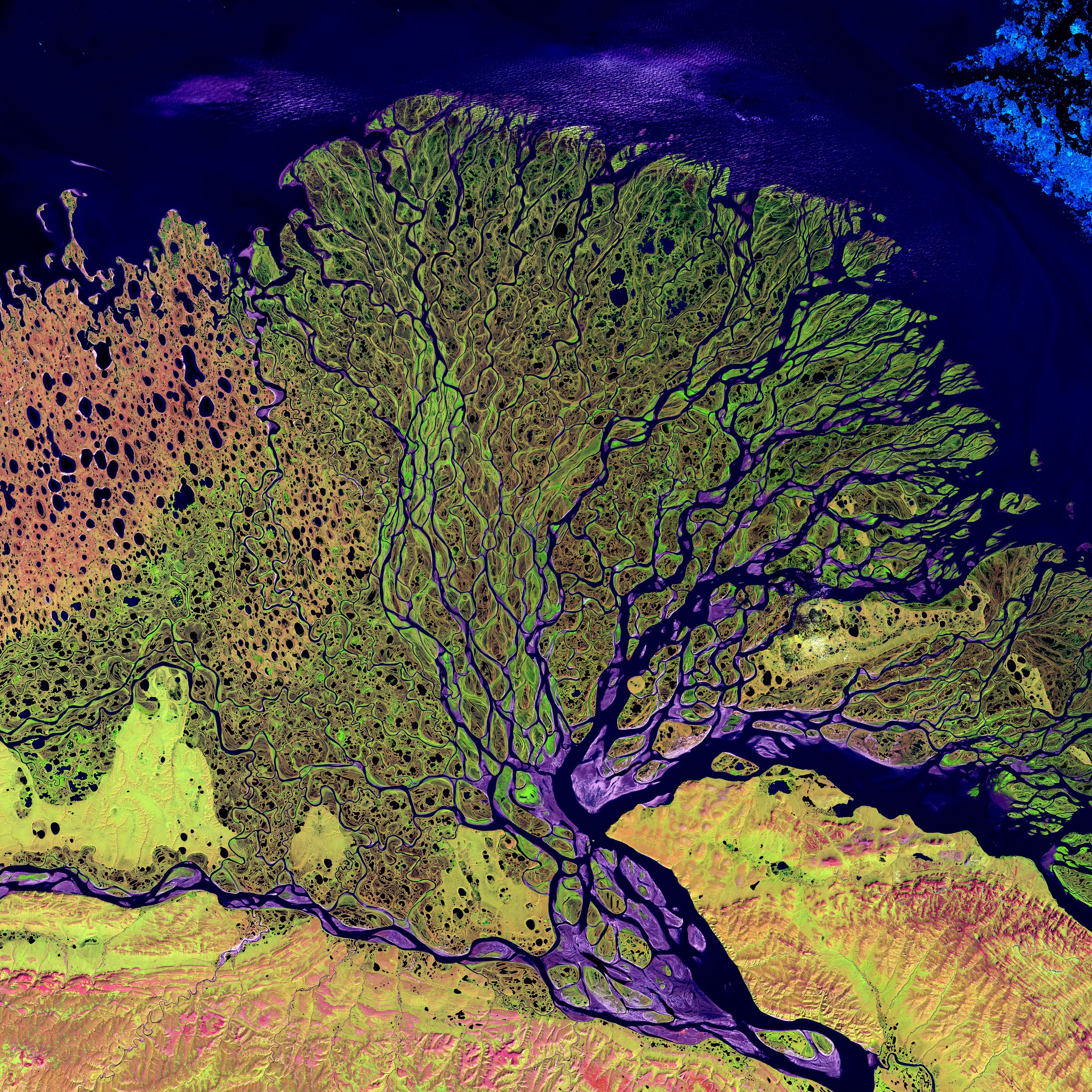
Deltas are mainly created by the process of -

a)

deposition

b)

weathering

c)

waves

d)

erosion

63.
Rain washing away soil from a hillside
a)
Weathering
b)
Erosion
c)
Deposition
64.
Which type of river has fast waters that are cool with a V-shaped channel?
a)
Old
b)
Young
c)
Mature
65.
ponds filling up with sediment and becoming marshes
a)
weathering
b)
erosion
c)
deposition
66.
The presence of the same ________ on several continents supports the idea of continental drift.
a)
rocks
b)
fossils
c)
both fossils and rocks
d)
neither fossils nor rocks
67.
The theory of _______ states that Earth’s crust and upper mantle are broken into sections that are in constant, slow motion.
a)
plate tectonics
b)
continental drift
c)
seafloor spreading
d)
divergent boundaries
68.
_______ are formed when two continental plates collide.
a)
Mountain ranges
b)
Transform faults
c)
Rift valleys
d)
Volcanoes
69.
The theory of continental drift was first proposed by __________.
a)
Thomas Edison
b)
Alfred Wegener
c)
Benjamin Franklin
d)
Harry Hess
70.
The _______ is the thickest layer of the Earth at 1800 miles thick.  This layer contains most of the mass of the Earth.
a)
crust
b)
mantle
c)
outer core
d)
inner core
71.
Plates move apart at _________ boundaries.
a)
volcanic
b)
divergent
c)
convergent
d)
transform
72.
What is the name of the process of an ocean plate diving beneath a continent plate when the two collide? 
a)
collision
b)
earthquake
c)
subduction
d)
induction
73.
What type of plate boundary features the collision between 2 plates? 
a)
Convergent
b)
Divergent
c)
Transform
d)
Continental
74.
What is a good example of a convergent continental-continental plate boundary? 
a)
Himalayan Mountain Range
b)
Santa Monica Mountains
c)
Channel Islands
d)
Conejo Mountain
75.
Iceland was formed by 
a)
Contienntal rifting at a divergente plate boundary
b)
Slipping of plates on a tranform boundary
c)
Collision of oceaninc plates at a Convergent boundary
d)
Volcanos erupting
76.
When 2 plates are sliding past each other, what type of boundary is this?
a)
divergent
b)
transform
c)
convergent
77.
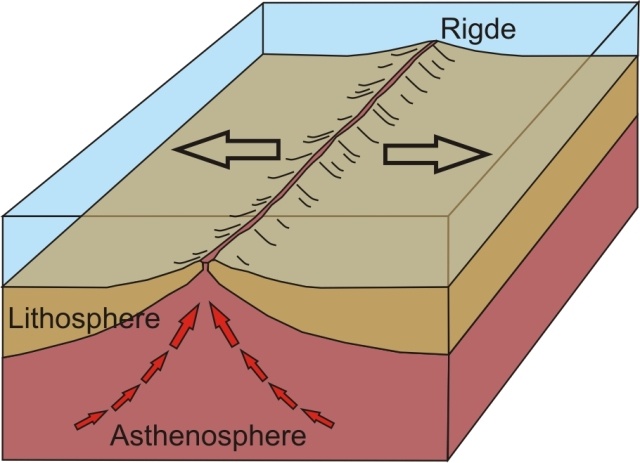
What kind of plate boundary is shown here?
a)
divergent
b)
convergent
c)
transform
d)
subducting
78.
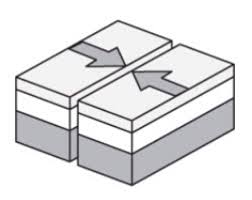
What kind of plate boundary is shown here?
a)
divergent
b)
convergent
c)
transform
d)
submergent
79.
Plate movement is caused by ______________.
a)
the rotation of the Earth
b)
ocean tides
c)
convection currents in the mantle
d)
the moon's gravity
80.
Which type of plate boundary is shown in the picture?
a)
Transform boundary
b)
Divergent boundary
c)
Convergent boundary
81.
What is the name of the layer that contains the uppermost mantle and crust
a)
Asthenosphere
b)
Mesosphere
c)
Lithosphere
82.
Name the boundary
a)
convergent boundary
b)
divergent boundary
c)
transform boundary
d)
sergent boundary
83.
What would you be most likely to find at a transform boundary?
a)
Earthquakes
b)
Volcanoes
c)
Mountains
d)
Rift
84.
The San Andrea's Fault in California is which type of boundary?
a)
Convergent
b)
Divergent
c)
Subductive Zone
d)
Transform
85.

This area contains over 70 percent of volcanoes and 90 percent of earthquakes in the world.

a)

North American plate

b)

Pacific Ring of fire

c)

Atlantic Ring of fire

d)

African convergent plate

86.
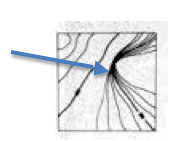
What feature is at the arrow?
a)
volcano
b)
mountain
c)
cliff
d)
river
87.
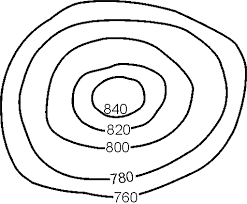
Determine the contour interval:
a)
5 m
b)
10 m
c)
15 m
d)
20 m
88.
What do contour lines that are farther apart represent?
a)
waterfall
b)
steep area
c)
gentle slope
d)
river
89.

How many mountain tops does this map have?

a)

one

b)

two

c)

three

d)

four

90.
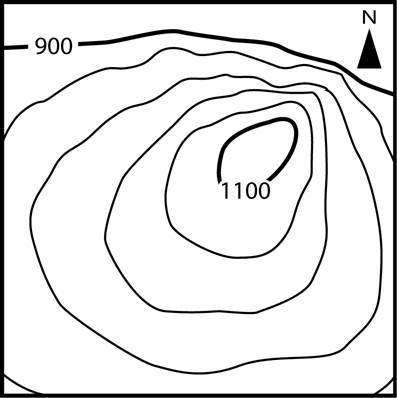
Provided is a topographic map of a hill with contour lines drawn showing elevation in meters.
The steepest slope on this hill can be found on the side that is facing which direction?
a)
Southwest
b)
Northeast
c)
Northwest
d)
Southeast
91.
Based on the map below, which location has a greater elevation, A or B?
a)
Location A is higher.
b)
Location B is higher.
c)
Locations A and B are at the same elevation.
d)
It is impossible to determine which location is higher.
92.
Which direction is the river flowing?
a)
north
b)
south
c)
east 
d)
west
93.
What is this symbol?
a)
mountain
b)
depression or sinkhole
c)
cave
d)
railroad central
94.

What does this image represent?

a)

mountain

b)

depression or sinkhole

c)

beaches

d)

island

95.
An area's height above sea level
a)
topography 
b)
relief
c)
elevation
d)
GIS
96.
This line is bold and darker and has the elevation indicated:
a)
contour lines
b)
index contour
c)
contour interval
d)
contour loops
97.
What is the elevation at sea level?
a)
0
b)
100m
c)
20m
d)
3000m
98.
What is the highest elevation on this map?
a)
Over 320 meters
b)
Over 450 meters
c)
Over 220 meters
d)
Over 380 meters
99.
Contour lines do not ever cross
a)
true
b)
false
c)
sometimes
d)
it depends on the situation
100.
What do the v-shaped contour lines represent?
a)
mountains
b)
steep areas
c)
gradual areas
d)
rivers
101.
The shape of the surface of an area and the elevations of land formations like mountains.
a)
road map
b)
topography
c)
geography
d)
physiology
102.
What are the curved lines on a topographic map called?
a)
contour lines
b)
contour intervals
c)
slope
d)
elevation
103.

Which fossil is a 3-D replica of the original shape of the organism?

a)

cast

b)

mold

c)

trace

d)

preserved remains

104.
Which fossil is an impression left by the original organism?
a)
cast
b)
mold
c)
trace
d)
preserved remains
105.
The Geologic Time Scale is a record of what?
a)
old geologists
b)
sweet geology music
c)
the known history of rocks and fossils
d)
a list of every living thing ever
106.
How old do Paleontologists believe the Earth is?
a)
2015 years old
b)
3.6 billion years old
c)
4.6 billion years old
d)
4.6 million years old
107.

According to the law of superposition, which layer is the oldest?

a)

A

b)

B

c)

C

108.
Identify the Era:
called the "Age of Mammals"
a)
Precambrian
b)
Paleozoic
c)
Mesozoic
d)
Cenozoic
109.
Identify the Era:
This era contains the Triassic, Jurassic, and Cretaceous Periods
a)
Precambrian
b)
Paleozoic
c)
Mesozoic
d)
Cenozoic
110.
Put this in order of smallest to largest time frame.
a)
Eon, Era, Periods, Epoch
b)
Periods, Epoch, Eon, Era,
c)
Epochs, Periods, Eras, Eons
d)
Eras, Periods, Epochs, Eons
111.
Which layer is a result of an igneous intrusion?
a)
B
b)
C
c)
D
d)
E
112.
The picture is an example of .......
a)
trace fossil.
b)
carbonization.
c)
original fossil.
d)
cast.
113.
Cambrian, Ordovician, Silurian, Devonian, Mississippian, Pennsylvanian, Permian, Triassic, Jurassic, Cretaceous, Tertiary, Quaternary all belong to:
a)
Periods
b)
Eons
c)
Epochs
d)
Eras
114.

Sediment can trap organisms remains inside. Rock, ice, tar, and amber are all capable of forming:

a)

Preserved remains

b)

Trace fossils

c)

Cast fossils

d)

Mold fossil

115.
Place the following in order starting with the OLDEST
1  Paleozoic
2  Cenozoic
3  Precambrian
4  Mesozoic
a)
1 3 2 4 
b)
3 1 4 2
c)
4 3 2 1 
d)
2 3 1 4
116.
Superposition means that in an undisturbed sequence of sedimentary rocks, which of the following is true?
a)
The oldest rocks are on top.
b)
The youngest rocks are in the middle.
c)
The youngest rocks are on the top.
d)
There is no way to know which layers are older.
117.
Which principle or law states that "the processes that shape the world today also operated in the past."
a)
Uniformitarianism
b)
Original Horizontality
c)
Lateral Continuity 
d)
Superposition 
118.

Which layer is the youngest?

a)

B

b)

C

c)

D

d)

E

119.

Which rock layer is the oldest?

a)

A

b)

B

c)

C

d)

D

120.
The age of a rock layer compared to the other rock layers around it is called
a)
Absolute Age
b)
Relative Age
c)
Comparative Age
d)
Layer Age
121.
Geologists use radioactive dating to determine THE ABSOLUTE AGE OF ROCKS.
a)
True
b)
False
122.
In "The Day the Mesozoic Died" why was it important that scientists found the clay layer in several different places in the world?
a)
It shows that what caused the gray clay layer was not an isolated event.
b)
It shows that there is  a lot of clay in the world.
c)
It shows that the Earth was covered in a shallow ocean
d)
all of these
123.
What were the dominant animals of the Mesozoic Era? 
a)
fish
b)
reptiles
c)
mammals
d)
bacteria
124.

Foraminifera were

a)

marine plankton species

b)

simple plants found in freshwater

c)

prehistoric snails

125.

What is called the thin layer of dark clay found around the world?

a)

Walter Alvarez Layer

b)

Italian layer

c)

K-T boundary

d)

Foraminifera's boundary

126.
The K-T boundary separates which two periods in Earth's history?
a)
Cretaceous and Tertiary
b)
Cretaceous and Jurassic
c)
Jurassic and Permian
d)
Carboniferous and Jurassic
127.
How old is the K-T boundary?
a)
65 MYA
b)
4.5 BYA
c)
2 MYA
d)
A long time ago
128.
What kind of plants resisted the catastrophic impact the best?
a)
Oaks
b)
Grass
c)
Ferns
d)
All of above
129.
What is the correct order of the rock layers from oldest to youngest?
a)
B, C, D, E, A
b)
A, B, C, D, E
c)
E, D, C, B, A
d)
B, C, D, A, E
130.
In rock layers, jellyfish fossils are found lower than trilobite fossils, and trilobite fossils are found lower than ammonite fossils. What can be determined from this information?
a)
Trilobites existed before jellyfish and ammonites.
b)
Jellyfish existed before trilobites and ammonites. 
c)
Ammonites existed before trilobites and jellyfish.
d)
Jellyfish, trilobites, and ammonites lived together.
131.

These fossils are distinguishable from other fossils because they were widespread geographically, had a short lifespan and were only found during very specific times in history.

a)

trace

b)

index

c)

permineralized

d)

mold and cast

132.

What evidence is there that a large asteroid hit Earth at the end of the Mesozoic? Check all that apply. (THREE)

a)

impact crater located near the Gulf of Mexico

b)

layer of ash and dust that dates back to 65 million years ago

c)

high levels of iridium in a rock layer from 65 million years ago

d)

shocked basalt

e)

red beds