
 Worksheets
Science Fusion: Les. 5.2 Moon Phases & Eclipses
Total questions: 49
Worksheet time: 49mins
Name
Class
Date
1.
What is the phase of the moon during a solar eclipse?
a)
Full Moon
b)
New Moon
c)
First Quarter
d)
A solar eclipse can happen any time
2.

Identify the moon phase
a)
Full Moon
b)
New Moon
c)
First Quarter
d)
Last Quarter
3.

Identify the moon phase
a)
Full Moon
b)
New Moon
c)
First Quarter
d)
Last Quarter
4.

Identify the moon phase
a)
Waning Crescent
b)
Waxing Gibbous
c)
First Quarter
d)
Last Quarter
5.

Identify the moon phase
a)
Waxing Crescent
b)
Waning Gibbous
c)
First Quarter
d)
Last Quarter
6.

Identify the moon phase
a)
Waxing Crescent
b)
Waning Gibbous
c)
Waning Crescent
d)
Last Quarter
7.

Identify the moon phase
a)
Waxing Crescent
b)
Waning Gibbous
c)
Waning Crescent
d)
Waxing Gibbous
8.

Identify the moon phase
a)
Waxing Crescent
b)
Waxing Gibbous
c)
Waning Gibbous
d)
Waning Crescent
9.

Identify the moon phase
a)
Waxing Crescent
b)
Waxing Gibbous
c)
Waning Gibbous
d)
Waning Crescent
10.

The Moon orbits Earth in a ________________ direction
a)
clockwise
b)
counterclockwise
c)
upwards
d)
downwards
11.
Define Waxing
a)
Moon is increasing and light part appears to be growing
b)
Completely illuminated
c)
dark side is facing earth
d)
Moon is decreasing and light part appears to be�shrinking
12.

Name the moon phase
a)
Waxing Gibbous
b)
Waxing Crescent
c)
Waning Crescent
d)
Waning Gibbous
13.

Name the moon phase
a)
Waning Crescent
b)
Waxing Crescent
c)
Waning Gibbous
d)
Waxing Gibbous
14.

Which type of eclipse is shown in this picture?
a)
Solar Eclipse
b)
Orbit
c)
Lunar Eclipse
d)
Total Eclipse
15.

Which type of eclipse is shown in the diagram?
a)
Solar Eclipse
b)
Lunar Eclipse
c)
Total Eclipse
d)
Partial Eclipse
16.

What is this moon?
a)
Full Moon
b)
Waxing Gibbous
c)
First Quarter Moon
d)
Waxing Crescent
17.

The moon phase shown above
a)
new moon
b)
waxing gibbous
c)
waning crescent
d)
3rd quarter
18.

The moon phase shown above
a)
waxing gibbous
b)
waning gibbous
c)
waxing crescent
d)
waning crescent
19.

The moon phase shown above
a)
waning crescent
b)
full moon
c)
1st quarter
d)
3rd quarter
20.

The moon phase shown above
a)
new moon
b)
waning gibbous
c)
waxing crescent
d)
waxing gibbous
21.

The moon phase shown above
a)
3rd quarter
b)
waning crescent
c)
1st quarter
d)
full moon
22.

The moon phase shown above
a)
waning gibbous
b)
waning crescent
c)
waxing crescent
d)
1st quarter
23.
One rotation of Earth is equal to
a)
a day.
b)
a year.
24.
What is Earth's annual motion around the sun called?
a)
Rotation
b)
Revolution
25.
The Northern Hemisphere gets __________ sunlight in the winter, which leads to _________ temperatures.
a)
less direct, hotter
b)
less direct, colder
c)
more direct, hotter
d)
more direct, colder
26.
What are the reasons for the seasons?
a)
Earth's tilt and rotation.
b)
Earth's rotation and revolution.
c)
Earth's tilt and revolution.
d)
Earth's tilt and resolution
27.

Based on the image, B is called ____.
a)
New Moon
b)
Waxing gibbous
c)
Waning crescent
d)
Waxing crescent
28.

Based on the image, H is called ____.
a)
New Moon
b)
Waxing gibbous
c)
Waning crescent
d)
Waxing crescent
29.

Based on the image, G is called ____.
a)
New Moon
b)
Full moon
c)
Waning quarter
d)
Waxing quarter
30.

Based on the image, C is called ____.
a)
New Moon
b)
Full moon
c)
Waning quarter
d)
Waxing quarter
31.

Approximately how much time passes between the new moon and full moon?
a)
one month
b)
two weeks
c)
3 days
d)
24 hours
32.

Name the moon phase that would come AFTER this moon.
a)
waning crescent
b)
waxing crescent
c)
waning gibbous
d)
waxing gibbous
33.

What phase comes BEFORE this one?
a)
Waxing Crescent
b)
Waxing Gibbous
c)
Waning Gibbous
d)
Waning Crescent
34.

What phase comes BEFORE this one?
a)
Full Moon
b)
Third Quarter
c)
New Moon
d)
First Quarter
35.
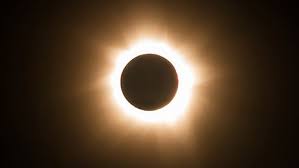
During a solar eclipse...
a)
The sun is blocked by the moon
b)
The Earth is blocked moon
c)
The moon is blocked by the sun
d)
You are blocked
36.
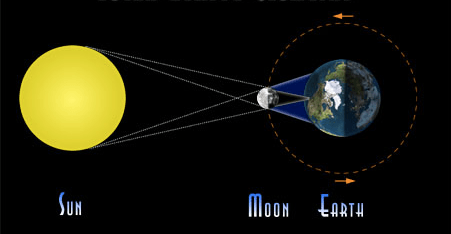
Which type of eclipse is shown in this picture?
a)
Solar Eclipse
b)
Orbit
c)
Lunar Eclipse
d)
Total Eclipse
37.
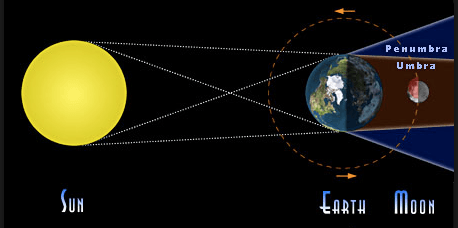
Which type of eclipse is shown in the diagram?
a)
Solar Eclipse
b)
Lunar Eclipse
c)
Total Eclipse
d)
Partial Eclipse
38.
How long does it take for our moon to complete a full revolution & rotation around the Earth?
a)
365 Days
b)
90 Days
c)
30 days
d)
7 days
39.
What shape is the path of the moon & Earth following in the path of their revolutions? The Moon around the Earth & the Earth around the Sun?
a)
Rectangle
b)
Circular
c)
Triange
d)
elliptical
40.
Phases of the Moon depend on how much _____.
a)
distance is between Earth and the Moon
b)
of the lighted side of the Moon faces Earth
c)
shadow Earth makes on the Moon
d)
shadow the Moon makes on Earth
41.

What causes Day and Night on Earth?
a)
The rotation of the Earth
b)
Earth moving farther from and closer to the Sun
c)
The Revolution of Earth
d)
The Sun moving around Earth
42.
Eclipse that occurs during a full moon.
a)
Lunar
b)
Solar
43.
Eclipse that occurs during a New Moon.
a)
Lunar
b)
Solar
44.
What is the order during a solar eclipse
a)
sun, moon, earth
b)
sun, earth, moon
45.

We do NOT have a solar or lunar eclipse each month because...
a)
The tilt of the moon's orbit is at 5 degrees
b)
The moon is too small
c)
The moon's orbital distance changes
d)
All choices
46.
the lighter outer portion of the shadow or partial shadow of the earth.
a)
Umbra
b)
Penumbra
c)
Solar Eclipse
d)
Lunar Eclipse
47.
The dark inner portion of the shadow cone or full shadow of the earth.
a)
Umbra
b)
Penumbra
c)
Solar Eclipse
d)
Lunar Eclipse
48.
Occur when the Moon does not fully move into the Umbra
a)
Total Lunar Eclipse
b)
Partial Lunar Eclipse
c)
Penumbral Lunar Eclipse
d)
Annular Eclipse
49.
What part of the Sun is visible during a total eclipse?
a)
Chromosphere
b)
Corona
c)
Prominences
d)
Sunspots
100 %

