
NEW
Font size
S
M
L
XL
 Worksheets
Earth review for final part 1
Total questions: 38
Worksheet time: 26mins
Name
Class
Date
1.

A river starts very small before getting larger. What is the name given to a small river that joins a larger river?
a)
Confluence
b)
Tribunal
c)
Tributary
d)
Joiner
2.

The start of a river is called the what?
a)
River summit
b)
River source
c)
River start
d)
River mouth
3.
The area that contains a river system is called a what?
a)
Drain Bassoon
b)
Drainage Basinet
c)
Drainage Basin
d)
Drain Basalt
4.
The high ground around a river where rain seldom falls is called the ...
a)
Mountains
b)
Watershed
c)
Drainage Basin
d)
Valley
5.

Deposition is when ...
a)
Objects are moved along the river.
b)
Objects are dropped along the river.
c)
Objects are suspended in the water.
d)
Objects are move into the ocean.
6.

Deposition means that you will find what near the river mouth?
a)
Large Rocks
b)
Small Rocks
c)
Sand and small particles
d)
Silt
7.

A meander is best described as ...
a)
A straight section of the river.
b)
A winding section of a lake.
c)
A section of the river that joins another river.
d)
A winding section of a river.
8.
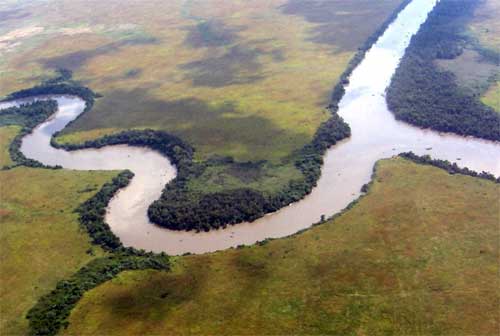
The section where a smaller river joins a larger river is called a ...
a)
Tributary
b)
Congruence
c)
Confluence
d)
Convergence
9.

When the bends of a Meander get close enough they can join, creating a new river path. What is left is called ...
a)
An oxback lake
b)
An oxen lake
c)
An oxcart lake
d)
An oxbow lake
10.

The point where the river meets an ocean or lake is called the ...
a)
River Source
b)
River Mouth
c)
River Head
d)
River Section
11.
The water cycle includes ...
a)
Evaporation, Condensation, Transportation, Precipitation.
b)
Evaporation, Condensation, Transpiration, Precipitation.
c)
Evaporation, Erosion, Transpiration, Precipitation.
d)
Evaporation, Erosion, Transportation, Precipitation.
12.
What is the name of the area of groundwater where it is saturated?
a)
Zone of Saturation
b)
Zone of Aeration
c)
Water Table
13.
What is the area underground where there is not any water?
a)
Zone of Saturation
b)
Zone of Aeration
c)
Water
14.
The name of the area that is the upper level of the zone of saturation:
a)
Zone of Saturation
b)
Zone of Aeration
c)
Water Table
15.
When water soaks the ground it becomes groundwater through what process?
a)
Runoff
b)
Infiltration
c)
Transpiration
16.
The amount of space between soil is:
a)
Porosity
b)
Permeability
17.
The ability of a liquid to flow through a substance is:
a)
Porosity
b)
Permeability
18.
What is a hole dug below the water table that water seeps into?
a)
Well
b)
Spring
c)
Aquifer
d)
Reservoir
19.
What is an underground layer of rock or soil filled with water called?
a)
Aquifer
b)
Spring
c)
Well
d)
Reservoir
20.
What are sources of water pollution?
a)
Precipitation as Acid rain
b)
Runoff water & Groundwater
c)
Industry & Household waste
d)
All of these
21.
What do we call water that flows over the ground surface rather than soaking in?
a)
runoff
b)
discharge
c)
recharge
d)
tributary
22.
What mechanism controls the flow of water in runoff?
a)
gravity
b)
temperature
c)
permeability
d)
porosity
23.
An aquifer is a(n)
a)
well in which water rises because of pressure
b)
underground layer of rock or sediment that holds water
c)
type of hot spring from which the water periodically erupts
d)
place where groundwater bubbles or flows out of cracks in the rock
24.
Which of the following has the lowest porosity?
a)
Clay
b)
Silt
c)
Gravel
d)
Sand
25.
A sponge has high porosity. A rock can have it too. Porosity is...
a)
the inability to hold water
b)
the ability to hold water
c)
allowing water to pass through
26.
This force causes the movement of glaciers
a)
pressure
b)
ice age
c)
gravity
d)
firn
27.
An alpine/valley glacier generally forms in mountainous areas
a)
true
b)
false
28.
Continental glaciers...
a)
cover millions of square miles
b)
do not cover an entire land mass
c)
carve out cirques and arretes
d)
are responsible for U-shaped valleys
29.
What is a bowl-shaped depression formed by glacial erosion?
a)
cirque
b)
arrete
c)
ice pack
d)
kettle
30.
A sharp, jagged ridge formed by a glacier is called a(n)...
a)
arrete
b)
cirque
c)
erratic
d)
drumlin
31.
What feature forms when a glacier reaches the ocean and a portion breaks off through a process called calving?
a)
an iceberg
b)
a marine glacier
c)
an alpine glacier
d)
an ice sheet
32.
a sharp, pyramid shaped peak formed by glacial erosion
a)
horn
b)
arete
c)
moraine
d)
kettle
33.
What is an enormous mass of ice moving over land?
a)
glacier
b)
iceberg
c)
ice wedging
d)
dune
34.

When a glacier retreats and large, partially buried, ice chunks are left behind to melt, these are formed:
a)
Moraine
b)
Prairie pothole
c)
Kettle Lake
d)
Fjord
35.
Poorly graded (unsorted) rock material deposited directly by a glacier.
a)
glacial drift
b)
stratified drift
c)
till
d)
glacier
36.
Glaciers form when _____.
a)
less snow falls than melts
b)
more snow falls than melts
c)
less rain falls than freezes
d)
more rain falls than freezes
37.
What type of glacier forms over large, flat, land masses and is shaped like a dome?
a)
an iceburg
b)
a crevasse
c)
a continental glacier
d)
an alpine glacier
38.
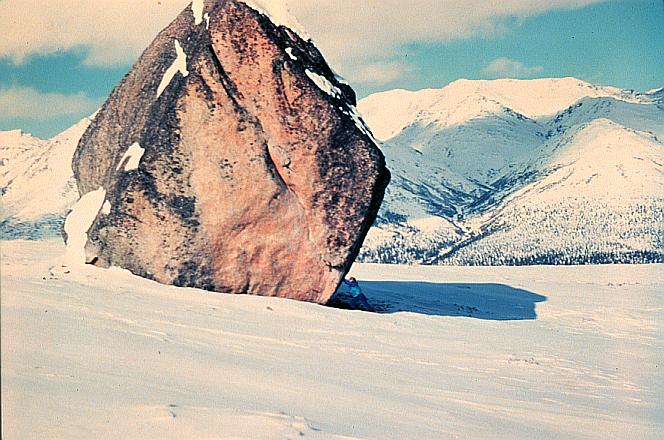
_____ are enormous boulders transported and deposited by glaciers, often far from their source region.
a)
Till
b)
Erratics
c)
Moraines
d)
Fjords
Reset

