
 Worksheets
Final Review
Total questions: 75
Worksheet time: 2hrs 6mins
Name
Class
Date
1.
What is the definition of CONDUCTION?
a)
When heat is transferred from objects like rays of light or electromagnetically.
b)
a hot liquid or air that expands, becomes less dense, and rises or becomes more dense, and sinks.
c)
When heat transfers from objects that are touching.
d)
When heat transfers through the heater or AC in your house.
2.
What is the definition of CONVECTION
a)
When heat transfers through waves.
b)
When heat transfers from objects that are touching.
c)
a hot liquid or air that expands, becomes less dense, and rises or becomes more dense, and sinks.
d)
Heat traveling from the sun
3.
What kind of heat transfer happens when the sun is heating your body?
a)
Conduction
b)
Radiation
c)
Convection
d)
Density
4.
Which of the following is an example of convection?
a)
A hair dryer is drying up your hair.
b)
When the AC or heater changes the temperature.
c)
When a car engine turns hot after being turned on.
d)
When you are making soup and the water is rising and lowering.
5.
What heat transfer happens when you burn your hand by touching a fire?
a)
Radiation
b)
Conduction
c)
Convectio
d)
I don't know!!!!!!!!!!!
6.
Which of the following is needed for convection to happen?
a)
Fluid/s
b)
Light in the form or rays
c)
Electromagnetic waves
d)
Fire
7.
When a pot is touching a stove that is on, what heat transfer is happening?
a)
I don't know??????
b)
Radiation
c)
Conduction
d)
Convection
8.

The way the heat is moving from the hot coffee is called...
a)
convection
b)
radiation
c)
insulation
d)
conduction
9.
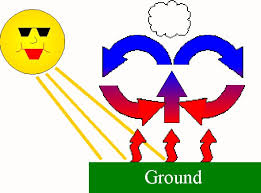
Warm air rises and the cool air sinks demonstrates this type of heat transfer.
a)
conduction
b)
convection
c)
radiation
d)
Insolation
10.

The baby chickens are kept warm from the heat lamps demonstrates this type of heat transfer.
a)
conduction
b)
convection
c)
radiation
11.
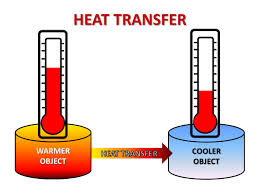
Heat transfers from an area of ____temperature to an area of ___ temperature.
a)
high to low
b)
low to high
c)
high to high
d)
It can travel high to low and low to high.
12.
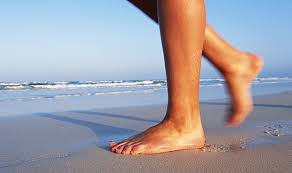
Walking on the warm sand sand with your bare feet demonstrates this type of heat transfer.
a)
conduction
b)
convection
c)
radiation
13.

The Gulf Stream is a current that brings warm ocean water from the south to the north. What type of heat transfer is this?
a)
conduction
b)
convection
c)
radiation
d)
Insolation
14.
Ironing a shirt is an example of...
a)
condensation
b)
conduction
c)
convection
d)
radiation
15.
Warm air is __________ dense than cold air and rises creating convection currents.
a)
more
b)
less
16.

Johnny accidentally grabbed the handle of the hot pot.
a)
conduction
b)
convection
c)
radiation
17.

A group of friends gather around a fire to stay warm.
a)
conduction
b)
convection
c)
radiation
18.
Transfer of thermal energy through "space"
a)
conduction
b)
convection
c)
radiation
19.
Transfer of thermal energy through "flow"
a)
conduction
b)
convection
c)
radiation
20.
Transfer of thermal energy through "touch"
a)
conduction
b)
convection
c)
radiation
21.
Near the ceiling of a room the air is warmer. The warm air rises because of
a)
conduction
b)
convection
c)
radiation
22.
A huge rock at the state park gets so hot during the day because of
a)
conduction
b)
convection
c)
radiation
23.
You get sunburned due to __________ from the sun.
a)
conduction
b)
convection
c)
radiation
24.
A chair is placed several feet from a fireplace. The fireplace has a glass screen. The side of the chair facing the fireplace gets warm because of
a)
conduction
b)
convection
c)
radiation
25.
The cause of weather systems on earth is
a)
conduction
b)
convection
c)
radiation
26.

Which layer of Earth is located above the outer core?
a)
crust
b)
inner core
c)
mantle
d)
lithosphere
27.
Which of these two layers is a solid?
a)
innercore
b)
Outercore
28.
What is the top layer of the Earth's surface called?
a)
Mantle
b)
Innercore
c)
Outercore
d)
Crust
29.
A dense ball of solid iron and nickel.
a)
crust
b)
inner core
c)
mantle
d)
outer core
30.
Which best describes the asthenosphere?
a)
molten metal
b)
dense, solid metal ball
c)
solid that flows
d)
dry land and ocean floor
31.
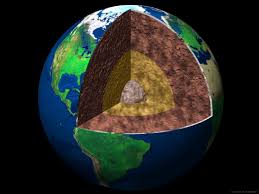
Which layer of Earth is located above the outer core?
a)
crust
b)
inner core
c)
mantle
d)
lithosphere
32.
Which layer of the earth is rock made mostly of iron?
a)
Lithosphere
b)
Core
c)
Asthenosphere
d)
Mantle
33.
What part of the earth is a layer of rock that comprises 67% of Earth’s mass?
a)
mesosphere
b)
mantle
c)
asthenosphere
d)
lithosphere
34.
What is the rigid layer of the Earth's surface made up of the crust and upper mantle called?
a)
asthenosphere
b)
lithosphere
c)
mesosphere
d)
continental crust
35.
Is the outer core a liquid or solid?
a)
liquid
b)
solid
36.
A battery converts ________ energy into electrical energy for human use.
a)
chemical
b)
kinetic
c)
sound
d)
light
37.

What is the sequence of the energy transformations represented in this diagram of a moving car?
a)
mechanical to chemical to radiant
b)
radiant to chemical to electrical
c)
mechanical to electrical to radiant
d)
radiant to electrical to mechanical
38.

What type of energy is provided in this picture?
a)
solar energy
b)
heat energy
c)
light energy
d)
all of these answers
39.

Which of the pictures involves kinetic mechanical energy that is converted into electrical energy?
a)
A
b)
B
c)
C
d)
D
40.
What type of heat transfer occurs when heat energy travels from the SUN to the EARTH?
a)
radiation
b)
convection
c)
conduction
d)
boiling
41.

Which of the pictures changes chemical energy into light (and thermal) energy?
a)
A
b)
B
c)
C
d)
D
42.

Which of the pictures converts solar energy into electrical energy?
a)
A
b)
B
c)
C
d)
D
43.

Which of the pictures demonstrates a transformation from electrical to light(and thermal) energy ?
a)
A
b)
B
c)
C
d)
D
44.

Conduction, Convection, or Radiation??
Heat from the sun
Heat from the sun
a)
Conduction
b)
Convection
c)
Radiation
45.

Conduction, Convection, or Radiation??
water boiling
water boiling
a)
Conduction
b)
Convection
c)
Radiation
46.

The picture shows a microwave oven. As the microwave oven operates, the electrical energy is transformed into all of the following EXCEPT
a)
solar
b)
light
c)
thermal
d)
mechanical
47.

The picture shows a light bulb attached to a hand generator. What energy transformation occurs as the handle of the generator is turned?
a)
thermal to solar to light
b)
solar to light to electrical
c)
mechanical to electrical to light
d)
electrical to mechanical to light
48.
Scientists observed a rocky, rotating object orbiting in space. It was 250 km wide and it was located several times farther away from the Sun than the Earth. The object was probably-
a)
an asteroid
b)
the moon
c)
Mars
d)
Venus
49.
Which of the following represents characteristics of the four planets farthest from the Sun?
a)
smaller planets
b)
3 or less moons
c)
gas giants
d)
rocky planets
50.
What planet was Galileo observing when he discovered the Galilean moons?
a)
Jupiter
b)
Neptune
c)
Saturn
d)
Uranus
51.
The Moon travels in an elliptical orbit that is nearly circular around the Earth. Which of the following best explains the cause of the Moon's motion?
a)
The Moon is affected by the unbalanced force of Earth's gravity which cause it to maintain its orbit
b)
The Moon is acted on by unbalanced forces
c)
The gravitational forces from the Sun and Earth on the Moon are equal
d)
There was a gravitational force millions of years ago that pulled the Moon in an elliptical direction and it hasn't been acted on by a force since then
52.
Which planet has the greatest gravitational force?
a)
Venus
b)
Mercury
c)
Earth
d)
Jupiter
53.
Which statement accurately describes the movement of objects in our solar system?
a)
The Sun revolves around the planets, and moons rotate around planets
b)
The planets revolve around the Sun, and the moons revolve around the planets
c)
The moons rotate around planets, and planets revolve around the Sun
d)
The planets rotate around the Sun, and moons revolve around the planets
54.
Why does it take Neptune so long to revolve around the Sun?
a)
Neptune's large diameter is causing it to slow down
b)
The Sun is applying large amounts of gravity on it, so it's slowing down
c)
Neptune is rotating so fast that it's energy is being transferred into rotational speed
d)
Neptune is such a long distance away that it has a large orbital path
55.
Mars is very similar to Earth. Which is a statement that describes a property of Earth, but NOT a property of Mars?
a)
One or more moons orbit the planet
b)
The planet is constantly in motion
c)
The orbital path is predictable
d)
An abundance of liquid water is located on the planet
56.
Which of the following accurately describes the orbital path of most planets in our solar system?
a)
The orbital path is in a large elliptical shape
b)
The orbital path is in a perfect circle
c)
The orbital path varies greatly from planet to planet
d)
The orbital path is an ellipse, but looks almost circular
57.
Which of the following represents characteristics of the four planets closest to the Sun?
a)
Gas giants
b)
Larger planets
c)
Rocky planets
d)
4 or more moons
58.
Identify the planet on the chart that would most likely be the coldest.
a)
Uranus
b)
Saturn
c)
Jupiter
d)
Mars
59.
What is speed?
a)
how far you go
b)
how much distance is covered over a period of time
c)
how fast you accelerate
d)
the change in the location of a object
60.
What is the formula to calculate speed?
a)
Speed = time/distance
b)
Speed = distance/time
c)
Speed = distance x time
d)
Speed = time x distance
61.
A runner races in the 100 meter dash. It takes her 10 seconds to finish. What is her average speed?
a)
10 m/s
b)
1000 m/s
c)
100 seconds
d)
10 seconds
62.

What is the average speed of the person during the first 5 seconds?
a)
0 m/s
b)
1 m/s
c)
3 m/s
d)
6 m/s
63.

At 60 seconds, how far had this object traveled?
a)
0 m
b)
10 m
c)
20 m
d)
40 m
64.
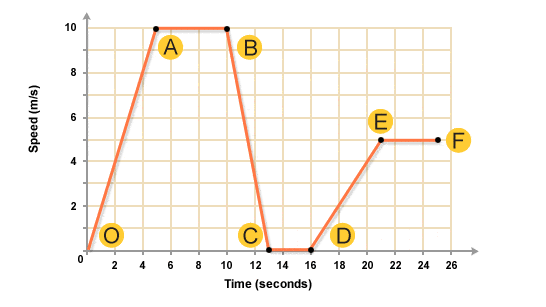
What is happening in this graph from point B to C?
a)
The object is going down a hill.
b)
The object is returning to its starting location.
c)
The object is slowing down.
d)
The object is staying still.
65.
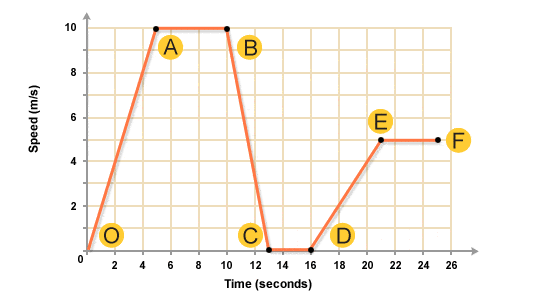
What is happening in this graph from point A to B?
a)
The object is accelerating.
b)
The object is not moving.
c)
The object is decelerating.
d)
The object is moving at a constant speed.
66.

What does this graph represent?
a)
Constant speed
b)
Acceleration
c)
Not moving
67.

What does this graph represent?
a)
Constant Speed
b)
Acceleration
c)
Not moving
68.

Which runner won the race?
a)
A
b)
B
c)
C
69.
Determined by how the mineral breaks (cleavage or fracture)
a)
breakage
b)
hardness
c)
luster
d)
streak
70.
Color of a mineral in powdered form.
a)
hardness
b)
streak
c)
breakage
d)
density
71.
A shiny material is described as having a __________________ luster
a)
metallic
b)
nonmetallic
72.
Magma forms Igneous rock. What process occurs between the two?
a)
heating and melting
b)
cooling and hardening
73.
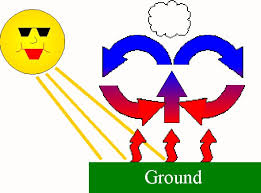
Warm air rises and the cool air sinks.
a)
conduction
b)
convection
c)
radiation
74.
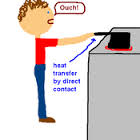
Johnny accidentally grabbed the handle of the hot pot.
a)
conduction
b)
convection
c)
radiation
75.

The warm air from this heater creates a current when the warm air rises and the cold air sinks.
a)
conduction
b)
convection
c)
radiation
100 %

