
 Worksheets
8th grade final exam
Total questions: 176
Worksheet time: 3hrs 14mins
Name
Class
Date
1.

The study of interactions in an ecosystem.
a)
ecology
b)
philosophy
c)
scientology
d)
biology
2.

A species that is in danger of becoming extinct.
a)
Threatened species
b)
out of luck
c)
do do birds
d)
endangered species
3.

A labeled diagram of a fiddler crab is provided. Which of the following is an accurate observation of the structures of a fiddler crab? Fiddler crabs have -
a)
five pairs of walking legs on each side.
b)
an enlarged propodus on both front legs.
c)
a pair of eyes on stalks at the top of the body.
d)
two pairs or chelipeds for a total of four.
4.
Over the winter break last year, there was an extreme blizzard in Lubbock, Texas. This blizzard was caused by a major drop in temperature, causing precipitation to freeze into snow. If a Texan were to step outside during this blizzard, their skin would start to form goose bumps and they would begin to shiver. In this situation, what is the stimulus and the response?
a)
Stimulus: precipitation is in the air; response: precipitation freezes
b)
Stimulus: Texan steps outside in the cold; response: blizzard occurs
c)
Stimulus: cold drop in temperature; response: shivering and goose bumps
d)
Stimulus: winter break started; response: precipitation starts
5.
Which of the following do all living things need to survive?
a)
oxygen
b)
water
c)
sunlight
d)
carbon dioxide
6.
Why do scientists organize living things into groups?
a)
so they can find them in the wild more easily
b)
so they can make sense of the variety of rocks on Earth
c)
so that the organisms are easier to study
d)
so products from living things can be easily found in groceries
7.
Combustion is another word for _______________.
a)
a train
b)
a bus
c)
a dog
d)
burning
8.

In the carbon cycle, producers take in the gas __
a)
carbon dioxide
b)
oxygen
c)
nitrogen
d)
carbon monoxide
9.
oxygen is a gas produced by _ and used by _
a)
plants and animals
b)
photosynthesis and carbon dioxide
c)
animals and plants
d)
carbon dioxide and photosynthesis
10.
If the plant population decreased, the amount of carbon would _________.
a)
Stay the same
b)
Increase
c)
Decrease
11.
The gas that is most abundant in the atmosphere is
a)
oxygen
b)
nitrogen
c)
carbon dioxide
d)
argon
12.
The Earth acts like a greenhouse that catches and traps heat from the sun.
a)
true
b)
false
13.
This traps heat and absorbs gases (carbon dioxide, methane..) and keeps the earth warm. Allowing heat to go back into space prevents Earth from becoming too warm
a)
Ozone Layer
b)
The Greenhouse Effect
c)
Greenhouse Gases
d)
Mesosphere
14.
What happens to the temperature if more greenhouse gases are released into the atmosphere?
a)
Temperature goes up
b)
Temperature goes down
15.
Where can the oldest layer be found?
a)
The top layer
b)
The middle layer
c)
They are all the same age
d)
The bottom layer
16.
In what kind of rock can fossils be found?
a)
Sedimentary Rocks
b)
Igneous Rocks
c)
Metamorphic Rocks
d)
Granite
17.
How are fossils created?
a)
Traces of organisms get turned into stone.
b)
Dead organisms are quickly buried for millions of years.
c)
Animals get trapped.
d)
All of the above
18.
Where does most of earth`s energy come from?
a)
The sun
b)
Mars
c)
Wind
d)
Water
19.
Which renewable resource gets its direct energy from the sun?
a)
Geothermal
b)
Solar
c)
Wind
d)
Hydrogen
20.
Energy we get from earth's interior heat
a)
Geothermal
b)
Solar Energy
c)
Wind Energy
d)
Hydroelectricity
21.
If you traveled from the center of Earth to the surface, the pressure would...
a)
increase
b)
decrease
c)
stay the same
d)
unsure
22.
True or False:
The Earth's thin shell of hard rock is called the crust.
The Earth's thin shell of hard rock is called the crust.
a)
True
b)
False
23.

Which layer is made up of iron and nickel?
a)
Crust
b)
Mantle
c)
Inner Core
d)
Lithosphere
24.
If we compare the temperature and pressure of the Earth’s mantle to the core, what differences can we expect as we move downward into the Earth?
a)
Both the temperature and pressure increase.
b)
Both the temperature and pressure decrease.
c)
The temperature increases and the pressure decrease.
d)
The temperature decreases and the pressure increases.
25.

Identify each layer - #15.
a)
Lithosphere
b)
Mantle
c)
Crust
d)
Asthenosphere
26.

Identify each layer - #19.
a)
mantle
b)
lithosphere
c)
inner core
d)
outer core
27.

Identify each layer - #20.
a)
mantle
b)
asthenosphere
c)
inner core
d)
outer core
28.
True or False: The Earth's crust is thick melted rock
a)
True
b)
False
29.
True or False: The Earth's crust is made of rock
a)
True
b)
False
30.
Scientists determine what Earth’s interior looks like by using:
a)
Volcanoes
b)
Seismic Waves
c)
Continental Drift
d)
Convection Currents
31.
What is the shaking of the Earth’s crust caused by a release of energy?
a)
Earthquake
b)
Epicenter
c)
Fault
d)
Plate
32.
Which of the following is NOT a cause of an earthquake?
a)
Collapse of Cavern
b)
Eruption of Volcano
c)
Lightning Strikes
d)
Moving Tectonic Plates
33.
What is a break in the lithosphere along which movement in an earthquake has first occurred?
a)
Earthquake
b)
Epicenter
c)
Fault
d)
Focus
34.
Where is the point at which the first movement occurs during an earthquake?
a)
Epicenter
b)
Focus
c)
Fault
d)
Plate
35.
Where is the point on the Earth’s surface directly above the focus of an earthquake?
a)
Epicenter
b)
Fault
c)
Hypocenter
d)
Tremor
36.
Which type of wave is the first to arrive after an earthquake occurs?
a)
P Wave
b)
Rayleigh Wave
c)
S Wave
d)
Shear Wave
37.
Which body wave squeezes and stretches rock materials as they pass through the Earth?
a)
Body Waves
b)
P Waves
c)
S Waves
d)
Surface Waves
38.
What is another term for P Wave?
a)
Compression Wave
b)
Principal Wave
c)
Shear Wave
d)
Secondary Wave
39.
What is an instrument that detects and records waves produced by earthquakes? (This piece of equipment can measure the magnitude of an earthquake.)
a)
Epicenter
b)
Fault
c)
Seismogram
d)
Seismograph
40.
Which scale rates earthquakes based on the amount of damage done?
a)
Mercalli Scale
b)
Richter Scale
c)
Seismogram Scale
d)
Bernoulli Scale
41.
What is the temporary state in which loose soil and rock materials take on the property of a liquid?
a)
Aftershock
b)
Liquefaction
c)
Seismic Gap
d)
Tsunami
42.
Which scale measures the intensity of the ground movement?
a)
Mercalli Scale
b)
Richter Scale
c)
Seismogram Scale
d)
Bernoulli Scale
43.
S Waves can move through which of the following?
a)
Gas
b)
Liquid
c)
Solid
d)
All of these
44.
What is a smaller earthquake that follows a larger earthquake?
a)
Aftershock
b)
Liquefaction
c)
Seismic Gap
d)
Tsunami
45.
What is a large ocean wave that results from an underwater earthquake, landslide, or volcanic eruption?
a)
Aftershock
b)
Liquefaction
c)
Seismic Gap
d)
Tsunami
46.
What is the opening in Earth's crust through which molten rock, gases, and ash erupt?
a)
Divergent Boundary
b)
Magma
c)
Subduction Boundary
d)
Volcano
47.
What is molten rock that has formed deep within the Earth?
a)
Hot Spot
b)
Magma
c)
Lava
d)
Volcano
48.
Why does magma tend to rise to the surface?
a)
It has large amounts of silica.
b)
It contains very little silica.
c)
It is denser than the surrounding material.
d)
It is less dense than the surrounding material.
49.
The volcanoes on the Hawaiian Islands form due to which of the following?
a)
Divergent Boundary
b)
Hot Spot
c)
Subduction Boundary
d)
Transform Boundary
50.
What is the principal ingredient to all types of magma?
a)
Iron
b)
Magnesium
c)
Silica
d)
Water
51.
What type of lava cools quickly and forms rock with jagged edges?
a)
Aa
b)
Magma
c)
Pahoehoe
d)
Pillow Lava
52.
What type of lava cools slowly and forms rock with smooth, ropelike features?
a)
Aa
b)
Magma
c)
Pahoehoe
d)
Pillow Lava
53.
What are solid rock fragments that are ejected during a volcanic eruption?
a)
Lahar
b)
Magma
c)
Pyroclastic Material
d)
Silica
54.
What type of volcano has steep slopes made of alternating layers of ash and silica rich lava?
a)
Caldera
b)
Cinder Cone
c)
Composite Volcano
d)
Shield Volcano
55.
Where are most volcanoes found?
a)
Southern Hemisphere
b)
Ring of Fire
c)
Mid-Atlantic Ridge
d)
Hot Spots
56.
What is molten rock that has reached the Earth's surface?
a)
Aa
b)
Lava
c)
Magma
d)
Pahoehoe
57.
What is molten rock that has reached the Earth's surface?
a)
Aa
b)
Lava
c)
Magma
d)
Pahoehoe
58.
What do you call a large crater formed by the collapse of a volcano?
a)
Caldera
b)
Cinder Cone
c)
Composite Volcano
d)
Shield Volcano
59.
Where do volcanoes come from?
a)
Places where plates move apart
b)
Places where plates are moving together
c)
Hot Spots
d)
All of these options
60.
What factor(s) determine(s) whether an eruption will be explosive?
a)
The amount of gases in the magma
b)
The amount of silica in the magma
c)
The amount of gas and silica in the magma
d)
None of these affect the explosiveness of the volcano
61.
Which type of plate boundary would cause mountains to form?
a)
Transform
b)
Convergent
c)
Divergent
d)
Reform
62.
The Great Rift Valley in Africa and the Mid-Ocean Ridge were all created by this boundary
a)
Divergent
b)
Convergent
c)
Reform
d)
Transform
63.
Which layer has convection currents?
a)
Inner Core
b)
Outer Core
c)
Mantle
d)
Crust
64.
subduction zones in the ocean can create which features?
a)
islands
b)
volcanoes
c)
earthquakes
d)
all of the above
65.
When one plate sides under neath another, it _________ and the magma _________.
a)
hardens, sinks
b)
melts, sinks
c)
hardens, rises
d)
melts, rises
66.
Transform boundaries are most likely to produce what phenomenon?
a)
volcanoes
b)
deep sea trenches
c)
underwater mountain ranges
d)
earthquakes
67.
When an oceanic plate and a continental plate collide, which one will subduct?
a)
oceanic
b)
continental
c)
neither
68.
Which of the following is NOT a tectonic boundary?
a)
Convergent
b)
Divergent
c)
Sedergent
d)
Transform
69.

What is this image...
a)
Revolving boundary
b)
San Andreas (Transform)
c)
Convergent
70.
The area where two tectonic plates meet.
a)
mantle
b)
focus
c)
plate boundary
d)
convection
71.
About how many days does it take to moon to go through a complete cycle?
a)
7 days
b)
365 days
c)
29 days
d)
20 days
72.

When the visible (lit) portion of the moon is increasing, the moon is:
a)
waning
b)
full
c)
waxing
d)
new
73.

When the Earth is between the moon and sun, it is most likely a:
a)
new moon
b)
full moon
c)
waxing crescent
d)
waxing gibbous
74.
What causes the moon's phases
a)
Where you are standing on Earth
b)
the amt of sunlight reflected onto the moon from the sun
c)
The tilt of Earth
d)
how fast the moon is moving
75.
Why do we always see the same side of the moon from Earth?
a)
because the phases change
b)
because it rotates and revolves at the same rate
c)
because half of the moon always receives sunlight
d)
The moon changes positions
76.
Mrs. Smith says "the moon looks larger than the stars!" What explains this?
a)
The moons soaks up the star's light
b)
The moon is larger than Earth
c)
The moon is larger than stars
d)
the moon is closer to Earth than stars
77.
Define Waxing
a)
Moon is increasing and light part appears to be growing
b)
Completely illuminated
c)
dark side is facing earth
d)
Moon is decreasing and light part appears to be shrinking
78.
Define Gibbous
a)
Less than half of moon visible
b)
More than half of moon visible
c)
All of moon visible
d)
None of moon visible
79.

Name the moon phase
a)
Waxing Gibbous
b)
Waxing Crescent
c)
Waning Crescent
d)
Waning Gibbous
80.

Name the moon phase
a)
Waning Crescent
b)
Waxing Crescent
c)
Waning Gibbous
d)
Waxing Gibbous
81.
A[n] ______________ tide occurs when the sun is at right angles to the line between Earth and the moon.
a)
high
b)
neap
c)
low
d)
spring
82.
Differences in the moon's and sun's pull on different sides of the Earth cause _________.
a)
gravity
b)
lunar phases
c)
tides
d)
dabbing
83.
A[n] ___________ tide occurs when the sun, Earth, and the moon are nearly in a line.
a)
spring
b)
high
c)
low
d)
neap
84.
Tides are the cycle of rising and falling ocean water that repeats automatically every
a)
24 hours
b)
12.5 hours
c)
25 hours
d)
6.25 hours
85.
The time required for the earth to orbit around the sun...
a)
Year
b)
Month
c)
Day
d)
6 Months
86.
The time required for the Moon to orbit around the Earth...
a)
Year
b)
Month
c)
Day
d)
6 Months
87.
The time required for the earth to rotate once on it axis...
a)
Year
b)
Month
c)
Day
d)
6 Months
88.
Earth is tilted at an angle of 23.5 degrees on its axis
a)
true
b)
false
89.
The rotation of Earth is responsible for day and night
a)
true
b)
false
90.
The Earth's tilt and revolution cause day and night
a)
true
b)
false
91.
What are the reasons for the seasons?
a)
Earth's tilt and rotation.
b)
Earth's rotation and revolution.
c)
Earth's tilt and revolution.
d)
Earth's tilt and resolution
92.
Which definition explains what a solstice is?
a)
When the days and nights are equal?
b)
When the Sun is at its lowest or highest.
c)
When the Sun moves.
d)
When we don't see any light for 6 months.
93.
The study of the moon, stars, and other objects in space is called
a)
botany
b)
biology
c)
geology
d)
astronomy
94.
The largest known volcano in the solar system, Olympus Mons, is located on this planet.
a)
Venus
b)
Mars
c)
Mercury
d)
Earth
95.
Almost Earth’s twin in size and mass, this planet has very thick atmosphere.
a)
Venus
b)
Mars
c)
Mercury
d)
Neptune
96.
This is the only planet in the solar system with oceans of liquid water.
a)
Mercury
b)
Mars
c)
Venus
d)
Earth
97.
Scientists have been able to find no atmosphere around this planet because it has little gravity and is closest to the sun.
a)
Mars
b)
Venus
c)
Mercury
d)
Earth
98.
The surface of this planet appears red due to rusting iron in the rocks.
a)
Mercury
b)
Mars
c)
Pluto
d)
Venus
99.
This gas giant has a large storm in its atmosphere known as The Red Spot
a)
Jupiter
b)
Saturn
c)
Uranus
d)
Neptune
100.
Most likely due to a massive collision, this planet rotates from top to bottom.
a)
Saturn
b)
Venus
c)
Neptune
d)
Uranus
101.
Some scientists believe that this dwarf planet is actually a very large comet caught in a permanent orbit.
a)
Eris
b)
Pluto
c)
Mars
d)
Neptune
102.
This cold, blue planet was discovered by a mathematical prediction.
a)
Neptune
b)
Jupiter
c)
Uranus
d)
Venus
103.
This is the largest planet in the solar system.
a)
Saturn
b)
Jupiter
c)
Uranus
d)
Venus
104.
This is the smallest planet in the solar system
a)
Mercury
b)
Venus
c)
Earth
d)
Mars
105.
Its largest moon is Titan.
a)
Saturn
b)
Jupiter
c)
Neptune
d)
Uranus
106.
This has an extremely elliptical orbit -
a)
Pluto
b)
Neptune
c)
Uranus
d)
Saturn
107.
Only planet known to have life
a)
Earth
b)
Mars
c)
Venus
d)
Mercury
108.

True or False
The Sun is the biggest star in the sky.
The Sun is the biggest star in the sky.
a)
True
b)
False
109.

What word best describes our sun?
a)
Average
b)
Supergiant
c)
Dwarf
d)
Red Giant
110.
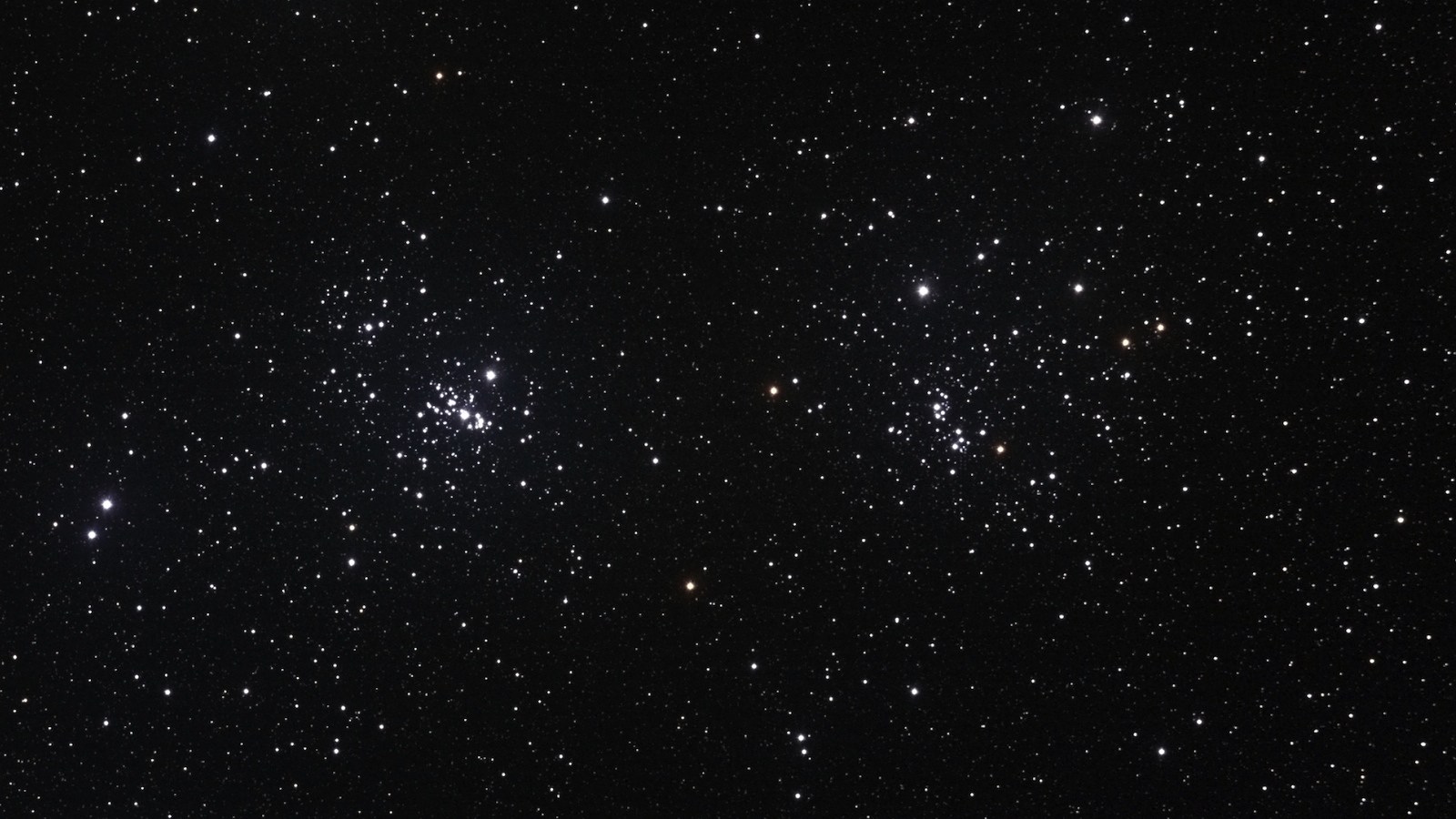
Why do other stars appear so much smaller than the sun?
a)
They are much smaller
b)
They are so far away
c)
They are not as bright
d)
They are dwarf stars
111.

What color of star is the hottest?
a)
Blue
b)
Red
c)
Yellow
d)
Orange
112.

What color of star is the coolest?
a)
Red
b)
Yellow
c)
Blue
d)
White
113.

What is the name of the largest stars?
a)
Protostars
b)
Supergiants
c)
Red Giants
d)
Dwarf Stars
114.

Why does the sun look small in the sky to us?
a)
It is 93,000,000 miles away
b)
It is smaller than Earth
c)
It is not very bright
d)
It travels around Earth
115.

What is the name of baby stars?
a)
Dwarf
b)
Supergiant
c)
Protostars
d)
Nebulas
116.
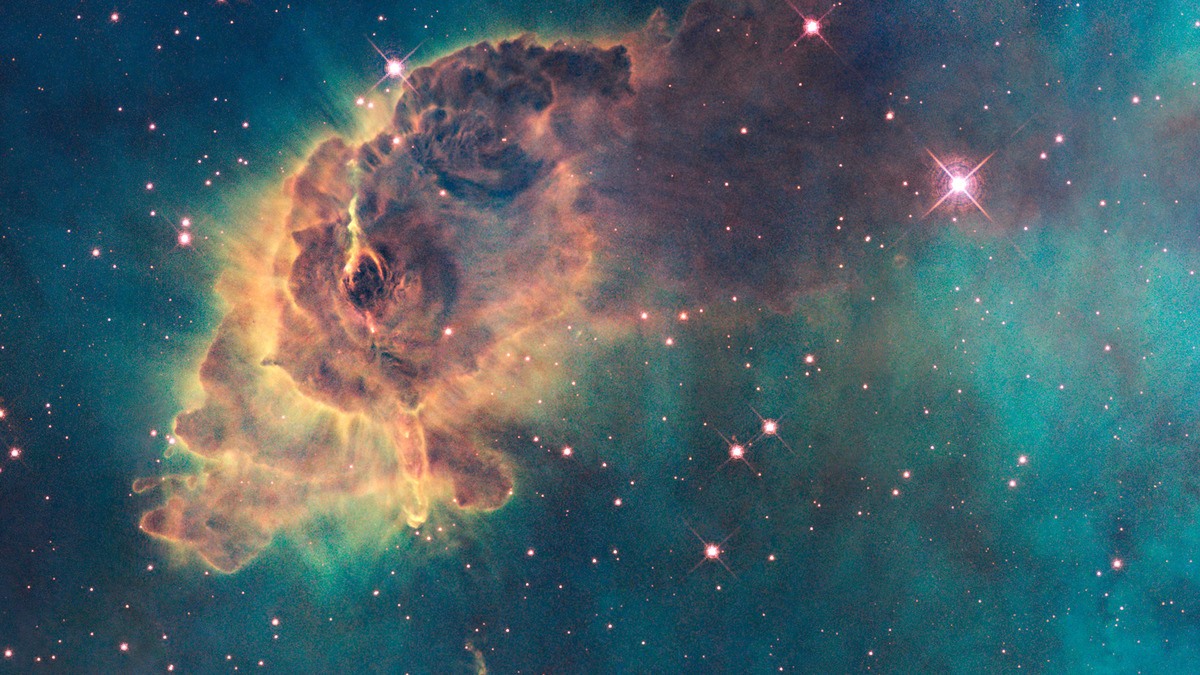
What is the name of the gas/dust clouds that form stars?
a)
Nebulas
b)
Protostars
c)
Supernova
d)
Neutron Star
117.
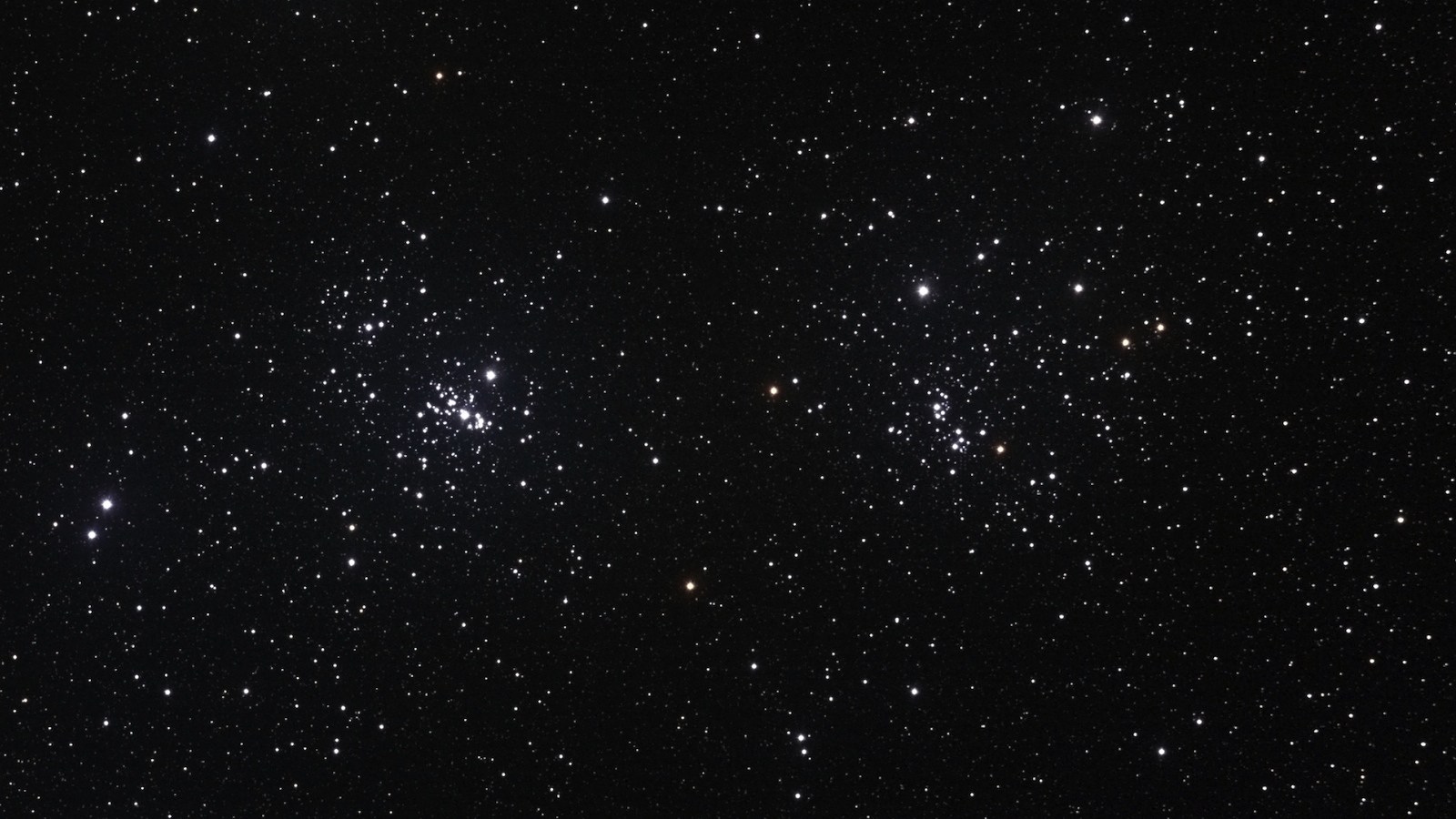
True or False
Stars are really close together in outer space.
Stars are really close together in outer space.
a)
True
b)
False
118.

True or False
Constellations are stars that appear to be in a pattern.
Constellations are stars that appear to be in a pattern.
a)
True
b)
False
119.
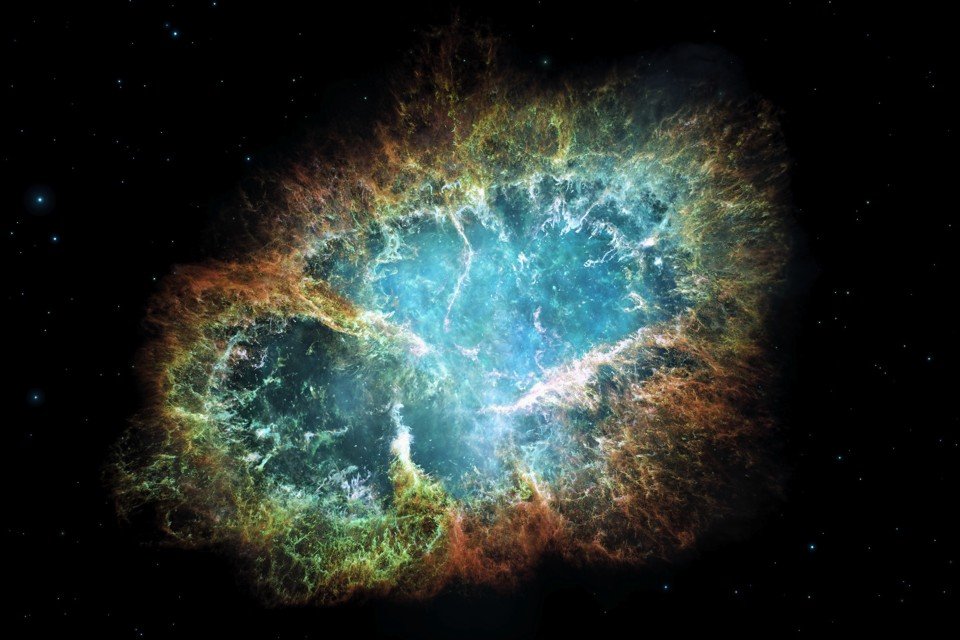
What is the name of the explosion at the death of a massive star?
a)
Supergiant
b)
Supernova
c)
Black Hole
d)
Nebula
120.

To get the sun to appear bigger in our sky, how would the distance between the sun and earth have to change?
a)
Earth would have to move closer to the sun
b)
Earth would have to move farther from the sun
121.

What are stars?
a)
Rocky bodies
b)
Hot exploding balls of gas
c)
5 pointed shapes
d)
Hollywood actors
122.

Which fossil is a replica of the original shape of the organism?
a)
cast
b)
mold
c)
trace
d)
preserved remains
123.

Which fossil is an impression left by the original organism?
a)
cast
b)
mold
c)
trace
d)
preserved remains
124.
Relative dating of rock layers tells us that the deeper we dig, _______.
a)
the younger the rocks get
b)
the smellier the rocks get
c)
the harder the rocks get
d)
the older the rocks get
125.
The Geologic Time Scale is a record of what?
a)
old geologists
b)
sweet geology music
c)
the known history of rocks and fossils
d)
a list of every living thing ever
126.
How old do Paleontologists believe the Earth is?
a)
2015 years old
b)
3.6 billion years old
c)
4.6 billion years old
d)
4.6 million years old
127.

According to the law of superposition, which layer is the youngest?
a)
A
b)
B
c)
C
128.
Paleozoic, Mesozoic & Cenozoic are all
a)
Epochs
b)
Eras
c)
Periods
d)
Eons
129.
Which is the most recent era of time- the one that we are currently in?
a)
Mesozoic
b)
Paleozoic
c)
Cenozoic
d)
Precambrian
130.
Fossils in which minerals replace all, or a part, of an organism is what kind of fossil?
a)
Petrified Fossil
b)
Preserved
c)
Fault
d)
Intrusion
131.
Footprints, nests, burrows and fossilized poop are examples of what kind of fossils?
a)
Trace Fossils
b)
preserved remains
c)
Erosion
d)
sedimentary rock
132.
Identify the Era in which each of the events occurred:
Jurassic period
Jurassic period
a)
Mesozoic
b)
Paleozoic
c)
Cenozoic
d)
Precambrian
133.
Identify the Era:
First forms of life appeared in this era.
First forms of life appeared in this era.
a)
Precambrian
b)
Paleozoic
c)
Mesozoic
d)
Cenozoic
134.
What is a fossil?
a)
any dead organism
b)
the preserved remains or traces of an organism
c)
a perfect copy of a rock
d)
an unusual type of rock
135.

Which of the following correctly lists the layers of rock in order from youngest to oldest?
a)
A, B, C, D, E
b)
B, C, D, E, A
c)
E, D, A, B, C
d)
C, B, A, D, E
136.

Which layer is the oldest and youngest?
a)
C and B
b)
C and E
c)
D and E
d)
A and B
137.

Which era is the longest?
a)
Cenozoic
b)
Cambrian
c)
Precambrian
d)
Phanerozoic
138.

Which layer is a result of an igneous intrusion?
a)
B
b)
C
c)
D
d)
E
139.

How do fossils form?
a)
Foot prints, burrows, or other impressions made by animals that give use clues to how they lived.
b)
When things die and their remains are buried.
c)
The preserved remains of an organism.
d)
The age determined by the things around it.
140.

What is radio active decay?
a)
The preserved remains of an organism.
b)
Atoms in an unstable element break down to form another element.
c)
When things die and their remains are buried.
d)
The time it takes for 1/2 of the radioactive atoms to decay in an element.
141.

What does radio active dating works best to determine?
a)
The age determined by the things around it.
b)
The age of an igneous rock.
c)
The age determined by radioactive dating.
d)
The time it takes for 1/2 of the radioactive atoms to decay in an element.
142.

Which rock layer in the diagram seems to be the oldest?
a)
F
b)
E
c)
B
d)
A
143.
gaps in rock layers caused by erosion are called
a)
law of superposition
b)
unconformities
c)
uniformitarianism
d)
relative dating
144.
Which type of dating method can be used on rock layers by applying the Law of Superposition?
a)
relative dating
b)
absolute dating
c)
radioactive dating
d)
radiometric dating
145.
Which of the following would PREVENT soil erosion on a farm?
a)
over-grazing
b)
deforestation
c)
plowing
d)
crop rotations
146.

When ocean waves crash against rocks,
a)
the rocks will melt
b)
the rocks will explode as the waves hit them
c)
pieces of the rock may break off due to weathering
d)
the rocks will grow larger in size
147.

What is the process that picks up and moves weathered rocks?
a)
Deposition
b)
Landslide
c)
Weathering
d)
Erosion
148.
Plants prevent soil erosion by-
a)
holding dirt in place with their roots
b)
providing food for herbivores
c)
the process of photosynthesis
d)
releasing water into the atmosphere through transpiration
149.
Decayed organic material in soil is called______.
a)
Litter
b)
Silt
c)
Humus
d)
Clay
150.
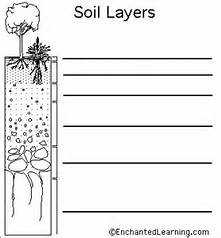
Which horizon contains clay, silt, minerals, and a little humus?
a)
Horizon A
b)
Horizon B
c)
Horizon C
d)
Horizon D or R
151.
Another word for save is....
a)
trash
b)
water
c)
conserve
d)
destroy
152.
Soil's one of the Earth’s most valuable resources. Everything on Earth depends on soil somehow.
a)
True
b)
False
153.
This is the layer below the topsoil and above the bedrock. It is called
a)
bedrock
b)
subsoil
c)
humus
d)
no layer exists
154.
This is the very bottom layer of soil. It lies below all the layers of soil
a)
bedrock
b)
humus
c)
soil
d)
subsoil
155.
If something was once living it is called
a)
no more
b)
decayed
c)
erosion
d)
heated
156.
Which of the following traits is encoded in your DNA?
a)
Your personality
b)
Your likes and dislikes
c)
Your intelligence
d)
Your eye color
157.
Which word describes the majority of permanent genetic mutations?
a)
Helpful
b)
Minor
c)
Injurious
d)
Beneficial
158.
trait shows only if both parents pass it on
a)
recessive
b)
dominant
c)
codominan
159.
when you have two different genes
a)
heterozygous
b)
dominant
c)
homozygous
160.
when you have two of the same genes
a)
heterozygous
b)
recessive
c)
homozygous
161.
the physical look of a trait
a)
phenotype
b)
genotype
c)
recessive
162.
DD is an example of
a)
homozygous recessive
b)
dominant
c)
Homozygous dominant
d)
recessive
163.
Dd letters are an example of....
a)
heterozygous genes
b)
homozygous genes
c)
dominant genes
d)
recessive genes
164.
Which of these is an inherited trait for humans?
a)
knowing how to read
b)
speaking English
c)
being able to play the violin
d)
having two arms
165.
Which of these is a learned behavior for a dog?
a)
walking on four legs
b)
rolling over on command
c)
barking
d)
panting
166.
Which sentence is TRUE?
a)
Acquired traits are passed from parents to offspring
b)
Inherited traits are passed from parents to offspring
c)
Behaviors are never inherited
d)
Behaviors are always inherited
167.
Which of these traits can a tree NOT pass to its offspring
a)
the shape of its leaves
b)
roots that grow toward the water
c)
a trunk scared by lightning
d)
the kind of seed it forms
168.
A mother dog and her puppy both have curly fur. Which best explains this?
a)
in dogs, curly fur is more common than straight fur
b)
in dogs, curly fur is an acquired trait
c)
the mother dog acquired curly fur and passed on that trait to her puppy
d)
the mother dog inherited curly fur and passed on that trait to her puppy
169.
Which of these is a learned behavior for a human?
a)
sleeping
b)
laughing
c)
playing violin
d)
having brown eyes
170.
Which of the following is a definition of inherited trait?
a)
a characteristic that a living thing gets from its parents
b)
a characteristic that a living thing gets during its lifetime
c)
a behavior that a living thing learns from its parents
d)
a skill that an animal develops after it is born
171.
In a population of cardinals, all the birds have short beaks. Their short beaks are an example of
a)
a learned behavior
b)
an inherited trait
c)
an acquired trait
d)
an inherited behavior
173.
The mathematical chance that something will happen is known as...
a)
chance
b)
luck
c)
probability
173.
The mathematical chance that something will happen is known as...
a)
chance
b)
luck
c)
probability
174.
The mathematical chance that something will happen is known as...
a)
chance
b)
luck
c)
probability
175.
The different forms of genes are known as
a)
environment
b)
probability
c)
traits
d)
alleles
176.

T - tall and t = short
In the punnett square below, what belongs in the missing square
In the punnett square below, what belongs in the missing square
a)
tt
b)
Tt
c)
Bb
d)
TT
100 %
![Around the World [ENG-VIET Complete] Level 3](https://cf.quizizz.com/image/image-loader.svg)
