wayground logo

Free Printable Worksheets

Font size

S
M
L
XL
Worksheets

STAAR Review 5th grade

Total questions: 78

Worksheet time: 1hrs 4mins

Name
Class
Date
1.
All moving objects have ----
a)
electrical force
b)
kinetic energy 
c)
potential energy
d)
frictional force 
2.
A bicyclist rides on a flat road and then stops pedaling but does not apply the brakes. The bicycle stops because of ....
a)
magnetism
b)
balance
c)
attraction
d)
friction 
3.
A student throws a ball. Which of these best describes the moving ball? 
a)
The ball has light energy 
b)
The ball has kinetic energy 
c)
The ball is transferring light energy to the air
d)
The ball is transferring sound energy to the air 
4.
In which direction will the ball most likely go after it hits the wall? 
a)
A
b)
B
c)
C
d)
D
5.
What is a PUSH or PULL of an object?
a)
Motion
b)
Force
c)
Friction
d)
Gravity
6.
What process changes liquid water into vapor?
a)
1 - sun's radiation
b)
2 - condensation
c)
3 - evaporation
d)
4 - precipitation
7.
Which process is most responsible for the formation of the Grand Canyon?
a)
scraping by glaciers
b)
erosion by wind and water
c)
explosive volcanic eruptions
d)
cracking of Earth's crust by earthquakes
8.
This landform is a sea arch. What is responsible for shaping this arch?
a)
plate tectonics
b)
earthquakes
c)
deposition
d)
erosion
9.
This rock formed when bits of other rocks became pressed into a solid. What type of rock is it?
a)
Sedimentary Rock
b)
Metamorphic Rock
c)
Igneous Rock
10.
How are Sedimentary Rocks formed?
a)
Cooling and Hardening
b)
Heat and Pressure
c)
Compacting and Cementing
d)
Melting
11.
Where can the oldest layer be found?
a)
The top layer
b)
The middle layer
c)
They are all the same age
d)
The bottom layer
12.
In what kind of rock can fossils be found?
a)
Sedimentary Rocks
b)
Igneous Rocks
c)
Metamorphic Rocks
d)
Granite
13.
How are fossils created?
a)
Traces of organisms get turned into stone.
b)
Dead organisms are quickly buried for millions of years.
c)
Animals get trapped.
d)
All of the above
14.
What are the 3 main fossil fuels?
a)
Coal, Oil, and Gasoline
b)
Coal, Oil, and Natural Gas
c)
Electricity, Gasoline, Petroleum
d)
Coal, Oil, Non-renewable Resources
15.
Oil and natural gas were formed from ___________________
a)
marine organisms
b)
dead plants
c)
trees
16.
Petroleum and natural gas form from...
a)
strong winds
b)
cooled magma
c)
radioactive materials
d)
remains of plants and animals 
17.
Which of the following is a fossil fuel?
a)
Wind
b)
Coal
c)
Solar
d)
Biomass
18.
Which of the following is a nonrenewable resource?
a)
milk
b)
coal
c)
biomass
d)
water
19.
Fossil fuels are classified as nonrenewable because they.......
a)
require expensive equipment
b)
take millions of years to replace
c)
can be found all over 
d)
provide all the energy we use
20.
The Appalachian Mountains used to be pointed like the Rockies. What process lead to the roundedness of their peaks?
a)
Weathering
b)
Deposition
c)
Lightning Strikes
d)
Mining of the rock
21.
What is the definition of a renewable resource?
a)
things that don't run out
b)
things that do run out
c)
stuff that makes things happen
d)
none of the above
22.
Which layer formed first?
a)
Rock Layer W
b)
Rock Layer X
c)
Rock Layer Y
d)
Rock Layer Z
23.

We have day and night because...

a)

Earth rotates on its axis.

b)

The Sun rotates on its axis.

c)

Earth is tilted.

d)

Earth orbits the Sun.

24.

The Moon shines because...

a)

it is covered in ice.

b)

it has craters.

c)

it reflects light from the Sun.

d)

it rotates at a high speed.

25.

Ocean tides are caused by...

a)

the Moon's gravitational pull.

b)

strong winds.

c)

earthquakes.

d)

all of the above.

26.

The Sun appears to move across the sky each day because...

a)

The Sun orbits the Earth.

b)

Earth orbits the Sun.

c)

The Sun is rotating on its axis.

d)

Earth is rotating on its axis.

27.

Each month, the Moon moves through...

a)

2 phases

b)

4 phases

c)

6 phases

d)

8 phases

28.
The Moon has_____similar to those on Earth, but no atmosphere.
a)
satellite
b)
people
c)
rocks
d)
phrases
29.
The moon has rocks similar to those on Earth,__________and almost no_________
a)
atmosphere, sun
b)
meteroroids, water
c)
atmosphere, moon
d)
atmosphere, water
30.
What is the weather conditions in an area over a long period of time?
a)
climate
b)
temperature
c)
elevation
d)
precipitation
31.
Winters in Maine can reach temperatures below zero.
a)
Climate
b)
Weather
32.
Changes from minute-to-minute, hour-to-hour, day-to-day
a)
Climate
b)
Weather
33.
Texas has long, hot summers.
a)
Climate
b)
Weather
34.
What is climate?
a)
 What's going on with the atmosphere at any particular time
b)
The type of weather that occurs during a particular season
c)
An area's pattern of weather over a long period of time
d)
How much sunshine an area gets 
35.
The order of the planets is:
a)
Mars,Venus,Earth,
Mercury,Saturn
Jupiter, Uranus, Neptune
b)
Earth,Venus,Mars
Jupiter, Neptune,
Mercury,Saturn,
Uranus
c)
Mercury,Venus,Earth
Mars,Jupiter,
Saturn,Uranus
Neptune
36.
Which planet is fifth from the sun?
a)
Saturn
b)
Jupiter
c)
Mars
d)
Earth
37.
which planet is the third from the sun?
a)
Mercury 
b)
Neptune 
c)
Pluto 
d)
Earth 
38.

Which type of metamorphosis is shown?

a)

complete metamorphosis

b)

incomplete metamorphosis

39.

Which types of metamorphosis is shown?

a)

complete metamorphosis

b)

incomplete metamorphosis

40.

Which stage does this represent?

a)

egg

b)

larva

c)

nymph

d)

pupa

41.

Which stage does this represent?

a)

egg

b)

larva

c)

nymph

d)

pupa

42.

Which stage does this represent?

a)

egg

b)

larva

c)

nymph

d)

pupa

43.

How many stages are found in complete metamorphosis?

a)

2

b)

3

c)

4

d)

5

44.

How many stages are found in incomplete metamorphosis?

a)

2

b)

3

c)

4

d)

5

45.
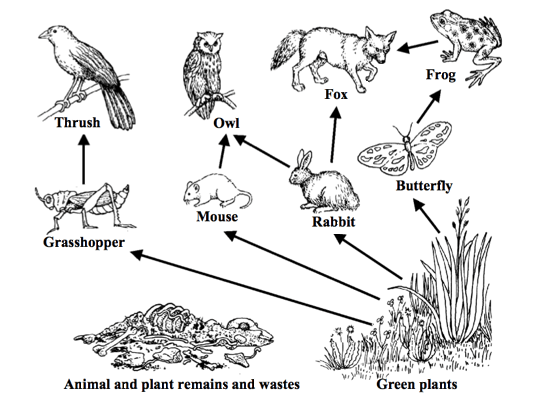
The owl receives energy from which organisms?
a)
grasshopper and mouse
b)
mouse and rabbit
c)
rabbit and butterfly
d)
butterfly and frog
46.
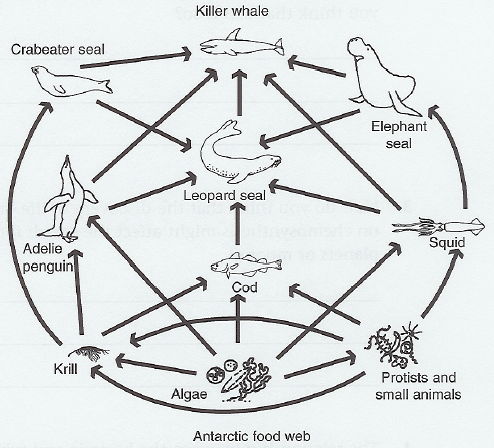
Which organism is the top predator in this food web?
a)
leopard seal
b)
killer whale
c)
elephant seal
d)
crabeater seal
47.
Which one is NOT an example of a decomposer?
a)
mushroom
b)
leaves
c)
mold
d)
worm
48.
Grass is considered a ...
a)
consumer
b)
producer
c)
decomposer
d)
composers
49.
What are the three states of matter?
a)
solid, volume, mass
b)
density, volume, mass
c)
solid, liquid, gas
d)
density, gas, volume
50.
Something that takes up space and has mass.
a)
volume
b)
matter
c)
mass
d)
density
51.
A measure of how much mass is contained in a given unit of volume.
a)
mass
b)
density
c)
volume
d)
matter
52.
The amount of space something takes up
a)
density
b)
volume
c)
mass
d)
matter
53.
A watermelon has more matter than a grape, so it has more
a)
mass
b)
eat
c)
solid
d)
greater
54.
The ability of a metal to allow heat or electricity to pass through it.
a)
conductivity
b)
insulator
c)
mass
d)
density
55.

What does it mean if something is an insulator?

a)

It allows energy to flow through it

b)

It blocks energy from flowing through it

c)

It is always warm

56.

What does it mean if something is a conductor

a)

It allows energy to flow through it

b)

It block energy from flowing through it

c)

It is always warm

57.

Which TWO are examples of insulators?

a)

Wool sock

b)

Aluminum can

c)

Styrofoam cooler

d)

Steel pipe

58.

Which TWO are conductors

a)

Cotton sweatshirt

b)

Copper pipe

c)

Silver spoon

d)

Rubber tire

59.
Two wires carrying electricity can create a spark if they come too close together. This spark can start a fire. Wires carrying electricity are usuallly covered  with plastic to keep them from starting a fire. Why does the plastic keep electricity from starting a fire?
a)
Plastic is a good insulator.
b)
Plastic can melt when heated.
c)
Plastic is softer than wire.
d)
Plastic conducts electricity.
60.
Erosion is one of the processes involved in the formation of sedimentary rock. Which of these best describes the process of erosion?
a)
Rocks are broken into smaller pieces that remain in the same location.
b)
Pressure compacts layers of sediment and turns them into rock.
c)
Pieces of rock or soil are carried from one place to another.
d)
Sediment grains fall to the bottom of a lake to form sedimentary layers.
61.
A student observing birds in a park records some ways that birds interact with living and nonliving parts of their environment. All the following  observations are was that a bird interacts with nonliving parts of its environment except______
a)
reacting to morning sunlight by singing
b)
drinking and taking a bath in a puddle of water
c)
responding to cold temperatures by fluffing its feathers
d)
feeding insects to its chicks
62.
A student made a list of activities that involve energy.  
-
1. Sharks chasing a school of fish
2. A toaster heating bread
3. A cell phone charging
4. A tree limb falling to the ground
5. Tomato plants absorbing sunlight
6. A canoe floating down a river
-
Which activities on the list are examples of the use of mechanical energy? 
a)
Activities 1, 4, and 6 
b)
Activities 2, 4, and 5
c)
Activities 1 and 2 
d)
Activities 3, 5, and 6 
63.
A student combined powdered paint with water to make a small amount of a blue liquid paint mixture. The student left the paint mixture in an open container. Several days later the student found the container and observed that changes had occurred. What most likely happened to the mixture?
a)
The container was empty after the mixture evaporated into the air.  
b)
The paint evaporated, leaving only clear water in the container.
c)
The water evaporated, leaving only a dry blue solid in the container.  
d)
The liquid paint mixture was lighter in color after some water evaporated.  
64.
Tropical climates have warm temperatures and abundant sunlight all year. What must be available for plants in these climates to make their own food throughout the year?
a)
Bacteria 
b)
Birds  
c)
Shade
d)
Water
65.
Most alternative energy resources produce more energy at certain times. Which combination can produce a steady flow of energy from only alternative resources 24 hours a day year-round? 
a)
Geothermal and natural gas
b)
Hydroelectric and geothermal 
c)
Solar and petroleum 
d)
Wind and coal 
66.
Which of these is not soluble in water?
a)
Oil
b)
Salt
c)
Honey
d)
Sugar
67.

The temperature at which a substance changes from a liquid to a solid (for water, this is 0 degrees Celsius, 32 degrees Fahrenheit)

a)

freezing point

b)

boiling point

c)

melting point

d)

evaporation

68.

___ is the physical change in a matter from a liquid to a gas

a)

evaporation

b)

melting point

c)

boiling point

d)

condensation

69.
What is the boiling point of water
a)
0 C
b)
100 F
c)
50 C
d)
100 C
70.

The temperature at which a substance changes from liquid to gas (for water this is 100 degrees Celsius, 212 degrees Fahrenheit)

a)

boiling point

b)

melting point

c)

evaporation

d)

condensation

71.
What is water's freezing point?
a)
0 F
b)
32 C
c)
50 C
d)
0 C
72.
What is water's melting point?
a)
32 C
b)
0 C
c)
32 F
d)
0 F
73.
A student hiking in a rocky are on a mountain notices that wide, deep cracks have formed in some of the large rocks. Some of the cracks are so large that the rocks have broken apart. Which process most likely caused these rocks to crack and break.
a)
Erosion by wind 
b)
Water freezing and thawing 
c)
Erosion by fast-moving water
d)
Sediment being deposited
74.
Prairie dogs eat plants and dig underground tunnels. Prairie dog tunnels help break up hard prairie soils, and the animals' waste adds nutrients to the soil. In the past, large groups or prairie dogs lived in many parts of the U.S. Great Plains, but people have destroyed most of these colonies. Which of these will most likely happen when prairie dogs are removed from an area?
a)
The population of predators that eat prairie dogs will decrease
b)
The population of plants that prairie dogs eat will decrease
c)
The nutrients in the soil will increase
d)
The number of underground tunnels will increase
75.
In a food chain, energy does NOT flow directly from---
a)
producer to decomposer
b)
producer to consumer
c)
consumer to decomposer
d)
consumer to producer
76.
A student made a mixture using equal amounts of salt and pepper. The salt grains were the same as the pepper grains. What should the student do to most easily separate the pepper from the salt?
a)
Use a pair of tweezers to remove each grain of pepper
b)
Run a small magnet through the mixture to attract the pepper
c)
Put the mixture in water and filter the pepper out of the water
d)
Use a strainer with a fine wire screen to remove the pepper
77.
Which of these is learned behavior of a dog?
a)
Begging for food
b)
Drinking water
c)
Panting on a hot day
d)
Chewing on a bone
78.
Which alternative energy source is generated beneath Earth's crust and can be used to heat buildings?
a)
Hydroelectric Energy
b)
Geothermal Energy
c)
Wind Energy
d)
Solar Energy