
 Worksheets
8th Science Biology STAAR Review
Total questions: 171
Worksheet time: 4hrs 25mins
Name
Class
Date
1.
Put the following organisms in order to create food chain: Grasshopper, Acorn, Snake, Hawk
a)
Grasshopper>Snake>Hawk>Acorn
b)
Acorn>Grasshopper>Snake>Hawk
c)
Acorn>Grasshopper>Hawk>Snake
2.
How much energy is transferred from one energy level to the next?
a)
90%
b)
10%
c)
100%
d)
1%
3.

Which of the relationships is an example of a parasite-host?
a)
Tick and Deer
b)
Beetle and Caterpillar
c)
Deer and Oak Tree
4.
Which of the relationships is an example of a predator-prey?
a)
Tick and Deer
b)
Beetle and Caterpillar
c)
Deer and Oak Tree
5.
Which of the relationships is an example of a producer-consumer?
a)
Tick and Deer
b)
Beetle and Caterpillar
c)
Deer and Oak Tree
6.

a)
A
b)
B
c)
C
d)
D
7.

a)
A
b)
B
c)
C
d)
D
8.
All of the following are examples of abiotic EXCEPT
a)
Climate
b)
Soil
c)
Temperature
d)
Decaying tree
9.

a)
A
b)
B
c)
C
d)
D
10.

a)
A
b)
B
c)
C
d)
D
11.

a)
A
b)
B
c)
C
d)
D
12.
Identify the following changes that have affected organisms and traits in future populations as either a short-term environmental change or long-term environmental change.
An earthquake caused landslides and shifts in ground level, which changed the course of rivers or flooded large areas. Earthquakes that occur in ocean areas can cause underwater landslides that create tsunamis. The large waves can destroy coastal ecosystems.
An earthquake caused landslides and shifts in ground level, which changed the course of rivers or flooded large areas. Earthquakes that occur in ocean areas can cause underwater landslides that create tsunamis. The large waves can destroy coastal ecosystems.
a)
Short term environmental change
b)
Long term environmental change
13.
Identify the following changes that have affected organisms and traits in future populations as either a short-term environmental change or long-term environmental change.
Tectonic plate movement has caused large changes in climate across the Earth, leading to the extinction or growth of many species.
Tectonic plate movement has caused large changes in climate across the Earth, leading to the extinction or growth of many species.
a)
Short term environmental change
b)
Long term environmental change
14.
Identify the following changes that have affected organisms and traits in future populations as either a short-term environmental change or long-term environmental change.
Extended droughts caused by the El Niño/La Niña global weather cycles may cause individual species to decrease with the changing conditions.
Extended droughts caused by the El Niño/La Niña global weather cycles may cause individual species to decrease with the changing conditions.
a)
Short term environmental change
b)
Long term environmental change
15.
Identify the following changes that have affected organisms and traits in future populations as either a short-term environmental change or long-term environmental change.
Changes in the Earth’s tilt angle and direction are thought to control the natural climate changes that occur on our planet. Species adapt to these changes by changing camouflage colors, thickness of fur, habitat range, or hunting and migration behavior.
Changes in the Earth’s tilt angle and direction are thought to control the natural climate changes that occur on our planet. Species adapt to these changes by changing camouflage colors, thickness of fur, habitat range, or hunting and migration behavior.
a)
Short term environmental change
b)
Long term environmental change
16.

a)
TABLE A
b)
TABLE B
c)
TABLE C
d)
TABLE D
17.

a)
A
b)
B
c)
C
d)
D
18.

a)
A
b)
B
c)
C
d)
D
19.
Runoff has increased in recent years because of human activities. Which activity has caused the greatest increase in polluted runoff?
a)
Higher water usage
b)
Irrigation
c)
City Urbanization
d)
Illegal Dumping
20.
Which of the following is the best explanation of artificial reefs?
a)
A human-made underwater structure, typically built to provide ocean animals and plants protection and a place to grow and reproduce. Often built with materials such as concrete or limestone, sunken oil rigs, or sunken ships.
b)
The quantity of fish pulled from the ocean is greater than the amount that can be re-supplied by growth and reproduction. Depleting teh population can drastically alter the marine food chain.
c)
Caused by drilling, natural disasters such as hurricanes, wrecked tankers, dumping, etc. Kills large amounts of fish, alters the marine food chain, and poisons wildlife that depend on the affected organisms for food.
d)
Nearly nine million volunteers from 152 countries and locations have cleaned 145 million pounds of trash from the shores of lakes, streams, rivers, and the ocean on just one day each year. Companies such as Exxon and Shell Oil also have similar efforts several times a year.
21.
Which of the following is the best explanation of overfishing?
a)
A human-made underwater structure, typically built to provide ocean animals and plants protection and a place to grow and reproduce. Often built with materials such as concrete or limestone, sunken oil rigs, or sunken ships.
b)
The quantity of fish pulled from the ocean is greater than the amount that can be re-supplied by growth and reproduction. Depleting teh population can drastically alter the marine food chain.
c)
Caused by drilling, natural disasters such as hurricanes, wrecked tankers, dumping, etc. Kills large amounts of fish, alters the marine food chain, and poisons wildlife that depend on the affected organisms for food.
d)
Nearly nine million volunteers from 152 countries and locations have cleaned 145 million pounds of trash from the shores of lakes, streams, rivers, and the ocean on just one day each year. Companies such as Exxon and Shell Oil also have similar efforts several times a year.
22.
Which of the following is the best explanation of oil spills?
a)
A human-made underwater structure, typically built to provide ocean animals and plants protection and a place to grow and reproduce. Often built with materials such as concrete or limestone, sunken oil rigs, or sunken ships.
b)
The quantity of fish pulled from the ocean is greater than the amount that can be re-supplied by growth and reproduction. Depleting teh population can drastically alter the marine food chain.
c)
Caused by drilling, natural disasters such as hurricanes, wrecked tankers, dumping, etc. Kills large amounts of fish, alters the marine food chain, and poisons wildlife that depend on the affected organisms for food.
d)
Nearly nine million volunteers from 152 countries and locations have cleaned 145 million pounds of trash from the shores of lakes, streams, rivers, and the ocean on just one day each year. Companies such as Exxon and Shell Oil also have similar efforts several times a year.
23.
Which of the following is the best explanation of beach cleanups?
a)
A human-made underwater structure, typically built to provide ocean animals and plants protection and a place to grow and reproduce. Often built with materials such as concrete or limestone, sunken oil rigs, or sunken ships.
b)
The quantity of fish pulled from the ocean is greater than the amount that can be re-supplied by growth and reproduction. Depleting teh population can drastically alter the marine food chain.
c)
Caused by drilling, natural disasters such as hurricanes, wrecked tankers, dumping, etc. Kills large amounts of fish, alters the marine food chain, and poisons wildlife that depend on the affected organisms for food.
d)
Nearly nine million volunteers from 152 countries and locations have cleaned 145 million pounds of trash from the shores of lakes, streams, rivers, and the ocean on just one day each year. Companies such as Exxon and Shell Oil also have similar efforts several times a year.
24.
Which land biome has the greatest biodiversity?
a)
Temperate Forest
b)
Rainforest
c)
Tundra
d)
Desert
25.

a)
A
b)
B
c)
C
d)
D
26.

a)
A
b)
B
c)
C
d)
D
27.

Which stage represents the establishment of the pioneer organisms?
a)
Stage 1
b)
Stage 2
c)
Stage 3
d)
Stage 4
28.
Which stage would result if a fire were to destroy the climax community?
a)
Stage 1
b)
Stage 2
c)
Stage 3
d)
Stage 5
29.

Which of these correctly sequences the diagrams to show the process of ecological succession happening in an ecosystem?
a)
Z, W, X, Y
b)
Y, X, W, Z
c)
X, Y, W, Z
d)
W, Z, Y, X
30.
Identify the following as either Primary Succession or Secondary Succession:
starts on bare rock
starts on bare rock
a)
Primary Succession
b)
Secondary Succession
31.
Identify the following as either Primary Succession or Secondary Succession:
soil is already present
soil is already present
a)
Primary Succession
b)
Secondary Succession
32.
Identify the following as either Primary Succession or Secondary Succession:
would occur after land is cleared by humans
would occur after land is cleared by humans
a)
Primary Succession
b)
Secondary Succession
33.
Identify the following as either Primary Succession or Secondary Succession:
soil must be formed before most plants can grow
soil must be formed before most plants can grow
a)
Primary Succession
b)
Secondary Succession
34.
Which of the following is part of the theory of natural selection?
a)
Individuals that acquire characteristics will pass those characteristics on to their offspring.
b)
Most offspring of a species will survive to reproduce.
c)
Individuals within the same population have identical traits.
d)
Individuals that have favorable traits are more likely to survive and reproduce.
35.

Which adaptation would most likely be evident in an animal living in the tundra biome?
a)
Large, wide ears with thin tissue
b)
Long legs to escape predators
c)
Long neck to reach food in high branches
d)
Thick fat layer that develops quickly
36.

a)
A
b)
B
c)
C
d)
D
37.
Put the following organs in the correct order to sequence the movement of food through the digestive system.
a)
Stomach, esophagus, small intestine, mouth, large intestine
b)
mouth, esophagus, stomach, large intestine, small intestine
c)
mouth, small intestine, esophagus, large intestine
d)
mouth, esophagus, stomach, small intestine, large intestine
38.

Which organ system best describes the excretory system?
a)
1
b)
2
c)
3
d)
4
39.
Which organ system best describes the circulatory system?
a)
1
b)
2
c)
3
d)
4
40.
Which organ system best describes the respiratory system?
a)
1
b)
2
c)
3
d)
4
41.
Which organ system best describes the digestive system?
a)
1
b)
2
c)
3
d)
4
42.
Which cell organelle determines if an organism is an autotroph?
a)
Cell Wall
b)
Chloroplast
c)
Cytoplasm
d)
Mitochondria
43.

Which organelle best describes the chloroplast?
a)
1
b)
3
c)
5
d)
7
44.
Which organelle best describes the mitochondria?
a)
2
b)
3
c)
4
d)
5
45.
Which organelle best describes the nucleus?
a)
2
b)
3
c)
4
d)
5
46.
Which organelle best describes the cytoplasm?
a)
2
b)
3
c)
4
d)
5
47.
Which organelle best describes the vacuole?
a)
5
b)
3
c)
6
d)
7
48.

Which organism in the table transforms sunlight energy into chemical energy?
a)
Organism A
b)
Organism B
c)
Organism C
d)
Organism D
49.
Which of the organisms would be classified as prokaryotic?
a)
Organism A
b)
Organism B
c)
Organism C
d)
Organism D
50.

a)
A
b)
B
c)
C
d)
D
51.

a)
A
b)
B
c)
C
d)
D
52.
The hereditary information in animal and plant cells is located on the chromosomes, which the cells store in the –
a)
Vacuoles
b)
Nucleus
c)
Cytoplasm
d)
Ribosomes
53.

a)
A
b)
B
c)
C
d)
D
54.
Which of the following best describes the term prokaryotic?
a)
single-celled organism that does not have a membrane-bound nucleus or organelles
b)
organism made up of cells that have a membrane-bound nucleus and other organelles
c)
an organism that makes its own food
d)
made up of only one cell
55.
Which of the following best describes the term Eukaryotic?
a)
single-celled organism that does not have a membrane-bound nucleus or organelles
b)
organism made up of cells that have a membrane-bound nucleus and other organelles
c)
an organism that makes its own food
d)
made up of only one cell
56.
Which of the following best describes the term Autotroph?
a)
single-celled organism that does not have a membrane-bound nucleus or organelles
b)
organism made up of cells that have a membrane-bound nucleus and other organelles
c)
an organism that makes its own food
d)
made up of only one cell
57.
Which of the following best describes the term Unicellular?
a)
single-celled organism that does not have a membrane-bound nucleus or organelles
b)
organism made up of cells that have a membrane-bound nucleus and other organelles
c)
an organism that makes its own food
d)
made up of only one cell
58.
ARE YOU GOING TO ROCK THE SCIENCE STAAR?
a)
YES
b)
NO
59.

How many producers are in this food web?
a)
1
b)
2
c)
3
d)
4
60.
Organisms that eat other organisms (heterotroph).
a)
Producer
b)
Parasite
c)
Consumer
d)
Scavenger
61.
Organisms that live in or on another organism and benefit at the host's expense.
a)
Parasite
b)
Producer
c)
Scavenger
d)
Decomposer
62.

Asexual reproduction that produces two identical daughter cells is called what?
a)
Meiosis
b)
Mitosis
c)
biotechnology
d)
cellular respiration
63.

Sexual reproduction that produces four genetically different gametes (sperm and egg).
a)
Meiosis
b)
Cancer
c)
Mitosis
d)
Virus
64.
The genetic make-up of an organism is known as:
a)
Heredity
b)
Phenotype
c)
Genotype
d)
Genetics
65.
The physical appearance of an organism is known as:
a)
Heredity
b)
Phenotype
c)
Genotype
d)
Genetics
66.
The path of food energy from the sun to the producer then transferred to a series of consumers is known as a?
a)
Food Web
b)
Food Chain
c)
Energy Line
d)
Energy Transformation
67.

a)
The mallard, because it hunts for fish while wading near the edge of the pond
b)
The pied-billed grebe, because it dives in open water to get crayfish on the bottom of the pond
c)
The great egret, because it hunts in water near the edge of the pond for fish and other prey
d)
None of these
68.

a)
Increased gill surface area has allowed the cichlids to change their diet and avoid competing with the Nile perch.
b)
Increased gill surface area has allowed the cichlids to be camouflaged and avoid being eaten by the Nile perch.
c)
Increased gill surface area has allowed the cichlids to leave Lake Victoria and establish populations in nearby bodies of water.
d)
Increased gill surface area has allowed the cichlids to better absorb the limited oxygen in the water.
69.

a)
The functions of living things occur in cells.
b)
Cells exist only in multicellular organisms.
c)
Living things are composed of cells.
d)
Cells contain hereditary information.
70.
Organisms who receive their energy by consuming other organisms.
a)
Chloroplast
b)
Heterotroph
c)
Autotroph
d)
Phototropism
71.
The part of a cell that contains the chromosomes (wound up DNA) in eukaryotic cells.
a)
Chloroplasts
b)
Cell Wall
c)
Nucleus
d)
Homeostasis
72.
The genetic code for all of your traits.
a)
Nucleus
b)
DNA
c)
Chloroplast
d)
Recessive gene
73.
The organelle inside a plant cell that converts sunlight into energy.
a)
Chloroplast
b)
Photosynthesis
c)
Parasite
d)
Cell Wall
74.
The part of a plant cell that is rigid & permeable.
a)
Chloroplast
b)
Turgor Pressure
c)
Cell Wall
d)
Phototropism
75.
The term used to define a cell that has a nucleus containing DNA.
a)
Prokaryote
b)
Eukaryote
c)
Autotroph
d)
Homeostasis
76.

Cattle egrets forage (feed) in fields among cattle. The egret gets easy access to flying insects stirred up by the cattle, and the cattle don't care if they are there or not.
a)
mutualism
b)
commensalism
c)
competition
d)
parasitism
77.
A relationship between two organisms in which one organism benefits and the other is unharmed...
a)
Mutualism
b)
Competition
c)
Parasitsm
d)
Commensalism
78.
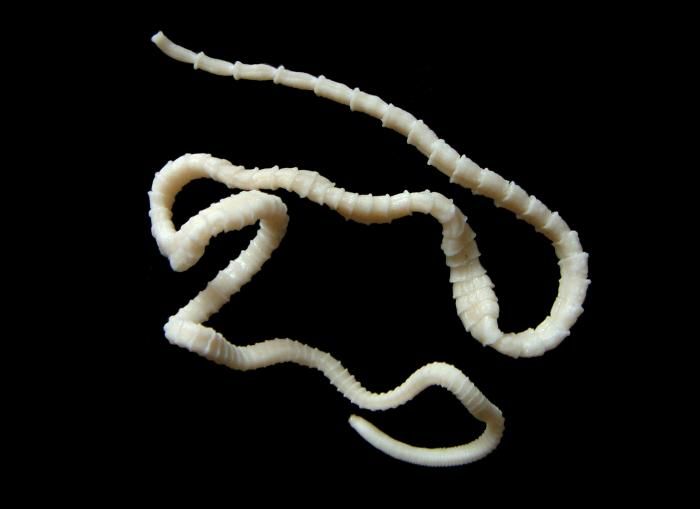
A tapeworm and a cat have this type of relationship.
a)
mutualism
b)
parasitism
c)
commensalism
d)
competition
79.
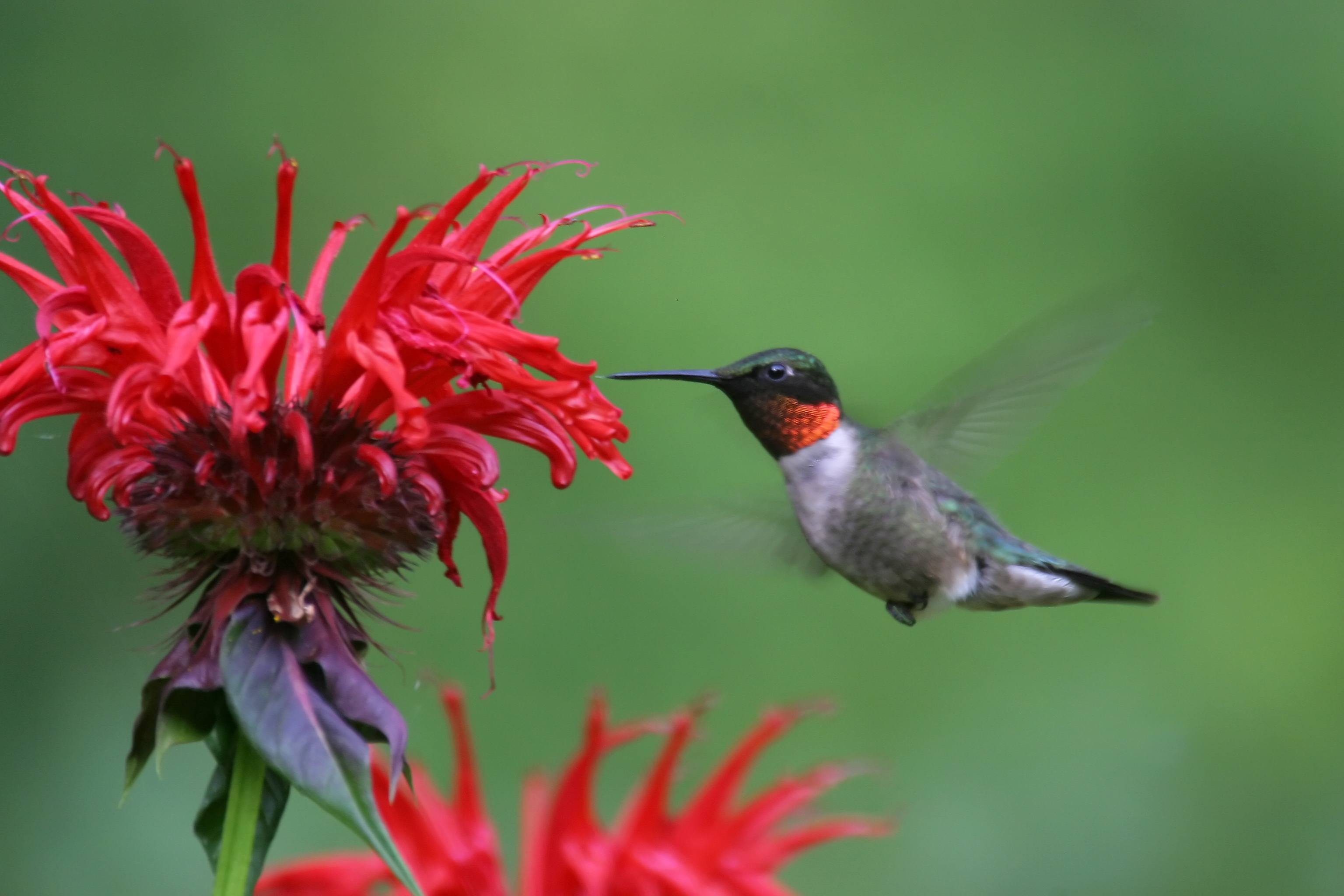
What type of symbiosis? Hummingbirds feed on nectar from flowers. The flowers are pollinated by hummingbirds as they move from flower to flower.
a)
commensalism
b)
mutualism
c)
parasitism
d)
predation
80.
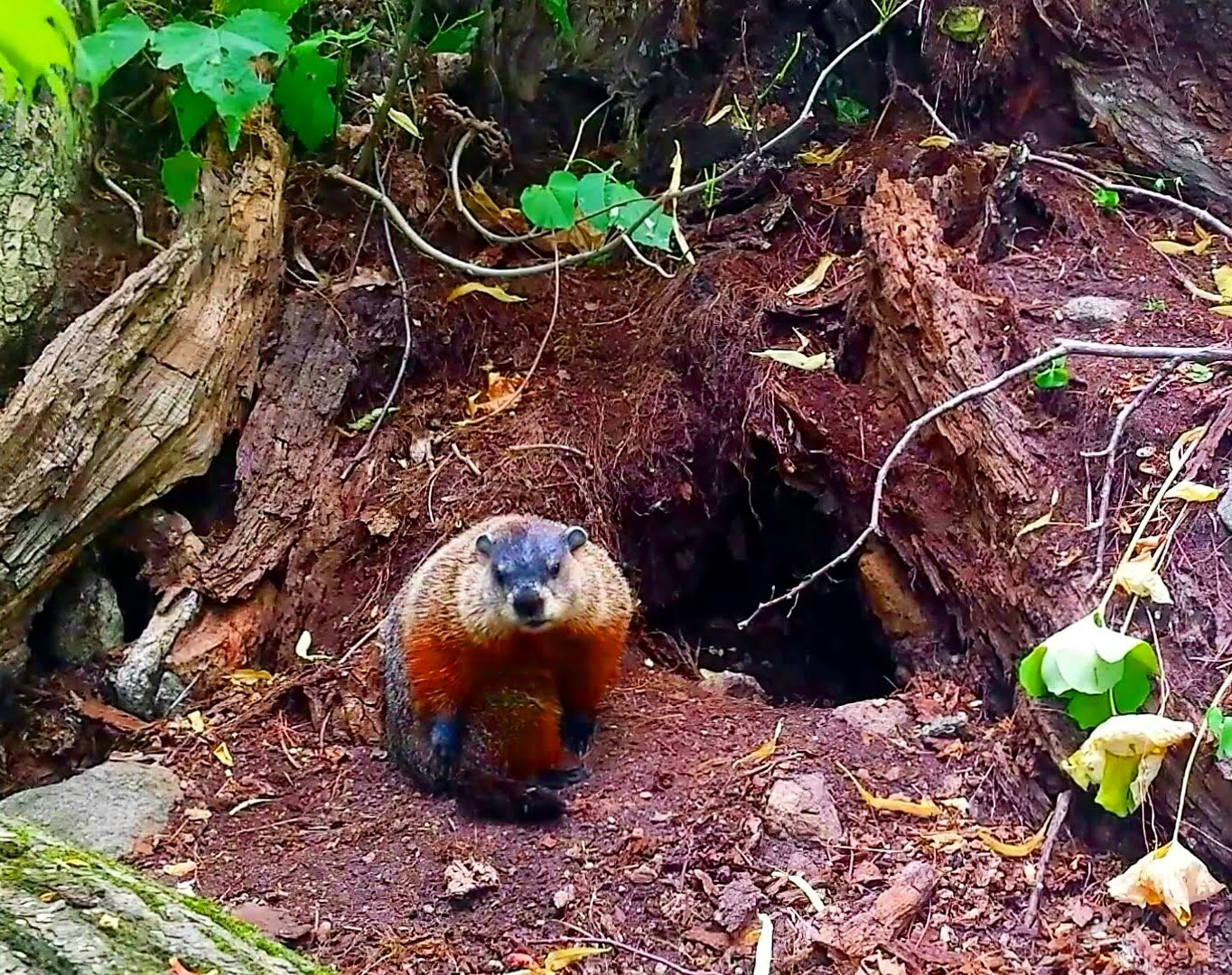
What type of symbiosis? Skunks often live in burrows that have been dug and abandoned by woodchucks.
a)
commensalism
b)
mutualism
c)
parasitism
d)
predation
81.
A relationship between two organisms in which both organisms benefit.
a)
Mutualism
b)
Competition
c)
Parasitsm
d)
Commensalism
82.
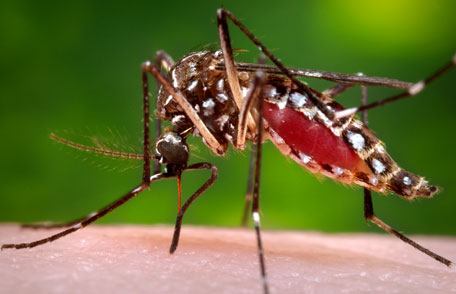
When a mosquito bites you, you are the __________ and the mosquito is the ____________.
a)
host, hostess
b)
parasite, host
c)
host, parasite
d)
prey, predator
83.
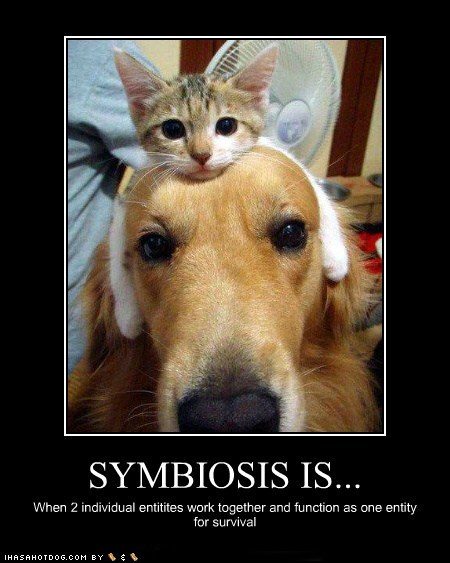
A relationship in which two species live closely together.
a)
resource
b)
mutualism
c)
succession
d)
symbiosis
84.

Which organism do the owl and the weasel compete for in the food web?
a)
Hawk
b)
Spider
c)
Grasshopper
d)
Shrew
85.

Which of the following is a herbivore?
a)
cricket
b)
frog
c)
hawk
d)
shrew
86.

How many carnivores are shown in this food web?
a)
6
b)
4
c)
5
d)
3
87.
What might happen if you remove a primary consumer from the ecosystem?
a)
There would be more food for secondary consumers.
b)
The number of primary consumers would increase.
c)
The number of plants would increase.
d)
The number of secondary consumers would increase.
88.

Which of the following would be the most likely effect, if there were a sudden increase in the cricket population?
a)
There would be a decrease in the small bird population.
b)
There would be a decrease in the grass/flowers population.
c)
There would be a decrease in the mice population.
d)
There would be an increase in the grass/flowers population.
89.

Which of the following best describes the small bird in the food web above?
a)
primary and secondary consumer
b)
secondary and tertiary consumer
c)
primary consumer only
d)
secondary consumer only
90.
A frog eats a fly. The frog and fly are demonstrating ________.
a)
mutualism
b)
competition
c)
predator/prey
d)
parasitism
91.
A tapeworm inside a dog is
a)
competition
b)
predation
c)
commensalism
d)
parasitism
92.
A tick and a dog have this type of relationship.
a)
mutualism
b)
commensalism
c)
neutralism
d)
parasitism
93.
A symbiotic relationship that involves species having to fight for something they both need or want
a)
competition
b)
predation
c)
commensalism
d)
parasitism
94.
Example of a consumer
a)
worm
b)
bacteria
c)
mushroom
d)
hawk
95.
Example of a decomposer
a)
fungus
b)
mouse
c)
plants
d)
frogs
96.
A tree is a ....
a)
composer
b)
decomposer
c)
producer
97.
Humans are considered...
a)
consumers
b)
decomposers
c)
producers
98.
Worms are considered...
a)
producer
b)
consumer
c)
decomposer
100.
Frogs are considered...
a)
consumers
b)
decomposers
c)
producers
100.
Frogs are considered...
a)
consumers
b)
decomposers
c)
producers
101.
Grass is considered a ...
a)
consumer
b)
producer
c)
decomposer
102.

What is a producer?
a)
an organism that gets energy from eating other organisms
b)
an organisms that uses sunlight to make its own food
c)
an organism that gets energy from eating dead organisms, non-living material or waste
d)
an organism that uses chemical energy to make its own food
103.

What is a herbivore?
a)
an animal that gets energy from eating other animals
b)
an organism that gets energy from eating only plants
c)
an animal that gets energy by eating both plants and other animals
d)
an animal that eats only herbs
104.

An organism that gets energy from eating other organisms is a ______________
a)
producer
b)
consumer
c)
decomposer
d)
prey
105.

A connection of food chains with many food energy paths in an ecosystem is a ____________
a)
ecosystem
b)
food web
c)
environment
d)
population
106.

An animal that is hunted and eaten for food is a
a)
predator
b)
prey
c)
population
107.
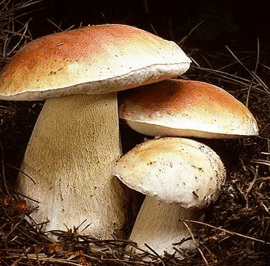
An organism that gets energy from breaking down dead organisms, non-living material or waste
a)
producer
b)
consumer
c)
decomposer
d)
autotroph
108.

What is a carnivore?
a)
an animal that gets energy by eating other animals
b)
An animal that gets energy by eating only plants
c)
an animal that gets energy by eating both plants and animals
d)
an animal that makes its own energy through photosynthesis
109.

An animal that gets energy from eating both plants and animals is a
a)
herbivore
b)
carnivore
c)
omnivore
d)
autotroph
110.

Where do all life forms get their energy?
a)
Earth's Core
b)
Water
c)
Plants
d)
The Sun
111.
The arrows in a food chain or web represents what?
a)
They point to the organism that is being eaten.
b)
It shows how sunlight flows within an ecosystem.
c)
They show what direction the energy is flowing between organisms.
d)
They represent how water is transferred within a habitat.
112.

In this food chain, what will happen if the frogs become extinct?
a)
The snakes will increase.
b)
The grasshoppers will decrease.
c)
The eagles will remain the same.
d)
The grasshoppers will increase.
113.
Which of the following would have a negative impact on an ecosystem
a)
constructing highways
b)
planting trees
c)
recycling paper
114.
The space, conditions and all the living and non-living things around an organism is its _________________.
a)
home
b)
environment
c)
neighborhood
d)
ecosystem
115.
An inherited trait that helps those organisms that have it to survive
a)
niche
b)
structure
c)
characteristic
d)
adaptation
116.

Coloring or another physical characteristic that help an organism blend in with its environment
a)
mimicry
b)
camouflage
c)
hibernation
d)
migration
117.

The role an organism plays in its ecosystem
a)
niche
b)
behavior
c)
structure
d)
function
118.

When an organism copies a characteristic of something else in order to better its chances for survival and reproduction
a)
hibernation
b)
camouflage
c)
mimicry
d)
migration
119.

The seasonal movement of an organism from one place to another
a)
camouflage
b)
migration
c)
hibernation
d)
function
120.

When an organism slows its life functions for a period of time to better its chances for survival during harsh conditions
a)
camouflage
b)
migration
c)
mimicry
d)
hibernation
121.
A group of organisms which are similar to each other and can combine to have offspring
a)
species
b)
characteristic
c)
club
d)
organisms
122.
The passing of physical characteristics from parent to offspring is?
a)
genetics
b)
Heredity
c)
Traits
d)
Fertilization
123.
A unit of genetic material that determines a trait
a)
Carrier
b)
DNA
c)
chromosome
d)
Gene
124.
To acquire a trait from your parents
a)
recieve
b)
inherit
c)
Gene
d)
Allele
125.
Phenotype is the organisms physical appearance while genotype in the organisms genetic make up
a)
true
b)
False
126.
What is another name for natural selection?
a)
survival of the smartest
b)
survival of the fastest
c)
survival of the biggest
d)
survival of the fittest
127.
When all of the organisms of a species have died it is called
a)
evolution
b)
extinction
c)
adaptation
d)
natural selection
128.

What is this an example of?
a)
diversity of species
b)
variation
c)
vestigial structures
d)
DNA studies
129.
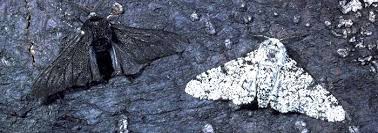
Predict which moth would increase in population
a)
light
b)
dark
130.

Darwin wrote that organisms with traits that are best suited to the environment will ________________
a)
increase in number
b)
become extinct
131.
Which of the following is NOT an example of natural selection?
a)
People selectively breeding hamsters.
b)
Insect populations developing resistance to certain pesticides.
c)
Bacteria becoming resistant to antibiotics.
d)
Male birds of certain species developing colorful feathers to attract female mates.
132.
What does the term "terrestrial" mean?
a)
Water-based ecosystem
b)
Land-based ecosystem
133.
What does the term "aquatic" mean?
a)
Water-based ecosystem
b)
Land-based ecosystem
134.
All of the nonliving parts of an ecosystem are __________.
a)
biotic
b)
biology
c)
abiotic
d)
biography
135.
What are biotic factors?
a)
dead things
b)
living things/ organisms
c)
weather
d)
plants
136.
Temperature, light, air, water, and soil are all _____ parts of the environment
a)
alive
b)
biotic
c)
abiotic
d)
living
137.
This ecosystem would have many trees.
a)
Forest
b)
Grassland
c)
Ocean
d)
Lakes/Ponds
138.
This ecosystem contains salt water.
a)
Forest
b)
Grassland
c)
Ocean
d)
Lakes/Ponds
139.
This ecosystem has very few trees and a lot of varieties of grasses.
a)
Forest
b)
Grassland
c)
Wetland
d)
Lakes/Ponds
140.
Which word means "land based" ecosystem?
a)
Terrestrial
b)
Aquatic
141.
Which word means "water-based" ecosystem?
a)
Terrestrial
b)
Aquatic
142.
A(n) ___________ is where the river meets an ocean.
a)
wetland
b)
pond
c)
lake
d)
estuary
143.

There is competition for resources between:
a)
Brittle Brush and Saguaro Cactus
b)
Armadillo and Peccary
c)
Stomach Worm and Gila Monster
d)
Banded Gecko and Peccary
144.
What does cell theory say?
a)
All Living things are made of cells
b)
All cells come from pre-existing cells
c)
cells are the basic unit of life
d)
All of these answers are correct
145.

How many organisms in this food web eat only producers?
a)
1
b)
2
c)
3
d)
4
146.

Which of the following is a predator-prey relationship in this food web?
a)
Jackal-Goat
b)
Rabbit-Green Plant
c)
Mouse-Owl
d)
Jackal-Lion
147.

Which of the following is a producer-consumer relationship in the food web?
a)
phytoplankton-squid
b)
leopard seal-cod
c)
zooplankton-squid
d)
phytoplankton-krill
148.
The living organisms in an ecosystem such as plants and animals
a)
adaptation
b)
biotic
c)
decomposer
d)
abiotic
149.
The non-living factors in an ecosystem such as rocks, water and temperature.
a)
natural selection
b)
biotic
c)
biodiversity
d)
abiotic
150.
Organisms that make their own food. Also called autotrophs.
a)
Producer
b)
Parasite
c)
Scavenger
d)
Decomposer
151.
Organisms that digest dead producers and consumers such as mold, fungus, bacteria and worms.
a)
Producer
b)
Parasite
c)
Decomposer
d)
Consumer
152.
Organisms, such as vultures, that feed on dead animals.
a)
Producer
b)
Scavenger
c)
Consumer
d)
Parasite
153.
Organisms that live in or on another organism and benefit at the host's expense.
a)
Parasite
b)
Producer
c)
Scavenger
d)
Decomposer
154.
Photosynthetic plant that is the beginning of the food chain for many aquatic animals.
a)
Phytoplankton
b)
Parasite
c)
Producer
d)
Consumer
155.
Struggle between organisms of the same or different species for food, space, light, water, etc.
a)
Interdependence
b)
Natural Selection
c)
Adaptation
d)
Competition
156.
Mutual dependence between organisms in order to help them survive.
a)
Competition
b)
Interdependence
c)
Adaptation
d)
Natural Selection
157.
Variety of life
a)
Natural Selection
b)
Ecological Succession
c)
Interdependence
d)
Biodiversity
158.
Gradual and orderly process of change in an ecosystem until a stable community is established.
a)
Ecological Succession
b)
Biodiversity
c)
Adaptation
d)
Competition
159.
Process by which organisms that are suited to a particular environment are better able to survive and reproduce than other organisms that are not.
a)
Ecological Succession
b)
Biodiversity
c)
Natural Selection
d)
Producer
160.
The scientific name for an organism is made from the:
a)
class and family name
b)
genus and species name
c)
domain and kingdom name
d)
kingdom and phylum name
161.

An illustration and a dichotomous key are given. What is the correct classification for this organism?
a)
Class Insecta
b)
Order Amblygygi
c)
Order Araneae
d)
Order Scorpiones
162.

What is the name of bird Z?
a)
Certhidea
b)
Geospiza
c)
Camarhynchus
d)
Platyspiza
163.
Animals that adapt...
a)
Stay the same
b)
Change certain characteristics to survive
c)
Bake cookies
164.
A Porcupine has sharp quills. Why would a porcupine need this adaptation?
a)
to protect itself
b)
to keep warm
c)
to kill its prey
d)
to cover its skin
165.
The arctic fox and snowshoe hare develop a white coat of fur during the winter months. What statement best describes this behavioral response?
a)
The color of the fur will attract a mate
b)
White fur allows the animals to reflect light and stay warm
c)
Snow falls during the winter and the white fur will camouflage the animals
d)
It becomes colder during the winter, so these animals need more fur to stay warm
166.

A dichotomous key for trees is provided. Hikers found a tree that has large brown cones and single sharp needles. What species of tree have the hikers found?
a)
Juniper
b)
Pine
c)
Spruce
d)
Fir
167.

A dichotomous key for insects is given. To what order does an insect with two pairs of scaly wings belong?
a)
Coleoptera
b)
Heteroptera
c)
Diptera
d)
Lepidoptera
168.

A student discovers an arachnid with a segmented abdomen, long legs, and a tail with no stinger. The student uses the dichotomous key below to identify it. Which arachnid has the student found?
a)
Whip Scorpion
b)
Wind Scorpion
c)
Daddy long legs
d)
Scorpion
169.

A labeled diagram of a fiddler crab is provided. Which of the following is an accurate observation of the structures of a fiddler crab? Fiddler crabs have -
a)
five pairs of walking legs on each side.
b)
an enlarged propodus on both front legs.
c)
a pair of eyes on stalks at the top of the body.
d)
two pairs or chelipeds for a total of four.
170.

A table of arachnid and insect characteristics is shown. Which characteristic could be used to distinguish between
arachnids and insects?
arachnids and insects?
a)
Jointed legs
b)
Body segments
c)
Presence of eyes
d)
Presence of antennae
171.
A botanist discovers a new plant in the jungle. Which of the
following observations of the plant’s characteristics would be useful in determining its identity with a dichotomous key?
following observations of the plant’s characteristics would be useful in determining its identity with a dichotomous key?
a)
It was discovered in the summertime
b)
It is wet from a recent rain storm.
c)
Its leaves curl up on the edges.
d)
It is eaten by native jungle ants.
100 %

