wayground logo

Free Printable Worksheets

Font size

S
M
L
XL
Worksheets

Particle Physics Review

Total questions: 24

Worksheet time: 31mins

Name
Class
Date
1.

What are fundamental particles?

a)

Quarks

b)

Electrons

c)

Protons

d)

Neutrons

2.
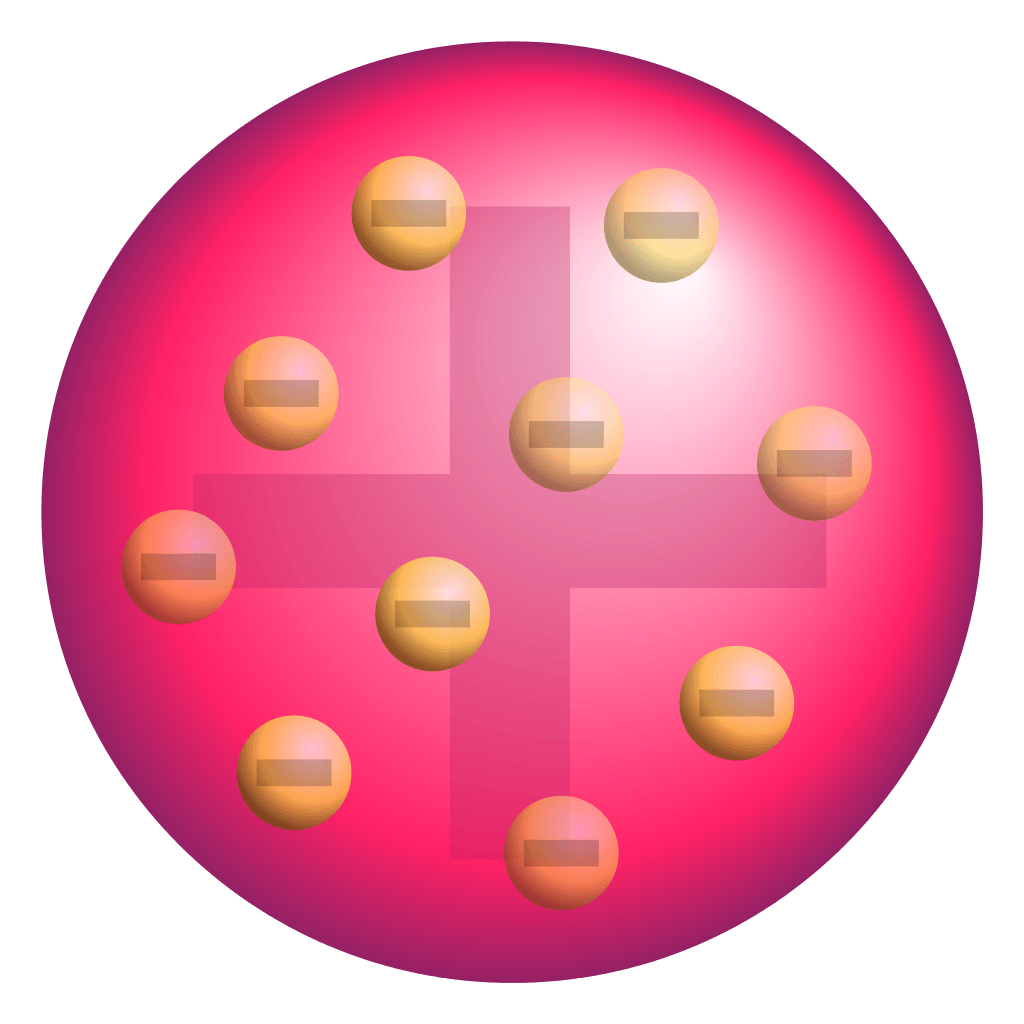
This model was developed after J.J. Thompson discovered electrons, a particle smaller than an atom. Is shows electrons floating freely in a positive space.
a)
The "Plum Pudding Model" of the atom
b)
The "Rutherford Model" of the atom
c)
Democritus's model of the atom
d)
The "Solar System Model" of the atom
3.
Proposed that the atom had a dense positively charge center which was extremely small but consisted of mostly empty space.
a)
Ernest Rutherford
b)
J.J Thomson
c)
Robert Millikan
d)
John Dalton
4.
During the thin foil experiment, it was seen that a______of alpha particles passed through the thin foil because the atom__________.
a)
majority; was dense
b)
few; was mostly empty space
c)
majority; was mostly empty space
d)
few; was dense
5.
All atoms consist of mostly empty space.
a)
True
b)
False
6.
Rank the four fundamental forces of nature in order from weakest to strongest:  
a)
Electromagnetism, Gravity, Strong Nuclear, Weak Nuclear
b)
Weak Nuclear, Gravity, Electromagnetism, Strong Nuclear
c)
Gravity, Weak Nuclear,  Electromagnetism, Strong Nuclear
d)
Weak Nuclear, Electromagnetism, Gravity, Strong Nuclear
7.
The photoelectric effect helps us to understand
a)
the particle nature of light.
b)
diffraction pattern produced as light passes through a single slit.
c)
the wave behavior of light.
d)
spectroscopes.
8.
The photoelectric experiment is where
a)
two atoms are forced to collide.
b)
you look through diffraction glasses to see the emission spectrum of light.
c)
light is shined on a piece of metal and electrons are ejected.
d)
two atoms are split.
9.

The emission spectrum is produced when

a)

electrons release energy as they move to their excited state.

b)

electrons absorb energy as they move to their excited state.

c)

electrons release energy as they return to the ground state.

d)

electrons absorb energy as they return to the ground state.

10.
A characteristic set of light wavelengths absorbed by a material.
a)
hydrogen spectra
b)
absorption spectrum
c)
electromagnetic spectrum
d)
emission spectrum
11.

Einstein applied the concept of quantized energy of light. The units of light energy is now called

a)

proton

b)

electron

c)

particle

d)

photon

12.

Which of the following explains Einstein’s experiment that proves the photoelectric effect?

a)

UV light has high energy due to its color. Energy is carried to the electrode as a photon and is emitted as a wave

b)

UV light has high energy due to its speed. Energy is carried to the electrode as a wave and is emitted as a photon

c)

UV light has high energy due to its intensity. Energy is carried to the electrode as a photoelectron and is emitted as a wave

d)

UV light has high energy due to its frequency. Energy is carried to the electrode as a photon and is emitted as a photoelectron

13.

When an atom emits a photon, which of the following happen? (Check all that apply)

a)

The energy of the photon is the same as the difference between energy levels

b)

An electron goes from a higher excited level to a lower energy level

c)

An electron goes from a lower energy state to an excited state

d)

We call this radioactive decay

14.
In a Bohr model, what is the state called when electrons have absorbed energy?
a)
Excited State
b)
Ground State
c)
Quantum State
d)
Emission State
15.

Light of a single wavelength is incident on a metal. Electrons are released. The intensity of the light is then increased.

Which of the following changes occur?

a)

Number of electrons released: increase.

Energy of electrons: increase.

b)

Number of electrons released: decrease.

Energy of electrons: no change.

c)

Number of electrons released: decrease.

Energy of electrons: increase.

d)

Number of electrons released: increase.

Energy of electrons: no change.

16.
The splitting of a nucleus into smaller nuclei is
a)
fusion
b)
fission
c)
decay
d)
gamma radiation
17.
Which atoms combine together during fusion reaction on the sun?
a)
Helium and Hydrogen atoms
b)
Hydrogen atoms
c)
Hydrogen and Lithium atoms
d)
Hydrogen and Carbon atoms
18.

The Sun converts mass to energy at such a rate that it produces 3.9x1026 J every single second. How much mass is converted every second to produce this much energy?

a)

1.3 x 10¹⁸ kg

b)

1.17 x 1035 kg

c)

3.51 x 1043 kg

d)

4.33 x 10⁹ kg

19.

This gif shows

a)

fission

b)

fusion

20.

The energy equivalent of 5.0 × 10⁻³ kilogram is

a)

4.5 x 10¹⁴ J

b)

1.37 x 10¹⁴ J

c)

2.25 x10¹⁶ J

d)

2.34 x 10¹⁵ J

21.

What total mass must be converted into energy to produce a gamma photon with an energy of 1.03 × 10⁻¹³ joule?

a)

1.14 x 10⁻³⁰ kg

b)

9 x 10¹⁶ kg

c)

1.8 x 10¹² kg

d)

2.34 x 10¹⁵ kg

22.
The theory that light acts as both a wave and a particle is called what?
a)
Wave amplitude theory
b)
Particle physics of light
c)
Photon theory
d)
Wave-particle duality of light
23.
The photoelectric effect helps us to understand
a)
the particle nature of light.
b)
diffraction pattern produced as light passes through a single slit.
c)
the wave behavior of light.
d)
spectroscopes.
24.
Only the wave theory of light offers an explanation for the ability of light to exhibit...
a)
diffraction.
b)
reflection.
c)
photoluminescence.
d)
illumination.