NEW
Font size
S
M
L
XL
WorksheetsScientific Processes
Total questions: 52
Worksheet time: 1hrs 17mins
Name
Class
Date
1.
An experiment is conducted to test how different cleats change an athletes running speed. Six different types of cleats are tested and the 100m run time is recorded. What is the independent variable?
a)
The type of cleat
b)
The run time
c)
The 100 meters
d)
The athlete
2.
How many variables can be tested in a controlled experiment?
a)
one
b)
two
c)
three
d)
as many as possible
3.
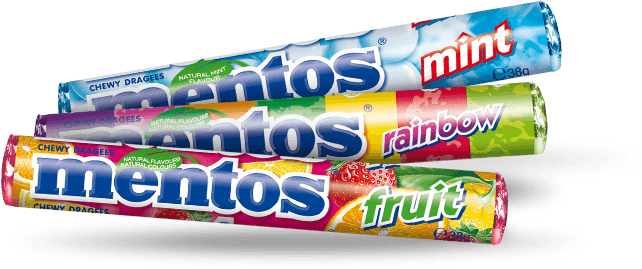
A test is set up to test which brand of soda creates the biggest foam explosion when adding a Mentos candy. Three different sodas were tested. They measured the height of the foam eruption. What is the dependent variable?
a)
Brand of soda
b)
Number of mentos candies used
c)
Height of foam eruption
d)
Temperature of soda
4.
Research Question: How does the type of gasoline put in a car effect how fast the car can drive? What is the independent variable?
a)
Type of gasoline
b)
which car the gas is put into
c)
how fast the car can drive
d)
how much gas is put into the car
5.
This variable is the actual data collected during the experiment.
a)
independent variable
b)
dependent variable
c)
control group
d)
data group
6.
This variable in an experiment is the one being deliberately changed by the scientist.
a)
dependent variable
b)
independent variable
c)
data
d)
control group
7.
Things that stay the same throughout the whole experiment are called
a)
controls
b)
dependent variables
c)
independent variables
d)
constants
8.
The yard is wet so it must have rained last night is an example of a (an)
a)
constant
b)
control
c)
inference
d)
quantitative data
9.
An experiment is conducted to test which kind of cat food a cat likes best. The amount of food the cat eats is recorded and four different type of food are tested. What is the dependent variable?
a)
The cat food
b)
The cat
c)
The amount of food the cat eats.
d)
The bowl the cat ate out of.
10.
What tool do we use to measure mass?
a)
graduated cylinder
b)
beaker
c)
ruler
d)
balance
11.
Which instrument is used for precise measurements of liquids?
a)
graduated cylinder
b)
measuring cup
c)
beaker
d)
beaker
12.
A group of scientists genetically engineered a type of bean plant so it was naturally resistant to insect pests. Which of these was most likely part of their original definition of the problem they wished to solve?
a)
Keep insects away from where people live
b)
Grow bean plants with less water
c)
Use fewer chemicals pesticides
d)
Store beans longer without fear of spoilage
13.
Trina wanted to find out which of her two rubber balls could bounce the highest. She took the first ball and dropped it onto the cement sidewalk. She then dropped the second ball from the same height on the grass. She recorded how high each ball bounced. Her experiment could be improved by
a)
measuring the time it takes for each ball to reach its maximum height
b)
bouncing both balls on the same surface
c)
dropping the second ball from a higher position
d)
bouncing each ball a different number of times
14.
Students are growing plants in the dark or in the light to see which grows better. They put 3 seeds in the dark and 5 seeds in the light because they know seeds are more likely to dry out in the light.
How could this experiment be improved?
a)
Put all plants in the light.
b)
Put all plants in the dark (where they sprout better)
c)
Put the same number of seeds in each container.
d)
put all the plants in the light so they grow better
15.
A student is testing how a magnet causes different objects to move, by seeing how far away the magnet could be from an object. The student tested three different magnetic objects, on five different surfaces, multiple times. The students also used a blue magnet, a yellow magnet, and a green magnet. What did the students do wrong in testing their experiment?
a)
They didn't repeat their experiment a couple of times.
b)
They only had two things that were changing.
c)
They forgot to test something that was non-magnetic
d)
They had too many variables
16.
How does changing the shape of a kite affect it's ability to fly?
a)
testable
b)
nontestable
17.
Are cats better than dogs?
a)
testable
b)
nontestable
18.
Students put two plants in the sun. Plant A is in the sun for 10 minutes. Plant B is in the sun for 1 hr. Students decide that plant B is better at photosynthesis. This is wrong because...
a)
They didn't control all variables
b)
The independent variable was sunlight
c)
The dependent variable was amount of gas produced
d)
they used different amounts of water
19.
The step by step directions of the experiment are found in the:
a)
hypothesis
b)
conclusion
c)
procedure
d)
data table
20.
Data that proves or disproves a claim.
a)
models
b)
explanation
c)
evidence
d)
variable
21.
What step does every scientific experiment begin with?
a)
hypothesis
b)
question/problem
c)
procedures
d)
conclusion
22.
The summary at the end of an experiment that explains the results.
a)
conclusion
b)
procedures
c)
materials
d)
responding variable
23.
Observations made during an experiment are called:
a)
data
b)
problems
c)
conclusions
d)
questions
24.
When you use observations and prior knowledge to draw conclusion or make guesses is called a(n)______________.
a)
Observation
b)
Inference
c)
Conclusion
d)
Classify
25.
Which statement is an inference about this picture?
a)
The van is tan.
b)
The van ran into KFC.
c)
The driver was not paying attention to the road.
d)
An ambulance is at KFC.
26.
A statement describing what will happen in the future is a ________________
a)
Observation
b)
Prediction
c)
Inference
d)
clue
27.
Which word best describes the statement: Andy has a green lunch box.
a)
Observation
b)
Prediction
c)
Inference
d)
Classifying
28.
Which word best describes the statement: I believe it will rain tomorrow.
a)
Classifying
b)
Inference
c)
Observation
d)
Prediction
29.
When you are using 1 or more of your 5 senses, you are making a(n) ______________.
a)
Classification
b)
Observation
c)
Prediction
d)
Conclusion
30.
True or False;
A Hypothesis has to be correct.
a)
True
b)
False
31.
Which is the dependent variable in Amelia's experiment?
a)
the number of bean plants in each group
b)
the amount of water given daily to each plant
c)
the height of each bean plant
d)
the amount of fertilizer given to each group of bean plants
32.
According to the graph how far does the person travel in the first 5 seconds?
a)
2 m
b)
10 m
c)
0 m
d)
5 m
33.
What is the person doing from 5 seconds to 10 seconds?
a)
Walking
b)
Running
c)
Standing Still
d)
Walking Fast
34.
Which runner won the race?
a)
A
b)
B
c)
C
35.
The distance-time graphs shown represent the motion of a car. Which of the following graphs represents the car at constant speed?
a)
graph A
b)
graph B
c)
graph C
d)
graph D
36.
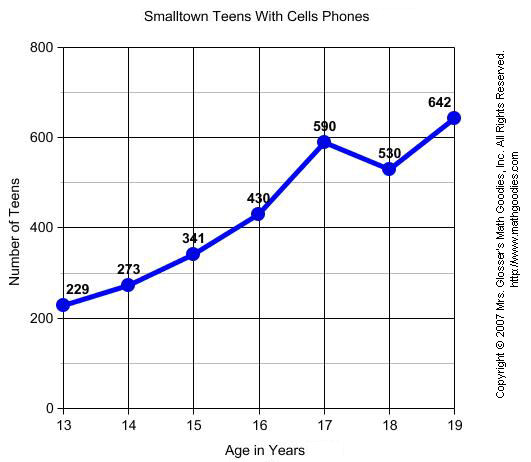
What label is along the y-axis in this graph?
a)
Copyright 2007
b)
Lines
c)
Age in Years
d)
Number of Teens
37.
What must be TRUE of any hypothesis?
a)
It must be proven correct
b)
It must not be based on observations
c)
It must be testable
38.
Factors that are not being tested and are kept the same
a)
Controlled variables
b)
Inference
c)
Quantitative observation
39.
An if/then statement that shows a cause & effect relationship is included in the:
a)
data table
b)
materials list
c)
hypothesis
40.
Eiko is doing an experiment to determine the best fertilization plan for bean plants. She will test 4 plants using this schedule. Plant Fertilization Schedule A never B monthly C weekly D daily
Which plant is the control?
a)
Plant A
b)
Plant B
c)
Plant C
d)
Plant D
41.
Martin is doing an experiment to see the way plants grow without soil. He is growing the plants in different solutions of water and nutrients. In this experiment, what is a plant that gets no nutrients called?
a)
condition
b)
control
c)
mixture
d)
variable
42.
Zack is testing whether temperature affects the distance a rubber band can be stretched before it breaks. He heats some rubber bands in the microwave oven. He puts some on the kitchen counter. He puts some in the refrigerator and some in the freezer.
Which set-up is the control group?
a)
rubber bands on the counter
b)
temperatures of the rubber bands
c)
distance the rubber bands can stretch
d)
number of rubber bands in each group
43.
You need to be able to put the information you collect into a format that is easy to understand like a table or graph.
a)
State Conclusion
b)
Organize and analyze the data
c)
Make an observation and record the data
d)
Design an experiment
44.
A hypothesis is
a)
a random guess
b)
an explanation that answers a question
c)
an experiment
45.
Scientists base their hypothesis only on their obeservations
a)
True
b)
False
46.
A hypothesis is based on observations and research
a)
True
b)
False
47.
Scientific questions have to be...
a)
Measurable
b)
Easy
c)
Interesting
48.
The factors in an experiment that can be changed.
a)
variables
b)
quantitative data
c)
hypothesis
d)
steps
49.
How is it determined if a hypothesis is correct or incorrect?
a)
A focused question is decided given.
b)
Research within written sources is conducted.
c)
An experiment is carried out to test the hypothesis.
d)
Scientists communicate their results.
50.
What is a dependent variable?
a)
The variable you measure
b)
The variable you test or change
c)
The variable that is kept the same
51.
Which statement best states the importance of using control groups?
a)
Control groups allow comparison between subjects receiving a treatment and those receiving no treatment.
b)
Control groups eliminate the need for large sample sizes, reducing the number of measurements needed.
c)
Control groups eliminate the need for statistical tests and simplify calculations.
d)
Control groups provide a method by which statistical variability can be reduced.
52.
In 1928, the scientist Alexander Fleming was trying to grow the bacterium Staphylococcus, and by chance, discovered that it would not grow in the presence of a mold that he named Penicillium. In 1939, Ernst Chain and Howard Florey purified penicillin, and in 1941, penicillin was first used to treat bacterial diseases. In 1945, Alexander Fleming, Ernst Chain, and Howard Florey received the Nobel Prize in medicine for the discovery and isolation of penicillin. These facts show that —
a)
Florey and Chain unfairly used Fleming’s work and should not have received the Nobel Prize
b)
whenever possible, the Nobel Prize should be given to more than one person
c)
scientific progress often requires the efforts of many people working together
d)
chance plays no role in scientific discoveries
Reset