
 Worksheets
AQA - Rates of Reactions
Total questions: 25
Worksheet time: 21mins
Name
Class
Date
1.
Rate of chemical reaction means
a)
amount of product formed
b)
speed of reaction
c)
concentration of reacting particles
d)
combining reactants with products
2.
Which factors increase the rate of a reaction.
a)
increasing temperature
b)
increasing concentration
c)
increasing surface area
d)
all of these
3.
Increase in temperature of the reactants can do one of the following
a)
Slow collision frequency
b)
Allow less effective collision between the particles
c)
Neutralise the reaction
d)
increase collision between the particles thus increasing the rate.
4.
Why does a catalyst increase the rate of reaction?
a)
it produces extra energy for the reactants
b)
it increases the speed of the reactant particles
c)
it increases the frequency of particle collisions
d)
it reduces the activation energy of the reaction
5.
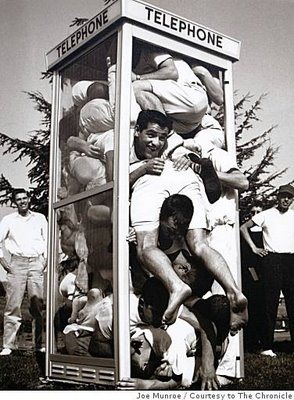
You make a space much smaller hoping to increase the reaction rates.
a)
temperature
b)
concentration
c)
catalyst
d)
pressure
6.
Which of the following increase the reaction rate?
a)
less surface area
b)
lower temperature
c)
an inhibitor
d)
increased concentration
7.
Why don't all collisions between particles cause a reaction?
a)
the particles also need to collide with a catalyst
b)
not all the particles collide with enough energy
c)
not all the particles collide at a high enough temperature
d)
the particles need to collide with each other twice
8.
Why does a higher temperature increase the rate of a reaction?
a)
it increases both the frequency and energy of particle collisions
b)
it only increases the frequency of particle collisions
c)
it only increases the energy of particle collisions
d)
it reduces the activation energy of the reaction
9.

B represents
a)
energy absorbed
b)
energy released
c)
activation energy
10.
To slow down a chemical reaction you will do one of the following:
a)
Place the reactants in hot water
b)
Place the products in ice bath
c)
Place the reactants in a ice bath
d)
Keep stirring the reactants with a stirring rod
11.

The picture shows a reversible chemical reaction taking place. How can equilibrium be reached?
a)
Stopper the flask.
b)
Add more reactants.
c)
Add more products.
d)
Cool the contents.
12.
Define chemical equilibrium.
a)
A reaction is reversible.
b)
The concentration of the reactants is equal to the concentration of the products.
c)
The rate of a forward reaction is equal to the rate of the reverse reaction.
d)
The reaction stops and no further change in concentration occurs.
13.

This symbol indicates that a reaction is ____________
a)
reversible
b)
irreversible
14.
When the rate of the forward reaction is equal to the rate of backward reaction, the system is said to be in
a)
Chemical Equilibrium
b)
Chemical Balance
c)
Chemical Constant
d)
Chemical Reaction
15.
How does a catalyst change during a reaction?
a)
It is part of the products
b)
It combines with the reactants
c)
It precipitates
d)
It remains unchanged
16.
A substance that increases speed of chemical reaction without being changed is called:
a)
Catalyst
b)
Acid
c)
Base
d)
pressure
17.
Increase in temperature of the reactants can do one of the following
a)
Slow collision frequency
b)
Allow less effective collision between the particles
c)
Cause particles to lose speed
d)
Increase collision between the particles thus increasing the reaction rate
18.
Decreasing the particle size increases the reaction rate because
a)
It makes particles move faster
b)
It increases the likelihood of collisions with the correct geometry
c)
It decreases the surface area available to react
d)
It increases the number of collisions
19.

Identify where the reaction has finished
a)
A
b)
B
c)
C
d)
D
20.
Order the letters from highest to lowest rate of reaction.
a)
A > B > C > D
b)
A > BC > D (B and C have the same rate)
c)
A > B > CD (C and D have the same rate)
d)
D > C > B > A
21.
Identify the part of the graph with the fastest rate of reaction.
a)
A
b)
B
c)
C
d)
D
22.
What method can NOT be used to collect gas?
a)
Using a gas syringe
b)
Collecting it in a measuring cylinder under water
c)
Measuring the change in mass
d)
Seeing how quickly the solution goes cloudy
23.
How does the energy in a reversible reaction in one way compare with the opposite direction?
a)
more energy going forward
b)
more energy going back
c)
the same
d)
no difference
24.
Which of these statements about rate of reaction graphs is NOT true?
a)
the steeper the slope, the faster the rate of reaction
b)
a flat slope means there is no reaction
c)
the shallower the slope, the faster the reaction
d)
as the reaction slows, the slope gets more shallow
25.
A ______ is a substance that speeds up the rate of a
chemical reaction without being used up in the reaction itself.
a)
Concentration
b)
Catalyst
c)
surface area
100 %

