wayground logo

Free Printable Worksheets

Font size

S
M
L
XL
Worksheets

7th Life Science

Total questions: 129

Worksheet time: 2hrs 6mins

Name
Class
Date
1.
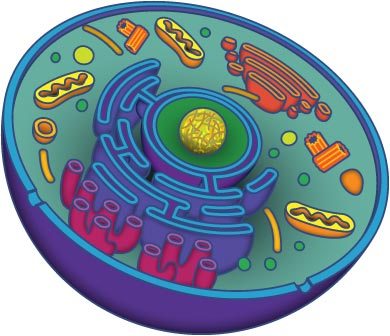
Which organelle is only found in a plant cell? 
a)
nucleus
b)
chloroplast
c)
mitochondria
d)
cell membrane
2.
Directs all cell activities through the DNA located there.
a)
Lysosomes
b)
Nucleus
c)
ribosomes
d)
Mitochondria
3.
Which of the following is directly involved in the transportation of materials inside/within the cell?
a)
Endoplasmic Reticulum
b)
Vacuole
c)
Lysosome
d)
Mitochondria
4.
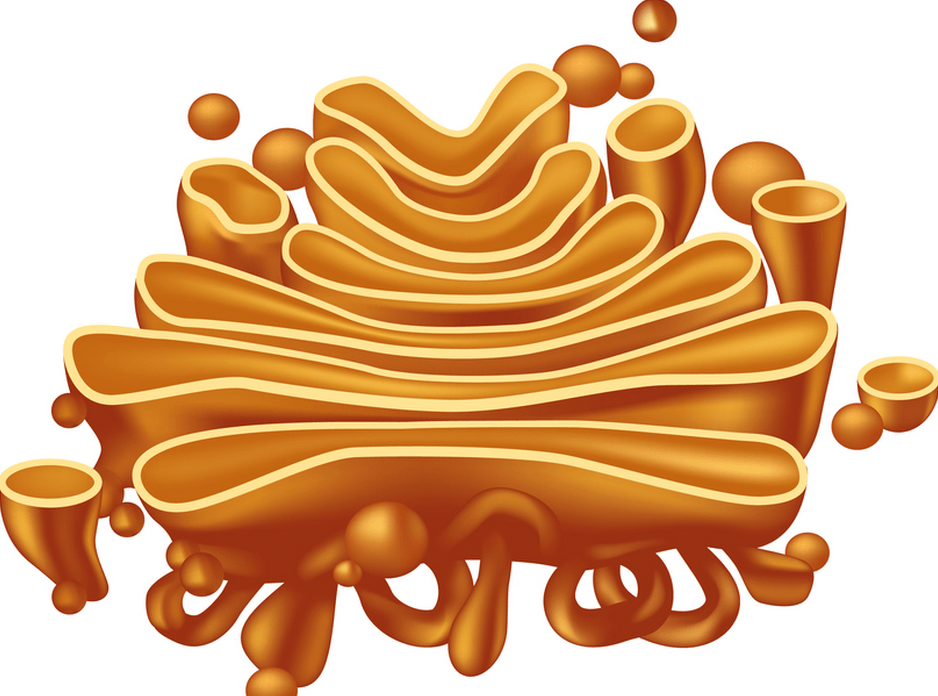
I am a protein packaging and shipping machine! Who am I?
a)
vacuole
b)
ribosome
c)
mitochondrion
d)
golgi apparatus
5.
What is found in both plant and animal cells but is much larger in plant cells?
a)
Nucleus
b)
Mitochondria
c)
Chloroplast
d)
Vacuole
6.
Where are proteins made?
a)
Golgi body
b)
Mitoichondria
c)
Chromosomes
d)
Ribosomes
7.
I am the outer most layer of an animal cell. What am I?
a)
cell wall
b)
nucleus
c)
cell membrane 
d)
cell skin
8.
What organelle is called the "powerhouse" of a cell?

a)
Endoplasmic Reticulum
b)
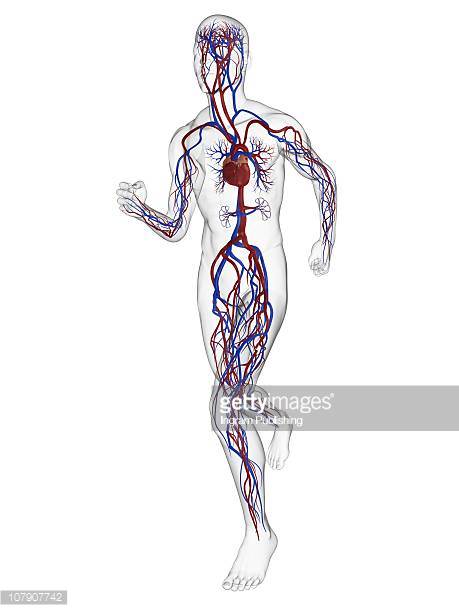
Nucleus
c)
Mitochondria
d)
Nucleolus
9.
The ___________ is the basic unit of life
a)
organ
b)
cell
c)
atom
d)
tissue
10.
A group of tissues that work together to perform a similar function is called_____. (Examples include the heart, lungs or stomach)
a)
cells
b)
tissues
c)
organs
d)
organ system
11.
 A group of cells that have similar functions? Examples are nervous, epithelial, muscle and connective
a)
cells
b)
tissues
c)
organs
d)
atoms
12.
Organs that work together to perform a related function is called _____________?
a)
cells
b)
tissues 
c)
organ system
d)
organs
13.
When many organ systems work together it can form...
a)
organ
b)
cells
c)
organ system
d)
organism 
14.
The brain is a part of which organ system?
a)
nervous
b)
skeletal
c)
muscular
d)
digestive 
15.
Robert Hooke, Anton van Leeuwenhoek, Theodor Schwann, Rudolf Virchow, and Matthias Schliden were all responsible for what theory?
a)
The Theory of Gravity
b)
The Theory of Relativity
c)
The Cell Theory
d)
The Theory of Continental Drift
16.
All cells come from___________ cells.
a)
pregnant
b)
pre-existing
c)
paternal
d)
pin size
17.
What tool do you use to view the cells?
a)
metric ruler
b)
centrifuge
c)
microscope
d)
pipette
18.
All living things are made up of...
a)
cells
b)
cell tissues
c)
organ
d)
organ systems
19.
An organism made of one cell is called
a)
unicellular
b)
multicellular
20.
What is the fluid inside a cell called? 
a)
Endoplasimic Reticulum
b)
Orange Juice
c)
Water
d)
Cytoplasm
21.
This organelle helps plants keep their rigid structure. 
a)
Cell wall
b)
Cell membrane
c)
Chloroplast
d)
Nucleus
22.

Four ways that bacteria are helpful to people.

a)

Provide oxygen, food products, environmental recycling, medicine.

b)

Provide carbon dioxide, food products, environmental recycling, medicine.

c)

Provide oxygen, waste products, environmental recycling, medicine.

d)

Provide oxygen, food products, environmental recycling.

23.

Tiny structures that produce proteins inside bacteria.

a)

bacteria

b)

cytoplasm

c)

ribosomes

d)

flagellum

24.

A process by which bacteria reproduce asexually

a)

binary fission

b)

conjugation

c)

endospore

d)

pasteurization

25.

Organisms that break down large, complex chemicals in dead organisms into small, simple chemicals.

a)

conjugation

b)

endospore

c)

pasteurization

d)

decomposers

26.

A process by which bacteria reproduce sexually

a)

conjugation

b)

endospore

c)

pasteurization

d)

decomposers

27.

The process of breaking down food to release energy

a)

cellular respiration

b)

binary fission

c)

conjugation

d)

endospore

28.

Tiny single-celled organisms that live almost everywhere

a)

bacteria

b)

cytoplasm

c)

ribosomes

d)

flagellum

29.

A method of slowing down food spoilage

a)

conjugation

b)

endospore

c)

pasteurization

d)

decomposers

30.

A small, rounded, thicked-walled resting cell inside a bacteria cell

a)

conjugation

b)

endospore

c)

pasteurization

d)

decomposers

31.

A whip-like structure thet helps a bacterial cell to move

a)

ribosomes

b)

flagellum

c)

cellular respiration

d)

binary fission

32.
Prokaryotes are unlike all other organisms in that their cells 
a)
do not have a nucleus
b)
have organelles
c)
have cell walls
33.
Bacteria that contain chlorophyll and perform photosynthesis like a plant belong in the group
a)
archaebacteria
b)
cyanobacteria
c)
chemoautographs
d)
pathogens
34.
The process of converting nitrogen into a form plans can use is known as nitrogen
a)
conjugation
b)
sterilization
c)
fixation
d)
decomposition
35.
Name the three cell shapes of prokaryotes
a)
rod, circle spiral
b)
cocci, bacilli, spirilli
c)
crystal, tube, spaghetti
36.
Most bacteria are...
a)
Autotrophs
b)
Heterotrophs
37.
Antibiotics kill viruses
a)
True
b)
False
38.
A(n) _____ is a virus that enters a bacterial cell.
a)
endospore
b)
decomposer
c)
plasmid
d)
bacteriophage
39.
When a virus invades a living cell, its _______
takes over the cell's functions.
a)
outer coat
b)
genetic material
c)
core
d)
cytoplasm
40.
Which viral life cycle allows viral genetic material to lay dormant while the host cell reproduces?
a)
lytic
b)
mitosis
c)
lysogenic
d)
S phase
41.
Which viral life cycle kills its host cell by lysing?
a)
lytic
b)
mitosis
c)
lysogenic
d)
S phase
42.
What do viruses need to reproduce?
a)
they need genetic material
b)
They need a host cell
c)
They need  bacteria
d)
They need insulin
43.
Needs host cell to reproduce.
a)
Virus
b)
Bacteria
c)
Fungus
d)
Protozoan
44.
What helps prevent viral diseases?
a)
Vaccines
b)
Antibiotics
c)
Herbal tea
d)
Gene Therapy
45.
A pathogen.........
a)
makes proteins
b)
causes infection or disease
c)
is made of cells
d)
is a living thing
46.
What is the 1st step of virus infection?
a)
Entry
b)
Attachment
c)
Replication
d)
Assembly
47.
 Like all other body systems, the immune system helps the body maintain homeostasis.  Which statement best describes how the immune system does this?  
a)
it protects other organs and tissues from infection and disease
b)
it breaks down food to provide cells with nutrients
c)
it gathers information through the senses and controls all other body systems
d)
 it transports oxygen and carbon dioxide
48.
The picture below illustrates one internal part of the body’s immune system. What process is illustrated in the picture?  
a)
a skin cell destroying germs.
b)
inflammation near an opened wound
c)
a white blood cell destroying pathogens
d)
mucus in the lungs destroying pathogens
49.
 Liz notices that shortly after cutting her arm accidentally the area around the cut is turning red and feeling hot.  Which immune system defense is Liz experiencing?  
a)
inflammation
b)
white blood cell clotting
c)
skin
d)
fever
50.
Diseases are passed from human to human by these four types of germs: 
a)
Viruses, influenza, HIV, and vaccines
b)
Viruses, bacteria, fungi, and parasites
c)
Viruses, cancers, mutagens, and DNA
d)
Viruses, blood, pollutants, and symptoms
51.

Antibody

a)

a substance produced by the body that attaches to a pathogen and aids in its destruction

b)

An organism that tlives and feeds off another organism

c)

ability of the body to defend itself against disease

d)

a microorganism that can cause disease

52.

Communicable disease

a)

all the cells, tissues, and organs that work to protect the body from disease

b)

disease caused by a pathogen that can spread easily from person to person

c)

disease that does not typically spread from person to person

d)

ability of the body to defend itself against disease

53.

immunity

a)

a substance produced by the body that attaches to a pathogen and aids in its destruction

b)

a drug that can kill of stop the growth of harmful bacteria

c)

ability of the body to defend itself against disease

d)

all the cells, tissues, and organs that work to protect the body from disease

54.

Parasite

a)

tiny disease-causing structure that can only reproduce inside a living cell

b)

disease caused by a pathogen that can spread easily form person to person

c)

An organism that lives and feeds off another organism

d)

a microorganism that can cause disease

55.
What two things are found in the central nervous system?
a)
brain/spinal cord
b)
spinal cord/motor neurons
c)
motor/sensory neurons
d)
only brain
56.
Which part of the neuron is a long fiber that send information to other cells?
a)
dendrite
b)
terminal
c)
cell body
d)
axon
57.
Which part of your brain controls memory?
a)
cerebrum
b)
cerebellum
c)
medulla
d)
neurons
58.
True/False: Digestion begins in the mouth.
a)
True
b)
False
59.
Produces bile
a)
gallbladder
b)
stomach
c)
liver
d)
small intestine
60.
Tube that carries swallowed food to the stomach
a)
esophagus
b)
liver
c)
pancreas
d)
rectum
61.
Gland that produces insulin as well as other chemicals needed for digestion
a)
pancreas
b)
esophagus
c)
large intestine
d)
gall bladder
62.
Flap of skin that covers the opening to the windpipe during swallowing
a)
Stomach
b)
Pepsin
c)
Pancreas
d)
Epiglottis
63.
_______ allow nutrients to be absorbed by the blood and taken through the body.
a)
salivary glands
b)
villi
c)
small intestine
64.
Acids and enzymes are used in 
a)
physical digestion
b)
chemical digestion
65.
What is the place where two bones meet?
a)
hinge
b)
bone
c)
spot
d)
joint
66.
What is the name for the connector that attaches muscle to bone?
a)
ligament
b)
tendon
c)
patella
d)
string
67.
What is the name for the connector that attaches bone to bone?
a)
ligament
b)
tendon
c)
patella
d)
string
68.

Which of the following is not a function of bones?

a)

Protection

b)

Blood cell formation

c)

Storage

d)

Absorption

69.
What is the disorder of the skeletal system that results in having very brittle, soft bones?
a)
Osteoporosis
b)
Osteomyelitis
c)
Arthritis
d)
Bursitits
70.
Bone formed by needlelike pieces of bone and lots of space are called
a)
Spongey bone
b)
Cartilage
c)
Compact bone
71.
Tissue found in some bones that makes blood cells
a)
red marrow
b)
yellow marrow
c)
canaliculi
d)
lamellae
72.
What do the bones create?
a)
white blood cells
b)
platlets
c)
red blood cells
d)
flying turkeys
73.
The joints in your knees and elbows are most similar to:
a)
a clock
b)
a screw
c)
a wheel
d)
a door hinge
74.
What are the 3 types of muscle tissue?
a)
Thigh, Calf, & Shoulder
b)
Traps, Forearm, & Abs
c)
Hamstring, Biceps, & Triceps
d)
Smooth Muscle, Cardiac Muscle, & Skeletal Muscle
75.
Which muscle type is found in your stomach, bladder, and intestines?
a)
Skeletal
b)
Smooth
c)
Cardiac
d)
Straight
76.
Which type of muscle is found in your heart?
a)
Skeletal
b)
Smooth
c)
Cardiac
d)
Straight
77.
Which muscles are involuntary?
a)
skeletal
b)
cardiac
c)
smooth
d)
smooth and cardiac
78.
When a muscle contracts, it _______
a)
gets longer
b)
gets shorter
c)
gets thinner
d)
grows hair
79.
Which types of muscle tissue are voluntary?
a)
Cardiac
b)
Skeletal
c)
Smooth
d)
Cardiac and Smooth
80.
Skeletal muscles are attached to the _________.
a)
Stomach
b)
Lungs
c)
Bones
d)
Involuntary Muscles
81.
What is a overstretched muscle/tendon called?
a)
contraction
b)
fractured
c)
broken
d)
strain
82.

Skeletal muscles work in pairs.

a)

True

b)

False

83.
What is the function of the kidneys in the excretory/urinary system?
a)
store urine before it is eliminated from the body.
b)
break down food into smaller pieces through chemical digestion
c)
filter blood of cellular waste material as a result of cellular respiration
d)
control thoughts, voluntary actions, and other sensations of the five senses.
84.
These organs are responsible for what?
a)
storing urine
b)
storing water
c)
filtering blood
d)
they don't have a particular job 
85.
Urine flows out of the kidneys through narrow tubes called
a)
Gallbladder
b)
Ureter
c)
Nephrons
d)
Urethra
86.
What is #3?
a)
Kidney
b)
Ureters
c)
Bladder
d)
Urethra
87.
secrete wastes including water, salts, and small amounts of urea
a)
appendix
b)
gall bladder
c)
salivary glands
d)
sweat glands
88.
Kidneys create a liquid called:
a)
Urine
b)
Blood
c)
Feces
d)
Carbon Dioxide
89.

What is the main organ of the circulatory system?

a)

small intestine

b)

bone

c)

lungs

d)

heart

90.

Arteries carry oxygen rich blood away from the heart.

a)

True

b)

False

91.

Veins carry oxygen poor blood back to the heart.

a)

False

b)

True

92.
______________ are the smallest blood vessels.
a)
Arteries
b)
Veins
c)
Capillaries
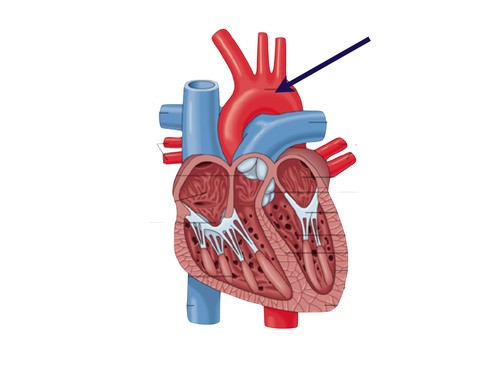
93.
Identify
a)
Pulmonary veins
b)
Pulmonary artery
c)
Aorta
d)
Vena cava
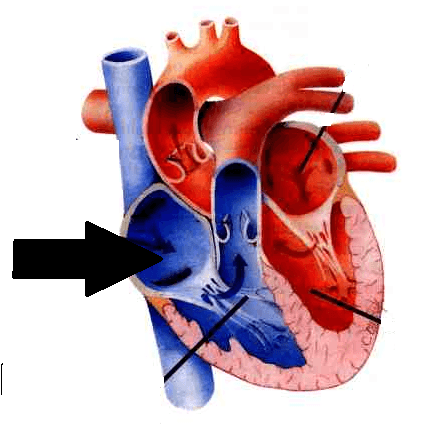
94.
Identify
a)
Left atrium
b)
Right atrium
c)
Left ventricle
d)
Right ventricle
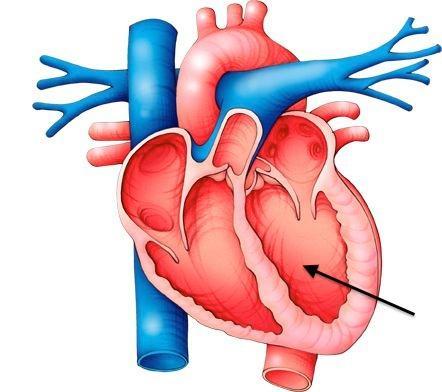
95.
Identify
a)
Left atrium
b)
Right atrium
c)
Left ventricle
d)
Right ventricle
96.
The heart has ___ chambers.
a)
1
b)
2
c)
3
d)
4
97.
The aorta is the largest artery in the body. The blood leaving the aorta is full of?
a)
Oxygen 
b)
Carbon Dioxide 
c)
White blood Cells 
d)
Potassium 
98.
What does Deoxygenated mean?
a)
Oxygen-rich
b)
Blood flow
c)
Oxygen-poor
d)
Water Flow
99.
A flap of tissue that prevents blood from flowing backward
a)
Aorta
b)
Atrium
c)
Septum
d)
Valve
100.
What does the Circulatory System do?
a)
Circulates the Blood throughout the body
b)
Circulates Water throughout the body
c)
Excretes Waste
d)
Controls all parts of the body
101.
A deficiency in hemoglobin or red blood cells.
a)
anemia
b)
polycythemia
c)
leukemia
d)
leukocytosis
102.
A cancer of the bone marrow that causes an over production of white blood cells
a)
leukopenia
b)
polycythemia
c)
anemia
d)
leukemia
103.
The liquid part of blood
a)
plasma
b)
water
c)
cytoplasm
d)
collagen
104.
Which blood cells are the most numerous?
a)
RBC
b)
WBC
c)
platelets
105.
Which blood type is the UNIVERSAL DONOR?
a)
O+
b)
O-
c)
AB+
d)
AB-
106.
Which blood type is the universal recipient?
a)
AB+ 
b)
AB-
c)
O+
d)
O-
107.
B cells, T cells, and natural killer cells are ______.
a)
monocytes
b)
basophils
c)
eosinophils
d)
lymphocytes
108.
What are the main organs of gas exchange in the respiratory system?
a)
diapragm
b)
lungs
c)
trachea
d)
bronchi
109.

When you breathe, your lungs take in ___ and remove ___.

a)

air/oxygen

b)

oxygen/carbon dioxide

c)

carbon dioxide/waste

d)

waste/air

110.
The two main branches from the trachea (one to each lung)
a)
bronchi
b)
alveoli
c)
capillaries
d)
bronchioles
111.
The air sacs that are covered with capillaries that separate gases we need from gases we don't need.
a)
bronchi
b)
lungs
c)
oxygen
d)
alveoli
112.
A disorder of the lungs called ____ causes the bronchi to become restricted (get smaller) so air can't get to the lungs.
a)
asthma 
b)
cold
c)
influenza 
d)
bronchitis 
113.
What are the most five important organs part of the respiratory system? 
a)
The nose,throat,lungs, and sub system 
b)
The nose,throat ,windpipe,voice box, lungs 
c)
Nose , Trachea
d)
Nose, Trachea, windpipe,oesphogus,lungs 
114.
What is the name of the muscle below the lungs that helps with breathing?
a)
trachea
b)
alveoli
c)
diaphragm
d)
bronchi
115.
What is an other word for windpipe?
a)
Larynx
b)
Trachea
c)
Oesophagus
d)
Diaphragm
116.
Fission, budding, and regeneration are all examples of what kind of reproduction? 
a)
Asexual Reproduction 
b)
Sexual Reproduction 
117.
How does this protist move? 
a)
Pseudopods 
b)
Cilia 
c)
Flagellum
118.
How does this protist move? 
a)
Flagellum
b)
Cilia 
c)
Pseudopods
119.
A protist that can not make its own food is called what? 
a)
Autotroph
b)
Heterotroph 
120.
A protist that can make its own food is called what? 
a)
Heterotroph
b)
Autotroph
121.
What does the word Pseudo mean?
a)
Large
b)
Small
c)
Real
d)
Fake
122.
What type of cell(s) do Protist have? 
a)
Eukaryotic 
b)
Prokaryotic
123.
Which are examples of fungi?
a)
mold
b)
yeast
c)
mushrooms
d)
all of the above
124.
What are some bad effects of fungi?
a)
Athletes Foot
b)
Ringworm
c)
Mushroom's produce deadly poison
d)
All of the above
125.
How can humans benefit from fungi?
a)
 Eats the bacteria in their yards.
b)
Makes pretty flower-like structures.
c)
Used dish soaps
d)
Used in antibiotics
126.
Mold is classified into which of the following kingdoms?
a)
plantae
b)
fungi
c)
protista
d)
bacteria
127.
Fungi can be 
a)
decomposers or producers
b)
consumers or producers
c)
consumers or decomposers
d)
none of these
128.
Any method of reproducing that create offspring identical to the single parent. 
a)
asexual
b)
budding
c)
sexual
d)
sporogenesis
129.
Fungi that feed on and HELP the host.
a)
saprophytic
b)
parasitic
c)
symbiotic