wayground logo

Free Printable Worksheets

Font size

S
M
L
XL
Worksheets

6th Grade Science Benchmark

Total questions: 92

Worksheet time: 1hrs 19mins

Name
Class
Date
1.
Which organism do the owl and the weasel compete for in the food web?
a)
Hawk
b)
Spider
c)
Grasshopper
d)
Shrew
2.
Which of the following is a herbivore?
a)
cricket
b)
frog
c)
hawk
d)
shrew
3.
Which of the following would be the most likely effect, if there were a sudden increase in the cricket population?
a)
There would be a decrease in the small bird population.
b)
There would be a decrease in the grass/flowers population.
c)
There would be a decrease in the mice population.
d)
There would be an increase in the grass/flowers population.
4.
A consumer that hunts is called:
a)
a producer.
b)
an omnivore.
c)
a predator.
d)
a herbivore.
5.
Cattle egrets forage (feed) in fields among cattle. The egret gets easy access to flying insects stirred up by the cattle, and the cattle don't care if they are there or not.
a)
mutualism
b)
commensalism
c)
competition
d)
parasitism
6.
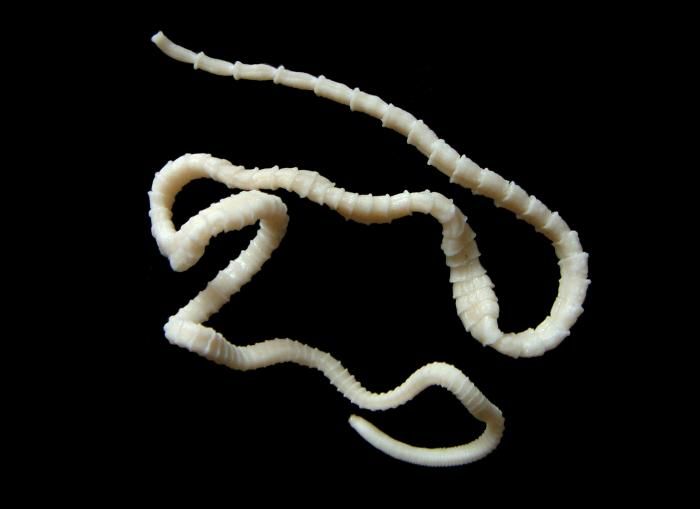
A tapeworm and a cat have this type of relationship.
a)
mutualism
b)
parasitism
c)
commensalism
d)
competition
7.
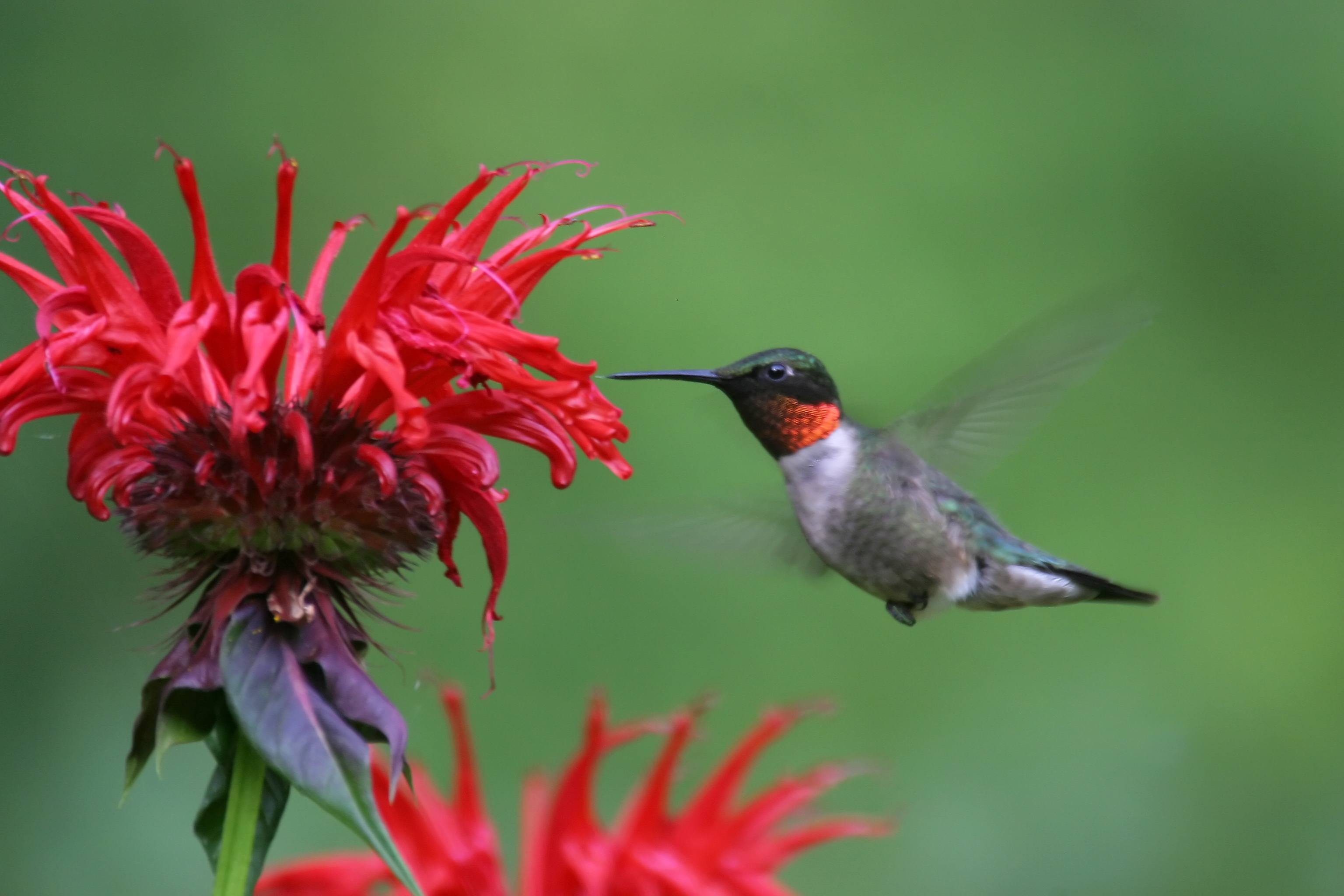
What type of symbiosis?  Hummingbirds feed on nectar from flowers.  The flowers are pollinated by hummingbirds as they move from flower to flower.
a)
commensalism
b)
mutualism
c)
parasitism
d)
predation
8.
Remoras attach themselves to a shark’s body. They then travel with the shark and feed on the leftover food scraps from the shark’s meals. The relationship neither harms nor benefits the shark. 
a)
parasitism
b)
commensalism
c)
mutualism
9.
Which statement is true?
a)
The light bulb will light up because the  circuit is complete.
b)
The light bulb will light up because the  circuit is broken.
c)
The light bulb will not light up because the  circuit is complete.
d)
The light bulb will not light up because the  circuit is broken.
10.

Oxygen, Water, Sunlight, and Water Temperature are all examples of...?

a)

biotic factors

b)

nuetral factors

c)

living factors

d)

abiotic factors

11.

When you heat air or water molecules, the molecules will move _______________.

a)

slower

b)

the same

c)

faster

12.

wood burning, cooking pancakes, and rusting are all examples of..

a)

chemical change

b)

physical change

13.

Which s the layer of air where planes fly?

a)

troposphere

b)

mesosphere

c)

stratosphere

d)

thermosphere

14.

What is the independent variable?

a)

the variable the scientist changes

b)

the variable the scientist measures

15.

What is the dependent variable

a)

the variable the scientist measures

b)

the variable the scientist changes

16.

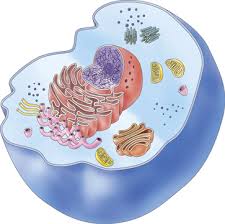
Question in image.

a)

They act as the powerhouse to create energy

b)

They synthesize proteins.

c)

They store and transport proteins

d)

They are organelles that modify cell products

17.

Which of the following models is incorrectly matched with its formula?

a)
b)
c)
d)
18.
The energy of a bow changes when the string  is pulled back.
Which change will occur in the bow after the  string is released?
a)
Nuclear potential energy will decrease. 
b)
Elastic potential energy will decrease. 
c)
Gravitational potential energy will increase.
d)
Chemical potential energy will increase.
19.
The arrows in the diagram represent air movement.
This air movement is a result of
a)
the waves pushing against the land.
b)
the sun heating the land and water differently.
c)
water evaporating from plant leaves.
d)
particles of pollution entering the air.
20.
At which point on the ramp will the toy car have the greatest kinetic energy?
a)
1
b)
2
c)
3
d)
4
21.
Which animal from this  food web receives energy  directly from producers?
a)
hawk
b)
snake
c)
mouse
d)
owl
22.
When a student pressed the button on a battery-powered flashlight, the light bulb began to glow. The first step in this energy transformation is mechanical. What are the next steps in this energy transformation?
a)
electrical to light to chemical 
b)
chemical to electrical to light 
c)
chemical to light to electrical 
d)
electrical to chemical to light
23.
Which two organisms from this food web are both classified as consumers?
a)
tree and bird
b)
insect and fox
c)
rabbit and grass
d)
grass and tree
24.
phytoplankton→krill→small fish→large fish
What is the role of krill in this food chain?
a)
scavenger
b)
producer
c)
consumer
d)
decomposer
25.
As the tire swings back and forth, a relationship occurs between which two types of energy?
a)
heat and electromagnetic
b)
mechanical and nuclear
c)
potential and kinetic
d)
physical and chemical
26.
Which factor is a biotic element of an Arctic tundra?
a)
strong wind
b)
cold temperature
c)
frozen soil
d)
snowy owl
27.
SC.6.L.14.1
Which of the following is a correct sequence of levels of organization in the body?
a)
atoms, molecules, cells, tissues, organs.
b)
atoms, organ systems, cells, organs, tissue
c)
molecules, organs, cells, tissues, organ systems.
d)
atoms, cells, tissues, molecules, organ systems.
28.
SC.6.L.14.3
The process in plant cells that converts energy from the sun into energy stored in food is ________.
a)
photosynthesis
b)
cellular respiration
c)
homeostasis
d)
cell division
29.
SC.6.L.14.5
Which term best fits the level of organization pictured in the diagram?
a)
organ
b)
tissue
c)
single cell
d)
organ system
30.
The way energy is passed from one organism to another
a)
food chain
b)
energy
c)
extinct
d)
habitat
31.
Which one is NOT an example of a decomposer?
a)
mushroom
b)
leaves
c)
mold
d)
worm
32.
The arrows in a food chain or web represents what?
a)
They point to the organism that is being eaten.
b)
It shows how sunlight flows within an ecosystem.
c)
They show what direction the energy is flowing between organisms. 
d)
They represent how water is transferred within a habitat.
33.
_______ factors are all living things located within an ecosystem.
a)
biotic
b)
abitotic
c)
biome
d)
niche
34.
What are all members of one kind of organism that live in a particular area?
a)
population
b)
microrganisms
c)
community
d)
environment
35.
The deer and the rabbit living together make up a
a)
community
b)
population
c)
biosphere
d)
food web
36.
What is the first place energy starts in a food chain?
a)
plants
b)
sun
c)
animals
d)
carnivores
37.
Sharks consume smaller fish they catch in the ocean. This is an example of what type of relationship?
a)
predator/prey
b)
parasite/host
c)
prey/predator
38.
What does the picture show?
a)
A Food Web
b)
An Ecosystem
c)
A Food Chain
d)
A nice scenery
39.
An organism that lives by breaking apart dead organic matter into simpler parts is...
a)
scavenger
b)
consumer
c)
decomposer
d)
carnivore
40.
Which is a biotic factor in a deciduous forest?
a)
rocks
b)
soil
c)
hills
d)
deer
41.
The root word "chloro" means...
a)
nucleus
b)
cell
c)
put together
d)
green
42.
What kind of cells do humans have?
a)
Eukaryotic
b)
Prokaryotic
43.
What does a eukaryotic cell have that a prokaryotic cell does not?
a)
DNA
b)
Cytoplasm
c)
Cell membrane
d)
Nucleus
44.
The root word "eu-" means...
a)
nucleus
b)
before
c)
cell
d)
true
45.
Which part (s) of a plant are made of cells?
a)
Roots only
b)
Stem only
c)
Leaves only
d)
All of the plant
46.
Which of the following is found in plant cells, but not animal cells?
a)
Cell membrane
b)
Cell Wall
c)
Cytoplasm
d)
Nucleus
47.
The root word "kary" means...
a)
true
b)
before
c)
green
d)
nucleus
48.
Organisms that are made up of only one cell are called ____________.
a)
Eukaryotic
b)
Non-living
c)
Unicellular
d)
Multicellular
49.
The root word "photo-" means...
a)
very small
b)
light
c)
form
d)
nourishment
50.
I am the outer most layer of an animal cell. What am I?
a)
cell wall
b)
nucleus
c)
cell membrane 
d)
cell skin
51.
The root word "synthesis" means....
a)
light
b)
self
c)
put together
d)
sit
52.
What type of cell is this?
a)
Animal Cell
b)
Plant Cell
c)
Fungi Cell
d)
Bacteria Cell
53.
The root word "multi" means...
a)
many
b)
one
c)
nucleus
d)
form
54.
The function of the nucleus is to hold the DNA and ____________.
a)
to hold the cell parts in place
b)
to control what goes in and out of the cell
c)
to make food for the organism
d)
to control all cell activities
55.
The smallest living part of all organisms is a(n) _________.
a)
cell
b)
atom
c)
organ
d)
tissue
56.
What is the BEST reason that fire is not considered a living organism?
a)
It requires oxygen to burn
b)
It is not made of cells
c)
It can move from place to place
d)
It can grow larger
57.
This cell is most likely a(n)--
a)
prokaryotic cell
b)
animal cell
c)
plant cell
d)
bacteria cell
58.

Which of the following supports and protects the cell?

a)

cell wall

b)

nucleus

c)

chromosome

d)

golgi bodies

59.

What is the area between the nucleus and cell membrane that is a jelly like substance that contains organells?

a)

nucleus

b)

chromosome

c)

cytoplasm

d)

ER

60.

What is the 'control center' of the cell that regulates all

a)

cytoplasm

b)

cell membrane

c)

chromosome

d)

nucleus

61.

Where are proteins made?

a)

golgi bodies

b)

cell wall

c)

ribosome

d)

lysosome

62.

Which is a rod shaped "power house" of the cell that breaks down food and turn it into energy

a)

ribosome

b)

nucleus

c)

lysosome

d)

mitochondrion

63.

Which of the following stores food, water, wastes and keeps the plant cell firm?

a)

vacuole

b)

golgi bodies

c)

nucleus

d)

lysosome

64.
Which of the following is the correct order of organization in living things from most basic (simple) to most complex?
a)
a.  Organism, cell, tissue, organ, organ system
b)
a.  Organ system, organ, tissue, cell, organism
c)
a.  Cell, tissue, organ, organ system, organism
d)
a.  Cell, organ, tissue, organ, organism, organ system
65.
Anything that can perform life processes by itself is a/an
a)
cell
b)
organ
c)
organism
d)
organ system
66.
A group of similar cells that come together to perform a specific function is a/an
a)
organ
b)
organism
c)
organ system
d)
tissue
67.
When a group of organs work together to perform a particular function they create a/an
a)
organ system
b)
organism
c)
tissue
d)
organ
68.
The smallest level of organization of life in an organism
a)
tissue
b)
cell
c)
organ
d)
organ system
69.
The cell is the building block of all living things.
a)
True
b)
False
70.
Which is an example of an organism?
a)
a beetle
b)
a lake
c)
a rock
d)
a shell
71.
Tissue that works together to perform a function
a)
organ
b)
cell
c)
organ system
d)
organism
72.
The heart contains different types of tissue. What level is the heart?
a)
cell
b)
organ system
c)
organ
d)
tissue
73.
A group of different tissues working together to do a job is called a/an _____.
a)
tissue
b)
organ
c)
stem cell
d)
organ system
74.
This is a example of........ 
a)
organ system
b)
cells
c)
organ
d)
tissue
75.
This is a example of ........
a)
cell
b)
organ system
c)
organ
d)
tissue
76.
This is a example of ........
a)
organ
b)
organ system
c)
tissue
d)
cell
77.
Which is the correct formula for:
 three hydrogen (H)
one sulfur (S)
four oxygen (O)
a)
H3SO4
b)
HSO4
c)
H4S3O
d)
H2O
78.
Number of C's in 2Na₂CO₃
a)
1
b)
2
c)
3
d)
5
79.
The number of Na's in Na₂CO₃
a)
1
b)
2
c)
3
d)
6
80.
How many Elements are in the compound C2H8O ?
a)
2
b)
1
c)
3
d)
0
81.
How many total atoms are in the compound C2H8O ?
a)
11
b)
2
c)
8
d)
1
82.
How many Aluminum are in Al2O3?
a)
3
b)
2
c)
5
83.
How many total atoms are in the compound C2H8O ?
a)
11
b)
2
c)
8
d)
1
84.
How many Chlorine are in MgCl2?
a)
2
b)
1
c)
3
85.
Which stages does liquid water from the ocean turn into water vapor?
a)
condesantion
b)
evaporation
c)
precipitation
d)
run off
86.
Which stage does ground water try to return to the ocean or soak into the ground?
a)
condensation
b)
evaporation
c)
precipitation
d)
run off
87.
Which stages does liquid water from the ocean turn into water vapor?
a)
condesantion
b)
evaporation
c)
precipitation
d)
run off
88.
Which stage does the #2 show in the diagram?
a)
condensation
b)
evaporation
c)
precipitation
d)
run off
89.
Which stage does the #3 show in the diagram?
a)
condensation
b)
evaporation
c)
precipitation
d)
run off
90.
What is it called when plants give off water vapor as a waste product?
a)
condensation
b)
evaporation
c)
sublimation
d)
transpiration
91.
The process by which water moves through the atmosphere and back to Earth’s surface 
a)
Erosion
b)
Precipitation
c)
The Water Cycle
d)
Condensation
92.
When plants lose water into the atmosphere as a gas, this is called. . .
a)
evaporation
b)
condensation
c)
precipitation
d)
transpiration