wayground logo

Free Printable Worksheets

NEW

Font size

S
M
L
XL
Worksheets

5th Grade VA SOL Science Review

Total questions: 76

Worksheet time: 1hrs 4mins

Name
Class
Date
1.
Which type of clouds bring lightning, thunder, and tornadoes?
a)
Cirrus
b)
Nimbus
c)
Cumulonimbus
d)
Stratus
2.
If you observe thick, grey clouds, what type of weather can you expect to come?
a)
heavy rain
b)
a change in temperature
c)
heavy winds
d)
a snow storm
3.
What type of instrument measures the humidity in the air?
a)
hygrometer
b)
barometer
c)
anemometer
d)
rain gauge
4.
Which instrument measures the air temperature?
a)
rain gauge
b)
barometer
c)
anemometer
d)
thermometer
5.
A front is
a)
where warm air is cooling at earth's surface
b)
a line where hot and cold air are separating
c)
a line where two different air masses meet
d)
where cold air is rising and forming rain clouds
6.
What weather factor does a barometer measure?
a)
Air Pressure
b)
Air Temperature
c)
Wind Speed
d)
Humidity
7.
If there are puffy white clouds in the sky, what type of weather can we expect?
a)
some form of percipitation
b)
thunderstorms
c)
heavy showers
d)
sunny and fair
8.
The spinning of an object on its axis is called______
a)
orbit
b)
rotation
c)
revolution
d)
tide
9.
Day and night is caused by the _____________ of earth on its axis.
a)
revolution
b)
orbit
c)
rotation
10.
What are the reasons for the seasons?
a)
Earth's tilt and rotation.
b)
Earth's rotation and revolution.
c)
Earth's tilt and revolution.
d)
Earth's tilt and resolution
11.
When the Northern Hemisphere of Earth is Leaning away from the Sun, What season is the Southern Hemisphere experiencing?
a)
Summer
b)
Winter
c)
Spring
d)
Fall
12.
How long does it take for Earth to complete on full rotation?
a)
365 days
b)
23 hours
c)
24 hours
d)
1 month
13.
What are the Inner Planets?
a)
Mercury, Mars, Earth, and Venus
b)
Earth, the Moon, Mars
c)
Neptune, Pluto, Earth
d)
:)
14.
The order of the planets is:
a)
Mars,Venus,Earth,
Mercury,Saturn
Jupiter, Uranus, Neptune
b)
Earth,Venus,Mars
Jupiter, Neptune,
Mercury,Saturn,
Uranus
c)
Mercury,Venus,Earth
Mars,Jupiter,
Saturn,Uranus
Neptune
d)
Mercury, Earth, Venus, Mars, Saturn, Jupiter, Neptune, Uranus
15.
An organism that gets energy from eating other organisms is a ______________
a)
producer
b)
consumer
c)
decomposer
d)
prey
16.
A connection of food chains with many food energy paths in an ecosystem is a ____________
a)
ecosystem
b)
food web
c)
environment
d)
population
17.
The shrew provides energy for the _______?
a)
cricket
b)
grasshopper
c)
frog
d)
snake
18.
The arrows in a food chain or web represents what?
a)
They point to the organism that is being eaten.
b)
It shows how sunlight flows within an ecosystem.
c)
They show what direction the energy is flowing between organisms. 
d)
They represent how water is transferred within a habitat.
19.
What kind of circuit is this?
a)
series
b)
parallel
20.
Which of these substances conducts electricity the best?
a)
wood
b)
brick
c)
copper
d)
plastic
21.
A material in which electric currents move easily
a)
Circuit
b)
Insulator 
c)
Resistance 
d)
Conductor 
22.
All of the following are insulators except
a)
plastic
b)
rubber
c)
water
d)
wood
23.

Energy that is stored until a force acts on it...

a)

potential energy

b)

light energy

c)

sound energy

d)

kinetic energy

24.

Closed circuit in which the current follows one path (when one light goes out, they all go out)

a)

parallel

b)

series

c)

current

25.
If plants are exposed to sunlight, then they will grow taller.
What part of the scientific method is this an example of?

a)
Procedure
b)
Hypothesis
c)
Question
d)
Results
26.
What step does every scientific experiment begin with?
a)
hypothesis
b)
question/problem
c)
procedures
d)
conclusion
27.
What is a hypothesis?
a)
an educated guess stating what you believe will be the result of your experiement
b)
a random guess
c)
a statement of the outcome of your experiment
d)
step by step directions for your experiment
28.
The independent variable is the ONE thing you _____.
a)
change on purpose
b)
control or keep constant
c)
measure
29.
The variable that is being measured or observed is called the _______________. Hint: this is the variable that is the result or effect 
a)
independent variable
b)
dependent variable
c)
control variable
30.
An experiment is performed on plants to see how different liquids affect plant growth. Each plant in the experiment is given a different liquid: water, apple juice, or milk. What variables should be kept constant/controlled? 
a)
type of plant, flower pot,  soil, and amount of sunlight
b)
water, apple juice, milk
c)
only the amount of sunlight
d)
type of plant only
31.

What type of rock forms due to heat and pressure?

a)

Sedimentary

b)

Igneous

c)

Metamorphic

d)

Oceanic

32.

What type of rock is granite?

a)

Igneous

b)

Metamorphic

c)

Sedimentary

d)

Magma

33.

What type of rock contains fossils?

a)

Metamorphic

b)

Igneous

c)

Sedimentary

d)

Lava and Magma

34.

Which type of rock is pictured above?

a)

Igneous

b)

Metamorphic

c)

Sedimentary

d)

All of the above

35.

How does sedimentary rock become igneous

a)

Heat and Pressure

b)

Cementation and Compaction

c)

Melting and Cooling

d)

Cooling and Pressure

36.

Which type of boundary pulls apart the earth's crust?

a)

Convergent

b)

Divergent

c)

Transform

d)

All of the above

37.
Rocks are classified by -
a)
how they were formed.
b)
when they were formed.
c)
where they were formed.
d)
their color when formed
38.
Metamorphic rock forms where any kind of rock –
a)
is crystalized after being liquid rock.
b)
contains fossils of marine organisms
c)
is changed by extreme heat and pressure.
d)
is composed of cemented sediment.
39.
Sedimentary rock can be changed into igneous rock if sediments are –
a)
compacted.
b)
deposited.
c)
weathered.
d)
melted.
40.
Wind, water, and ice breaking down rock is called
a)
Erosion
b)
Deposition
c)
Compaction
d)
Weathering
41.
This rock started as lava that cooled and then was heated and put under pressure over time. What type of rock is this?
a)
Sedimentar
b)
Igneous
c)
Metamorphic
42.
This layer of Earth is solid Iron and Nickel
a)
Outer Core
b)
Mantle
c)
Inner Core
d)
Crust
43.
This layer of Earth is the thickest part
a)
crust
b)
outer core
c)
mantle
d)
inner core
44.
Which type of plate boundary would cause mountains to form
a)
Transform
b)
Convergent
c)
Divergent
d)
Reform
45.
California, Japan, Chile, Nepal, and India have all experienced earthquakes before. What type of plate boundary must be near
a)
Reform
b)
Divergent
c)
Convergent
d)
Transform
46.

Which is the thinnest layer of the earth?

a)

Mantle

b)

crust

c)

Bread crust

d)

Pizza crust

47.
What was the name given to all the continents when they were joined as one super continent
a)
Supreme Continent
b)
United States
c)
Bill Nye's World
d)
Pangea
48.
What is the correct order (starting from the surface) of Earth's layers?
a)
crust, outer core, inner core, mantle
b)
mantle, outer core, inner core, crust
c)
crust, mantle, outer core, inner core
d)
outer core, inner core, crust, mantle
49.
What happens to pressure as we move from the crust to the inner core?
a)
Pressure Decreases
b)
Pressure Increases
c)
Nothing
50.
What is the steep slope at the edge of the continental shelf?
a)
seamount
b)
mid-ocean ridge
c)
continental slope
d)
rift zone
51.
Where is the shallowest part of the ocean floor?
a)
continental slope
b)
continental shelf
c)
abyssal plains
d)
rift zones
52.
What is the flat land located on either side of the mid-ocean ridge?
a)
continental slope
b)
continental shelf
c)
abyssal plain
d)
ocean basin
53.
Tides are caused primarily by the _______ gravity.
a)
Spring
b)
moon's
54.
Define ocean currents. 
a)
The movement of water caused by sea animals
b)
Trails left by boats
c)
Moving Streams of water within the ocean
55.
A strong surface current that runs along the east coast of the United States and carries warm water to Europe.
a)
Jet Stream
b)
Gulf Stream
c)
La Nina
d)
El Nino
56.
The substance being dissolved in a solution.
a)
sands
b)
solute
c)
solvent
d)
alloy
57.
The substance in which a solute is dissolved
a)
sands
b)
solvent
c)
alloy
d)
negative particles
58.
If we are making Kool-aid with sugar, Kool-aid powder, and water, which part is the solvent?
a)
water
b)
powder
c)
sugar
d)
powder and sugar
59.
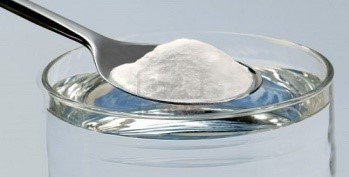
In this mixture, which of the following will be the solute?
a)
The water in the glass
b)
The glass that holds the final mixture
c)
The solution containing both powder and water
d)
The powder on the spoon
60.
The lowest part of the wave is?
a)
crest
b)
trough
c)
rarefaction
d)
wavelength
61.
Material that allows light to pass through allowing you to see "clearly" to the other side
a)
opaque
b)
translucent
c)
transparent
62.
Visible light is ...
a)
Light bulb
b)
sun
c)
light that we can see with our natural eye
d)
fire
63.
What does refract mean?
a)
To shrink
b)
To bend
c)
To widen
d)
To enlarge
64.
Which images are opaque?
a)
A & C
b)
A,C,E, & F
c)
D, E, & F
d)
A & E
65.
Which explains why the fork looks different under water?
a)
light can't pass through the glass
b)
the wavelength of light lengthens
c)
the amount of light increases when going through water
d)
light is refracted at an angle
66.
The color you see is the color that is ___.
a)
reflected
b)
absorbed
67.
A longer string makes a _______ pitch than a short string.
a)
louder
b)
softer
c)
higher
d)
lower
68.
The highest pitch is made by the _______ instrument.
a)
biggest
b)
wooden
c)
smallest
d)
shiniest
69.
Area of a longitudinal wave where particles are CLOSE together.
a)
Compression
b)
Rarefaction
70.
_______ is the number of waves that pass a certain point at an specific time. 
a)
Frequency 
b)
Pitch
c)
Amplitude
d)
I don't know
71.
Which organism make their own food through the process of photosynthesis? 
a)
decomposer
b)
consumer
c)
herbivore
d)
producer 
72.

All the members of one species that live within an area of an ecosystem

a)

population

b)

community

c)

niche

73.
What is an adaptation?
a)
A feature or behavior that helps an animal survie.
b)
The food that an animal eats.
c)
How energy moves in a food web.
74.
An example of a physical adaptation is...
a)
a turtle hiding inside its shell
b)
The spikes on a porcupine fish
c)
a rabbit burrowing underground
d)
a viper biting when threatened
75.
An example of a physical adaptation is...
a)
a turtle hiding inside its shell
b)
The spikes on a porcupine fish
c)
a rabbit burrowing underground
d)
a viper biting when threatened
76.
The main source of energy in the food chain is _________________
a)
the sun
b)
the plants
c)
the consumers
d)
the decomposeres