wayground logo

Free Printable Worksheets

NEW

Font size

S
M
L
XL
Worksheets

Weather Review-2023

Total questions: 77

Worksheet time: 2hrs 33mins

Name
Class
Date
1.
This instrument measures air pressure.
a)
anemometer
b)
barometer
c)
rain gauge
d)
thermometer
2.
A high pressure system means we might have this weather.
a)
Snow blizzard
b)
Sunny and dry
c)
Rain storm
d)
Tornado
3.
A low pressure system means we might have this weather.
a)
Sunny 
b)
A clear sky
c)
Dry day
d)
Stormy or wet
4.
This tool is used with a wind vane to determine the direction of the wind.
a)
wrench
b)
screwdriver
c)
compass
d)
telescope
5.
This tool measures the wind speed.
a)
barometer
b)
anemometer
c)
thermometer
d)
my dog when he sticks his head out the window
6.
This tool photographs clouds and sends data to meteorologists.
a)
camera
b)
iPhone 5
c)
satellite
d)
radar
7.
What pushes weather from place to place?
a)
magic
b)
water
c)
wind
d)
clouds
8.
They are highest clouds in the sky. They look curly, white and feathery. Usually mean good weather.
a)
Cumulus
b)
Cumulonimbus
c)
Cirrus
d)
Stratus
9.
This is sometimes called a thunderhead cloud. It looks very tall like mountains and heavy rain comes from it. 
a)
Cumulus
b)
Cirrus
c)
Stratus
d)
Cumulonimbus
10.
They are low in the sky and look soft and fluffy. 
a)
Cirrus
b)
Cumulonimbus
c)
Cumulus 
d)
Stratus
11.
These clouds are the closest to the ground. Their name means layer- or sheet like. They bring rain or snow and cover most of the sky. 
a)
Cirrus
b)
Stratus
c)
Cumulonimbus
d)
Cumulus
12.
Which cloud brings nice weather?
a)
Cumulonimbus
b)
Cumulus
c)
Stratus
13.
Low clouds (like fog), that are thick, cover the sky, and block the sun.  Usually bring continuous precipitation (rain or snow).
a)
stratus
b)
cumulus
c)
cirrus
d)
nimbo
14.
What is an air mass? 
a)
A place where weather always changes in an extreme way.
b)
Air that is wet and freezing
c)
A cloud that produces rain, snow, sleep, or hail.
d)
A large body of air with the same moisture and temperature throughout.
15.
What type of air mass is circled?
a)
continental polar
b)
continental tropical
c)
maritime polar 
d)
maritime tropical
16.
What type of air mass is circled?
a)
continental polar
b)
continental tropical
c)
maritime polar 
d)
maritime tropical
17.
rapidly moving cold air  mass runs into a warm air mass the cold air slides under the warm air. This is called a  .....
a)
cold front
b)
warm front
c)
stationary front
18.
When a warm air mass gently slides on top of a cold air mass, and you have drizzly rain and then warmer weather, what type of front is it?
a)
warm front
b)
cold front
c)
occluded front
d)
stationary front
19.
A front is
a)
where warm air is cooling at earth's surface
b)
a line where hot and cold air are separating
c)
a line where two different air masses meet
d)
where cold air is rising and forming rain clouds
20.
Which most likely produces clear, cool weather?
a)
zero air pressure
b)
stable air pressure
c)
a low pressure system
d)
a high pressure system
21.
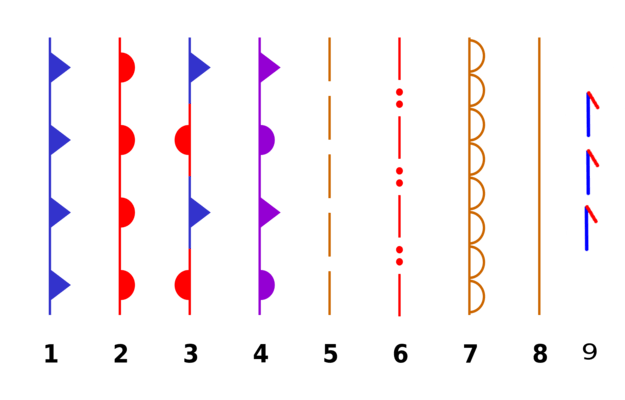
What does symbol # 3 mean?
a)
stationary front
b)
occluded front
c)
warm front
d)
cold front
22.
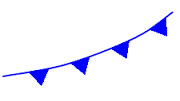
What symbol is this?
a)
warm front
b)
cold front
c)
stationary front
d)
occluded front
23.
A violently rotating column of air called a _____ when it comes in contact with the ground.
a)
hurrican
b)
tornado
c)
trade wind
d)
local wind
24.
A _____ is a large, swirling, low-pressure system that forms over the Atlantic Ocean.
a)
blizzard
b)
cold front
c)
tornado 
d)
hurricane
25.
An instrument used to show the direction of wind and measure the speed
a)
rain guage
b)
Thermometer
c)
barometer
d)
wind sock
26.
the amount of water vapor in the air
a)
warm front
b)
precipitation
c)
humidity
d)
air pressure
27.
The two main factors that determine the climate of a region are _____________ and ______________.
a)
altitude and pressure
b)
pressure and temperature
c)
temperature and precipitation
d)
altitude and pressure
28.
Because Earth's axis is _________________, the hemispheres receive different amounts of solar energy at different times.
a)
straight
b)
titled
c)
bent
d)
not there
29.
The sun's rays are least direct
a)
near the poles
b)
near the equator
c)
at high altitude
d)
far from the ocean
30.
The El Nino is caused by
a)
cold water off the Atlantic coast of South America
b)
warm water in the Pacific off the coast of South America
c)
warm water in the Pacific off the coast of Mexico
d)
cold water in the Pacific off the coast of Mexico
31.

Jet streams are long, wide air currents in the upper atmosphere. They often affect weather over large areas. In what direction do jet streams above North America usually flow?

a)

east to west


b)

west to east


c)

south to north

d)

north to south

32.

This is a weather map of the United States.


What type of weather will Florida expect when the front comes through?

a)

many days of rain, snow, or fog


b)

heavy precipitation or thunderstorms


c)

light rain or drizzle


d)

sunny, clear, and windy

33.

Which is the best explanation for how air masses move across the United States?

a)

The trade winds move air masses from west to east across the United States.

b)

The polar easteriles move air masses from west to east across the United States.

c)

The prevailing westerlies move air masses from west to east across the United States but may be deflected by the jet stream.

d)

The warm air of the Gulf Stream causes air masses to move from the Atlantic Ocean to the Pacific Ocean.

34.

A student in northern Ohio lost a balloon in a storm. Toward which state would the balloon MOST likely travel?

a)

Michigan

b)

Indiana

c)

Kentucky

d)

Pennsylvania

35.

In which direction do weather patterns move in the United States?

a)

east to west

b)

north to south

c)

west to east

d)

south to north

36.

What two factors determine the direction in which prevailing winds blow?

a)

the rotation of the Earth on its axis and the sun’s uneven heating of the earth

b)

the revolution of the earth around the sun and the sun’s uneven heating of the earth

c)

the rotation of the Earth on its axis and the cool air from the poles

d)

the revolution of the Earth around the sun and the cool air from the poles

37.

Weather patterns in the US move from west to east because

a)

the tradewinds move them

b)

the prevailing westerlies move them

c)

the polar easterlies move them

d)

sea breezes move them

38.

The trade winds and polar easterlies DO NOT typically impact NC's weather because

a)

they are sea breezes at the coast

b)

they are found near the equators or at the poles.

c)

they almost never are blowing

d)

they cancel each other out

39.

To move air masses to North Carolina the prevailing westerlies are helpful. In addition,...

a)

wind speed will increase.

b)

the Jet Stream moves air masses west to east.

c)

colder weather in the Great Lakes region.

d)

high

40.

In the United States, weather patterns generally move in which direction?

a)

south to north

b)

north to south

c)

west to east

d)

east to west

41.

The picture is a map of part of the United States. Over the course of a few days, Nevada, Arizona, California, and New Mexico were all hit by the same storm system. Based on the general pattern of weather in the U.S., which state was most likely hit by the storm first?

a)

Nevada

b)

New Mexico

c)

Arizona

d)

California

42.

If the state of Nebraska has a heat wave, which state would most likely feel the same heat wave within the next day or two?

a)

Texas

b)

Utah

c)

Indiana

d)

North Dakota

43.

The rotation of the Earth causes winds to bend due to the...

a)

coriolis effect

b)

doldrums

c)

trade winds

d)

westerlies

44.

what is the main cause of the coriolis effect?

a)

earth’s rotation

b)

trade winds

c)

the sun and ocean

d)

temperature

45.
In which direction do prevailing westerlies flow?
a)
from east to west
b)
from west to east
c)
from north to south
d)
from south to north
46.
Steady winds that flow from east to west between 30°N latitude and the equator and 30°S latitude and the equator.
a)
Prevailing westerlies
b)
Horse latitudes
c)
Trade winds
d)
Polar easterlies
47.
Cold winds that blow from east to west between latitude lines 60°N and the North Pole and 60°S and the South Pole.
a)
Prevailing westerlies
b)
Trade winds
c)
Horse latitudes
d)
Polar easterlies
48.
Which global winds have the greatest impact on the weather in the US?
a)
trade winds
b)
prevailing westerlies
c)
doldrums
d)
polar easterlies
49.
I am a fast-moving ribbon of AIR that moves from west to east in the Northern Hemisphere around the Earth.
a)
California Current
b)
Gulf Stream
c)
Jet Stream
d)
Atlantic Ocean
50.
What type of winds blow constantly, predictably, and over long distances?
a)
land breezes
b)
mountain breezes
c)
global winds
d)
land breezes
51.

What is the initial source for global winds and convection in the atmosphere?

a)

heat from the Earth's core

b)

the rotation of the Earth

c)

Moon's gravity

d)

unequal heating of the Earth by the sun

52.
In which direction do prevailing westerlies flow?
a)
from east to west
b)
from west to east
c)
from north to south
d)
from south to north
53.
What type of winds blow constantly, predictably, and over long distances?
a)
land breezes
b)
mountain breezes
c)
global winds
d)
land breezes
54.
The tropical winds running from 0 to 30 degrees latitude are called:
a)
subtropical westerlies
b)
polar westerlies
c)
trade winds
d)
polar winds
55.

Winds occur because hot air rises and cool air sinks in a process called...

a)

conduction

b)

convection

c)

radiation

d)

magnetism

56.

The rotation of the Earth causes winds to bend due to the...

a)

coriolis effect

b)

doldrums

c)

trade winds

d)

westerlies

57.

Winds that blow from the North and South pole toward 600 latitude are called...

a)

trade winds

b)

westerlies

c)

polar easterlies

d)

horse latitudes

58.

What causes wind?

a)

Too much Taco Bell

b)

Differences in elevation

c)

The uneven heating of the Earth by the sun

d)

Ocean currents

59.

Which global winds move FROM the east to the west?

a)

Doldrums

b)

Cauldrons

c)

Westerlies

d)

Easterlies

60.

What causes the Coriolis Effect?

a)

Rotation of the Earth

b)

Rotation of the Moon

c)

Earth tilt

d)

Rotation of the Sun

61.

The temperature at the poles is....

a)

Warmer and less dense

b)

Warmer and more dense

c)

Colder and less dense

d)

Colder and more dense

62.

The boundary formed when two air masses meet is called a...

a)

Storm line

b)

Front

c)

Squall Line

d)

Thunderhead

63.

The tropical winds running from 0 to 30 degrees latitude are called:

a)

Polar Westerlies

b)

Subtropical Westerlies

c)

Polar Winds

d)

Trade Winds

64.

What is the total number of belts in each hemisphere?

a)

Five

b)

Three

c)

Two

d)

Six

65.

Most of the United States is located in the wind belt known as the...

a)

Polar Easterlies

b)

Prevailing Westerlies

c)

Trade winds

66.

The temperature at the equator is...

a)

Cold and less dense

b)

Cold and more dense

c)

Warm and more dense

d)

Warm and less dense

67.
Which statement correctly defines wind?
a)
Wind is the movement of air from areas of low pressure to areas of high pressure
b)
Wind is the movement of air to a colder area in the atmosphere.
c)
Wind is the movement of air from areas of high pressure to areas of low pressure.
d)
Wind is the movement of air pushed around and bouncing off Earth's surface.
68.
Why does warm air rise?
a)
Warm air is more dense than cooler air.
b)
Warm air has more pressure than cooler air.
c)
Warm air is less dense than cooler air.
d)
Warm air has a higher dew point than cooler air.
69.
Which is most responsible for guiding the movement of different air masses across the United States?
a)
the oceans
b)
trade winds
c)
the jet stream
d)
easterly winds
70.
Sea and land breezes happen because ____________________________________. 
a)
The land heats and cools more slowly than the water
b)
The land heats and cools more quickly than the water
c)
Air moves more easily over water than over land
d)
Air moves more easily over land than over water
71.
Cool, dense air near the sea moves inland toward warm, dense air during the day and sets up _____________________________.
a)
sea breeze
b)
land breeze
c)
jet stream
d)
doldrum
72.
Cool, dense air moves during the night from the land toward the water is known as ____________________________.
a)
sea breeze
b)
land breeze
c)
jet stream
d)
doldrum
73.
The condition of the atmosphere at a given time and place
a)
Weather
b)
Climate
c)
Temperature
d)
Season
74.
Weather conditions in a region over a long time
a)
Weather
b)
Climate
c)
Temperature
d)
Season
75.
process by which liquid changes to gas
a)
Condensation
b)
Evaporation
c)
Precipitation
d)
Greenhouse Effect
76.
Warm ocean current that moves warm tropical water northward along eastern North America
a)
Hurricane
b)
Orographic effect
c)
Gulf Stream
d)
Monsoon
77.
Brooklyn is sad that she cannot ride her scooter because it is raining outside. What type of pressure is messing up her day? 
a)
High pressure
b)
Low pressure 
c)
atmospheric pressure
d)
barometric pressure