
Font size
 Worksheets
Year 7 Chemistry - Equipment and Safety
Total questions: 40
Worksheet time: 25mins


What is this?
Graduated Cylinder
Beaker
Wet ruler
Test tube


What is the name of this piece of science equipment?
Plastic spout
Funnel
Beaker
Cone

What is the name of this piece of science equipment?
Watch glass
Evaporating Basin
Beaker
Petri dish

Which item of equipment below would be best to accurately measure the VOLUME of a liquid?
Beaker
Graduated cylinder
Electronic scales
Force meter


When using this piece of equipment, what unit of measure should be used?
Grams
Litres
Milliliters
Meters

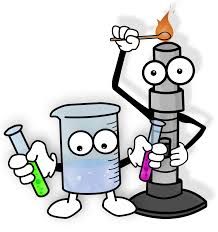
What do you call the part of the burner that "twists" ?
Base
Collar
Cylinder
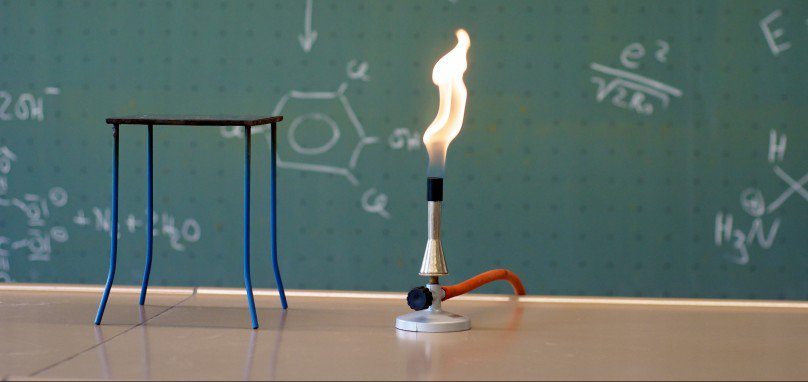
To produce the most heat, you should twist the collar until you see ______
A dark blue cone
An orange cone
A yellow cone
A light blue cone

What part of the Bunsen Burner is labelled B?
Head
Collar
Neck
Air hole
What part of the Bunsen Burner is labelled D?
Head
Collar
Neck
Air hole
What part of the Bunsen Burner is labelled G?
Gas hose
Gas tap
Bench protector
Base
What part letter controls the type of flame you produce?
H
E
D
B

What is this a scientific diagram of?
Bunsen burner
Conical flask
Beaker
Graduated/measuring cylinder

What is this a scientific diagram of?
Retort stand and clamp
Test tube rack
Test tubes
Tripod

What is a hypothesis?
A very tall "pothesis".
Something you change in an experiment.
The result of the experiment.
A statement that predicts the effect of changing one variable in an experiment.

What is the best way to increase the reliability of an experiment?
repeat the experiment
use more independent variables
wear safety glasses
control the variables

What is the best way to increase the fairness of an experiment?
repeat the experiment
use more independent variables
wear safety glasses
control the variables

Which of the following correctly names the parts A, B, C and D in order?
Beaker, Tripod, Heat Proof Mat, Bunsen
Beaker, Heat Proof Mat,Tripod, Bunsen
Beaker, Gauze Mat,Tripod, Bunsen
Conical Flask, Retort stand, Beaker, Bunsen Burner.


You accidentally break some glassware you should
Clean it up immediately
Leave it
Tell the teacher
Tell you lab partner to clean it up

Appropriate dress for lab includes which of the following
Closed toed shoes
Pants
No dangling jewellery
All of these answers are correct

What should you NEVER do in the lab?
Play practical jokes on people
All of these
Run while holding a beaker with chemicals
Mess around with your friends

Keeping your work area and floor neat and clean is important because:
my teacher is a neat freak
it keeps the room from looking messy
I won't lose my supplies in the clutter.
It helps prevent accidents.

Which of the following is NOT a safe lab practice?
Keep chemicals, glassware, and other equipment away from the edge of the lab table.
After removing glassware from a heat source touch it right away to see if it is cool.
Report minor accidents to your lab supervisor and/or teacher.
Carefully heat chemicals in a flask with teacher supervision.

Why is it important to know the names and appearances of lab equipment before doing laboratory work?
So you score higher on the lab test.
So you can quickly obtain your laboratory supplies before lab.
So you can follow lab instructions clearly.
Because its is polite to use the correct equipment names.

If you are not sure what to do during a lab activity:
guess
change lab partners
ask a teacher
just sit quietly and do nothing

You should tie back long hair and/or baggy clothes when:
working near fire.
using chemicals in the lab.
trying to impress a friend.
Both A and B.

Helping to clean up the lab or classroom is the job of
the cleaners
exchange students.
each and every student.
the teacher.

When we draw Scientific diagrams, which of the following is NOT a rule we should follow?
Draw in pencil.
Use a ruler.
Draw in 3D
Draw open containers without lines over the opening.

The item of equipment shown in the picture is called:
an evaporating basin.
a petri dish.
a beaker
a watch glass

The item of equipment shown in the picture is called:
an evaporating basin.
a petri dish.
a beaker
a watch glass

The item of equipment shown in the picture is called:
a boss head
a clamp.
a retort head
a thingy ma bob

Which of the following would be best used to mix small volumes of chemicals and observe chemical reactions?
beaker
test tube
graduated cylinder
a bath tub.

When lighting a Bunsen burner you should...
light the match, close the air-hole and then turn on the gas.
light the match, open the air-hole and then turn on the gas.
close the air-hole, light the match and then turn on the gas.
close the air-hole, turn on the gas and then light the match.

The flame shown in the picture is known as which TWO of the following?
the safety flame.
the heating flame.
a non luminous flame
a luminous flame

