
 Worksheets
Earth Science B Review
Total questions: 87
Worksheet time: 1hrs 10mins
Name
Class
Date
1.
Which type of wave arrives to a point first?
a)
Primary Waves (P-Waves)
b)
Secondary Waves (S-Waves)
c)
Rayleigh Waves
d)
Love Waves
2.
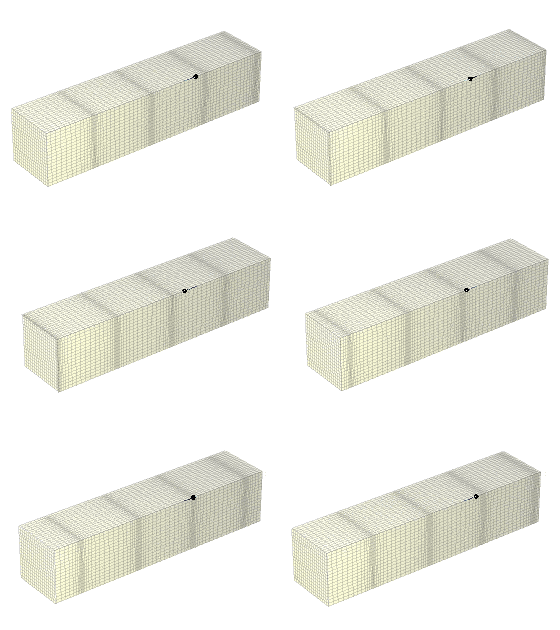
Which body wave is pictured?
a)
P-Wave
b)
S-Wave
c)
Rayleigh Wave
d)
Love Wave
3.

This is the area beneath the Earth's surface where the earthquake begins
a)
epicenter
b)
focus
c)
fault line
d)
tectonic plate
4.
P Waves travel through...
a)
Solids
b)
Liquids
c)
Both
5.
S Waves travel through...
a)
Soilds
b)
Liquids
c)
Both
6.

These are the first waves released during an earthquake
a)
S waves
b)
Surface Waves
c)
P waves
7.

These are the secondary, or second waves to be released. They cannot travel through the liquid outer core
a)
S waves
b)
Surface Waves
c)
P waves
8.
True or False
The Earth's core is liquid surrounded by a solid outer core
The Earth's core is liquid surrounded by a solid outer core
a)
True
b)
False
9.
Energy from an Earthquake travels as.....
a)
seismic waves
b)
intergalactic waves
c)
sound waves
d)
plasma waves
10.
What causes the tectonic plates of Earth to continually move?
a)
convection currents in the mantle
b)
volcanic and seismic activity in the crust
c)
strong winds and storms
d)
rotation of the solid core
11.
Is a layer of week of soft mantle that is made of rock that flows slowly. Tectonic plates move on top of this layer.
a)
Inner Core
b)
Asthensophere
c)
Lithosphere
d)
Outer Core
12.
This is the outermost, rigid layer of the Earth, made up of two parts, is divided into pieces call tectonic plates.
a)
Inner Core
b)
Asthensophere
c)
Lithosphere
d)
Outer Core
13.
The order of the earth’s compositional layers from most dense to least dense are
a)
Inner Core, Crust, Mantle and Outer Core
b)
Crust, Mantle, Outer Core and Inner Core
c)
Inner Core, Outer Core, Mantle and Crust
d)
Crust, Outer Core, Inner Core and Mantle.
14.
Temperature _____________________ as you go deeper into the earth.
a)
increases
b)
decreases
c)
goes up and down depending on the layer
d)
stays the same
15.
Pressure ______________________ as you go deeper into the Earth
a)
increases
b)
decreases
c)
goes up or down depending on the layer
d)
stays the same
16.

What are the two kinds of crust that the Earth has?
a)
Oceanic and Crustatious Crust
b)
Oceanic and Continental Crust
c)
Optic and Continental Crust
17.
Supporting Evidence: fossils, continent shape, landforms
a)
Continental Drift
b)
Seafloor Spreading
c)
Plate Tectonics
18.
Supporting Evidence: subduction, earthquakes, volcanoes, Mid-Atlantic Ridge, older theories
a)
Continental Drift
b)
Seafloor Spreading
c)
Plate Tectonics
19.
The name for the actual lithospheric plates
a)
Tectonic Plates
b)
Plate Tectonics
c)
Pangaea
d)
Continental Drift
20.
The theory stating the continents were once joined in a large mass that broke apart.
a)
Continental Drift
b)
Seafloor Spreading
c)
Plate Tectonics
d)
Pangaea
21.
The theory that states that the Earth is divided into plates that float and move in slow, constant motion.
a)
Continental Drift
b)
Seafloor Spreading
c)
Plate Tectonics
d)
Tectonic Plates
22.
Continental crust is more dense than oceanic crust.
a)
True
b)
False
23.
Hot spots are volcanically active areas that are not near tectonic plate boundaries.
a)
True
b)
False
24.
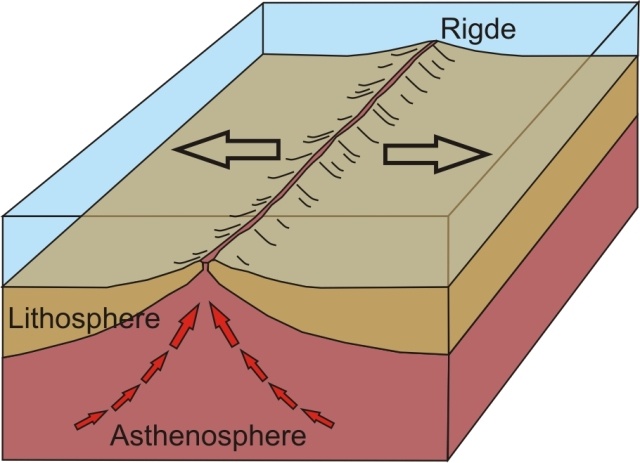
What kind of plate boundary is shown here?
a)
divergent
b)
convergent
c)
transform
d)
subducting
25.

What kind of plate boundary is shown here?
a)
divergent
b)
convergent
c)
transform
d)
submergent
26.

What kind of plate boundary is shown here?
a)
divergent
b)
convergent
c)
transform
d)
strike slip
27.
What geologic feature/event would you most likely to find at a divergent boundary between two pieces of oceanic crust?
a)
Rift Valley
b)
Mid-Ocean Ridge
c)
Island Arc
d)
Flat land
28.
What geologic feature/event would you most likely to find at a convergent boundary between two pieces of continental crust?
a)
Volcano
b)
Mountain
c)
Rift
d)
Island Arc
29.
A subduction zone is formed...
a)
when one tectonic plate sinks below another
b)
at every type of convergent plate boundary
c)
at every type of divergent plate boundary
d)
at transform boundaries
30.
The area where two or more plates meet is called a __________________.
a)
fault
b)
plate boundary
c)
plate edge
d)
ring of fire
31.
What would you be most likely to find at a transform boundary?
a)
Earthquakes
b)
Volcanoes
c)
Mountains
d)
Rift
32.
What would you be most likely to find at a convergent boundary between two pieces of continental crust?
a)
Volcano
b)
Mountain
c)
Rift
d)
Island Arc
33.
Which of the following statements is false?
a)
Oceanic crust is made of basalt
b)
Oceanic crust is thinner than continental crust
c)
Oceanic crust is less dense than continental crust
d)
Oceanic crust is younger than continental crust
34.
Which of the following statements is false?
a)
Continental crust is less dense than oceanic crust
b)
Continental crust is younger than oceanic crust
c)
Continental crust is made of granite
d)
Continental crust is thicker than oceanic crust
35.
Which type of rock results from melting and cooling of magma?
a)
Igneous
b)
Metamorphic
c)
Sedimentary
d)
Extrusive
36.
Which type of rock forms from extreme heat and pressure?
a)
Igneous
b)
Sedimentary
c)
Organic
d)
Metamorphic
37.
A metamorphic rock changes into an igneous rock by what two processes?
a)
Melting and cooling
b)
Extreme heat and pressure
c)
Compaction and cementation
d)
Weathering and erosion
38.
Wind, water, and ice breaking down rock is called
a)
Erosion
b)
Deposition
c)
Compaction
d)
Weathering
39.
What is the MAIN way rocks are classified?
a)
Their color and shapes
b)
How they form
c)
Mineral bands
d)
Where they form
40.

When sediments are pressed together tightly, this is called ____________.
a)
Compaction
b)
Cementation
c)
Weathering
d)
Erosion
41.
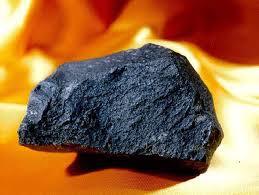
This rock was found near the mouth of a volcano. What type of rock is this?
a)
Sedimentary
b)
Igneous
c)
Metamorphic
42.
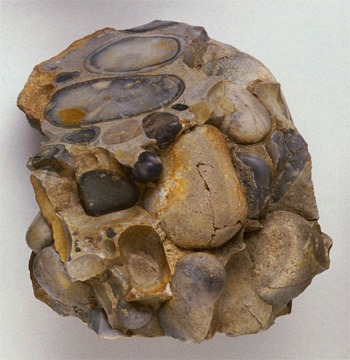
This rock was formed by smaller pieces of rock that settled at the bottom of a lake millions of years ago. What type of rock is this?
a)
Sedimentary
b)
Igneous
c)
Metamorphic
43.
Fossils are often found in ____________ because it is formed from the remains of once living things.
a)
metamorphic
b)
magma
c)
igneous
d)
sedimentary
44.
Which type of rock forms from extreme heat and pressure?
a)
Igneous
b)
Sedimentary
c)
Organic
d)
Metamorphic
45.
Which type of igneous rock forms above ground?
a)
Intrusive
b)
Organic
c)
Extrusive
d)
Foliated
46.
Coal is an example of a _______ sedimentary rock.
a)
Chemical
b)
Organic
c)
Clastic
d)
Intrusive
47.
A metamorphic rock changes into an igneous rock by what two processes?
a)
Melting and cooling
b)
Extreme heat and pressure
c)
Compaction and cementation
d)
Weathering and erosion
48.
What type of texture does a SLOWLY cooling, intrusive igneous rock have?
a)
Foliated
b)
Nonfoliated
c)
Coarse grained
d)
Fine grained
49.
Regional and contact metamorphism create what type of rock?
a)
Igneous
b)
Sedimentary
c)
Foliated
d)
Metamorphic
50.
Climate is
a)
the further you get from the equator
b)
the higher you go, the colder it gets
c)
the conditions of the atmosphere at a certain place and time.
d)
the average weather conditions of an area over a long period of time.
51.
If you live near the ocean, in a marine climate, what kind of winters would you expect?
a)
Harsh, extreme winters
b)
Mild winters
c)
No winters at the beach.
d)
Really warm winters
52.
As you go to the top of a mountain, what happens to temperature?
a)
Nothing
b)
It increases
c)
It decreases
d)
It goes up and down
53.
Because convection cells are in place in the atmosphere and earth is spinning on its axis, the global winds appear to curve. This is known as the __________ ________.
a)
Coriolis Effect
b)
Greenhouse Effect
c)
Climate Effect
d)
Atmosphere Effect
54.
Which global winds have the greatest impact on the weather in the US?
a)
trade winds
b)
prevailing westerlies
c)
doldrums
d)
polar easterlies
55.
The sun’s rays are least direct __________.
a)
near the poles.
b)
in July.
c)
near the equator.
d)
far from the ocean.
56.
Large bodies of water affect climate of the land next to them because
a)
water heats up and cools more slowly than land
b)
water heats up and cools faster than land
c)
water and land cool at the same time
d)
water and land heat at the same rate
57.
Conditions that vary from day to day such as temperature and precipitation
a)
climate
b)
weather
c)
biome
d)
atmosphere
58.
At which latitudes do currents of dry, sinking air cause the dry conditions of Earth's major deserts?
a)
0° and 30°N
b)
60°N and 60°S
c)
30°N and 30°S
d)
60°S and 90°S
59.
As altitude _____________ temperature ___________.
a)
decreases, decreases
b)
increases, increases
c)
increases, decreases
d)
decreases, increases
60.
What is the name of the steady winds that flow from west to east between latitudes 30*N and 60*N and 30*S and 60*S?
a)
trade winds
b)
land breeze
c)
westerlies
d)
jet stream
61.
Steady winds that flow from east to west between 30*N latitude and 30*S latitude?
a)
jet stream
b)
breeze
c)
westerlies
d)
trade winds
62.

The curving of air to the right in the Northern hemisphere is caused by ___________ and is called the _________ effect.
a)
Earth's rotation...Coriolis
b)
Earth's revolution...Coriolis
c)
Earth's rotation...Doppler
d)
Earth's revolution...Doppler
63.
How do we name air masses?
a)
Water and temperature
b)
Air pressure
c)
Humidity and temperature
d)
Cold and warm
64.
How do we characterize an air mass that forms over land?
a)
Dry
b)
Wet
c)
Cold
d)
Warm
65.
How do we characterize an air mass that forms near the poles?
a)
Dry
b)
Wet
c)
Warm
d)
Cold
66.
How do we characterize an air mass that forms over near the equator?
a)
Dry
b)
Wet
c)
Cold
d)
Warm
67.
What's the humidity and temperature of a continental tropical air mass?
a)
Wet and cold
b)
Dry and warm
c)
Wet and warm
d)
Dry and cold
68.
What's the humidity and temperature of a maritime tropical air mass?
a)
Wet and cold
b)
Dry and warm
c)
Wet and warm
d)
Dry and cold
69.
A wet and cold air mass would be a...
a)
Maritime polar
b)
Continental polar
c)
Maritime tropical
d)
Continental tropical
70.
A dry and cold air mass would be...
a)
Maritime polar
b)
Continental polar
c)
Maritime tropical
d)
Continental tropical
71.
A dry and hot air mass would be...
a)
Maritime arctic
b)
Maritime tropical
c)
Continental tropical
d)
Continental polar
72.
Which gas in our atmosphere is most abundant?
a)
Argon
b)
Oxygen
c)
Nitrogen
d)
Carbon Dioxide
73.
Temperature in the stratosphere warms as altitude increases.
a)
True
b)
False
74.
What percentage of our atmosphere is made up of other gases such as argon, water vapor, and carbon dioxide?
a)
1%
b)
21%
c)
78%
d)
90%
75.
What is the percentage of oxygen in Earth's atmosphere?
a)
1%
b)
21%
c)
78%
d)
90%
76.
What is the percentage of nitrogen in Earth's atmosphere?
a)
1%
b)
21%
c)
78%
d)
90%
77.
In which layer of the atmosphere does weather occur?
a)
Mesosphere
b)
Thermosphere
c)
Stratosphere
d)
Troposphere
78.
What causes the temperature to increase in the stratosphere?
a)
Nitrogen
b)
Ozone
c)
Water Vapor
d)
carbon dioxide
79.
Which of the following is NOT a reason why the atmosphere is important?
a)
It is made of many layers.
b)
It provides gases living things need.
c)
It provides warm temperatures.
d)
It protects us from UV rays and meteors.
80.
Which of the following is the correct order of the atmosphere layers from Earth to space?
a)
troposphere, stratosphere, mesosphere, thermosphere, exosphere
b)
troposphere, mesosphere, thermosphere, exosphere, stratosphere
c)
thermosphere, stratosphere, mesosphere, troposphere, exosphere
d)
troposphere, stratosphere, mesosphere, exosphere, thermosphere
81.

A group of friends gather around a fire to stay warm.
a)
conduction
b)
convection
c)
radiation
82.
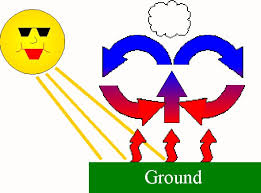
Warm air rises and the cool air sinks.
a)
conduction
b)
convection
c)
radiation
83.

Heat transfers from an area of ____temperature to an area of ___ temperature.
a)
high to low
b)
low to high
c)
high to high
84.
What is the greenhouse effect?
a)
The warming of a planet due to trapped radiation.
b)
The cooling of Earth due to air pollution.
c)
The heating of a solid, such as a rock.
85.
What gas from the list below is a cause for global warming?
a)
Urethane
b)
Oxygen
c)
Carbon Dioxide
86.
Humans have the ability to cause temperature change.
a)
True
b)
False
87.
Which of the following activities contributes the most to carbon emissions globally?
a)
Deforestation
b)
Agriculture
c)
Burning fossil fuels
d)
Respiration
100 %

