wayground logo

Free Printable Worksheets

NEW

Font size

S
M
L
XL
Worksheets

Twin Oaks Final Review Part Deux

Total questions: 67

Worksheet time: 51mins

Name
Class
Date
1.
As mass increases, what happens to gravitational force?
a)
increases
b)
decreases
c)
stays the same
d)
i don't know
2.
As the distance between 2 objects increases, what happens to gravitational force?
a)
increases
b)
decreases
c)
stays the same
d)
i don't know
3.
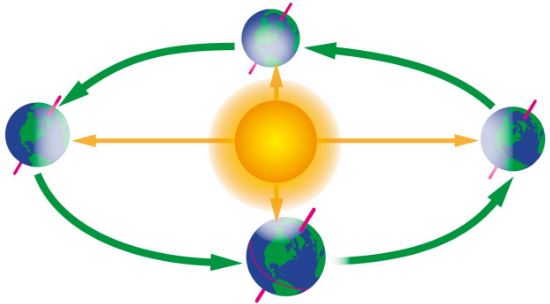
Which season is taking place in the Southern Hemisphere in Position 1?
a)
Winter
b)
Spring
c)
Summer
d)
Fall
4.
Which season is taking place in the Northern Hemisphere in Position 2?
a)
Winter
b)
Spring
c)
Summer
d)
Fall
5.
Which season is taking place in the Northern Hemisphere in Position 3?
a)
Winter
b)
Spring
c)
Summer
d)
Fall
6.
Which season is taking place in the Southern Hemisphere in Position 4?
a)
Winter
b)
Spring
c)
Summer
d)
Fall
7.
The solid inner core is made of...
a)
iron and nickel
b)
iron and magnesium
c)
rock and minerals
d)
oxygen and carbon
8.
What layer of the Earth is also the tectonic plates?
a)
mantle
b)
core
c)
lithosphere
d)
asthenosphere
9.
The lithosphere is made up of which two layers?
a)
Upper and Lower Mantle
b)
Upper Mantle and Crust
c)
Core and Mantle
d)
Crust and Uppermost Mantle
10.
Which layer is the thinnest, least dense and most brittle?
a)
Mantle
b)
Inner Core
c)
Crust
d)
Outer Core
11.
Which is an example of Constructive Force?
a)
Weathering by water
b)
Eroded by the ice
c)
Heat from the Sun
d)
An erupting Volcano
12.
Through processes like erosion and weathering, ______________ forces destroy landmasses
a)
Constructive
b)
Destructive
c)
Geosphere
d)
Energy
13.
Scientist learned about the interior of the Earth by studying
a)
core samples brough up by drilling
b)
radar images
c)
seismic waves
d)
x-rays
14.
How do scientists study earths interior
a)
seismic waves
b)
P waves only
c)
S waves only
d)
manned probes
15.
Holly has an unknown substance in a beaker. She wants to determine the relative pH of the unknown substance. She places a piece of blue litmus paper into the substance, and the litmus paper stays blue.
The substance in the beaker
a)
is a base.
b)
has a neutral pH.
c)
is an acid.
d)
does not have a pH.
16.
 Which of the following is an acid?
a)
shampoo
b)
baking soda
c)
orange juice
d)
water
17.
The pH of a solution is tested, and it is found to be a basic solution. Of the following choices, what could the pH have been?
a)
3
b)
9
c)
7
d)
5
18.
Which of the following is true about acids and bases?
a)
The lower the pH, the stronger the acid
b)
the higher the pH, the stronger the acid
c)
The lower the pH, the more neutral the acid
d)
The higher the pH, the weaker the base
19.

The Law of Conservation of Mass States

a)

Energy cannot be created nor destroyed, it can only change form.

b)

Mass cannot be created nor destroyed, it can only change form.

c)

Matter cannot be created nor destroyed, it can only change form.

d)

Mass can be created or destroyed, it cannot change form.

20.
Is burning wood a chemical or physical change?
a)
chemical
b)
physical
21.
Is glass breaking a chemical or phyiscal change?
a)
chemical
b)
physical
22.
Which of the following is NOT an example of a physical change?
a)
crumpled paper
b)
pencil sharpening
c)
shrunken clothing
d)
sour milk
23.
An gel ice pack getting cold after you put it in the freezer for an hour.
a)
Chemical Change
b)
Physical Change
24.
Which of the following IS a chemical change
a)
using chalk
b)
water freezing
c)
slicing cheese
d)
digestion
25.
A substance that contains only one type of atom is a(n)
a)
compound
b)
element
c)
heterogeneous mixture
d)
homogeneous mixture
26.
Two or more elements chemically combined:
a)
an atom
b)
a compound
c)
a mixture
d)
a pure substance
27.
A mixture that appears to be evenly mixed throughout:
a)
an atom
b)
a compound
c)
a homogeneous mixture
d)
a heterogeneous mixture
28.
 mixture that does NOT appear to be evenly mixed throughout:
a)
an atom
b)
a compound
c)
a homogeneous mixture
d)
a heterogeneous mixture
29.
How many phases does the moon go through?
a)
4
b)
8
c)
10
d)
16
30.

Which of the following statements is most accurate about the Movement of Earth and the Sun?

a)

The Sun revolves around the Earth

b)

The Earth rotates around the Sun

c)

The Earth revolves around the Sun

d)

The Earth rotates on its axis and revolves around the Sun

31.
Why do we always see the same side of the moon from Earth?
a)
because the phases change
b)
because it rotates and revolves at the same rate
c)
because half of the moon always receives sunlight
d)
The moon changes positions
32.

What causes the moon to go through its phases?

a)

The moon's revolution around the Earth

b)

The Earth's revolution around the moon

c)

The Earth's revolution around the Sun

d)

The Sun's revolution around the Earth

33.

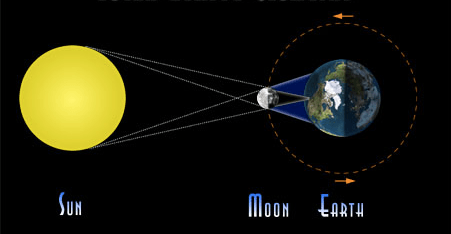
Which type of eclipse is shown in this picture?

a)

Solar eclipse

b)

Annular eclipse

c)

Lunar eclipse

d)

Total eclipse

34.
In thinking about a solar eclipse, what does the light source in the diagram represent?
a)
the Earth
b)
the Moon
c)
the Sun
35.
What type of eclipse is this?
a)
Solar eclipse
b)
Lunar eclipse
36.
What type of eclipse is this?
a)
Solar Eclipse
b)
Lunar Eclipse
37.
The Earth's axis is tilted _____ degrees.
a)
23.5
b)
25.3
c)
30.2
d)
24
38.
At position A, which hemisphere would have summer?
a)
Northern hemisphere
b)
Southern hemisphere
39.
What happens when the area in which you live tilts away from the sun?
a)
It is summer.
b)
It is spring.
c)
It is winter.
d)
It is fall.
40.

In spring/fall, the axis of the earth is pointed away or toward the sun?

a)

towards

b)

Neither away or toward

c)

away

41.
What are the reasons for the seasons?
a)
Earth's tilt and rotation.
b)
Earth's rotation and revolution.
c)
Earth's tilt and revolution.
d)
Earth's tilt and resolution
42.
What are the factors which combine to to keep celestial bodies in orbit? 
a)
Air Resistance and Gravity 
b)
Gravity and Inertia 
c)
Inertia and orbital speed
d)
Orbital speed and gravity 
43.
Gas giants
a)
Inner planets
b)
Outer planets
c)
Both
d)
Venus
44.
Mercury, Venus, Earth, & Mars
a)
Inner planets
b)
Outer planets
c)
Both
d)
Pluto
45.
Close to the sun
a)
Inner planets
b)
Outer planets
c)
Both
d)
Kuiper Belt
46.
Small diameter
a)
Inner planets
b)
Outer planets
c)
Both
d)
Jupiter
47.
Orbit the sun
a)
Inner planets
b)
Outer planets
c)
Both
48.
Solid, rocky surface
a)
Inner planets
b)
Outer planets
c)
Both
d)
Saturn
49.

What is it called when WATER is CHANGED from an LIQUID to WATER VAPOR?

a)

EVAPORATION

b)

PRECIPITATION

c)

TRANSPIRATION

50.
Why do most weather systems in the United States move from west to east?
a)
The West Coast is at a higher elevation than the East Coast and weather systems go downhill
b)
Prevailing westerlies carry weather systems to the east across most of the United States
c)
The West Coast is warmer and weather systems always move from warmer to colder places
d)
Mountain ranges prevent the movement of weather systems from west to east
51.
Which is the best explanation for how air masses move across the United States?
a)
The prevailing westerlies move air masses from west to east across the United States but may be deflected by the jet stream
b)
The trade winds move air masses from west to east across the United States
c)
The jet stream moves air masses from the Pacific Ocean across the United States
d)
The warm air of the Gulf Stream causes air masses to move from the Atlantic Ocean to the Pacific Ocean
52.
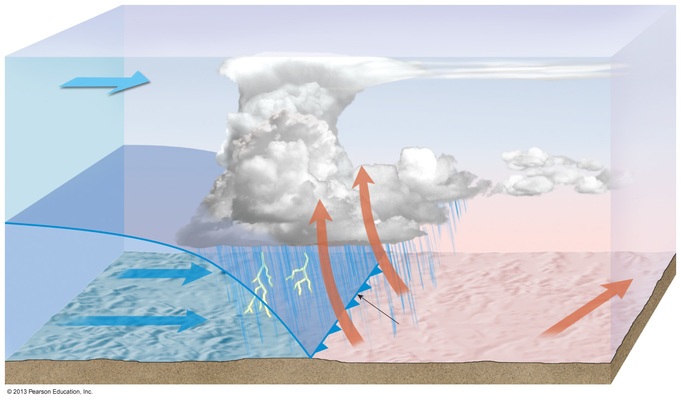
What type of storm front is this? 
a)
warm front
b)
cold front
c)
stationary front
d)
occluded front
53.
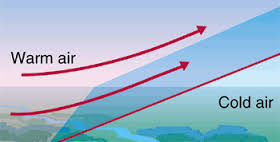
Which type of front is pictured?
a)
Cold front
b)
Warm front
c)
Occluded front
d)
Stationary front
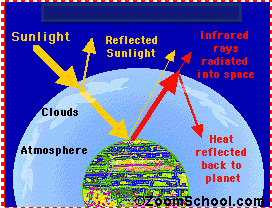
54.
The Earth acts like a greenhouse that catches and traps heat from the sun.
a)
true
b)
false
55.
What does this diagram illustrate?
a)
Ozone Layer
b)
The Greenhouse Effect
c)
Ultraviolet Radiation
d)
Layers of the atmosphere
56.
This traps heat and absorbs gases (carbon dioxide, methane..) and keeps the earth warm. Allowing heat to go back into space prevents Earth from becoming too warm
a)
Ozone Layer
b)
The Greenhouse Effect
c)
Greenhouse Gases
d)
Mesosphere
57.
What is a destructive force?
a)
A natural process that destroys land
b)
A natural process that creates land
c)
A natural process where areas that are normally dry is covered in water
d)
This ain't the right answer!!!
58.

What type of geological process is a subduction zone?

a)

Constructive

b)

Destructive

59.

What type of geological process is a mid ocean ridge?

a)

Destructive

b)

Constructive

60.
Few earthquakes occur in the middle of continents because
a)
few plate margins exist in these areas
b)
P-waves cannot travel through liquids
c)
S-waves cannot travel through the crust
d)
the crust in these areas isn't thick enough
61.

Most volcanoes and earthquakes occur where?

a)

The center of continents

b)

The edges of continents

c)

The ocean

d)

Plate boundaries

62.

What process is represented by letter C?

a)

Cooling and crystallization

b)

Melting

c)

Compaction and Cementation

d)

Extreme Heat and Pressure

63.

Which rocks in the picture are more weathered?

a)

Top

b)

Bottom

64.

Which important gas is NOT a greenhouse gas?

a)

Carbon Dioxide

b)

Water Vapor

c)

Oxygen

d)

Methane

65.
What causes wind to blow?
a)
Differences in longitude 
b)
Shock waves from clouds 
c)
Differences in air temperature and pressure 
d)
The rotation of the earth
66.
What creates the air pressure difference between the equator and the poles?
a)
The length of the seasons
b)
The shape of the earth 
c)
the duration of the solar year
d)
The amount of direct sunlight each area receives 
67.
Which term best describes how the earth's atmosphere is heated?
a)
Spirally
b)
Unevenly
c)
Circularly
d)
Kinetically