
NEW
Font size
 Worksheets
Knee Review
Total questions: 55
Worksheet time: 27mins
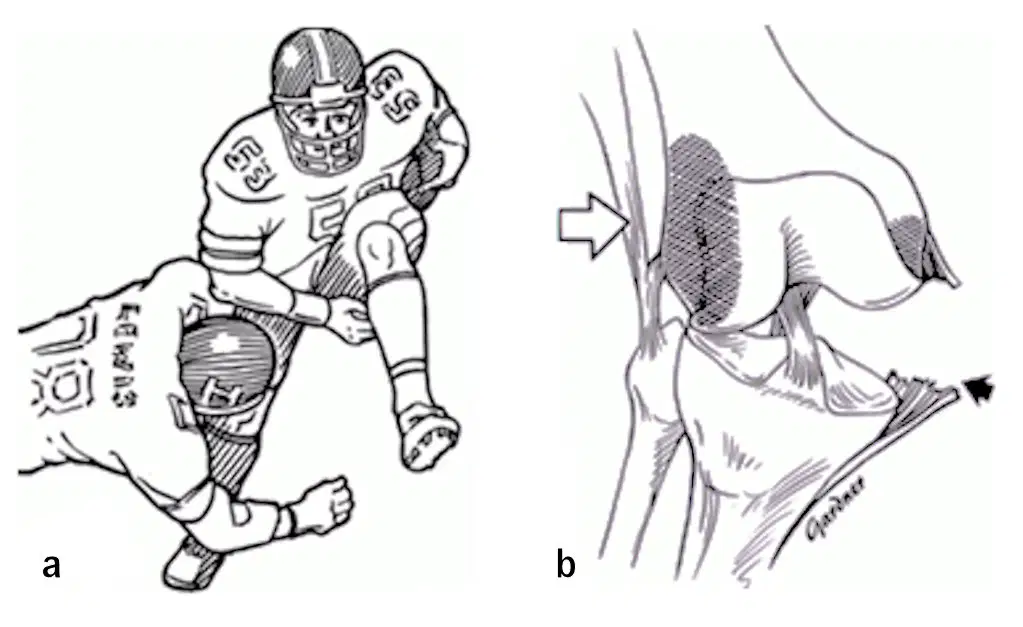
Which of the following ligaments protect the knee from valgus stress and external tibial rotational forces
ACL
PCL
MCL
LCL
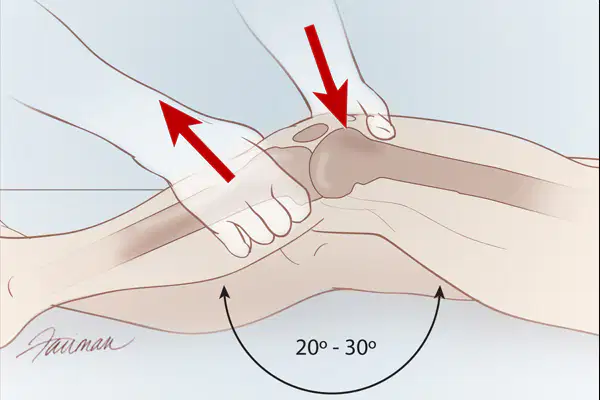
The Lachman's test is used to evaluate stability of which of the following?
MCL
ACL
Meniscus
Patellar femoral joint
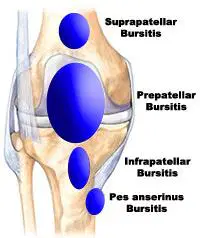
Which of the following is the bursa that commonly becomes inflamed from overuse of the patellar tendon?
Prepatellar bursa
Superficial infrapatellar bursa
Suprapatellar bursa
Deep infrapatellar bursa
The MOI that leaves the posterior cruciate ligament at greatest risk for injury is which of the following
Hyperextension of the knee
Falling witht he knee bent and the foot dorsiflexed
A valgus stress with the knee fully extended
Landing on the anterior aspect of the bent knee with the foot plantar flexed
A painful condition involving partial or complete separation of a piece of articular cartilage or subchondral bone is which of the following
Joint mice
Osteochondritis dissecans
Osgood-Schlatter disease
Larsen-Johansson disease
Which of the following is a condition common to runners and cyclists characterized by pain and irritation over the lateral femoral condyle?
Pes anerine tendinitis
Jumper's knee
Iliotibial band syndrome
Biceps femoris tendonitis
The anterior cruciate ligament is most often injured during what phase?
During deceleration with the knee in varus and the tibia internally rotated
During accleration with the knee in varus and the tibia externally rotated
During deceleration with the knee in valgus and the tibia internally rotated
During accleration with the knee in valgus and the tibia externally rotated
Which of the following structures is the main source of stability in the knee?
Menisci
Ligaments
Bones
Cartilage
An athlete who has immediate, significant swelling following an injury is displaying signs consistent with an injury to which of the following?
Cartilage
Capsule
Meniscus
Cruciate ligament
Feelings of locking are associated with injury to which structure?
Bone
Cartilage
Ligament
Muscle
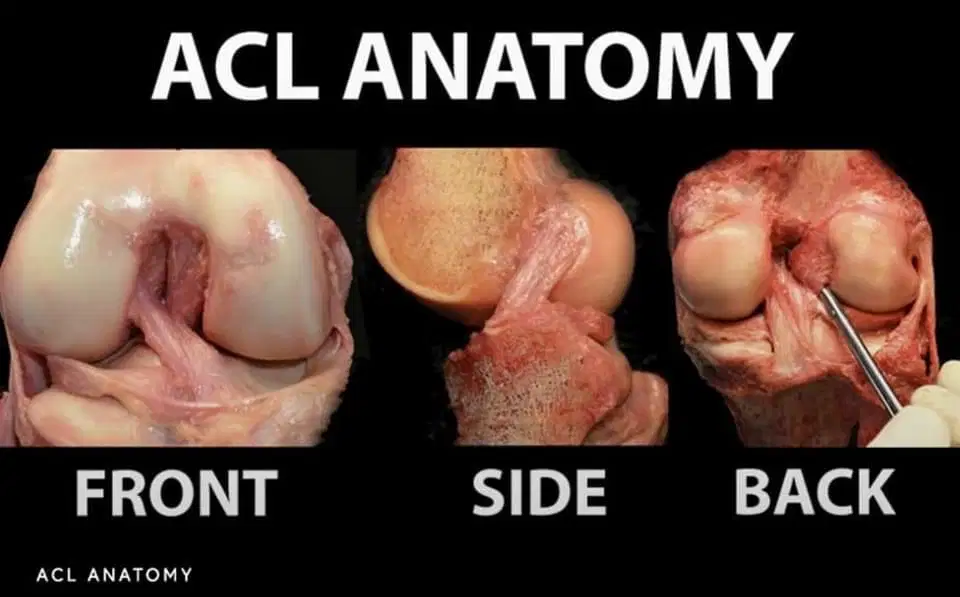
The anterior cruciate ligament prevents which of the following
Varus stress
Valgus stress
Posterior movement of the femur on the tibia in weight-bearing
Anterior movement of the femur on the tibia in weight-bearing
What mechanism is most likely to injure the medial meniscus?
A varus force
Hyperextension
A valgus force
A valgus force with rotation
What is the most common mechanism of injury for a patellar dislocation
The knee is flexed and internally rotated
The foot is planted and the knee is in valgus
The knee is extended and externally rotated
The foot is planted and athlete cuts in same direction
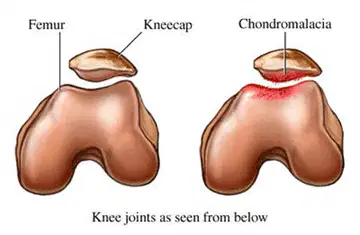
Which of the following is a cause of chondromalacia
Strong quadriceps muscles
Abnormal patellar tracking
Varus deformity at the knee
Supination of the foot
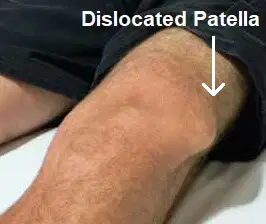
The patella usually dislocates in which direction?
Medially
Inferiorlly
Posterior
Lateral

The quadriceps muscles primary job is to do which of the following
Flex the knee
Rotate the knee
Flex the hip
Extend the knee
Which of the following structures have the responsibility of cushioning the knee during impact activity?
Cruciate ligaments
Menisci
Femoral condyles
Collateral ligaments
Which of the following injuries would NOT cause joint effusion
Meniiscal tear
Patellar tendinitis
Anterior cruciate ligament tear
Medical collateral ligament tear

The strongest cruciate ligament of the knee is the
Anterior cruciate
Posterior cruciate
Arcuate cruciate
Lateral cruciate
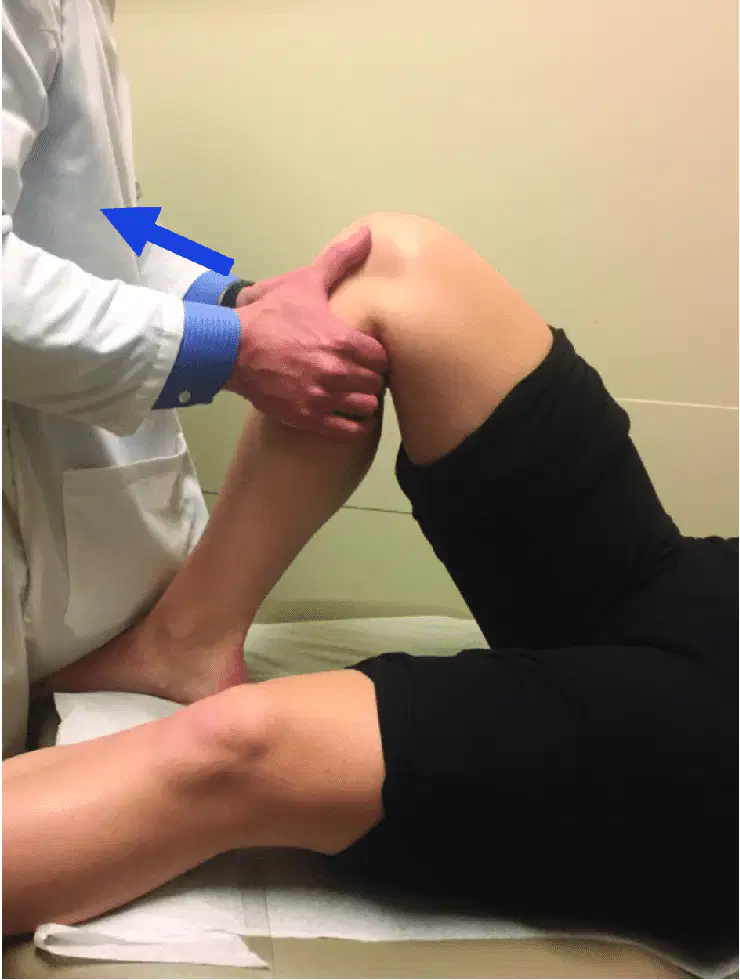
The Anterior Drawer test is used to evaluate stability of the
MCL
ACL
Meniscus
Patellar femoral joint

The ligament injury of the knee generally considered to be the most serious involves the:
Anterior cruciate
Lateral collateral
Medial collateral
Posterior cruciate
A gradual degenerative condition affecting the underside of the patella is called:
Patellaritis
Chondromalacia patella
Osteochondritis dissecans
Osgood-Schlatter's disease
The day before, a skier fell during a training run and twisted her knee. She experienced mild pain and was able to ambulate with a slight limp. She did not notice any swelling at this time. Today she complains of swelling, stiffness, and occasional locking of the knee joint. The athlete has probably sustained a/an:
Meniscal tear
Tibial fracture
Anterior cruciate sprain
Subluxation of the patella
The signs and symptoms of a meniscal tear and chrondromalacia patella may often appear similar. Which of the following conditions is indicative of both of these injuries?
Locking of the knee
Pain of the anterior knee with activity
Pain of the lateral joint line
Pain while performing a squat
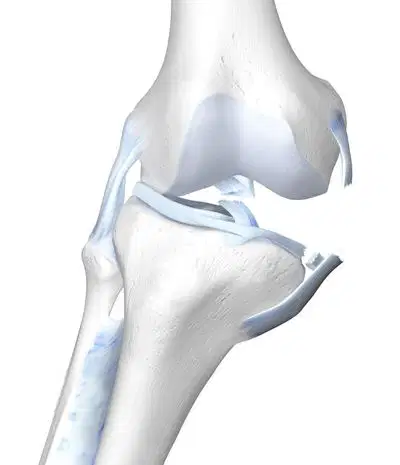
You hear of an athlete sustaining a "terrible triad" or "unhappy triad". Which tissues are affected?
MCL, LCL, ACL
LCL, ACL, Medial Meniscus
Lateral Meniscus, ACL, LCL
Medial Meniscus, ACL, MCL

Structure that attaches quadricep muscle to the tibia is the
Patella
Patella Tendon
Anterior Cruciate Ligament
Quadricep ligament


The muscle marked by the letter C is the
Biceps Femoris
Vastus Medialis
Sartorius
Vastus Lateralis

The muscle marked by the letter A is the
Biceps Femoris
Vastus Intermedius
Sartorius
Vastus Lateralis

The muscle marked by the letter D is the
Rectus Femoris
Vastus Medialis
Vastus Lateralis
Vastus Intermedius

Identify the RED muscle
Semitendinosus
Semimembranosus
Biceps Femoris
Quadricep

Identify the BLUE muscle
Semitendinosus
Semimembranosus
Biceps Femoris
Quadricep

Identify the GREEN muscles
Semitendinosus
Semimembranosus
Biceps Femoris
Quadricep

MCL
LCL
PCL
ACL
What does "C" of ACL stand for?
Cruciate
Collateral
Connective
Condylar
What does the "C" of MCL stand for?
Cruciate
Collateral
Connective
Condylar
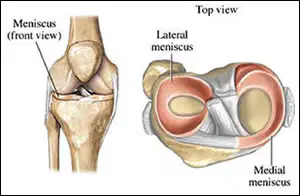
Why is the medial meniscus wider than the lateral meniscus?
because the medial tibial plateau is smaller
because the lateral epicondyle is higher
because the fibular head is in the way
because the medial condyle of the femur is bigger
What is the function of the patella
increases mechanical advantage of the quadriceps femoris tendon
decreases mechanical advantage of the quadriceps femoris tendon
serves as a cushion
attaches the femur to the tibia
The knee is a synovial joint. What does this mean?
fibrous capsule covers the joint
meniscus cushions the knee joint
enclosed by a capsule, and filled with fluid
the bursa of the knee provide shock absorption

Which anatomical landmark makes up the most distal ends of the femur that are covered with articular cartilage?
Tibial Tuberosity
Femoral Condyles
Femoral Epicondyles
Adductor Tubercles
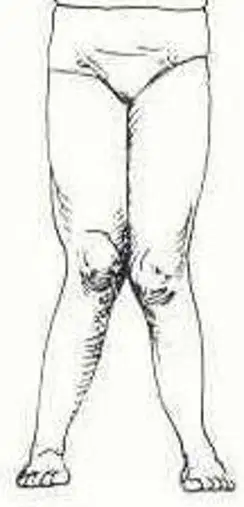
Genu valgum is best described as
Bow-legged
Knock kneed
Hyperextension
None of the above
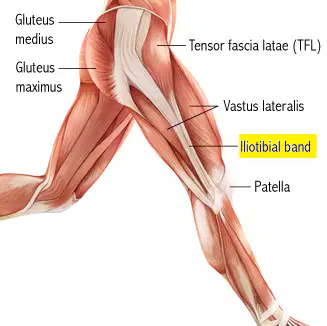
Another name of IT Band Friction Syndrome
Runner's knee
Jumper's knee
Tennis knee
Lacrosse knee
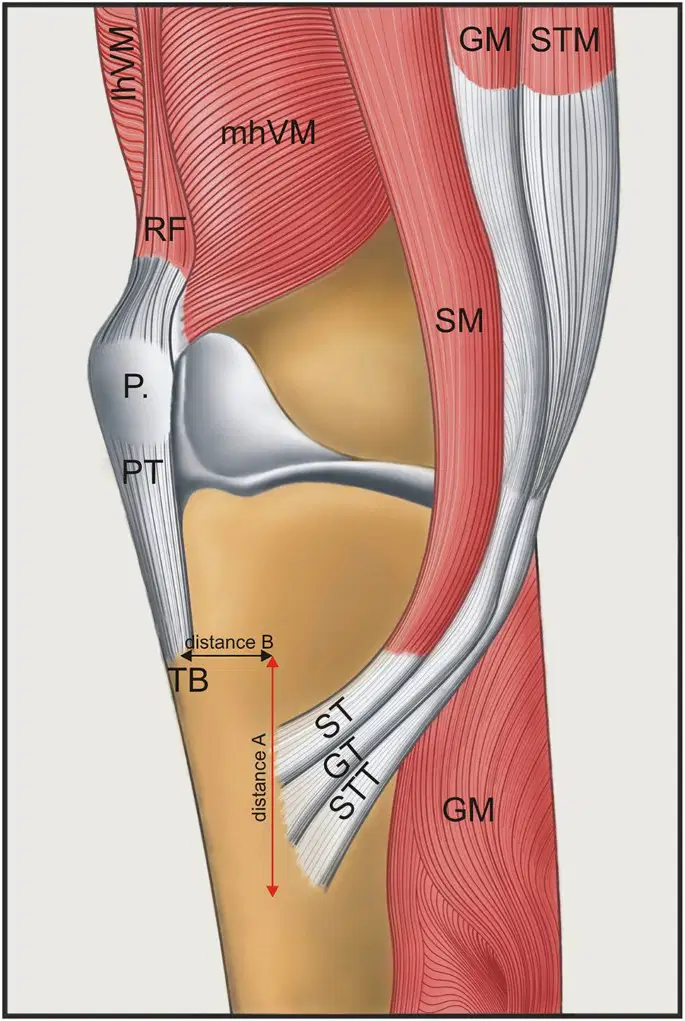
Which muscle is NOT part of the Pes Anderine Tendon
Gracilis
Sartorius
Semitendinosus
Bicep femoris

When performing the McMurray's test, you are testing for an injury to
Medial collateral ligament
Meniscus
Anterior cruciate ligament
Posterior cruiciate ligament
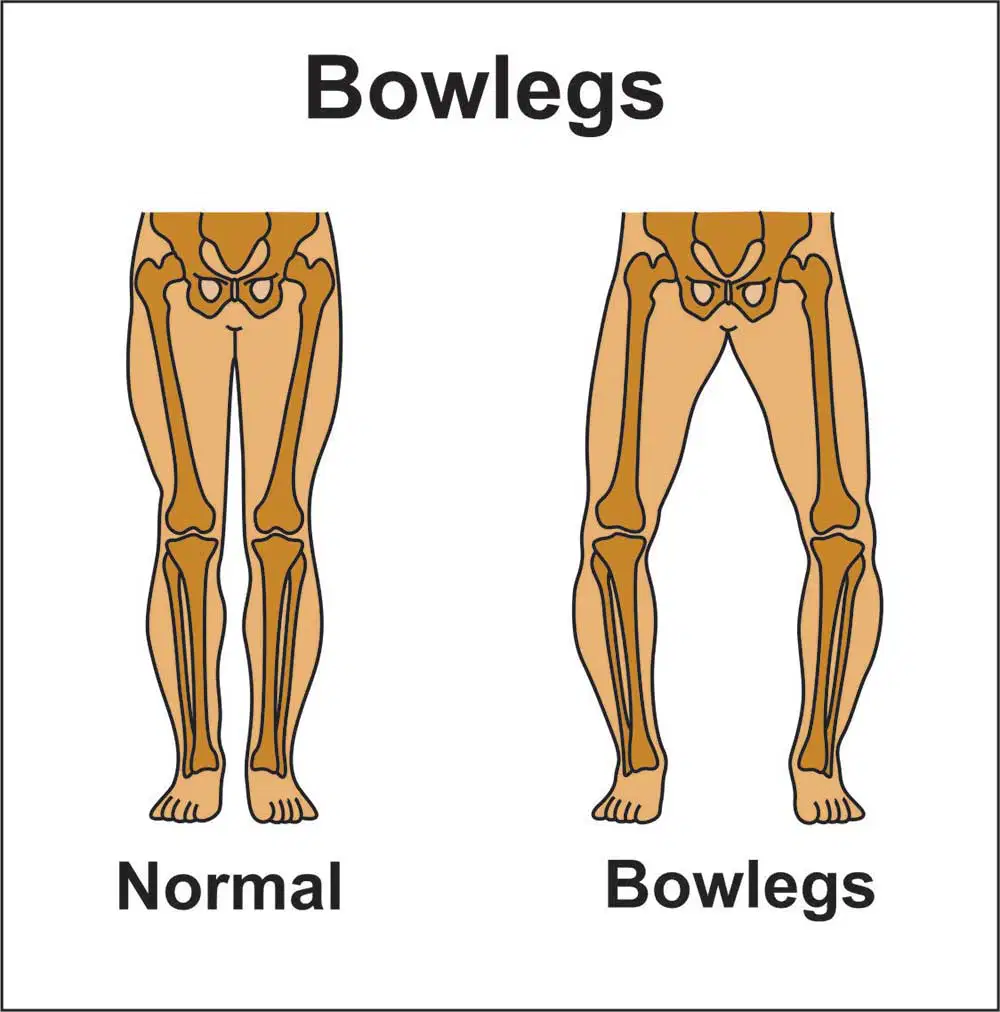
the medical term for bowlegged
Genu varum
Genu valgum
Genu recurvatum
Genu I dont care
Another name for patellar tendinits
Runner's knee
Jumper's knee
Golfer's knee
Cheerleader's knee
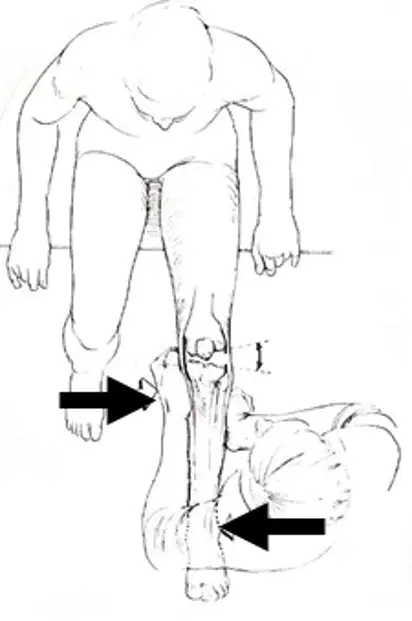
When performing the varus stress test, you are testing for an injury to
Medial collateral ligament
Meniscus
Anterior cruciate ligament
Lateral collateral ligament
Which of the following is NOT a function of the menisci
Deepens the articulation of the joint
Increases stability of the joint
negate shock absorption
Provides lubrication
Osgood-Schlatter disease is described as
Inflammation of the patellar tendon
Inflammation of the quadriceps tendon
Inflammation at the tibia tuberosity
Inflammation of the patellar tendon at the tibial tuberosity/tubercle
When your knee gets slaughtered
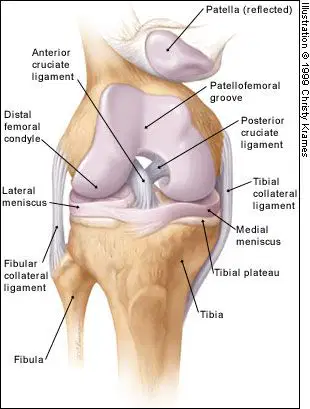
Which ligament is shaped like a pencil
Anterior cruciate
Medial collateral
Posterior cruciate
Lateral collateral
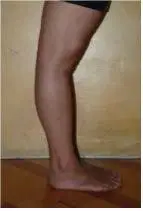
The medical term for hyperextended knees
Genu valgum
Genu recurvatum
Genu varus
Genu recurvalgum
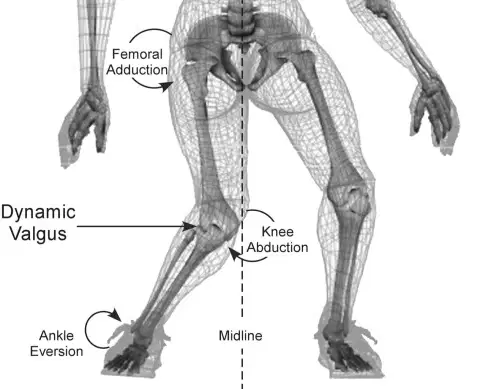
Most non-contact ACL injuries are caused by
Hyperextension
Rotation
Rotation with valgus stress
Rotation with varus stress
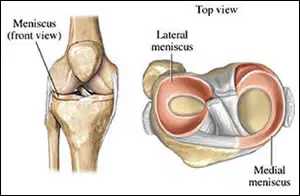
Why does a tear near the center of a meniscus to heal slower than one on the periphery?
More blood flow
About the same blood flow
Less blood flow
Have no idea

An athlete suffering from a MCL sprain may also have injured what other structure
LCL
Gracilis muscle
PCL
Meniscus

