wayground logo

Free Printable Worksheets

Font size

S
M
L
XL
Worksheets

EOG REVIEW

Total questions: 134

Worksheet time: 2hrs 32mins

Name
Class
Date
1.

What tool do you measure air pressure with?

a)

anemometer

b)

psychrometer

c)

barometer

d)

thermometer

2.

Which of the following is an example of exerting a force?

a)

a child running

b)

a train slowing down

c)

a worker pushing a cart

d)

an airplane soaring through the sky

3.

Energy of position or stored energy is called

a)

potential energy

b)

static energy

c)

kinetic energy

d)

physical energy

4.

What layers of the Earth's atmosphere decrease in temperature as altitude increases?

a)

troposhpere and stratosphere

b)

thermosphere and mesosphere

c)

mesosphere and stratosphere

d)

troposphere and mesosphere

5.
Of sixteen rabbits just born, thirteen have brown fur and three have white fur. The trait for white fur is considered to be 
a)
recessive
b)
bossy
c)
stronger
d)
dominant
6.
Genotype refers to the ...
a)
physical expression of the genes
b)
the genetic makeup of an organism 
c)
whether an allele is dominant or recessive
d)
how an organism will appear
7.

Energy in motion is called

a)

potential energy

b)

dynamic ebergy

c)

kinetic energy

d)

physical energy

8.

What is the main source of energy for the water cycle

a)

Wind

b)

Water

c)

Sun

d)

Trees

9.
Energy due to motion is ____________ energy. 
a)
Potential 
b)
Energy
c)
Kinetic
d)
Friction
10.
In multicellular organisms, tissues are comprised of _______.
a)
organs
b)
systems
c)
cells
d)
blood
11.
What body system removes the waste from your body? 
a)
Circulatory
b)
Excretory
c)
Digestive
d)
Respiratory
12.
Which body system transports oxygen and nutrients through out the body?
a)
Muscular System
b)
Nervous System
c)
Digestive System
d)
Circulatory System
13.
What system receives oxygen and gets rid of carbon dioxide?
a)
Heart
b)
Muscular System
c)
Veins 
d)
Respiratory System
14.
The main purpose of the ________ system is to produce hormones for the body.
a)
excretory
b)
digestive
c)
reproductive
d)
endocrine
15.
What system is the body's way of fighting off pathogens that would make it sick?
a)
Excretory
b)
Immune
c)
Digestive
d)
Endocrine
16.
Which element is most common in the atmosphere?
a)
Carbon
b)
Oxygen
c)
Nitrogen
d)
Hydrogen
17.
The lowest layer of the atmosphere, this is also where weather occurs.
a)
Exosphere
b)
Mesosphere
c)
Troposphere
d)
Stratosphere
18.
The _______  in the Stratosphere protects us from harmful UV rays.
a)
aurora
b)
weather
c)
convection currents
d)
ozone
19.
A measure of the amount of water vapor in the air is called what?
a)
precipitation
b)
dew point
c)
relative humidity
d)
transpiration
20.
What is the layer of the atmosphere in which meteors will burn up?
a)
Thermosphere
b)
Stratosphere
c)
Mesosphere
d)
Troposphere
21.
During this phase of the water cycle, water is evaporated from plants.
a)
Condensation
b)
Evaporation
c)
Transpiration
d)
Ground water
22.
This process keeps Earth's temperature suitable for life.
a)
Convection Currents
b)
Greenhouse Effect
c)
Albedo Effect
d)
Water Cycle
23.
Winds are caused by differences in
a)
precipitation
b)
humidity
c)
air pressure
d)
turbulence
24.
The name of the global winds that move from west to east across the United States is called
a)
Trade Winds
b)
Prevailing Westerlies
c)
Polar Easterlies
d)
Doldrums
25.
Low pressure systems are characterized by
a)
counterclockwise air flow and cloudy rainy weather
b)
sunny weather
c)
clockwise air movement
d)
calm, clear days
26.
Weather over a long period of time?
a)
storms
b)
climate
c)
weather
d)
Jet stream
27.
Conditions of the atmosphere at a particular time?
a)
Fronts
b)
climate
c)
weather
d)
air mass
28.
Thunderhead or thunderstorm type of cloud?
a)
cumulonimbus
b)
white puffy
c)
cirrus
d)
stratus 
29.
As you go higher in the troposphere, the temperature _______________.
a)
decreases
b)
increases
c)
stays the same
d)
gets very hot
30.
True or False? Land heats up slower than water.
a)
True
b)
False
31.
Which of the following is the correct order of the atmosphere layers from Earth to space?
a)
troposphere, stratosphere, mesosphere, thermosphere
b)
troposphere, mesosphere, thermosphere,  stratosphere
c)
stratosphere, mesosphere, thermosphere, troposphere
d)
troposphere, stratosphere, mesosphere, thermosphere
32.
As altitude increases, what happens to air pressure?
a)
increases
b)
remains constant
c)
decreases
d)
stays the same
33.

A fast moving current of air that flows in the upper atmosphere is called ___.

a)

current

b)

jet stream

c)

trade wind

d)

land breeze

34.

__ is the path the air travels through the atmosphere that is changed by the rotation of Earth.

a)

Coriolis effect

b)

Wind effect

c)

Convection effect

d)

Tide effect

35.
Which of the following powers the earth's water cycle?
a)
Energy from the sun.
b)
Clouds colliding together.
c)
Salts dissolving in seawater.
d)
The freezing and melting of water.
36.
Most of the water on the earth is found in which of the following locations? 
a)
Oceans
b)
The Atmosphere
c)
Groundwater
d)
Lakes and Rivers
37.
What does the word front mean?
a)
The place where it is raining
b)
The type of weather in a place
c)
The place where one air mass meets another
d)
A large bubble of air
38.
What does this image represent?
a)
Cold front
b)
Red bulbous things
c)
Warm front
d)
Sarah Ju
39.
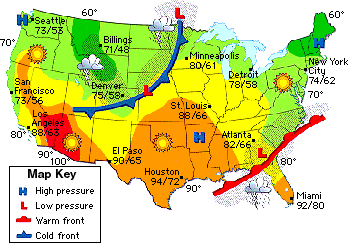
A cold front is approaching Minneapolis. What will happen to the air temperature?
a)
stay the same
b)
increase
c)
decrease
40.
A high pressure system is located north of New York City. What type of weather will be experienced there?
a)
clear, sunny skies
b)
cloudy and rainy
41.
 Which term correctly describes an individual with a pair of the same alleles for a trait? 
a)
homologus
b)
heterologus
c)
homozygous
d)
heterozygous
42.
 Look at the Punnett square.
If the two parents represented in the Punnett square have four offspring, what does the Punnett square tells you? 
a)
Two of the offspring will definitely have the genotype Aa.
b)
It is more likely that two of them will have the genotype Aa than the genotype aa.
c)
There is a 50% chance for each of the four offspring to have the genotype Aa.
d)
It is less likely that two of them will have the genotype Aa than the genotype aa.
43.
An individual with two different alleles for a specific trait is said to be: 
a)
homozygous
b)
heterozygous
c)
homogeneous
d)
heterogeneous
44.
Phenotype refers to the _________ of an individual
a)
genetic makeup
b)
actual physical appearance
c)
recessive alleles
d)
dominant alleles
45.
An organism that has two identical genes for a trait is said to be
a)
heterozygous for the trait
b)
hybrid for the trait
c)
homozygous for the trait
d)
incompletely dominant for the trait
46.
Heredity information for traits is located in 
a)
genes found on chromosomes
b)
chromosomes found on genes
c)
the mitochondria
d)
the lysosomes in the cytoplasm
47.
Which of these would best be described as a phenotype?
a)
Bb
b)
Pp
c)
Brown hair
d)
Mutation
48.
One flower is heterozygous red (Rr) and it is crossed with a homozygous white (rr) plant. Use a Punnett square to determine the probability of one of their offspring having a white color.
a)
100%
b)
25%
c)
75%
d)
50%
49.
How many males are shown in this pedigree?
a)
8
b)
5
c)
2
d)
16
50.
Fission, budding, and regeneration are all examples of what kind of reproduction? 
a)
Asexual Reproduction 
b)
Sexual Reproduction 
51.
Fine hairs that allow protist to move is called what? 
a)
Pseudopods 
b)
Euglena 
c)
Flagella 
d)
Cilia 
52.
What are the finger like projections called? 
a)
Flagella 
b)
Cilia 
c)
Pseudopods
d)
Veela 
53.
Which protists are autotrophic? 
a)
Euglena and Volvox
b)
Amoeba and Euglena 
c)
Volvox and Amoeba 
d)
Paramecium Only 
54.
How are protist classified? 
a)
How the eat
b)
How they reproduce 
c)
Where they live
d)
How they move
55.
What type of cells are protists?
a)
Prokaryotic 
b)
Eukaryoitc 
56.
A tail-like structure used for movement.
a)
Pseudopod
b)
Cilia
c)
Flagella
d)
Euglena
57.
Which two protists contain chloroplasts and eyespots?
a)
Volvox and Amoeba
b)
Volvox and Euglena
c)
Amoeba and Paramecium
d)
Euglena and Amoeba
58.
How do a paramecium and an amoeba obtain food to live?
a)
A paramecium collects food into an oral groove, while an amoeba uses pseudopods to surround food.
b)
A paramecium and an amoeba both use contractile vacuoles to capture food.
c)
A paramecium and an amoeba both make their own food through photosynthesis.
d)
A paramecium uses pseudopods to capture food, while an amoeba uses chloroplasts to make its food.
59.
What is the purpose of an eyespot?
a)
To absorb nutrients
b)
To detect sunlight
c)
To see where you are going
d)
To procreate
60.
Which type of protist is shown in the picture?
a)
euglena
b)
paramecium
c)
amoeba
d)
eukaryotic
61.
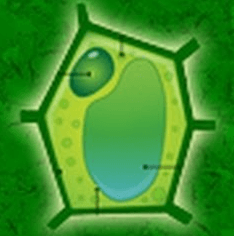
Which organelle is only found in a plant cell? 
a)
nucleus
b)
chloroplast
c)
mitochondria
d)
cell membrane
62.
This organelle takes food and turns it into ENERGY for plant and animal cells.
a)
Chloroplast
b)
Mitochondria
c)
Lysosome
d)
Ribosome
63.
The site of photosynthesis
a)
ribosome
b)
mitochondria
c)
chloroplast
d)
nucleus
64.
I am the outer most layer of an animal cell. What am I?
a)
cell wall
b)
nucleus
c)
cell membrane 
d)
cell skin
65.

A rigid layer that lies outside the plant cell's membrane is...

a)

Cytoskeleton

b)

Cilia

c)

Cell Wall

d)

Flagella

66.
What is the gel-like substance inside of cells called?

a)
photoplasm
b)
photosynthesis
c)
cytoskeleton
d)
cytoplasm
67.
A group of tissues that work together to perform a similar function is called_____. (Examples include the heart, lungs or stomach)
a)
cells
b)
tissues
c)
organs
d)
organ system
68.
 A group of cells that have similar functions? Examples are nervous, epithelial, muscle and connective
a)
cells
b)
tissues
c)
organs
d)
atoms
69.
Organs that work together to perform a related function is called _____________?
a)
cells
b)
tissues 
c)
organ system
d)
organs
70.
__________ is stored energy. 
a)
Potential
b)
Kinetic
c)
None of the above 
d)
All of the above 
71.
Food has _________ energy. 
a)
Potential 
b)
Kinetic 
c)
None of the above 
d)
All of the above 
72.
What kind of energy is in a rock at the edge of a cliff?
a)
Potential
b)
Kinetic
73.
Energy can not be created or destroyed, only converted from one form to another.
a)
true
b)
false
74.
When plants convert the sun's energy into food, which type of energy is it?
a)
electrical
b)
chemical
c)
thermal
d)
radiant
75.
Energy stored in the height of an object is called ___________ potential energy.
a)
Elastic
b)
Chemical
c)
Gravitational
d)
Nuclear
76.
At which point is potential energy greatest?
a)
W
b)
X
c)
Y
d)
Z
77.
What kind of energy is represented in this picture?
a)
Thermal
b)
Potential
c)
Nuclear
d)
Mechanical
78.
On a roller coaster, where is maximum kinetic energy?
a)
At the bottom of a big hill
b)
When going around a corner
c)
When going upside down
d)
At the top of a big hill
79.
The ability to do work is
a)
power
b)
energy
c)
thermal
d)
kinetic
80.
A _____ is a pull or a push.
a)
force
b)
friction
c)
gravity
d)
speed
81.
Another way that force can cause the change in an object's motion is to...
a)
change its color.
b)
change its pitch.
c)
change its direction.
d)
change its spots.
82.
_____ is the force that slows and stops motion between touching objects.
a)
Friction
b)
Gravity
c)
Pull
d)
Push
83.
Which has the least friction?
a)
snowboard on a snowy hill
b)
running on the playground
c)
sandpaper on wood
d)
a racer on a track
84.
What keeps the Moon in orbit around Earth?
a)
Earth's rotation.
b)
Earth's atmosphere.
c)
Earth's gravity.
d)
Earth's shape.
85.
two or more forces act upon an object in such a way as to exactly counteract each other
a)
friction
b)
balanced force
c)
unbalanced force
d)
force
86.
Objects that are changing their speed or their direction 
a)
force
b)
energy
c)
acceleration
d)
friction
87.
the capacity for vigorous activity; available power
a)
friction
b)
motion
c)
force
d)
energy
88.
the amount of material in a substance
a)
inertia
b)
force
c)
mass
d)
motion
89.
the speed and direction in which it moves
a)
weight
b)
velocity
c)
speed
d)
energy
90.
a measurement of the gravitational force acting on an object
a)
weight
b)
speed
c)
velocity
d)
inertia
91.
The temperature at which air is saturated and condensation forms is the:
a)
dew point
b)
rain point
c)
wind point
d)
relative humidity
92.
Cold air traveling south from Canada is:
a)
continental tropical
b)
continental polar
c)
maritime tropical
d)
maritime polar
93.
Warm air moving upwards from the Gulf of Mexico is:
a)
continental tropical
b)
continental polar
c)
maritime tropical
d)
maritime polar
94.
This type of front can bring strong storms
a)
cold
b)
warm
c)
stationary
d)
occluded
95.
This type of front results in the same weather for several days
a)
warm
b)
cold
c)
stationary
d)
occluded
96.
This weather tool measures wind speed and direction
a)
thermometer
b)
barometer
c)
anemometer
d)
psychrometer
97.
This means that the conditions are right for severe weather
a)
watch
b)
warning
98.
Located at the leading edge of a warm air mass. Brings gentle rain or light snow, followed by warmer, milder weather.  
a)
Warm Front
b)
Cold Front 
c)
Occluded Front 
d)
Stationary Front 
99.
Where the warm and cold air meet and stall, clouds and fog form, and it may rain or snow.  It could bring many days of clouds and precipitation.  
a)
Warm Front
b)
Cold Front
c)
Occluded Front 
d)
Stationary Front 
100.
This is the symbol for a... 
a)
Occluded Front
b)
Stationary Front
c)
Warm Front
d)
Cold Front 
101.
Identify the type of front that is shown in the image.
a)
Occluded Front
b)
Cold Front
c)
Stationary Front
d)
Warm Front
102.
Identify the type of front that is shown in the image.
a)
Occluded Front
b)
Cold Front
c)
Stationary Front
d)
Warm Front
103.
In which layer of the atmosphere does weather occur?
a)
Mesosphere
b)
Thermosphere
c)
Stratosphere
d)
Troposphere
104.

What DECREASES as you travel up in the atmosphere?

a)

Altitude

b)

Atmosphere

c)

Meteors

d)

Air Pressure

105.
What are the 2 most abundant gases in Earth's atmosphere?
a)
carbon dioxide and oxygen
b)
carbon dioxide and nitrogen
c)
nitrogen and oxygen
d)
nitrogen and hydrogen 
106.
The ozone layer is important because....
a)
It absorbs ultraviolet radiation
b)
Communication satellites are there
c)
Meteoroids burn up there
d)
It reflects radio waves back to Earth
107.

What happens to gravitational potential energy of a rock as it moves down a hill during a landslide?

a)

it is lost

b)

it increases

c)

it will not change

d)

it is transformed into kinetic energy

108.

What simple machine is used to raise and lower an elevator car?

a)

lever

b)

inclined plane

c)

screw

d)

pulley

109.

What is the name of the fixed point on a lever?

a)

wedge

b)

effort

c)

fulcrum

d)

load

110.

At which point in the picture does the cart have the most potential energy and the least amount of kinetic energy?

a)

a

b)

b

c)

c

d)

d

111.

True or False: Energy can not be created or destroyed?

a)

true

b)

false

112.
_____________ is the amount of matter that makes up an object.
a)
force
b)
mass
c)
direction
d)
position
113.
Which vehicle would have the most kinetic energy?
a)
Motorcycle
b)
Car
c)
Box Truck
d)
Pickup Truck
114.
When a ball is thrown into the air, it follows a curved path.

At which point does the ball have the greatest amount of gravitational potential energy?
a)
W
b)
X
c)
Y
d)
Z
115.
The graph represents the time and distance traveled by four different toy cars.


Which car had the greatest change in position?
a)
A
b)
B
c)
C
d)
D
116.
What happens if the forces on an object are unbalanced?
a)
Its motion will not change
b)
Its motion will change.
c)
The object will immediately stop moving.
d)
The forces will be zero
117.
The graph below shows the distance a student traveled on his bicycle trip and the amount of time it took him to travel that distance.


During which 5-minute interval did the student achieve the greatest average speed?
a)
0-5
b)
5-10
c)
10-15
d)
15-20
118.
A ramp is an example of which type of simple machine?
a)
Lever
b)
Wheel and Axle
c)
Inclined Plane
d)
Block and Tackle Pulley
119.
Which of the following statements about machines is true?
a)
Machines perform work with 100% mechanical efficiency
b)
Machines change the size or direction of a force.
c)
Machines enable a worker to do a job that was previously impossible.

d)
Machines perform input and output work
120.
What kind of energy are you taking in when eating food?
a)
thermal
b)
sound
c)
chemical
d)
electrical
121.
What is an example of kinetic energy?
a)
book on shelf
b)
parked car
c)
ball rolling down hill
d)
apple on tree
122.
When would you have the most potential energy?
a)
walking up the stairs
b)
sitting at the top of a hill
c)
running down the hallway
d)
sitting on a park bench
123.
When a pendulum swings, at which point is potential energy at its greatest?
a)
1
b)
2
c)
3
d)
4
124.
Which of the following best describes what is happening at position Y?
a)
kinetic energy has increased
b)
kinetic energy is destroyed
c)
kinetic and potential energy is zero
d)
kinetic has changed into potential energy
125.
What is a force that works AGAINST MOTION?
a)
Force
b)
Motion
c)
Gravity
d)
Friction
126.
Why is it harder for the boy in Image B to get down the hill?
a)
Motion
b)
Friction
c)
Work
d)
Displacement
127.
If you pull the cord, what direction will the box move?
a)
Up
b)
Down
c)
Left
d)
Right
128.
Thermal Energy is also known as....
a)
Electrical Energy 
b)
Solar Energy
c)
Nuclear Energy
d)
Heat Energy
129.
Which type of protist is shown in the picture?
a)
euglena
b)
paramecium
c)
amoeba
d)
eukaryotic
130.
Which protists are autotrophic? 
a)
Euglena and Volvox
b)
Amoeba and Euglena 
c)
Volvox and Amoeba 
d)
Paramecium Only 
131.
What organism uses the pseudopod for both movement and capturing its food?
a)
amoeba
b)
paramecium
c)
volvox
d)
pretzel mold
132.
Which two protists contain chloroplasts and eyespots?
a)
Volvox and Amoeba
b)
Volvox and Euglena
c)
Amoeba and Paramecium
d)
Euglena and Amoeba
133.
What is the purpose of an eyespot?
a)
To absorb nutrients
b)
To detect sunlight
c)
To see where you are going
d)
To procreate
134.

What is a flagellum?

a)

small hair-like structures

b)

the protists national flag

c)

a long whip-like tail

d)

"false-feet"

Similar Resources on Wayground