wayground logo

Free Printable Worksheets

Font size

S
M
L
XL
Worksheets

Precision Exam Review - Design & Visual Communications

Total questions: 76

Worksheet time: 10hrs 23mins

Name
Class
Date
1.

What are thumbnail sketches?

a)

Large drawings that use mediums other than pencil

b)

Detailed drawings that are used for final layout approval

c)

Sketches using your thumbnail as a unit of measure for accurate observational drawing

d)

Small, abbreviated drawings used to brainstorm and quickly translate ideas and concepts to paper

2.

What is light logic?

a)

A system of using value to create the illusion of real space and form

b)

Lighting at a photoshoot arranged in a logical manner to capture the subject in a natural way

c)

The RGB spectrum

d)

The rule that colored light will cast a shadow in its complementary color

3.

Identify one-point perspective drawing(s):

a)
b)
c)
d)
4.

Identify two-point perspective drawing(s):

a)
b)
c)
d)
5.

What is the purpose of one and two-point perspective drawings?

a)

To create the illusion of three-dimensional space on a flat surface

b)

To draw objects in proportion

c)

To identify the point of the drawing

d)

To create drawings for blueprints that are to scale

6.

What is NOT a way to show depth in a drawing?

a)

Overlapping shapes

b)

Variations in scale

c)

Using complementary colors

d)

Variations in value (Light and shadow)

7.

What is this an example of?

a)

Two-point perspective

b)

Foreshortening

c)

Gesture drawing

d)

Value scale

8.

Which image(s) utilize foreshortening?

a)
b)
c)
d)
9.

A small decorative line added as embellishment to the basic form of a character is called a _________________ .

a)

Serif

b)

Sans Serif

c)

Slab

d)

Display

10.

A category of typefaces that do not use serifs, small lines at the ends of characters, is called ____________.

a)

Sans Serif

b)

Slab

c)

Script

d)

Display

11.
A ____________ is a type of serif typeface characterized by thick, block-like serifs.
a)
Serif
b)
Slab
c)
Script
d)
Display
12.

A ____________ typeface is based upon the varied and often fluid stroke created by handwriting

a)

Serif

b)

Slab

c)

Script

d)

Display

13.
Letter- and word-spacing that is adjusted so that the text falls flush with both margins is called ____________ alignment.
a)
Left
b)
Right
c)
Center
d)
Justified
14.

What type style does this image represent? (Click on this text to show image)

a)

Sans Serif

b)

Serif

c)

Slab

d)

Display

15.
What font does this image represent? (Click on this text to show image)
a)
Sans Serif
b)
Serif
c)
Slab
d)
Display
16.

What type style does this image represent? (Click on this text to show image)

a)

Sans Serif

b)

Serif

c)

Blackletter

d)

Decorative/Novelty

17.

What type style does this image represent? (Click on this text to show image)

a)

Slab

b)

Script

c)

Blackletter

d)

Display

18.

Which of the 4 serif categories has the most contrast between thick and thin lines?

a)

Old Style

b)

Transitional

c)

Modern

d)

Slab

19.
The arrow is pointing to what part of the type?
a)
Ascender
b)
Baseline
c)
Cap Height
d)
X-Height
20.
The arrow is pointing to what part of the type?
a)
Cap Height
b)
Descender
c)
X-Height
d)
Baseline
21.
The arrow is pointing to what part of the type?
a)
Ascender
b)
Descender
c)
X-Height
d)
Counter
22.
The arrow is pointing to what part of the type?
a)
Counter
b)
Baseline
c)
X-Height
d)
Ascender
23.
The arrow is pointing to what part of the type?
a)
Cap Height
b)
Baseline
c)
Ascender
d)
Descender
24.
The arrow is pointing to what part of the type?
a)
X-Height
b)
Ascender
c)
Baseline
d)
Counter
25.
Type height is measured in:
a)
inches
b)
points
c)
picas
d)
kilojoules
26.

Select the correct order of visual hierarchy:

a)

Level 1: body text

Level 2: subheadings

Level 3: headings

b)

Level 1: headings

Level 2: subheadings

Level 3: body text

c)

Level 1: subheadings

Level 2: headings

Level 3: body text

27.

____ points = 1 pica; ____ points = 1 inch

a)

12; 72

b)

10; 6

c)

6; 24

d)

6; 32

28.
Which typeface is shown in the image?
a)
Serif
b)
San Serif
c)
Decorative/Ornamental
d)
Script
29.
Which typeface is shown in the image?
a)
Serif
b)
San Serif
c)
Decorative/Ornamental
d)
Script
30.
Which typeface is shown in the image?
a)
Serif
b)
Symbol
c)
Decorative/Ornamental
d)
Script
31.
Which typeface is shown in the image?
a)
Serif
b)
San Serif
c)
Decorative/Ornamental
d)
Script
32.

Bold is a...?

a)

Serif

b)

Font

c)

Type Style

d)

Typeface

33.
Which font tends to work better as body text in printed materials, such as textbooks, newspapers and novels?
a)
Serif
b)
Sans Serif
34.
The relative lightness or darkness of an object is:
a)
Texture
b)
Color
c)
Contrast
d)
Value
35.
A path between two points is a?
a)
Texture
b)
Shape
c)
Pattern
d)
Line
36.
Which of these elements can be physical or visual?
a)
Shape
b)
Line
c)
Value
d)
Texture
37.
The feeling of harmony between all parts of the work of art, which creates a sense of completeness:
a)
Balance
b)
Unity
c)
Space
d)
Line
38.
A regular repetition of elements to produce the look and feel of movement:
a)
Emphasis
b)
Color
c)
Shape
d)
Rhythm
39.
3 dimensional or something in a 2 dimensional artwork that appears to be 3 dimensional:
a)
Shape
b)
Pattern
c)
Form
d)
Contrast
40.
The focal point of an image or when one area or thing stands out:
a)
Contrast
b)
Line
c)
Spape
d)
Emphasis
41.
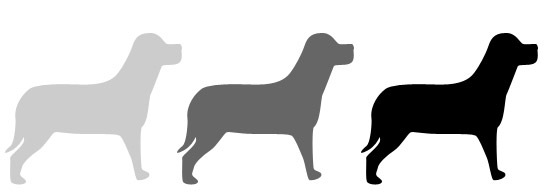
This image is a good example of which principle?
a)
Value
b)
Space
c)
Movement
d)
Contrast
42.
The distribution of visual weight is?
a)
Scale
b)
Contrast
c)
Rhythm
d)
Balance
43.
Is the tree in this picture representing positive or negative space?
a)
Positive space
b)
Negative space
44.
Holly chose to wear a skirt with blue, green, and violet hues. These colors are considered to be:
a)
secondary colors
b)
triadic colors
c)
warm colors
d)
cool colors
45.
This image is a good example of which element?
a)
value
b)
balance
c)
emphasis
d)
color
46.

blue, green, and purple are

a)

Cool Colors

b)

Warm Colors

47.

red, yellow, and orange are ________________________.

a)

Cool Colors

b)

Warm Colors

48.

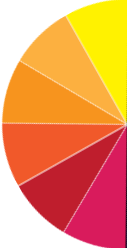
This picture shows the use of ...

a)

analogous colors

b)

observational drawing

c)

proportion and scale

d)

movement

49.

Copyright is a legal right that grants...

a)

anyone to reproduce a similar or identical version of a product or work

b)

companies to copy an image by electronic scanning

c)

intellectual property laws

d)

the creator of an original work exclusive rights for its use and distribution

50.
Which works are protected by copyright?
a)
ideas
b)
all works
c)
literary, musical, dramatic, pictorial works 
d)
titles, names, slogans
51.
Who Owns the Copyright in a Work?
a)
you and family members 
b)
author who created it 
c)
the president 
d)
the government
52.
What is Copyright Infringement?
a)
anyone who uses someone work without permission 
b)
a copy of someone work
c)
anyone who uses copyright owners work with permission
d)
a picture of someone work
53.
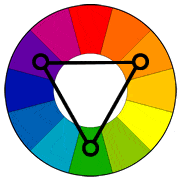
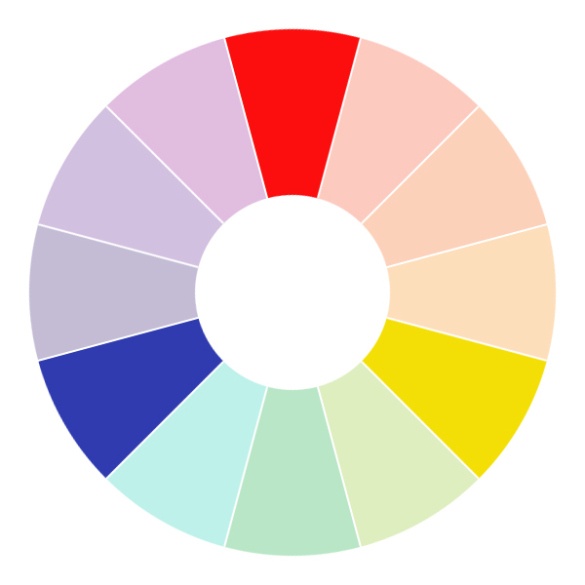
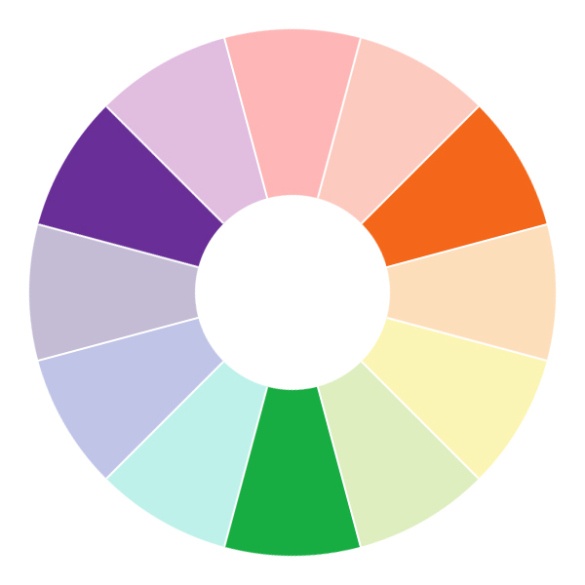
What color harmony is shown?
a)
Split Complementary Colors
b)
Neutral Colors
c)
Complementary Colors
d)
Tertiary Colors
54.
Three colors beside each other on the color wheel are also known as: 
a)
Analogous Colors
b)
Secondary Colors
c)
Cool Colors
d)
Complementary Colors
55.
Three colors equally spaced on color wheel?
a)
Analogous Colors
b)
Color Triad
c)
Monochromatic Colors
d)
Primary Colors
56.
Red, Yellow, & Blue are the "building blocks" of all color. What are these three colors also referred to as?
a)
Tertiary Colors
b)
Secondary Colors
c)
Primary Colors
d)
Complementary Colors
57.
Green, Orange, & Violet are created after mixing two Primary colors together. What are these colors also referred to as?
a)
Secondary Colors
b)
Primary Colors
c)
Tertiary Colors
d)
Analogous Colors
58.
These colors are created after mixing a Primary and a Secondary color together:
a)
Analogous Colors
b)
Tertiary Colors
c)
Complementary Colors
d)
Warm Colors
59.
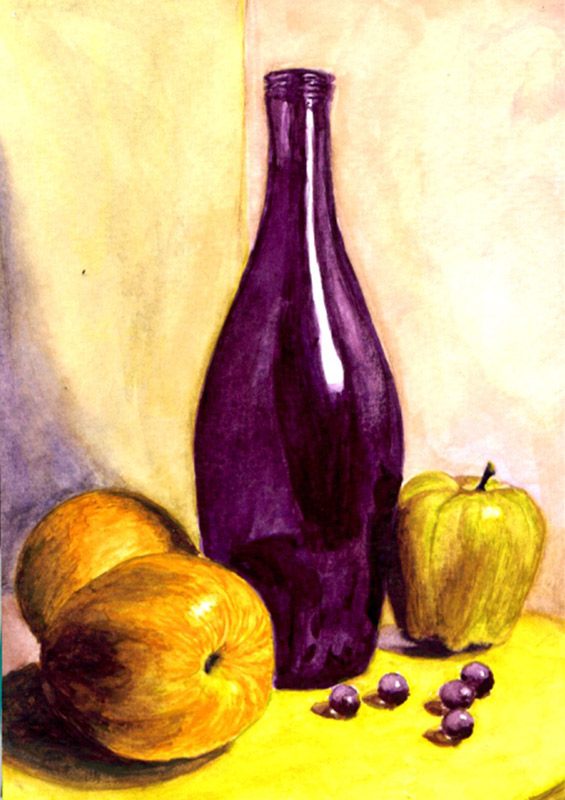
What color scheme is represented by this painting? Choose the best answer. 
a)
purple and yellow
b)
complementary
c)
analogous
d)
monochromatic
60.
What is the complementary color of yellow?
a)
Green
b)
Orange
c)
Violet
d)
Red
61.

The lightness or darkness of a color is called its ________.

a)

tone

b)

hue

c)

value

d)

blue

62.

What is the difference between a shape and a form?

a)

depth

b)

horizon line

c)

value scale

d)

color

63.

When an artwork has a full range of light to dark, it is said to have ___________.

a)

Drama

b)

Contrast

c)

Color

d)

Tone

64.

When light is shown on a 3 dimensional object, this appears...

a)

A reflection AND a cast shadow

b)

a reflection

c)

a cast shadow

d)

chiaroscuro

65.

What is the line in the middle of the landscape where earth meets the sky?

a)

sky line

b)

vanishing point

c)

horizon line

d)

vertical line

66.
What is Saturation?
a)
Lightness or Darkness of Color
b)
The Color Itself
c)
Intensity of Color
67.
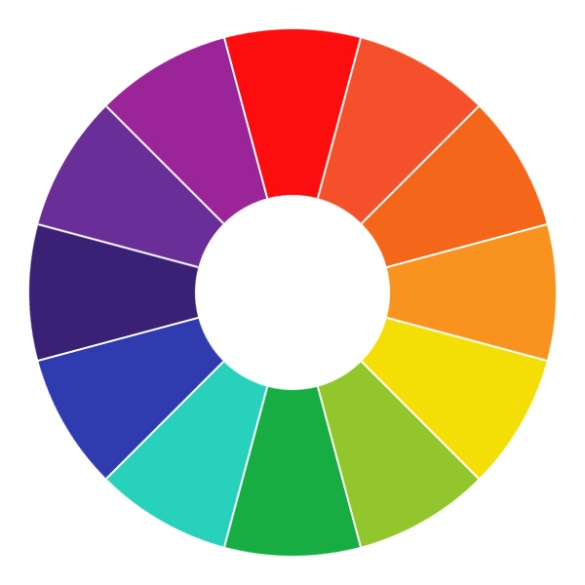
In the picture below, the color furthest to the left is a ______ of yellow.  
a)
shade
b)
tint
c)
complementary color
68.
What is HUE?
a)
Lightness or Darkness of Color
b)
The Color itself
c)
Intensity of Color
69.

Hue + Black = ______ ; Hue + White= ______

a)

shade, tint

b)

tint, shade

70.
What is Value?
a)
Lightness or Darkness of Color
b)
The Color itself
c)
Intensity of Color
71.
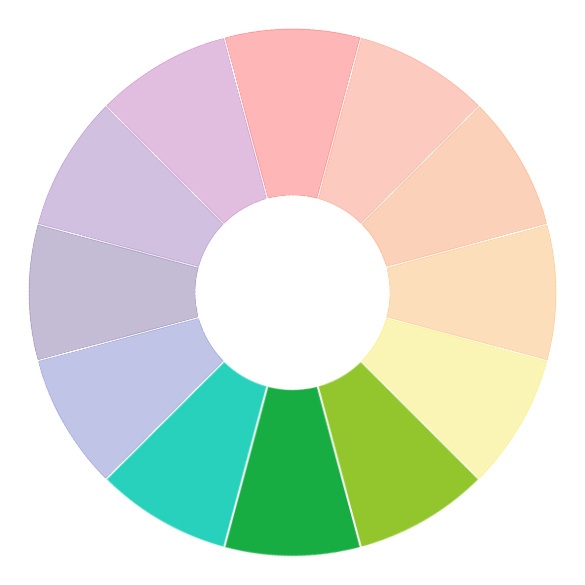
this image is a uses what color scheme
a)
Complementary
b)
primary
c)
neutrals
d)
Secondary
72.
This image uses what color scheme
a)
Analogous
b)
Warm
c)
Neutral
d)
Secondary
73.

The Berne Convention protects which of the following?

a)

artistic, scientific and literary works

b)

only scientific works

c)

only literary works

d)

only artistic works

74.

What is true of the Geneva Phonograms Convention?

a)

It grants copyright protection to sound recordings.

b)

It discusses the fair use of telephones.

c)

It was signed in the early 20th century.

d)

It grants copyright protection to images.

75.

Why are the Berne and Geneva Conventions important?

a)

They provide creators such as authors, musicians, poets, painters etc. with the means to control how their works are used, by whom, and on what terms.

b)

They are the first two copyright laws developed in the United States.

c)

They caused visual and audio creators to lose the ability to make their art available for mass distribution

d)

They challenged the current Intellectual Property laws and changed how artwork and sound recordings were developed.

76.

What does WIPO stand for and why is it important?

a)

World International Policy Organization; it requires participating governments to utilize consistent copyright laws

b)

World Intellectual Property Organization; it promotes the protection of intellectual property throughout the world

c)

Whole Inter-Person Operation: if you choose this answer, I know that you have not read any of the choices.

d)

World Institute for Property and Ownership; it governs copyright and who can apply for them