
 Worksheets
Studio Art 3 T2MP1 Proficiency
Total questions: 80
Worksheet time: 4hrs 0mins
What is a relief sculpture?
a sculpture in the round
a sculpture with a flat back surface
a sculpture you carve into
a sculpture made from papier-mache
Papier mache is...
newspaper
cardboard
glue
glue and water

______ is the element of art that is three-dimensional and consist of length, width, and depth of a shape.
Shape
Form
Texture
Space
An _________________ explains the meaning of the artwork, the artists' intent and other important information that the artist would like to share about their creation.
Critique
Artist Statement
Relief Sculpture
Name tag

In which type of relief sculpture are the sculpted elements slightly raised from the surface?
sunken relief
high relief
low relief

In which type of relief sculpture are the sculpted elelments greatly protruding from the surface?
low relief
sunken relief
high relief

In which type of relief sculpture are the sculpted elements carved into the surface?
sunken relief
low relief
high relief
Occupies space with the dimensions of height, width, and depth
2D
1D
3D
4D
An example of form would be
line
sphere
square
circle
Relief means
a type of clay
standing free, all sides are meant to be seen. You can walk around it.
2D art
A technique that involves carving or adding to a solid background of the same material
In the round means
A sculpture technique that involves carving or adding to a solid background of the same material
2D art
A type of clay
Standing free, all sides are meant to be seen. You can walk around it.
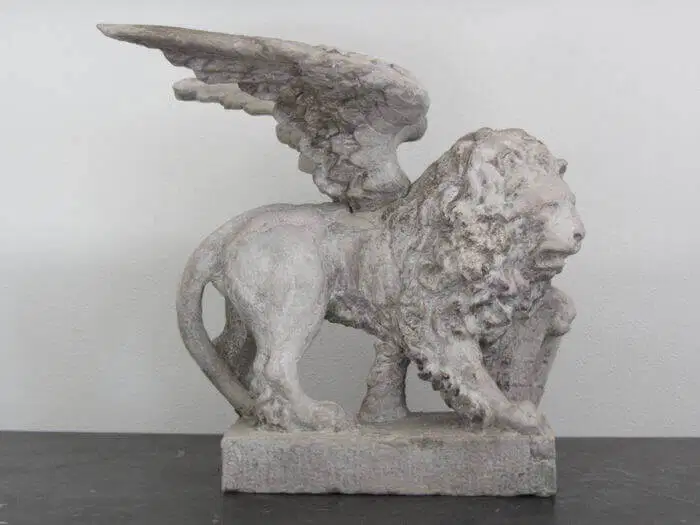
This sculpture is
Sphere
in the round
2D
relief
Choose the correct term for the following definition:
Make straight cuts, insert cut sides into each other.
Slot
Tabs
Flange
Feet
Choose the correct term for the following definition:
Cut part way through so that the cardboard can bend without breaking.
Flange
Feet
Tabs
Score
Choose the correct term for the following definition:
Score and bend, attach to both sides of a piece like bookends, secure to a base.
Feet
Stacking
Tabs
Score
Choose the correct term for the following definition:
Remove the thin top layer of cardboard to expose the ridges inside.
Exposed Corrugation
Cone
Stacking
Tabs
Choose the correct term for the following definition:
Stack and glue several pieces of cardboard together to create height.
Cone
Stacking
Score
Feet
Choose the correct term for the following definition:
Start with a circle shape, cut one side and wrap around to create a cone shape.
Stacking
Cone
Tabs
Feet

The materials used by the artist to produce a work of art.
Art Supplies
Art Tools
Art Media
Art Principles

Taking away or carving material to create a sculptural form
Subtractive
Additive
Manipulative
Mixed Media

A method in working with clay where the pieces are flattened with a roller.
Throw
Slab
Coil
Pinch

A hole in a sculpture creates a _______________
Gap
Negative Space
Void
Subtractive

Produces a sense of action, helping the viewers eye to sweep over the composition.
Rhythm
Variety
Movement
Flow

Wet, refined earth used by sculptor/potter to create a form.
Grog
Slip
Clay
Earthenware

Building up or attaching pieces of material together to create a form or sculpture.
Functional
Assemblage
Additive
Manipulative

A sculpture where the forms come out from a flat background.
Free Standing
Subtractive
Relief
Additive

A sculpture that is useful and serves a purpose.
Functional
Practical
Utilitarian
Decorative

A method in creating with clay using snake like rolls of clay.
Coil
Pinch
Throw
Slab

The elements of art that refers to the surface quality or feel of an object.
Touch
Texture
Smoothness
Feel
What are the 4 basic types of sculpture?
carving, clay, metal, and bronze
carving, casting, assembling, and modeling
relief, abstract, assembling, and modeling
stone, brass, paper, and cardboard
What are the two main processes of creating sculpture?
relief and casting
clay and stone
subtractive and additive
casting and recasting
Clay needs atleast _________ to dry.
2 hours
8 hours
10 hours
24 hours
This kind of clay hardens and cures at normal room temperature and once dry, it can be painted and decorated in a variety of ways.
Air Dry Clay
Traditional Clay
Polymer Clay
Stoneware Clay
The first step to starting a sculpture project is to first make a _____.
Base
Outline
Sketch
Wet surface
What are the plastic sticks used to help create details in your sculpture?
Modeling tools
Popsicle sticks
Pencils
Clay sticks
Where does the term sculpture come from?
from the Latin word sculpere, which means to carve
from the French word superposer, which means to stack
the English word scud, which means to move quickly
What does it mean if a sculpture is "kinetic"?
3D figures and forms that you can walk around
3D artworks that rise above a flat plane
3D artworks that have moving parts
Clay, wax, and papier-mache are all examples of mediums that can be used to create what type of sculpture?
carved
molded
cast
assembled
Sculptures that pull bits and pieces (some recycled) from just about anywhere into textured forms are what type of sculptures?
carved
molded
cast
assembled
Which types can be considered "additive" sculptures? (Check all that apply)
carved
cast
molded
assembled
Which types can be considered "subtractive" sculptures? (Check all that apply)
carved
cast
molded
assembled
Where does the term collage come from?
the French term coller
the word collection
The British term colour
What does the term coller mean?
to glue
to add color
to collect something
What is collage art?
Art that includes bright pops of color using paint
Art made from a collection of different items and/or images
Art made from a collection of drawn images
Art that is made by people ages 18-24
Assemblage is what type of process?
Additive
Subtractive
Manipulative
What is Assemblage?
Assemblage artist don't feel the need to create new objects, but just refashion items that already exist.
True
False
The difference between Collage and Assemblage is that one is 2D and the other one is 3D.
True
False
Assemblage allows to combine different media and materials.
True
False
Which of the following is not an element of art?
Line
Movement
Color
Texture
Check all the FORMS below (3D shapes)
Cube
Triangle
Sphere
Rectangle
Pyramid
Check all the types of TEXTURE.


What element of art is demonstrated in the picture?
line
value
texture
space

The dominant (strongest) principle of design in this artwork is:
Balance
Unity
Proportion
Movement

The dominant (strongest) principle of design in this artwork is:
Contrast
Distance
Proportion
Unity

The dominant (strongest) principle of design in this artwork is:
Proportion
Balance
Unity
Contrast

The dominant (strongest) principle of design in this artwork is:
Emphasis
Unity
Movement
Pattern

The dominant (strongest) principle of design in this artwork is:
Proportion
Balance
Movement
Unity

The dominant (strongest) principle of design in this artwork is:
Unity
Rhythm
Pattern
Movement

The dominant (strongest) principle of design in this artwork is:
Rhythm
Emphasis
Contrast
Pattern

The dominant (strongest) element of art in this artwork is:
Value
Form
Line
Shape

The dominant (strongest) element of art in this work is:
Color
Space
Texture
Shape


This element is represented by a 3-D object having depth. Examples include cube, cylinder, or sphere.
Shape
Value
Form
Texture

This element represents the area around (negative) and inside of an object (positive). Also refers to distance in an artwork (objects further away appear smaller).
Shape
Color
Space
Texture
This principle of design is referred to as a sense of motion in an artwork. Often described as jazzy, flowing, etc.
Contrast
Color
Rhythm
Balance


Which of these is thread?


which of these hold fabric together temporarily?


Which tool is the best one to use to take out a mistake when I sew?


What does a good running stitch look like?


How many times should I wrap my thread around my finger to make a beginning knot before I sew?
1
2
3
6
After wrapping the thread around my finger, what do I need to do?
Roll it off like a booger
Pull it off my finger
put the needle through the loop
Start to sew
What should I have to do to finish my beginning knot?
Put the needle through the loop
Push down my lasso
wrap the around my finger

