wayground logo

Free Printable Worksheets

Font size

S
M
L
XL
Worksheets

7th grade Final Exam Review #9

Total questions: 60

Worksheet time: 1hrs 24mins

Name
Class
Date
1.

Which of the answers below is a Primary Source?

a)

Diary

b)

Textbook 

c)

Notes from a teacher

d)

Encyclopedia 

2.

Which of the answers below is a Secondary Source?

a)

Autobiography

b)

Photograph

c)

Patent

d)

Biography

3.

Which of the answers below is NOT a Primary Source?

a)

National Geographic magazine article

b)

Diary

c)

1900's Buffalo Nickel

d)

Live video footage

4.
What type of source is this?
a)
Primary
b)
Secondary
5.
Cutting down trees to build houses is an example of which?
a)
Location
b)
Place
c)
Human-Environment Interaction
d)
Movement
6.
The Middle East is an example of which?
a)
Human-Environment Interaction
b)
Relative Location
c)
Movement
d)
Region
7.
If the price of printers goes down, what happens in the market for ink cartridges?
a)
Supply increases.
b)
Supply decreases.
c)
Demand increases.
d)
Demand decreases
8.
What determines price & quantity produced of goods?
a)
supply
b)
demand
c)
consumers
d)
supply & demand
9.

Who invented the printing press?

a)

Leonardo da Vinci

b)

Michelangelo

c)

Martin Luther

d)

Gutenberg

10.

A major impact of the printing press on Europe was it ________________ literacy of peasants.

a)

increased

b)

decreased

11.

Native Americans migrated across a land bridge from _____________ to North America?

a)

Africa

b)

Antarctica

c)

Asia

d)

Iceland

12.

Native Americans traveled across a _________ during the ice age

a)

ice gap

b)

iceberg

c)

land bridge 

d)

ice bridge

13.
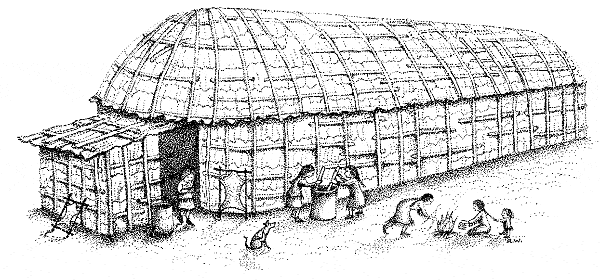
How did the Iroquois live?
a)
Longhouse
b)
Teepee
c)
Hut
d)
House
14.
These people lived in a longhouse together
a)
Friends
b)
Women
c)
All family members
d)
Men
15.
___________________ was the part of the Triangular Trade Route from Africa to the Colonies. 
a)
Slaves
b)
Ships 
c)
Middle Passage
d)
Servants
16.
This was a tax on molasses and sugar to reduce smuggling.
a)
Stamp Act
b)
Sugar Act
c)
Townshend Act
d)
Tea Act
17.
This was a tax on all printed materials in the 13 Colonies.
a)
Stamp Act
b)
Sugar Act
c)
Tea Act
d)
Townshend Act
18.
Finish this American Colonist Motto, "No Taxation without..."
a)
Transportation
b)
Relaxation
c)
Representation
d)
Sensation
19.
What was one main cause of the French and Indian War?
a)
France and Britain both claimed the same lands in North America.
b)
American colonists wanted independence from Britain.
c)
Native Americans did not like French people settling on the western land.
d)
The British government passed new tax laws in the colonies.
20.

How did Committees of Correspondence help the colonists fight British rule?

a)

They spread information quickly.

b)

They housed British soldiers.

c)

They voted to declare independence.

d)

They stole British goods.

21.
How did colonists protest the taxes put on British goods?
a)
left the colonies
b)
fought with the British soldiers
c)
boycotted buying the goods
22.
Who was the main author of the Declaration of Independence?
a)
Thomas Jefferson
b)
George Washington
c)
Samuel Adams
d)
Richard Henry Lee 
23.
8.5A 
Which problem did George Washington encounter when he became president?
a)
The Articles of Confederation needed to be replaced with a stronger constitution.
b)
Great Britain was refusing to trade with the United States.
c)
The United States had large debts from the American Revolution.
d)
Southern states were threatening to secede from the Union. 
24.
8.24 B
The primary goal of the American Temperance Society was to — 
a)
create a self-sufficient utopian society
b)
gain the release of mentally ill people from prisons
c)
decrease the consumption of alcohol
d)
 ban the spread of slavery to new territories 
25.
What was this poster's meaning?
a)
The Colonies needed to be united
b)
Serpents can grow back together
c)
Colonies need to be independent
d)
Ben Franklin didn't know why he made this
26.

This event broke tensions between the colonists and the British troops where shots were fired. Crispus Attucks was the first to be killed.

a)

Lexington and Concord

b)

Boston Tea Party

c)

Boston Massacre

d)

Bloody Valentine

27.

What was the punishment for the Boston Tea Party?

a)

Intolerable Acts

b)

Sugar Acts

c)

Quartering Acts

d)

Stamp Acts

28.
This person was a printer who was thrown in jail for writing negative stories about the New York governor.
a)
King of England
b)
Samuel Adams
c)
John Peter Zenger
d)
Daughters of Liberty
29.
John Peter Zenger's trial gave us freedom of ____________.
a)
religion
b)
jobs
c)
choice
d)
speech
30.

The words self-evident mean what?

a)

confusing

b)

obvious

c)

wrong

d)

self-aware

31.

What are our natural rights according to Jefferson? (He got the idea from John Locke, but he changed the last right.)

a)

Freedom of speech, religion, and press

b)

Life, liberty, and property

c)

Life, liberty, and the pursuit of happiness

d)

Voting, rebelling, and health

32.
Why was the Declaration of Independence written?
a)
To stop taxes from the British Empire.
b)
To make a United States army.
c)
To gain independence from the British Empire
d)
To install their own king in America
33.

The List of Grievances was the part of the Declaration that

a)

detailed the colonists' complaints with King George.

b)

listed a man's natural rights.

c)

introduced the Declaration.

d)

concluded the Declaration, declaring America a free country.

34.

Which amendment gives you the right of Religion, Assembly, Speech, and Press?

a)

First Amendment

b)

Second Amendment

c)

Third Amendment

d)

Fourth Amendment

35.
Which amendment protects you from being searched without a warrant? 
a)
First Amendment
b)
Second Amendment
c)
Third Amendment
d)
Fourth Amendment
36.
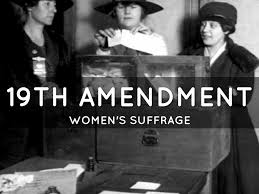
Which amendment guarantees women the right to vote?
a)
1st Amendment
b)
4th Amendment
c)
19th Amendment
d)
12th Amendment
37.

The "turning point in the war". It showed the patriots had a good chance of winning. France decided to ally with the Americans after this battle.

a)

Battle of Monmouth

b)

Battle of Trenton

c)

Battle of Yorktown

d)

Battles of Saratoga

e)

Battle for New York

38.

The last major battle of the Revolutionary War which resulted in the surrender of British forces.

a)

Battle of Monmouth

b)

Battles of Saratoga

c)

Battle of Trenton

d)

Battle of Yorktown

e)

Battle for New York

39.

American intellectual, inventor, and politician. He helped to negotiate French support for the American Revolution.

a)

Francis Marion

b)

Marquis de Lafayette

c)

Benjamin Franklin

d)

Lord Cornwallis

e)

John Burgoyne

40.
The "shot heard 'round the world" was which battle?
a)
Battle of Bunker Hill
b)
Battle of Saratoga
c)
Battle of Trenton
d)
Battle of Lexington & Concord
41.
American believed to have sewn one of the first flags for our country.
a)
Betsy Ross
b)
Rosa Parks
c)
Eleanor Roosevelt
d)
Helen Keller
42.
The Great Compromise was a compromise between--
a)
Mass. Plan and New Jersey Plan
b)
Virginia Plan and New Jersey Plan
c)
Virginia Plan and New York Plan
d)
Virginia Plan and Delaware Plan
43.
What kind of congress did the Great Compromise establish?
a)
1 House that controls everything
b)
2 Houses that have no power
c)
2 Houses that both vote on laws
d)
1 House that has no power
44.
For the Great Compromise, how is the number of Senators determined?
a)
based on population of each state
b)
equal number - 1 from each state
c)
equal number - 2 from each state
d)
slaves count as 3/5
45.

What was the Underground Railroad?

a)

Railroad tracks that ran East and West

b)

Secret routes that runaway slaves used to reach freedom

c)

An underground tunnel that ran to Canada

d)

A road that returned escaped slaves to the south

46.
What is an abolitionist?
a)
Someone who supports slavery
b)
Someone who wants to catch runaway slaves
c)
Someone who wants to end slavery
d)
Someone who wants to divide the North and South
47.
Where is the location of the Alamo?
a)
Santa Anna, Texas
b)
San Angelo, Texas
c)
San Felipe, Texas
d)
San Antonio, Texas
48.
Dictator of Mexico during Texas Revolution
a)
Carlos Espalier
b)
Antonio Lopez de Santa Anna
c)
Susanna Dickinson
d)
Juan Seguín
49.
Which branch is divided into the House and the Senate?
a)
Legislative
b)
Executive
c)
Judicial
50.
Which branch approves presidential appointments?
a)
Legislative
b)
Executive
c)
Judicial
51.
Dividing up the functions or role of government is known as what?
a)
Judicial Review
b)
Separation of Powers
c)
Amendment Process
52.
What branch is having its power checked when...
Congress overrides a President's veto?
a)
Legislative Branch
b)
Executive Branch
c)
Judicial Branch
d)
none
53.
In what year did the United States purchase the Louisiana Territory?
a)
1903
b)
1812
c)
1848
d)
1803
54.
What year did the most miners rush to California?
a)
1848
b)
1849
c)
1852
d)
1853
55.
How did the Louisiana Purchase affect the United States?
a)
It led to war. 
b)
It doubled the nation's size.
c)
It limited trade opportunities.
d)
It led to the discovery of a water route across the country.
56.
What is Manifest Destiny?
a)
The belief that it was America's destiny to control and civilize all of North America
b)
The belief that their destiny was to manifest
c)
A religious term used to explain how to be saved
57.

"American Progress" was a piece of art created by John Gast with the main idea of...

a)

the original 13 colonies

b)

President Polk

c)

Manifest Destiny

d)

Native American reservations

58.
Name the piece of land.
a)
Mexican Cession
b)
Northwest Territory 
c)
Trans-Appalachian West 
d)
Oregon Country 
59.
Which novel was written by Harriet Beecher Stowe to expose the cruelty of slavery?
a)
Little House on the Prairie
b)
The Liberator
c)
Slavery must be stopped
d)
Uncle Tom's Cabin
60.
Which describes the economy of the South?
a)
plantations; dependent on slavery
b)
industry; not dependent on slavery