wayground logo

Free Printable Worksheets

Font size

S
M
L
XL
Worksheets

World History Final Exam

Total questions: 145

Worksheet time: 2hrs 46mins

Name
Class
Date
1.

A movement of great creativity in art writing, and thought, rebirth of Greco-Roman culture.

a)

Middle Ages

b)

Renaissance

c)

perspective

d)

Dark Ages

2.

A way of thought that focuses on the human potential for success

a)

Humanism

b)

perspective

c)

patron

d)

Renaissance

3.
sculpted "David"
a)
Michelangelo 
b)
Leonardo da Vinci
4.

The wealthy Italian banking family that patronized the arts and artists like Michelangelo.

a)

Florence

b)

London

c)

Medici

d)

Fuggars

5.
How did Renaissance humanists differ from medieval thinkers?
a)
They focused solely on religious subjects and emphasized individual achievements.
b)
They rejected the classical works from Greece and Rome, focusing their work on Biblical studies.
c)
They were interested in inquiry and exploration, as well as the idea that humans could perfect themselves.
d)
They looked to the classical works from Greece and Rome, focusing on a narrow, specialized area of study.
6.

What was one of the problems of the Catholic Church that Luther wanted to fix?

a)

Sale of Indulgences

b)

Adoration of the Saints

c)

Elimination of the Sacrament of Baptism

d)

Helping the poor

7.

What is vernacular?

a)

a type of vine

b)

local/native language

c)

holy scripture

d)

only printing in Latin

8.

Why did England break with the Church?

a)

Martin Luther's influence spread throughout country

b)

John Calvin set up his theocracy in one the towns

c)

The king wanted a divorce and Church said no

d)

The England did not break from the Catholic Church

9.

Who invented the Printing Press?

a)

Martin Luther

b)

John Locke

c)

Johann Gutenberg

10.

The idea of predestination, or the belief that God knows who will and will not go to heaven, was used by...

a)

John Calvin

b)

Martin Luther

c)

John Wycliffe

d)

Desiderius Erasmus

11.
What did Catholic leaders discuss at the Council of Trent?
a)
New prices for indulgences
b)
The reformation of the Catholic Church
c)
How to support Protestantism
d)
How to infiltrate the Protestant church. 
12.
The Counter Reformation was a movement to...
a)
Separate from the Catholic Church due to their actions in society.
b)
Put people on trial that were believed to have committed heresy. 
c)
End the Protestant movement and bring people back to the Catholic Church
d)
The exploration of the world in order to gain trade partners an better Europe. 
13.
This group was established to spread Catholicism around the world 
a)
Huguenots
b)
Lutherans 
c)
Jesuits
d)
Monks
14.
Successful Ghazi who built a small state in Anatolia.
a)
Osman
b)
Timur the Lame
c)
Mehmed II
d)
janissary
15.
Conqueror who made Constantinople his capital.
a)
Mehmed II
b)
Osman
c)
janissary
d)
devshirme
16.
Ruler who brought Ottoman Empire to its height.
a)
Suleyman the Lawgiver
b)
Osman
c)
Mehmed II
d)
ghazi
17.
Policy for creating the sultans army.
a)
devshirme system
b)
janissary
c)
Mehmed II
d)
Osman
18.
Soldier slaves drawn from conquered Christian territories. 
a)
janissary
b)
devshirme
c)
Mehmed II
d)
Osman
19.
Emperor Yonglo built this within the Imperial City
a)
Forbidden City
b)
Lost World
c)
Inner Secret
d)
Forgotten City
20.
Who came to power after the Mongolian rule of China was weakened?
a)
Zhang dynasty
b)
Ming dynasty
c)
Wu dynasty
d)
Tang dynasty
21.
What product production was a secret punishable by death?
a)
Procleain
b)
Silk
c)
cotton
d)
Clocks
22.
This Mongol ruler ____ united China for the first time in over 300 years
a)
Kublai Khan
b)
Hongwu
c)
Yonglo
d)
Ghengis Khan
23.
What was the name of China's last dynasty
a)
Qing
b)
Qin
c)
Ming
d)
Tang
24.
The Ming Emperor wanted more tributaries so he gave his trusted adviser, ___________ the title "Admiral of the Western Seas" and told him to sail to "the countries beyond the horizon"
a)
Zheng He
b)
Marco Polo
c)
Ahmed
d)
Jamal al-Din
25.
Act performed by ambassadors that involved kneeling and touching their heads to the floor three times when meeting the emperor. 
a)
Kowtow
b)
Senpuku
c)
Chiagu
d)
Tskurimono
26.

What is a shogun?

a)

Figurehead of JapanVery wealthyRepresentative of gods

b)

Military leader, Actual ruler of Japan, Strongest Daiymo

c)

Land owning lords Hired samurai Protect peasants in exchange for labor

d)

Highly trained warriors Only people allowed to carry swords in public followed strict rules

27.

What is a samurai?

a)

Highly trained warriors, Only people allowed to carry swords in public followed strict rules

b)

Land owning lordsHired samuraiProtect peasants in exchange for labor

c)

Military leaderActual ruler of JapanStrongest Daiymo

d)

Figurehead of JapanVery wealthyRepresentative of gods

28.
In Shintoism, Japanese worship spirits of their ancestors found in
a)
nature
b)
animals
c)
other people
d)
statues
29.
The transatlantic trading network that transported enslaved persons was known as...
a)
The Pacific System.
b)
The Slave Trade System.
c)
The Colombian Exchange.
d)
The Triangle Trade
30.
African slaves were first used to work on
a)
European tobacco plantations.
b)
European sugar plantations.
c)
European cotton plantations.
d)
American cotton plantations.
31.
The Columbian Exchangewas the exchange of ____________ between the eastern and western hemispheres.
a)
people
b)
people, animals, and foods
c)
people and animals
d)
people and disease
32.
What does this picture represent?
a)
The exchange of diseases from the New Word to the Old World
b)
The exchange of livesock from the New Word to the Old World
c)
The exchange of goods from the New Word to the Old World
d)
The exchange of people from the New Word to the Old World
33.
Phillip II of Spain believed it was his duty to defend this branch of Christianity.
a)
Calvinism
b)
Catholicism
c)
Protestantism
d)
Baptism
34.
Louis XIV built this palace as a symbol of Frances wealth and power.
a)
Taj Mahal
b)
Buckingham Palace
c)
Versailles
d)
Huguennots
35.
He called himself the Sun King.
a)
Louis XIII
b)
Henri IV
c)
Henry of Navarre
d)
Louis XIV
36.
This is a ruler with complete authority over the government and lives of the people.
a)
Supreme Monarch
b)
Absolute Monarch
c)
Monarch
d)
Queen
37.
Who was the monarch of England when Phillip II went to war with his Spanish Armada and lost?
a)
Mary of Scots
b)
Elizabeth I
c)
James I
d)
Charles I
38.
Peter the Great implemented this to make Russia stronger.
a)
Mercantilism
b)
Westernization
c)
Balance of Power
d)
Trickle down economics
39.
What is Divine Right?
a)
a set of rules used by the greeks
b)
the God given right to rule
c)
Hitler's reason to exterminate Jewish people
d)
Machiavelli's theory on power
40.
Galileo was tried for heresy because he argued  
a)
That heaven did not exist
b)
That Earth revolved around the sun
c)
Against the law of gravity
d)
That the sun revolved around the Earth
41.
According to Copernicus, the sun  
a)
Revolved around the earth
b)
Was the center of the Universe
c)
Was the biggest star
d)
 Had many moons
42.
The idea that the earth is the center of the universe is the ___________ theory.
a)
geocentric
b)
heliocentric
c)
earthcentric
d)
world's worst
43.
What did Kepler add to Copernicus’ heliocentric theory?  
a)
That Jupiter had four moons
b)
That the planets revolved around the earth 
c)
That the sun was the biggest star
d)
That the planets move in eliptical (oval shaped) orbits around the sun
44.
Bacon, Galileo, & Newton promoted the idea that knowledge should be based on experimentation & ________.
a)
observation
b)
guessing
c)
research
d)
what your friends say
45.
What type of math was Newton known for developing?
a)
Geometry
b)
Trigonomety
c)
Calculus
d)
Addition
46.
The Enlightenment is
a)
a time of rebirth
b)
a time when science ruled
c)
a time with people used reason and logic to explain the world
d)
a time when technology ruled
47.

Enlightenment philosopher who did not agree with censorship and called for religious tolerance.

a)

Voltaire

b)

Denis Diderot

c)

Mary Wollstonecraft

d)

Adam Smith

48.
Enlightenment philosopher who believed men and women should be equal
a)
Voltaire
b)
Denis Diderot
c)
Mary Wollstonecraft
d)
Adam Smith
49.

Enlightenment philosopher who believed natural laws governed economics. Talked about the "invisible hand."

a)

Voltaire

b)

Denis Diderot

c)

Mary Wollstonecraft

d)

Adam Smith

50.
Enlightenment philosopher who edited the Encyclopedia to help educate the public.
a)
Voltaire
b)
Denis Diderot
c)
Mary Wollstonecraft
d)
Adam Smith
51.
Enlightenment philosopher who believed people had natural rights of life, liberty, and property.
a)
John Locke
b)
Montesquieu
c)
Rousseau
d)
Voltaire
52.
Enlightenment philosopher who believed to limit government, that it should be divided into separate branches that shared power.
a)
John Locke
b)
Montesquieu
c)
Rousseau
d)
Voltaire
53.

Enlightenment philosopher who believed people give the government the ability to rule and in return the government should protect will of the people.

a)

John Locke

b)

Montesquieu

c)

Rousseau

d)

Voltaire

54.
The idea that reason should guide society rather than tradition helped cause the revolution and came from
a)
the Declaration of Independence
b)
the Scientific Revolution
c)
the Enlightenment
d)
all of the above
55.
The French Revolution began when King Louis XVI
a)
was executed
b)
had his troops attack Paris
c)
called the Estates General together
d)
abdicated
56.
Most of the people of France belonged to the 
a)
1st 
Estate
b)
2nd Estate
c)
3rd Estate
d)
4th Estate
57.
When the other estates refused to change voting rules the 3rd Estate 
a)
met separately
b)
declared themselves the new government
c)
Created the National Assembly
d)
all of the above
58.
What is the significance of the Tennis Court Oath?
a)
it led to a new constitution for France
b)
it started the French Revolution
c)
it was the beginning of the Reign of Terror
d)
it marked the beginning of the rule of Napoleon
59.
The National Assembly set down the ideas of the Revolution in 
a)
the Declaration of Independence
b)
the Declaration of the Rights of Man
c)
the US Constitution
d)
The Edict of Nantes
60.
Napoleon's attempted naval blockade of the European continent, meant to keep Britain isolated, was called
a)
Neuveau System
b)
Britain Isolated System
c)
French System
d)
Continental System
61.
effective Russian strategy used against Napoleon and the invading French army; strategic retreat where everything is burned so the invaders can't live off the land
a)
scorched-earth policy
b)
burned-earth policy
c)
burned-earth strategy
d)
scorched-earth strategy
62.
Napoleon's final defeat in June of 1815
a)
Battle of Moscow
b)
Battle of Paris
c)
Battle of Trafalgar
d)
Battle of Waterloo
63.
After his initial defeat, Napoleon was exiled to the island of ______; his second exile was to the island of _________.
a)
St. Helena; Elba
b)
Elba; Corsica
c)
Elba; St. Helena
d)
Corsica; St. Helena
64.
Napoleon made which of the following reforms in France after he became Emperor?
a)
Napoleonic Code
b)
new tax collection method
c)
set up public schools
d)
all of these
65.
Napoleon replaced Monarchs of the countries he took over with
a)
Enlightened Philosophes
b)
Family Members
c)
Parliaments
d)
Soldiers from his Grand Army
66.
Part of Napoleon's legacy is the spread of
a)
Enlightenment ideas
b)
Capital punishment
c)
Women's rights
d)
Democratic governments
67.
Napoleon forced French culture on conquered territories. What was the impact of this?
a)
Trade increased
b)
Nationalism developed and spread
c)
Peace and prosperity spread across Europe
d)
All of Europe started speaking the same language
68.
The French people welcomed Napoleon because…
a)
they hoped he would fix the famine that France was experiencing
b)
he completely disagreed with the ideas of the French Revolution
c)
he was the son of King Louis XVI
d)
he promised to bring law and order to France after the chaos of the Reign of Terror
69.
Whose actions in the early 1800s seemed to have started Nationalism in both Germany and Italy along with the rest of Europe?
a)
Bismarck
b)
Napoleon
c)
Cavour
d)
Robespierre
70.
Which of the following was the major player behind German unification?
a)
Austria
b)
Prussia
c)
Switzerland
d)
Schleswig-Holstein
71.
What individual was most responsible for the unification of Germany?
a)
Wilhelm II
b)
Napoleon III
c)
Cavour
d)
Bismarck
72.
During this time period what nation had to lose land/power for Germany and Italy to become unified?
a)
Russia
b)
Ottoman Empire
c)
The Austrian Empire
d)
England
73.
Nationalism is....
a)
The belief that one should be loyal to the ruler of a country.
b)
The belief that one should be loyal to the country, not the ruler.
c)
The process of uniting separate areas into one country.
d)
The process of gaining new colonies.
74.
In which country did the Industrial Revolution begin?
a)
The United States
b)
England
c)
France
d)
Germany
75.
What impact did the Agricultural Revolution have on the population of England?
a)
The population increased a little.
b)
The population declined steeply.
c)
The population increased dramatically.
d)
The population stayed the same.
76.
Which 2 natural resources were the backbone of the Industrial Revolution?
a)
wood and peat
b)
oil and natural gas
c)
coal and iron
d)
cotton and tobacco
77.
England is an island. Why was this an advantage during the Industrial Revolution?
a)
It wasn't an advantage.
b)
It made it more difficult for other countries to steal England's ideas.
c)
England has many ports and rivers which allow easier worldwide trade.
d)
England had tropical weather, which allowed more crops to be grown.
78.
Which innovation  allowed factories to be built anywhere?
a)
flying shuttle
b)
spinning jenny
c)
cotton gin
d)
steam engine
79.
Who was the prophet of laissez-faire economics?
a)
Adam Smith
b)
John Stuart Mill
c)
Karl Marx
d)
Jeremy Bentham
80.
What did Marx believe created poverty for many people?
a)
laziness
b)
ignorance
c)
capitalism
d)
laissez faire
81.
This word means strengthening a country's military; it's a cause of World War I.
a)
Nationalism
b)
Militarism
c)
Alliances
d)
Imperialism
82.
What did Germany send to Mexico that offered to help them win land back from the United States if Mexico would start a war with the US?
a)
The Zimmerman Telegram
b)
The Outlandish Letter
c)
The Surprising Phone Call
83.
This word means seeking other colonies; it was a cause of World War I.
a)
Militarism
b)
Imperialism
c)
Alliances
d)
Nationalism
84.
This word means support for different sides during war; there were the Allied and Central powers during WWI.
a)
Nationalism
b)
Imperialism
c)
Alliances
d)
Militarism
85.
Germany used their U-boats to sink ships of the Allied powers; this British passenger liner was destroyed in 1917.
a)
Lusitania
b)
USS Maine
86.
Who won WWI?
a)
Allied powers
b)
Central Powers
87.
Which of the following countries was not an Allied Power in World War 1?
a)
Germany and Italy
b)
the United States and France
c)
Britain and France
d)
Germany and Austria-Hungary
88.
According to Woodrow Wilson, the purpose of the League of Nations was
a)
to remove threat of future wars.
b)
to prevent nuclear proliferation.
c)
to help the US gain more territories.
d)
to help promote prohibition in other countries.
89.
On May 7, 1915, a German submarine torpedoed and sank
a)
the Maine
b)
The Titanic
c)
The Lusitania
d)
The Queen Mary
90.
What action on November 11, 1918, brought World War I to and end?
a)
An armistice was signed
b)
A surrender was given
c)
A propaganda campaign was waged.
d)
The allies won a major battle.
91.
Which of these is a type of fighting used in World War One?
a)
Trench Warfare
b)
Atomic Bomb
c)
Guerilla Warfare
d)
No-Man's Land
92.
Payments for war damages were known as
a)
nationalism
b)
separatism.
c)
reparations.
d)
retaliations.
93.
9)  WWI began when Austria-Hungary declared war on Serbia one month after:
a)
Serbia tried to take more of Austria-Hungary's land.
b)
Serbia burned their flag.
c)
Archduke Ferdinand and his wife were killed.
d)
Serbia won more Olympic medals.
94.
13)  The U.S. sent thousands of troops to France in 1918 and this was a major cause for the Allied Powers to win the war.  The Germans surrendered and signed a treaty at
a)
Appamattox Court House
b)
Versailles
c)
London 
d)
Gettsyburg
95.
14)  The Treaty of Versailles required ____________ to admit that they had started the war and to pay back the Allies the amount of 32 billion dollars.
a)
Russia
b)
The U.S.
c)
Germany
d)
Georgia
96.
What hardships did American soldiers face in WWI?
a)
training was insufficient
b)
forced to live among rats, lice, and dead bodies
c)
They were malnourished
d)
They were forced  to fight alongside the French troops
97.
In which WWII event did Japan use the strategy of surprise attack to bomb the United States? 
a)
D-Day on the shores of France
b)
Pearl Harbor
c)
Invasion of Poland
d)
V-E Day
98.
Which countries belonged to the Axis Powers?
a)
U.S., Italy, and Great Britain
b)
U.S., Great Britain, and France
c)
Germany, Italy, and Japan
d)
Germany, France, and Japan
99.
Victory in Europe (V-E Day) was a result of ________________.
a)
Japan surrendering
b)
The atomic bombings
c)
Germany surrendering
d)
the signing of the Treaty of Versailles
100.
What did allied forces do on D-Day, June 6, 1944?
a)
They sent thousands of troops to Berlin.
b)
They stormed the beaches of Normandy, France.
c)
The fought the Nazi troops in Russia.
d)
They took control of many Japanese islands.
101.
Which famous WWII leader was the dictator of the  Soviet Union that had an alliance with Germany at the beginning of the war but later joined forces with the allied powers.
a)
Benito Mussolini
b)
Adolf Hitler
c)
Winston Churchill
d)
Joseph Stalin
102.
Which WWII leader became President after FDR passed, wanted  to save American lives in the Pacific, and decided to drop the  atomic bombs?
a)
Franklin D. Roosevelt
b)
Winston Churchill
c)
Harry S. Truman
d)
Joseph Stalin
103.
Which WWII leader was the fascist dictator of Italy, believed  in nationalism, and was an Axis ally?
a)
Joseph Stalin
b)
Benito Mussolini 
c)
Winston Churchill
d)
Adolf Hitler
104.
What strategy did the United States develop to help defeat Japan?
a)
island hopping
b)
total war
c)
Anaconda plan
d)
blockade
105.
Which organization was created after World War II to help countries peacefully resolve conflicts?
a)
League of Nations
b)
Warsaw Pact
c)
North American Treaty Organization
d)
United Nations
106.
What role did women  take during WWII?
a)
house wives that took care of the house and  children
b)
drove tanks and fought in the war
c)
created black out curtains for everyone 
d)
filled many traditionally male jobs
107.
The extermination of 11 million people, including 9 million Jews, was called 
a)
Holocaust
b)
Reichtag
c)
Third Reich 
108.
Germany employed a tactic that used extremely quick attacks. What was this called 
a)
blitzkrieg 
b)
lebenbaum
c)
leningrad
d)
Trench warfare 
109.
Due to paranoia, hitler invaded his own Ally, _____________. 
a)
Turkey
b)
Austria 
c)
Russia
d)
Japan
110.
Which event marked the turning point in the European front?
a)
Battle of Midway
b)
Battle of Stalingrad
c)
Battle of Britain
d)
Invasion of Poland
111.
In Korematsu v. United States, what was the ruling (or decision) of the Supreme Court?
a)
Putting Japanese people in camps was unnecessary for the war
b)
Putting Japanese people in camps was necessary for the war
c)
Camps were ok for Japanese immigrants, not citizens
d)
They didn't make a ruling
112.
What was the name of the plan to make the atomic bomb?
a)
The Bracero Program
b)
The Manhattan Project 
c)
The Bronx Venture
d)
The Brooklyn Enterprise
113.
What was the major turning point in the Pacific War against Japan?
a)
Battle of Iwo Jima
b)
Battle of Midway
c)
Battle of the Bulge
d)
Battle of Okinawa
114.
What is the policy of appeasement?
a)
giving in to an aggressor to avoid war
b)
standing up for one's beliefs
c)
depending on allies to fight for you
d)
disarming to show your unwillingness to fight
115.
FDR & Churchill declared that both nations would support self-determination, freedom of the seas, joint disarmament, and territorial integrity for all after WWII ended
a)
Atlantic Charter
b)
Yalta
c)
Potsdam
d)
Tehran
116.
President Truman adopted a new foreign policy during the Cold War know as the Truman Doctrine. What was the main goal of the Truman Doctrine?
a)
To expand trade with Europe
b)
To limit the build up of nuclear weapons
c)
To stop the spread of communism
d)
to send financial aid to Europe
117.
How did the Marshall plan try to stop the spread of communism in Western Europe after WWII?
a)
by providing government housing for refugees
b)
by providing military assistance to Vietnam
c)
by providing money to stop poverty
118.
Why was the United States involved in the Berlin Airlift?
a)
to airlift food to the people of West Berlin
b)
to bomb East Berlin
c)
to demolish the Berlin Wall
d)
to transport people out of East Berlin
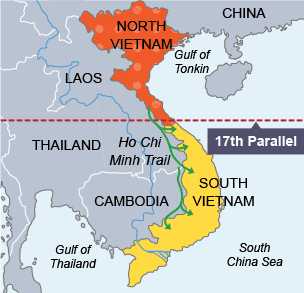
119.
In the 1950s, the United States became involved in the Vietnam War. Why did the United States become involved in this war?
a)
to prevent the collapse of the government of North Vietnam
b)
to stop Vietnam from taking over Hong Kong
c)
to stop the spread of communism to South Vietnam
d)
to prevent attacks against United States shipping
120.
Why was there an influx of Jewish immigrants in the 1930s?
a)
Diasporas
b)
British control
c)
The Holocaust
d)
Vacation
121.
What European country had control of Palestine?
a)
French
b)
Italians 
c)
Americans
d)
British 
122.
Who created the state of Israel in 1948?
a)
The British
b)
United States
c)
Arabs
d)
United Nations
123.
What is the Western Wall?
a)
An important Muslim monument
b)
Where Jesus was Crusified
c)
Yahweh 
d)
The last wall of the second synagogue  
124.
What was the purpose of the PLO? 
a)
to form a military alliance 
b)
to form a trading partnership
c)
to promote terrorism
d)
to Liberate Palestine land from Jews
125.
As the democratically elected prime minister of Iran, Mossadeq made this decision that Western nations did not favor.
a)
Joined the CIA
b)
Nationalized electricity
c)
Nationalized oil
d)
Privatized Oil
126.
Why did Iranian students take hostages from the US embassy, starting the hostage crisis?
a)
demand to put the Shah on trial in Iran
b)
demand to put the Shah on trial in USA
c)
send the Shah to the UN
d)
for helping during the Iran/Iraq War
127.
This leader took over Iran after the Shah was removed in 1979 and implemented a theocracy
a)
Ayatollah Khomeini
b)
Shah Pahlevi
c)
Mohammed Mossadeq
d)
Jimmy Carter
128.
The term meaning "Islamic Law"
a)
Theocratic law
b)
Sharia Law
c)
Islamic Fundamentalism
d)
Qu'ran Law
129.
What was the impact of the Safavid Empire on Iran
a)
Established Sunni Islam
b)
Established Shi'a Islam
c)
Sharia Law began
d)
Gave Ulema power
130.
Why was apartheid undemocratic?
a)
It involved a majority using its power to reject the ideas of minority groups.
b)
It was imposed on the South African population by a European government.
c)
There were no elections in South Africa.
d)
A small minority of the South African population controlled all political power.
131.
How was apartheid finally repealed?
a)
Through a revolution by black South Africans.
b)
Through the writing of a new constitution.
c)
Through a decision by South Africa's Supreme Court.
d)
Through a series of executive orders by President P.W. Botha.
132.
Why did Nelson Mandela become a symbol for anti-apartheid activists worldwide?
a)
He used his position as a religious leader to fight tirelessly against apartheid.
b)
He was South Africa's last black president before the National Party took over.
c)
He'd been murdered by police during an anti-apartheid demonstration.
d)
He'd been imprisoned for decades for opposing apartheid.
133.
What was a homeland or a bantustan?
a)
urban ghettos blacks were forced to live in
b)
urban ghettos colored were forced to live in
c)
a rural area where blacks were forced to live 
d)
a rural area colored were forced to live on
134.
Pakistan was created because which major religion was afraid of being persecuted? 
a)
Muslims
b)
Sikhs
c)
Hindus
d)
Christians
135.
One of the major problems with the Partition of Pakistan was...
a)
China control of Northern India
b)
Forced migration of people of different religions caused bitter feelings and anger
c)
Jinnah would still be a ruler of India from Pakistan
d)
None of the above
136.
How has the conflict over Kashmir caused world-wide concern?
a)
A world-wide Apartheid could happen.
b)
Russia is invading.
c)
Both India and Pakistan have nuclear weapons.
d)
People don't want Mexico to get involved.
137.
Land area fought over between Hindu's and Muslims in the region.
a)
Kashmir
b)
Kuwait
c)
Buddhia
d)
India
138.
Major reason for US and Indian economic relationships centers around India's growing ____________ industry.
a)
automobile 
b)
communication technologies
c)
military construction
d)
non-violent culture
139.
What are the Pro's of globalization?
a)
Larger markets
b)
new products
c)
resources for cheap
d)
All of the above 
140.
What is a con to globalization?
a)
diseases 
b)
better technology
c)
cheaper goods 
d)
more jobs 
141.
For participating countries, what did NAFTA call for?
a)
a challenge to U.S. economic leadership
b)
the development of a single currency
c)
 removal of environmental controls
d)
 the gradual removal of trade restrictions
142.
A large company that has operations in more than one country.
a)
Domestic Corporation
b)
Multinational Corporation
c)
Foreign Corporation
d)
State Corporation
143.
What function do the World Bank and International Monetary Fund serve?
a)
Give loans to developing countries
b)
Subsidize global corporations
c)
Act as a slush fund for international politicians
d)
Finance refugee operations and relief efforts
144.
Muhammad Ali Jinnah was the leader of which group?
a)
Muslim League
b)
Indian National Congress 
c)
Apartheid 
d)
Hindus
145.
The Indian National Congress Party was led by
a)
Mohandas Gandi
b)
Muhammad Ali Jinnah
c)
Jawaharlal Nehru
d)
Indira Gandi