wayground logo

Free Printable Worksheets

Font size

S
M
L
XL
Worksheets

Body in Motion: Critical Question 1

Total questions: 55

Worksheet time: 52mins

Name
Class
Date
1.
What is the name for the connector that attaches bone to bone?
a)
ligament
b)
tendon
c)
patella
d)
string
2.
What is the name for the connector that attaches muscle to bone?
a)
ligament
b)
tendon
c)
patella
d)
string
3.

Which of the following is not a function of bones?

a)

Protection

b)

Blood cell formation

c)

Storage

d)

Absorption

4.
The skeletal system is composed of what as well as bones?
a)
Joints, ligaments, and tendons
b)
Joints, ligaments, and cartilage
c)
Cartilage, ligaments, and tendons
d)
Ligaments and joints
5.
The adult skeletal system is composed of how many bones?
a)
216
b)
371
c)
206
d)
199
6.
What do the bones create?
a)
white blood cells
b)
platlets
c)
red blood cells
d)
flying turkeys
7.
Which type of joint give you the largest range of motion?
a)
pivot
b)
ball-and-socket
c)
hinge
d)
gliding
8.

What bone is highlighted?

a)

Skull (Cranium)

b)

Mandible

c)

Scapula

d)

Clavicle

9.

What bone is highlighted?

a)

Skull (Cranium)

b)

Scapula

c)

Clavicle

d)

Mandible

10.

What bone is highlighted?

a)

Skull (Mandible)

b)

Clavicle

c)

Mandible

d)

Scapula

11.
Which muscle type is found in your stomach, bladder, and intestines?
a)
Skeletal
b)
Smooth
c)
Cardiac
d)
Straight
12.
Which type of muscle is found in your heart?
a)
Skeletal
b)
Smooth
c)
Cardiac
d)
Straight
13.
Which muscles are involuntary?
a)
skeletal
b)
cardiac
c)
smooth
d)
smooth and cardiac
14.
When a muscle contracts, it _______
a)
gets longer
b)
gets shorter
c)
gets thinner
d)
grows hair
15.
Skeletal muscles are attached to the _________.
a)
Stomach
b)
Lungs
c)
Bones
d)
Involuntary Muscles
16.
Muscles always work in _____
a)
pairs
b)
groups of 3
c)
bones
d)
joints
17.
Voluntary muscle is
a)
muscle that has to be told when to move
b)
muscle that moves automatically
c)
muscle that needs to be stretched regularly
d)
muscle that makes up the heart and stomach
18.
How many Muscles are in the Skeletal System?
a)
500
b)
over 600
c)
300
d)
200
19.
A muscle that straightens part of your body is called a(n)...
a)
Extensor
b)
Flexor
20.
What is the name of this muscle?
a)
Trapezius
b)
Deltoid
c)
Abdominal
d)
Pectoralis
21.
What muscle is this?
a)
Pectoralis
b)
Triceps
c)
Obliques
d)
Rectus Abdominus
22.
What muscle is this?
a)
Gastrocnemius
b)
Quadriceps
c)
Pectorals
d)
Trapezius
23.

What muscle is highlighted?

a)

Lats

b)

Trapezius

c)

Hamstrings

d)

Calves

24.

The antagonist to the quadriceps is the

a)

bicep

b)

hamstring

c)

gastrocnemius

d)

quadriceps

25.

During a bench press which are the stabilizer muscles?

a)

pectoralis major

b)

triceps

c)

rear deltoids

d)

biceps

26.

An isometric contraction is where no movement takes place, because the load on the muscle exceeds the tension generated by the contracting muscle. This occurs when a muscle attempts to push or pull an immovable object.

a)

True

b)

False

27.

A concentric contraction is a contraction in which the muscle decreases in length (shortens) against an opposing load, such as lifting a weight up.

a)

True

b)

False

28.
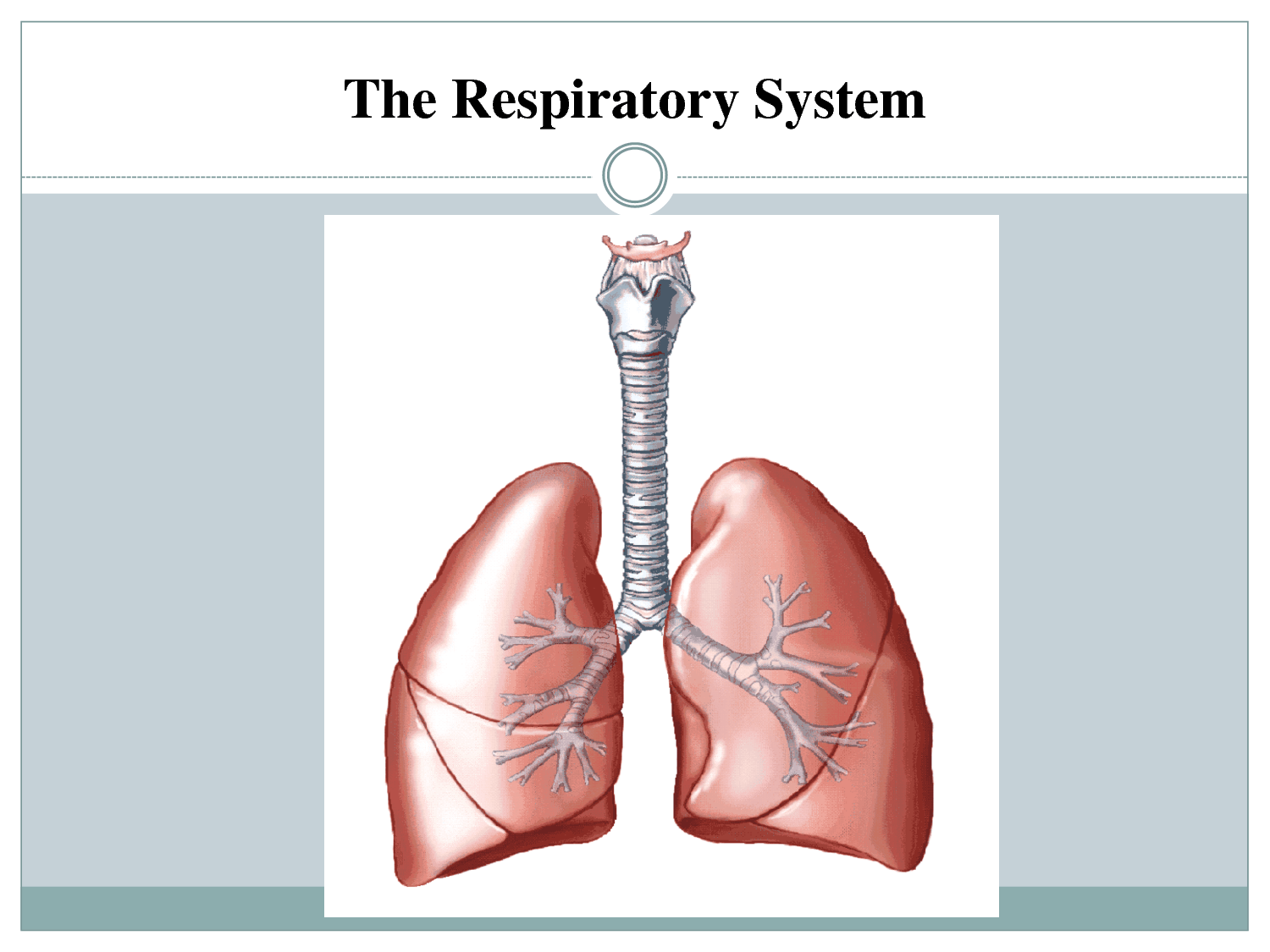
What is the main function of the respiratory system?
a)
to provide oxygen and remove carbon dioxide from the body
b)
to bring oxygen to the body
c)
to break down food and absorb nutrients
d)
to remove oxygen from the body and deliver carbon dioxide
29.
What are the main organs of gas exchange in the respiratory system?
a)
diapragm
b)
lungs
c)
trachea
d)
bronchi
30.
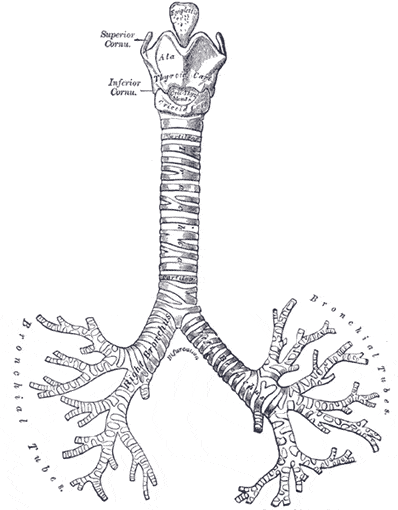
What is the function of the bronchi?
a)
Transport air from nose to lungs
b)
Transport air from trachea to lungs
c)
Transport air from lungs to alveoli
d)
Transport air from alveoli to blood
31.
Within the lungs, the exchange of oxygen and carbon dioxide occurs between the ___ and the capillaries. 
a)
trachea 
b)
bronchi 
c)
alveoli
d)
diaphragm
32.
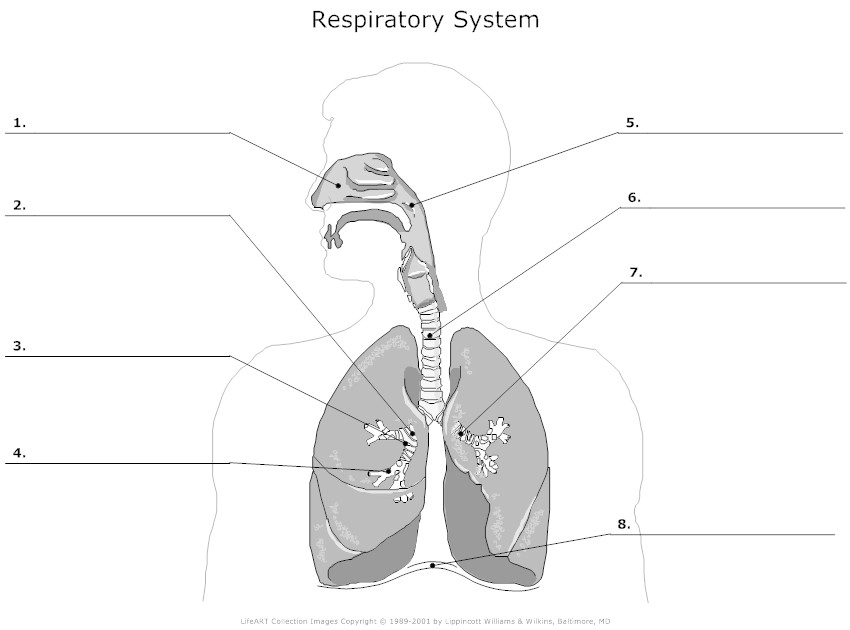
Name the organ label # 6. 
a)
alveoli 
b)
bronchi 
c)
trachea 
d)
lungs 
33.
What is tube that is also known as your wind pipe?
a)
esophogus
b)
bronchi
c)
trachea
d)
alveoli
34.
The passageway that is shared by both the digestive and respiratory system is the....
a)
larynx
b)
pharynx
c)
trachea
d)
nose
35.
The beginning of the respiratory system that warms and moistens the air.
a)
trachea
b)
nose
c)
bronchi
d)
diaphragm
36.
What is the small flap of tissue called that covers the air-only passage when we swallow?
a)
Bronchioles
b)
Larynx
c)
Alveoli
d)
Epiglottis
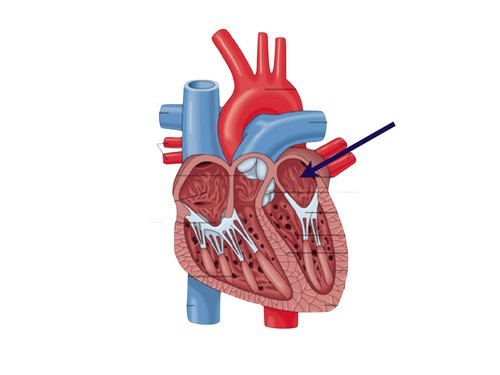
37.
Identify
a)
Left atrium
b)
Right atrium
c)
Left ventricle
d)
Right ventricle
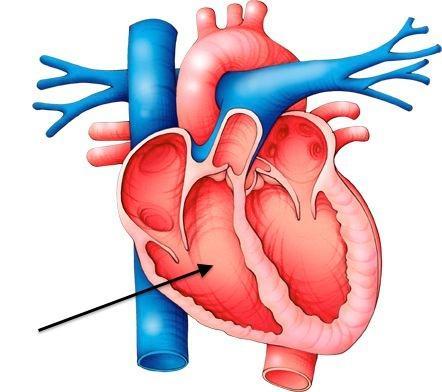
38.
Identify
a)
Left atrium
b)
Right atrium
c)
Left ventricle
d)
Right ventricle
39.
The heart has ___ chambers.
a)
1
b)
2
c)
3
d)
4
40.
This chamber of the heart RECEIVES blood returning from the body
a)
Right Atrium
b)
Right Ventricle
c)
Left Atrium
d)
Left Ventricle
41.
Thin-walled vessels that allow for the exchange of O2 , CO2, nutrients and wastes between blood cells or air sacs in the lungs
a)
Arteries
b)
Veins
c)
Capillaries
42.
What does Deoxygenated mean?
a)
Oxygen-rich
b)
Blood flow
c)
Oxygen-poor
d)
Water Flow
43.
A flap of tissue that prevents blood from flowing backward
a)
Aorta
b)
Atrium
c)
Septum
d)
Valve
44.
Carry blood away from heart; mostly oxygen-rich
a)
Arteries
b)
Veins
c)
Capillaries
45.
What is pulmonary circulation?
a)
Blood travelling to and from the lungs
b)
Blood travelling to and from the body
c)
A blood clot in the lungs
d)
The vessel that brings blood to the lungs
46.
Blood circulation from the heart to the rest of the body is called
a)
Full body
b)
Systemic
c)
pulmonary
d)
heart to lung
47.
What is the main function of the artery?
a)
It controls your brain and your thought process.
b)
They carry oxygen- poor blood BACK to the heart.
c)
Arteries carry oxygen- rich blood AWAY from the heart.
d)
It receives information (senses) and sends messages to the body about how to react to things.
48.
Which is NOT a function of the circulatory system?
a)
deliver O2 and nutrients to cells
b)
remove CO2 and wastes from cells
c)
break down carbohydrates into glucose
d)
transport other materials through body
49.
Structure(s) that keep the blood flowing in one direction.
a)
Valve(s)
b)
Septum(s)
c)
Neuron(s)
d)
Bronchiole(s)
50.
arteries, veins, and capillaries are three types of __________
a)
heart valves
b)
blood vessels
c)
cells
d)
veins
51.
What is the Circulatory System also known as?
a)
The heart
b)
Cardiovascular System
c)
Nervous System
d)
Aorta
52.
What do Red-Blood cells do?
a)
Carry oxygen from the lungs to the body cells and  transport carbon dioxide from the cells back to the lungs
b)
keeps blood flowing in one direction to the heart and prevent blood from flowing backwards
c)
Collects  blood from the capillaries and drain it into the veins
d)
Bring nutriients to the cells and carries away waste materials.
53.
What does blood do?
a)
Carries Water to cells
b)
Carries Oxygen to cells
c)
Carries Food to cells
d)
All of the above 
54.

Blood pressure is the measurement of the pressure of the blood in the artery.

a)

True

b)

False

55.

Which of the following are generally the body's immediate response to exercise?

a)

Increased Cardiac output

b)

Increased ventilation rate

c)

Reduced blood pressure

d)

Increased Heart Rate