
 Worksheets
Soil and soil dynamics Version 2
Total questions: 25
Worksheet time: 6hrs 15mins
Which of the following is a type of weathering that breaks down rocks and minerals?
Chemical
Mechanical
Biological
Permeable
The layer of soil in which the topsoil is found.
Horizon A
Horizon B
Horizon C
Horizon D or R
Soil is important because it intersects with all of the following:
Lithosphere, Hydrosphere, and the Earth
Water, Animals, and Plants
Lithosphere, Atmosphere, and Plants
Lithosphere, Atmosphere, Biosphere, and Hydrosphere
Of the three phases of soil, which of the following 2 phases are about equal percent in soil?
Mineral and Air
Mineral and Water
Water and Air
Air and Organic
The particle size of soil can tell us about the _______ of the soil.
quality
porosity
weathering
horizons
The rinsing of the topsoil from the Earth is called_________.
Chemistry
Irrigation
Weathering
Erosion
Salinization of soil is an increase in _____ in the soil.
salt
water
organic material
sand
Topsoil is the best soil layer for growing plants.
True
False
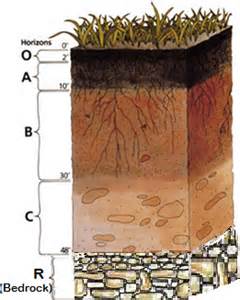
Which horizon or soil layer is made up of subsoil with only a few organics?
Horizon A
Horizon B
Horizon C
Horizon E
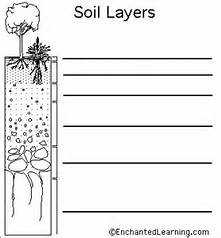
In which horizon, does water move down to pull minerals downward?
Horizon A
Horizon B
Horizon C
Horizon E
In which horizon is parent rock?
Horizon A
Horizon B
Horizon C
Horizon E
Irrigation of soil can lead to salinization.
True
False
Soil is one of the Earth’s most valuable resources. Everything on Earth depends on soil somehow.
True
False
What are the 3 types of particle sizes in soil?
Sand, silt, and clay
Clay, mud, and dirt
Sand, gravel, and rocks
Silt, sand, and minerals
What are the 4 parts that make up the 3 phases of soil?
Water, vegetation, mud, and rocks
Rocks, gravel, mud, and water
Air, mineral, water, and organic material
Mineral, air, mud, and dirt
Which horizon or soil layer contains organic material, such as dead and dying material?
O
A
B
C
Which of the following is the order of soil particles from large to small?
Clay, silt, sand
Sand, silt, clay
Silt, clay, sand
Clay, sand, silt
What is the best type of soil in which grow crops?
clay
sand
silt
loam
Which of the following best describes a soil's cation exchange capacity?
Ability of the soil to grow crops
Ability of the soil to provide water to plants
Ability of the soil to remain moist
Ability of the soil to deliver important nutrients to plants
How long, approximately, does it take to create soil?
a few months
decades
hundreds of years
thousands of years
Is soil a non-renewable resource?
Yes
No
Is soil with a high percentage of clay good for growing crops?
Yes
No
How can soils be classified?
Knowing the soil horizons
Using percentage of clay, silt, and sand in the soil
Knowing the percent of each phase in the soil
Using the percentage of water and organic material in the soil

