
 Worksheets
chemistry quiz
Total questions: 69
Worksheet time: 1hrs 17mins
Name
Class
Date
1.
Potassium makes up _______% of KMnO4?
a)
24.74
b)
75.26
c)
30.69
d)
69.31
2.
Find the percent of each element in the compound BaCl2.
a)
barium - 34% chlorine - 66%
b)
barium - 66% chlorine - 34%
c)
barium - 21% chlorine - 79%
d)
barium - 79% chlorine - 21%
3.
Which one is empirical?
a)
H2O2
b)
C2H6O12
c)
CaCl2
d)
N2O8
4.

Which of the following dimensional analysis setups will correctly convert 27.76g of Li to atoms of Li?
a)
A
b)
B
c)
C
d)
D
5.
What is the empirical formula if you have 81.82% carbon and 18.18% hydrogen?
a)
C5H13
b)
CH4
c)
C2H2
d)
C4H10
6.
What is the molar mass of dihydrogen dioxide (H2O2)?
a)
48 g/mole
b)
34.02 g/mole
c)
36.5 g/mole
d)
35.5 g/mole
7.
What is the molar mass of calcium hydroxide (Ca(OH)2)?
a)
74.1 g/mole
b)
57.1 g/mole
c)
58.1 g/mole
d)
none of the above
8.
How many particles are in 13.5 grams of Beryllium?
a)
1.5 particles
b)
9 particles
c)
4x10²³ particles
d)
9x10²³ particles
9.
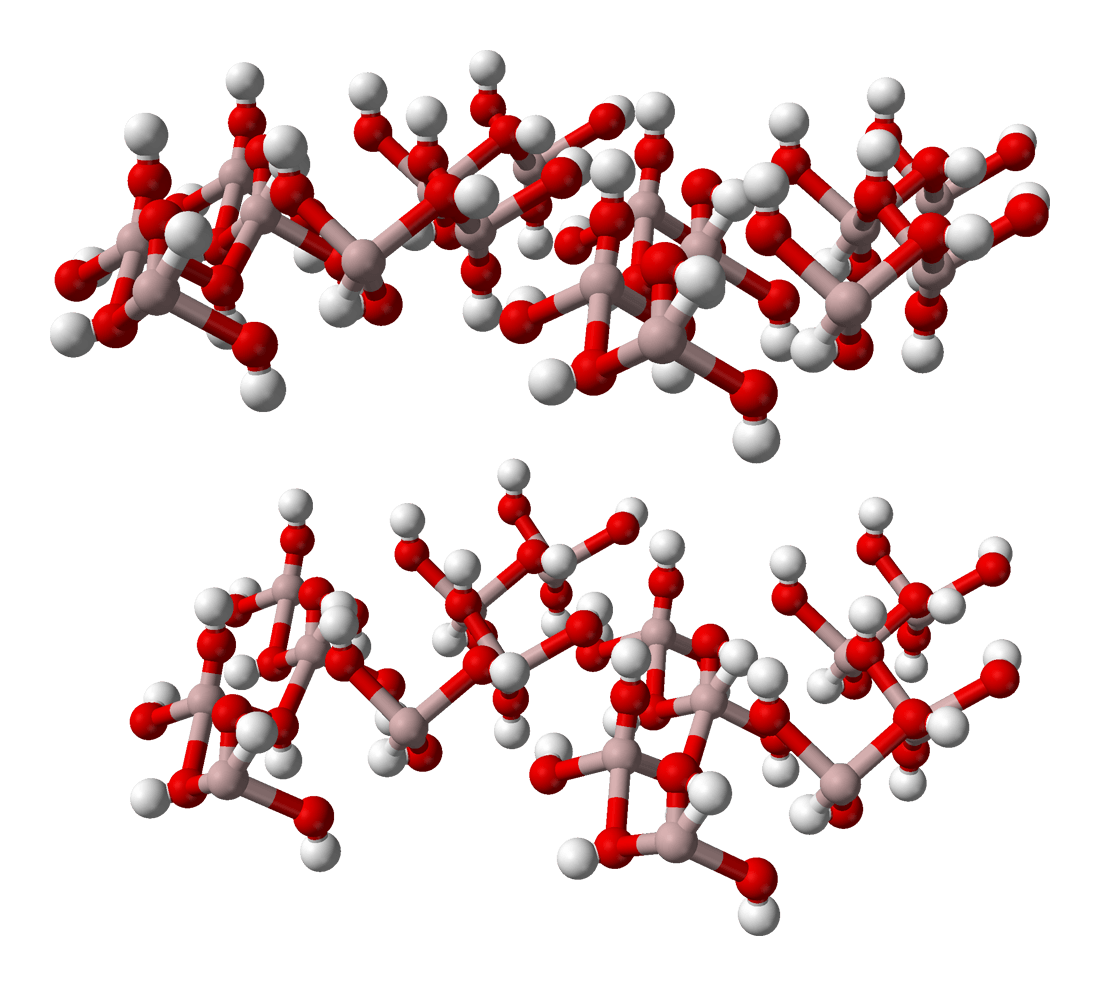
How many moles are in 98.3 g of Aluminum Hydroxide (Al(OH)3)?
a)
2.14 mol
b)
1.26 mol
c)
6.63 mol
d)
5.9 mol
10.
What is the difference between a formula unit and a molecule?
a)
formula unit - ionic bond
molecule - covalent bond
molecule - covalent bond
b)
formula unit - big
molecule - small
molecule - small
c)
formula unit - covalent bond
molecule - ionic bond
molecule - ionic bond
d)
formula unit - small
molecule - big
molecule - big
11.
The number 6.02 x 10²³ is called...
a)
Obama's number
b)
Bohr's number
c)
Trump's number
d)
Avogadro's number
12.
How many atoms of iodine are in a mole of iodine?
a)
53
b)
63.55g
c)
126.9
d)
6.02 x 10²³
13.
In chemistry, a "mole" is:
a)
The mass of an atom
b)
a large number used to count particles
c)
based on the volume of a substance
14.

How many moles are there in 16g of helium atoms?
a)
0.25
b)
8
c)
4
d)
0.5
15.

The unit for molar mass is
a)
g/mol
b)
mol/g
c)
grams
d)
moles
16.
A 331 gram sample of K2S (molar mass = 110.3 g) would have how many formula units? (grams to formula units)
a)
2.01 x 10²³
b)
1.21 x 1024
c)
1.81 x 1024
d)
3.61 x 1024
17.
Zachary is tasked with carefully measuring precisely one mole of aluminum. How should Zachary go about completing this assignment?
a)
He should obtain 27 aluminum pellets
b)
He should obtain 27 grams of aluminum
c)
He should obtain 13 grams of aluminum
d)
He should obtain 27 atoms of aluminum
18.
How many moles are in 3.01 x 10²² atoms of magnesium?
a)
0.0500 moles
b)
1.81 x 1046 moles
c)
5.00 x 10²¹ moles
d)
5.00 moles
19.

Which of the following dimensional analysis setups will correctly convert 2.50 moles of sodium to grams of sodium?
a)
A
b)
B
c)
C
d)
D
20.
How many molecules are in 2.00 moles of H2O?
a)
124x1024 molecules of H2O
b)
1.20x10²³ molecules of H2O
c)
1.20x1024 molecules H2O
d)
124
21.
Which of the following represents an empirical formula?
a)
H2O2
b)
HC2O4
c)
H2O6
d)
H12O48
22.
What is the percent composition of a compound that contains 40.8 g carbon and 54.4 g oxygen?
a)
42.9 % carbon; 57.1% oxygen
b)
57.1 % carbon; 42.9 % oxygen
c)
40.8 % carbon; 54.4 % oxygen
d)
54.4 % carbon; 40.8% oxygen
23.
When calculating the empirical formula the mole ratio is given as follows:
H1O3.5
What will the Empirical formula be?
H1O3.5
What will the Empirical formula be?
a)
H1O3.5
b)
HO3.5
c)
HO4
d)
H2O7
24.
A container with a volume of 893 L contains how many moles of air at STP?
a)
20003.2 moles
b)
39.9 moles
c)
22.4 moles
d)
none of the choices
25.
The force of attraction between oppositely charged particles is a(n):
a)
ionic bond
b)
valence electron
c)
metallic bond
d)
lewis dot diagram
26.
An ionic bond is:
a)
shared electrons
b)
bonding 2 nonmetals
c)
a transfer of electrons
d)
a charged particle
27.
A covalent bond is:
a)
shared electrons
b)
bonding 2 nonmetals
c)
a transfer of electrons
d)
a charged particle
28.
What does the Roman numeral in parentheses mean on some transition metals?
a)
the number of atoms
b)
the number of ions
c)
the number of ionic charge
29.
What part of the atom is responsible for chemical bonding?
a)
protons
b)
neutrons
c)
electrons
30.
Which of these is a characteristic of ionic compounds?
a)
They are gases at room temperature.
b)
They conduct an electric current when melted or dissolved.
c)
They have low melting points.
d)
They have the weakest bonds.
31.
How many electrons are involved in a double bond?
a)
1
b)
2
c)
3
d)
4
32.
Why does water bend when approached by a static charge?
a)
Water is polar.
b)
Water is nonpolar.
c)
Water is diatomic.
d)
Water is ionic.
33.
Which of the pairs of elements listed will NOT form an ionic solid?
a)
barium and iodine
b)
calcium and oxygen
c)
lithium and chlorine
d)
oxygen and hydrogen
34.
Which combination is most likely to form a covalent bond?
a)
Potassium-Chlorine
b)
Calcium-Oxygen
c)
Hydrogen-Carbon
d)
Gold-Silver
35.
What happens to the electrons in an ionic compound?
a)
· Transfer from one atom to another
b)
· Shared between many atoms
c)
Shares between two atoms
36.
What happens to the electrons in an covalent compound?
a)
· Transfer from one atom to another
b)
· Shared between many atoms
c)
Shares between two atoms
37.
What is the melting point of an covalent compound?
a)
high
b)
low
c)
will not melt
38.
What is the melting point of an ionic compound?
a)
high
b)
low
c)
will not melt
39.
What type of atoms are bonded in an ionic compound?
a)
2 metals
b)
2 nonmetals
c)
a metal and a nonmetal
40.
What type of atoms are bonded in a covalent compound?
a)
2 metals
b)
2 nonmetals
c)
a metal and a nonmetal
41.
carbon tetrafluoride
a)
C4F
b)
CF4
c)
CF
42.
What is the electrical conductivity of a covalent compound?
a)
good
b)
good when dissolved in water
c)
poor
43.
aluminum carbonate
a)
AlCO3
b)
Al3(CO3)2
c)
Al2(CO3)3
d)
Al2CO3
44.
iron (II) chloride
a)
Fe2Cl
b)
FeCl2
c)
FeCl
45.
dihydrogen monosulfide
a)
H2S
b)
HS2
c)
HS
d)
H2S6
46.
boron dibromide
a)
B2Br
b)
BBr2
c)
BBr
d)
B2Br2
47.
magnesium sulfate
a)
MgSO4
b)
Mg(SO4)2
c)
Mg2SO4
48.
lead (IV) oxide
a)
PbO
b)
Pb2O
c)
PbO2
d)
Pb4O
49.
potassium and oxygen
a)
K2O
b)
KO
c)
KO2
d)
K(II)O
50.
Name of SiH4
a)
silicon hydride
b)
monosilicon hydride
c)
monosilicon tetrahydride
d)
silicon tetrahydride
51.
What is the symbol for heat?
a)
q
b)
H
c)
J
d)
∘C
52.
Chemical reactions where both q and H are negative are considered
a)
spontaneous
b)
nonspontaneous
c)
exothermic
d)
endothermic
53.
Chemical reactions that absorb energy are called
a)
endothermic
b)
fast
c)
slow
d)
exothermic
54.

The following graph shows a(n)
a)
endothermic reaction
b)
exothermic reaction
c)
increase in entropy
d)
decrease in entropy
55.
An endothermic reaction feels _____ to the touch
a)
warm
b)
cool
56.
In an exothermic process the surrounding looses heat.
a)
True
b)
False
57.
In an endothermic reaction the system is releasing energy.
a)
True
b)
False
58.
Is the combustion of gasoline endothermic or exothermic?
a)
Endothermic
b)
Exothermic
59.
A reaction is performed in a beaker with a temperature probe recording the temperature changes of the reaction. If the temperature began at 15.0 degrees Celsius and ended at 27.5 degrees Celsius. If the reaction is our system, is the system endothermic or exothermic?
a)
Exothermic
b)
Endothermic
60.
Do reactants in an endothermic reaction have a higher or lower energy than the products?
a)
Higher
b)
Lower
61.
During an endothermic reaction in a beaker if we are part of the surroundings and touched the beaker, it would feel _______.
a)
Warm
b)
Cold
c)
Bubbly
d)
Damp
62.
What is oxidation number of Cr in Cr2O72-?
a)
-2
b)
+2
c)
+6
d)
+12
63.
What is oxidation number of Fe in FeO ?
a)
+2
b)
-2
c)
0
d)
+1
64.
Which substance is reduced in the following reaction?
NaOH + Li --> LiOH + Na
NaOH + Li --> LiOH + Na
a)
Li
b)
Na
c)
O
d)
H
65.
Which of the following is the balanced half -reaction for the oxidation of Cu to Cu+2?
a)
Cu --> Cu+2
b)
Cu + 2 e- --> Cu+2
c)
Cu --> Cu+2 + 2 e-
d)
Cu - 2e- --> Cu+2
66.
In the reaction
2Ca(s) + O2(g) --> 2CaO(s), calcium is __________
2Ca(s) + O2(g) --> 2CaO(s), calcium is __________
a)
Reduced
b)
Synthesized
c)
Oxidized
d)
None of the above
67.
Oxygen always has an oxidation number of...
a)
-1
b)
1
c)
2
d)
-2
68.
What is oxidation number of H in H2O?
a)
0
b)
-2
c)
-1
d)
+1
69.
In electrolytic cell, anode will attract...
a)
Cations
b)
Anions
100 %

