wayground logo

Free Printable Worksheets

Font size

S
M
L
XL
Worksheets

periodic trends and molecular geometry

Total questions: 70

Worksheet time: 2hrs 36mins

Name
Class
Date
1.

The ability to attract an electron in a chemical bond

a)

electronegativity

b)

electron affinity

c)

metallic character

d)

ionization energy

2.

Atomic radius decreases from left to right across a period because from left to right there is

a)

increasing number of valence electrons

b)

increasing inner shielding

c)

the nucleus pulls outer electrons in closer

d)

increasing number of protons in the nucleus

3.
As you move down the periodic table atoms get bigger.  This is because ____________.
a)
The atoms have more mass.
b)
The atoms have more protons.
c)
The atoms have more energy levels
d)
The atoms have more nuetrons
4.

The element with the highest electronegativity is -

a)

At

b)

F

c)

Cl

d)

Br

5.
Which periodic group has the smallest atomic radius?
a)
Alkali metals
b)
Halogens
c)
Noble Gases
d)
Transition metals
6.
Which of the following will have a larger radius than Zinc?
a)
Gallium
b)
Aluminum
c)
Magnesium
d)
Strontium
7.
Which of the following will have a higher electronegativity than arsenic (As)?
a)
Carbon (C)
b)
Neon (Ne)
c)
Antimony (Sb)
d)
Germanium (Ge)
8.

Which is a halogen?

a)

Helium

b)

Chlorine

c)

Oxygen

d)

Lithium

9.

Which is an alkali metal?

a)

Magnesium

b)

Iron

c)

Sodium

d)

Carbon

10.

Calcium is most like which of the following?

a)

Barium

b)

Potassium

c)

Cesium

d)

Scandium

11.
Which group of METALS is the most reactive?
a)
Group 2- Alkaline Earth
b)
Group 17- Halogens
c)
Group 18- Noble Gases
d)
Group 1- Alkali metals
12.

Transition elements are found in groups

a)

1-2

b)

3-12

c)

14-16

d)

17-18

13.

(select 2) Electronegativity energy increases as you move

a)

Down a Group

b)

Up a Group

c)

Left to Right across a Period

d)

Right to Left across a Period

14.

(select 2) Atomic Radius increases as you move

a)

Down a Group

b)

Up a Group

c)

Left to Right across a Period

d)

Right to Left across a Period

15.

The yellow atoms are called

a)

metals

b)

nonmetals

c)

metalloids

d)

noble gases

16.

What molecular geometry would PH3 have?

a)

Trigonal Pyramidal

b)

Trigonal Bipyramidal

c)

Bent

d)

Linear

17.

How many lone pairs of electrons are on the P atom in PF3?

a)

1

b)

2

c)

3

d)

0

18.

Which of the following is a covalent molecule and could have a Lewis Structure drawn?

a)

NO2

b)

MgCl2

c)

CH4

d)

H2O

e)

Li2O

19.

How many total valence electrons does phosphate PO43- have?

(a)  

20.

Using your VSEPR chart what is the predicted molecular geometry of the following structure?

a)

T-Shaped

b)

Trigonal Planar

c)

Bent

d)

Tetrahedral

21.
Which has the greater EN: 
Cl or Al?
a)
Cl
b)
Al
22.
Which has the greater EN: 
N or C?
a)
C
b)
N
23.
Which has the greater EN: 
H or F?
a)
H
b)
F
24.
Which of the following will have a larger radius than Zinc?
a)
Gallium
b)
Aluminum
c)
Magnesium
d)
Strontium
25.
Which of the following will have a higher electronegativity than arsenic (As)?
a)
Carbon (C)
b)
Neon (Ne)
c)
Antimony (Sb)
d)
Germanium (Ge)
26.
Which of the following will have a lower ionization energy than Scandium (Sc)?
a)
Helium (He)
b)
Titanium (Ti)
c)
Calcium (Ca)
d)
Magnesium (Mg)
27.
As atoms of elements in group 16 are considered in order from top to bottom, the electronegativity of each successive element....
a)
decreases
b)
increases
c)
remains the same
d)
none of the above
28.
Which atom has the largest atomic radius?
a)
potassium
b)
rubidium 
c)
francium
d)
cesium
29.
As you move down the periodic table atoms get bigger.  This is because ____________.
a)
The atoms have more mass.
b)
The atoms have more protons.
c)
The atoms have more energy levels
d)
The atoms have more nuetrons
30.
As you move across the periodic table atoms tend to get smaller because, ______________.
a)
the atoms have more mass.
b)
the atoms have less mass
c)
the atoms have more protons.
d)
the atoms have less electrons.
31.
Atoms that have a high electronegativity, _______________.
a)
give up their electrons more easily.
b)
hold on to their electrons more tightly.
c)
have more electron shells.
32.
Electronegativity is...
a)
how good an atom is at attracting electrons
b)
the ability of an atom to lose electrons
c)
the energy required to remove an electron from a specific atom
d)
how easy it is to make friends. 
33.
Ionization energy is...
a)
the energy required to add an electron to a specific atom
b)
how much energy it takes to remove an electron from an atom
c)
the energy required to shield the outer electrons from the nucleus
d)
a measure of the ability of an atom to attract electrons
34.
The atom with the largest atomic radius in Group 18 is - 
a)
Ar
b)
He
c)
Kr
d)
Rn
35.
Which statement correctly and completely identifies a trend?
a)
Atomic radius decreases across a period and increases down a group.
b)
Electronegativity decreases across a period and decreases down a group.
c)
Ionization energy increases across a period and increases down a group.
d)
Ionic radius increases across a period and increases down a group.
36.
The element with the largest electronegativity in the halogens is - 
a)
At
b)
F
c)
Cl
d)
Br
37.

The element with the lowest electronegativity in Period 3 is -

a)

Na

b)

Cl

c)

Ar

d)

Mg

38.
Which periodic group has the smallest atomic radius?
a)
Alkali metals
b)
Halogens
c)
Noble Gases
d)
Transition metals
39.
Atomic radius generally increases as we move __________.  
a)
down a group and from right to left across a period 
b)
up a group and from left to right across a period 
c)
down a group and from left to right across a period 
d)
up a group and from right to left across a period 
40.
Electronegativity __________ from left to right within a period and __________ from top to bottom within a group.
a)
decreases, increases 
b)
increases, increases
c)
increases, decreases 
d)
stays the same, increases
41.
Choose the correct shape for this molecule:
a)
Trigonal planar
b)
Trigonal pyramidal
c)
Bent
d)
Linear
42.
Choose the correct shape for this molecule:
a)
Bent
b)
Trigonal pyramidal
c)
Trigonal planar
d)
Linear
43.
Choose the correct shape for this molecule:
a)
linear
b)
Trigonal pyramidal
c)
Bent
d)
Tetrahedral
44.
In covalent bonds, electrons are ___________.
a)
transferred
b)
gained
c)
lost
d)
shared
45.
How many electrons should Oxygen have around its Lewis dot model?
a)
5
b)
6
c)
7
d)
8
46.
 A lone pair is defined as
a)
A pair of bonding electrons
b)
One non-bonding electron
c)
A pair of non-bonding electrons
d)
A pair of electrons on the central atom
47.
What is the VSEPR theory used to predict?
a)
Bond Strength
b)
Polarity
c)
Molecular Shape
d)
Electronegativity
48.
Choose the correct shape for this molecule:
a)
Bent
b)
Linear
c)
Tetrahedral
d)
Trigonal pyramidal
49.

Which best describes a triple bond?

a)

3 shared pairs of electrons

b)

3 shared electrons

c)

a central electron with 3 atoms bonded around it

50.
According to VSEPR, molecules adjust their shapes to keep which of the following as far away as possible?
a)
Pairs of valence electrons
b)
Inner shell electrons
c)
Mobile Electrons
d)
Electrons closest to the nucleus
51.
What geometry will this molecular structure have?: H2S
a)
bent
b)
tetrahedral
c)
linear
d)
trigonal pyramidal
52.

What two types of atoms make a covalent bond?

a)

2 Nonmetals

b)

1 Nonmetal and 1 Metal

c)

2 Metals

d)

2 Noble Gases

53.
This is a correct dot diagram for fluorine (F)
a)
true
b)
false
54.
This is a correct dot diagram for oxygen (O)
a)
true
b)
false
55.
Choose the correct shape for this molecule:
a)
Trigonal planar
b)
Trigonal pyramidal
c)
Bent
d)
Linear
56.
Choose the correct shape for this molecule:
a)
Bent
b)
Trigonal pyramidal
c)
Trigonal planar
d)
Linear
57.
Choose the correct shape for this molecule:
a)
Trigonal planar
b)
Trigonal pyramidal
c)
Bent
d)
Tetrahedral
58.
Choose the correct shape for this molecule:
a)
Tetrahedral
b)
Trigonal pyramidal
c)
Bent
d)
Trigonal planar
59.

What is the correct shape of CHCl3?

a)

Bent

b)

Trigonal pyramidal

c)

Tetrahedral

d)

Trigonal planar

60.
Choose the correct shape for this molecule:
a)
Bent
b)
Linear
c)
Tetrahedral
d)
Trigonal pyramidal
61.
*
a)
linear
b)
trigonal planar
c)
trigonal pyramid
d)
bent of angular
62.
According to the octet rule most elements need _______ valence electrons.
a)
2
b)
8
c)
6
d)
18
63.

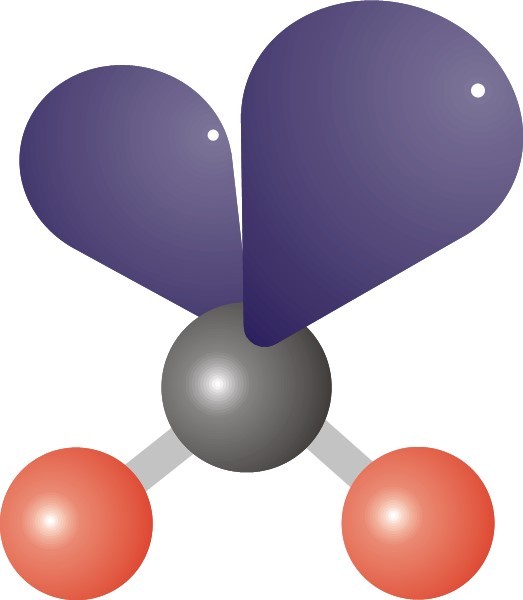
What molecule could this be? (Each purple cloud represents a lone pair of electrons.)

a)

CO2

b)

NH3

c)

H2S

d)

CH4

64.
 A lone pair is defined as
a)
A pair of bonding electrons
b)
One non-bonding electron
c)
A pair of non-bonding electrons
d)
A pair of electrons on the central atom
65.
*
a)
trigonal pyramid
b)
linear
c)
bent
d)
angular
66.
SiClhas what shape?
a)
square planar
b)
square pyramidal
c)
tetrahedral
d)
octahedral
67.

The geometry of a molecule with 3 bonded pairs of electrons and 0 lone pairs of electrons, AB3

a)

Tetrahedral

b)

Trigonal Planar

c)

Bent

d)

Trigonal Pyramidal

e)

Linear

68.

The geometry of a molecule with 2 bonded pairs of electrons and 2 lone pairs of electrons, AB2E2

a)

Tetrahedral

b)

Trigonal Planar

c)

Bent

d)

Trigonal Pyramidal

e)

Linear

69.

The geometry of a molecule with 4 bonded pairs of electrons and 0 lone pairs of electrons, AB4

a)

Tetrahedral

b)

Trigonal Planar

c)

Bent

d)

Trigonal Pyramidal

e)

Linear

70.

Determine the molecular geometry of the given structure.

a)

Trigonal Pyramidal

b)

Trigonal Bipyramidal

c)

Trigonal Planar

d)

Tetrahedral