
 Worksheets
Weathering, Erosion and Deposition
Total questions: 42
Worksheet time: 1hrs 21mins
Name
Class
Date
1.
Select the answer that shows the order of events a rock goes through.
a)
erosion, weathering, deposition
b)
weathering, erosion, deposition
c)
deposition, weathering erosion
d)
erosion, deposition, weathering
2.
What is the process that picks up and moves weathered rocks?
a)
deposition
b)
landslide
c)
weathering
d)
erosion
3.
How are canyons formed?
a)
Wind blows sand into high piles, which form the canyon walls.
b)
Rivers erode soil and rock over time, leaving behind canyon walls.
c)
Gravity causes rocks to fall from mountain sides onto valley floors.
d)
Ice freezes and thaws in cracks of rocks, and the cracks become canyons.
4.

A cliff formed near the ocean. Which statement best describes how this cliff formed?
a)
Warm air melted the rock.
b)
Sun rays evaporated the rock.
c)
Ocean waves washed away rock.
d)
Plant roots pushed away the rock.
5.
Weathering causes rocks and minerals to break into smaller pieces. Which event is the best example of weathering?
a)
a raindrop splashing in a lake
b)
a snowball rolling down a mountain
c)
a tree root growing into the crack of a rock
6.
Over long periods of time, deposition may change the Earth’s surface by _____.
a)
forming new land features
b)
breaking down large rocks into smaller ones
c)
washing away beaches
d)
severely draining topsoil
7.
Sarah does the investigation described below using a model to study how rivers erode earth materials.
· She pours 600 mL of sand onto a plate.
· She pours 150 mL of water onto the pile of sand.
· She measures how much of the sand washes off the edge of the plate.
· She notices that less sand washes off the plate when she pours water slowly than when she pours it faster.
How is the model similar to real rivers eroding earth materials?
· She pours 600 mL of sand onto a plate.
· She pours 150 mL of water onto the pile of sand.
· She measures how much of the sand washes off the edge of the plate.
· She notices that less sand washes off the plate when she pours water slowly than when she pours it faster.
How is the model similar to real rivers eroding earth materials?
a)
The model shows that faster-moving
water makes sand stick to the bottom of a river.
b)
The model shows that slower-moving
water makes sand float to the top of a river.
c)
The model shows that slower-moving water
erodes less earth materials than faster-moving water.
d)
The model shows that faster-moving
water erodes less earth materials than slower-moving water.
8.
Deposition changes the Earth’s surface because eroded materials _____.
a)
stop the river's flow
b)
make rich farmlands
c)
are dropped in new places
d)
move very slowly
9.
What has the greatest erosion effect on our beaches?
a)
waves
b)
gravity
c)
glaciers
d)
wind
10.
How does freezing water cause the weathering of rocks? The freezing water—
a)
keeps the rocks in place
b)
makes the rocks last longer
c)
expands cracks and breaks rocks
d)
causes rocks to fall in landslides
11.
The process that breaks down rocks and other materials on Earth's surface is called
a)
weathering
b)
erosion
c)
soil conservation
d)
decomposition
12.

What is mechanical weathering?
a)
Process through which rocks are physically broken into smaller pieces.
b)
Rocks are broken down through chemical changes.
c)
Rocks are worn away from acid in plant roots.
d)
Rocks broken down by machinery.
13.

The diagrams shows a rock with water trapped in the cracks during the day and at night.
Which statement best explains why this process results in weathering?
Which statement best explains why this process results in weathering?
a)
frozen water acts as a solute
b)
water expands when it freezes
c)
the mass of water increases when it freezes
d)
frozen water dissolves most types of rock
14.
Rust that forms on rocks or metal because of extended exposure to oxygen is what example of chemical weathering?
a)
carbon dioxide (carbonic acid)
b)
acid rain
c)
oxygen
d)
living organisms
15.
This type of weathering occurs when rocks weaken then break down due to chemical changes in the composition of the rock.
a)
mechanical weathering
b)
chemical weathering
c)
erosion weathering
d)
deposition
16.
Weeds growing into the cracks in a sidewalk and the sidewalk begins to crumble is an example of:
a)
mechanical weathering
b)
chemical weathering
17.
A metal statue slowly turning green after years of being outside is an example of:
a)
mechanical weathering
b)
chemical weathering
18.
Which of the following is an example of chemical weathering?
a)
Acid rain dissolving limestone
b)
roots breaking into concrete
c)
paper being ripped
d)
Water running over rocks
19.
All of the following are causes of physical weathering except...
a)
plant growth
b)
wind
c)
acid rain
d)
running water
20.
Exposure to rain and oxygen causes the metal minerals in rocks to rust and fall apart. This is an example of:
a)
mechanical weathering
b)
chemical weathering
21.
Rocks along a riverbed that are smoothed from continuously moving water and sediment rubbing against them is an example of:
a)
mechanical weathering
b)
chemical weathering
22.
Potholes forming in the road after a cold winter is an example of:
a)
mechanical weathering
b)
chemical weathering
23.
What is sediment?
a)
the process of rocks being broken down and carried away
b)
bits of rock, sand, and silt caused by the weathering of rocks
c)
the top layer of the soil
d)
decaying plant or animal material
24.
Which of these is an example of erosion
a)
Light Shinning onto a mountain
b)
Rain breaking down rock
c)
Wind blowing away sediment
d)
All of the above
25.
Which agents break down earth materials?
a)
wind only
b)
earthquakes and gravity
c)
ice and 007
d)
wind, water, and ice
26.
What is an enormous mass of ice moving over land?
a)
Ice wedging
b)
Glacier
c)
Iceberg
d)
Dune
27.
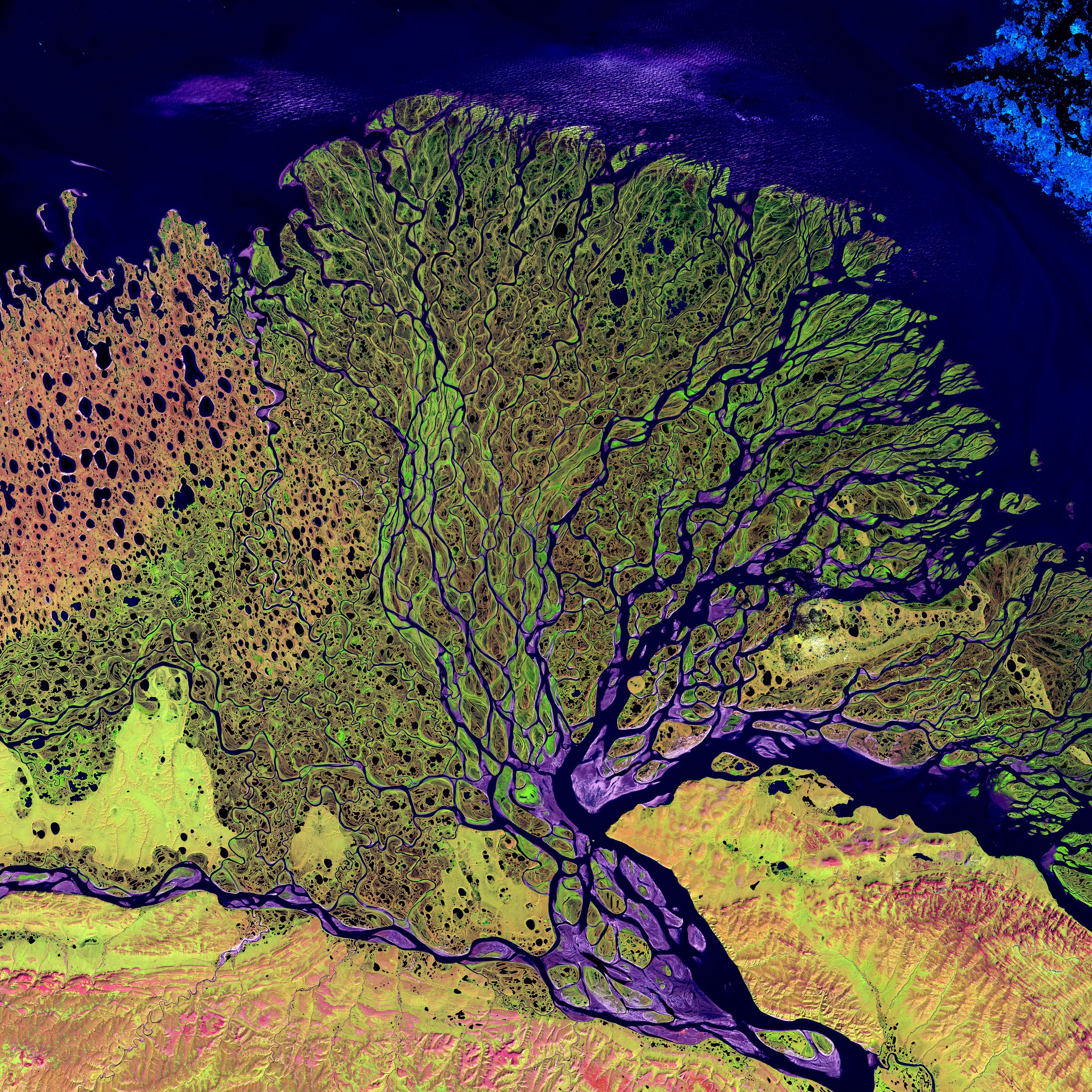
Deltas are mainly created by the process of -
a)
deposition
b)
weathering
c)
waves
d)
erosion
28.
Caves being formed by acid rain dissolving underground limestone
a)
Weathering
b)
Erosion
c)
Deposition
29.
Ponds filling up with sediment and becoming marshes
a)
Weathering
b)
Erosion
c)
Deposition
30.

A satellite image of an area in Florida shows a river with slight bends along its length. A second satellite image taken of the same area 10 years later shows the same river with a different course. What is the best explanation for the difference in the shape of the river's course between the two satellite images?
a)
Wind blew waves across the water surface, eroding away the bank on one side of the river until the river's course changed its shape
b)
Regular freezing and thawing of the river split the soil along the river banks, changing the shape of the river
c)
Water eroded the banks of the river and deposited the eroded soil on opposite banks, causing the river to form tighter bends
d)
Acid rain chemically weathered the banks along the river, forcing the river to wind back and forth
31.

What land form is this?
a)
valley
b)
canyon
c)
mountain
d)
plain
32.

What land form is this?
a)
valley
b)
plain
c)
volcano
d)
canyon
33.
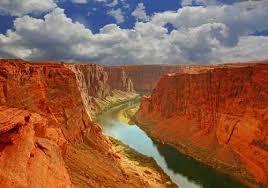
What land form is this?
a)
plain
b)
valley
c)
mountain
d)
canyon
34.

What land form is this?
a)
valley
b)
canyon
c)
plain
d)
mountain
35.
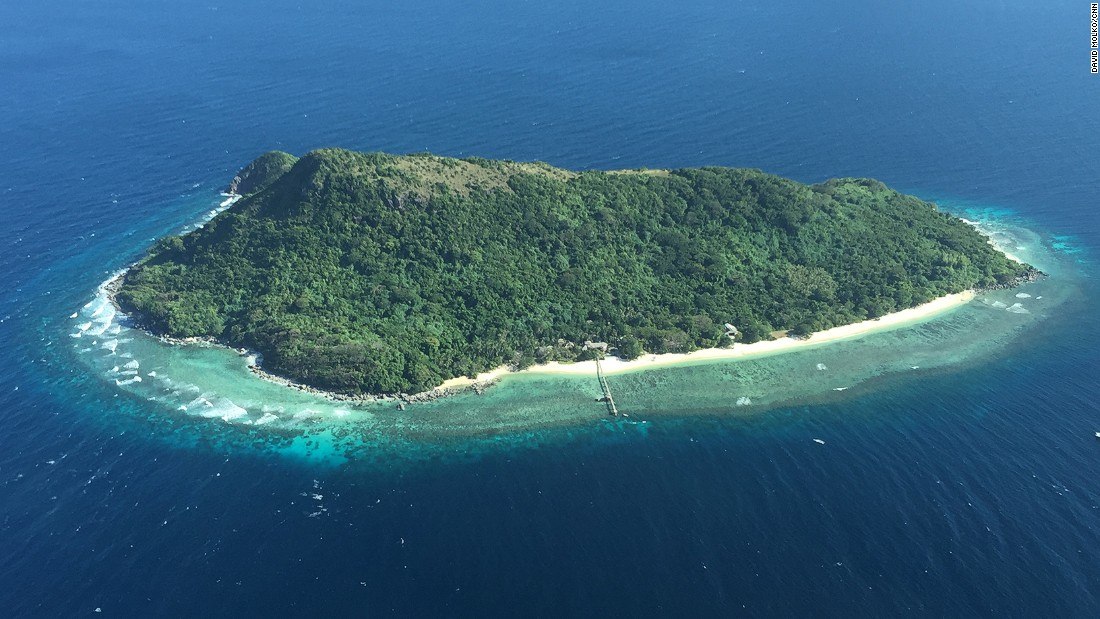
What land form is this?
a)
island
b)
valley
c)
plain
d)
mountain
36.

What land form is this?
a)
valley
b)
plain
c)
volcano
d)
mountain
37.
What land form is an opening in the earth's surface from which lava flows?
a)
mountain
b)
volcano
c)
canyon
d)
island
38.
What land form is a deep valley with very steep sides?
a)
canyon
b)
mountain
c)
valley
d)
plain
39.
What land form is land completely surrounded by water?
a)
plain
b)
canyon
c)
mountain
d)
island
40.

How do plants weather rocks?
a)
during photosynthesis
b)
when roots grow into cracks of rocks and expand the rock
c)
when the plant moves water from the roots to the leaves
d)
Plants don't weather rocks
41.
Deltas are mainly created by the process of -
a)
deposition
b)
weathering
c)
waves
d)
erosion
42.
Weathering involves the movement of rocks and minerals by agents such as water, wind and gravity.
a)
True
b)
False
100 %

