wayground logo

Free Printable Worksheets

NEW

Font size

S
M
L
XL
Worksheets

Science Review

Total questions: 52

Worksheet time: 17mins

Name
Class
Date
1.
Planets that are closer to the sun
a)
take more time to orbit
b)
take less time to orbit
2.
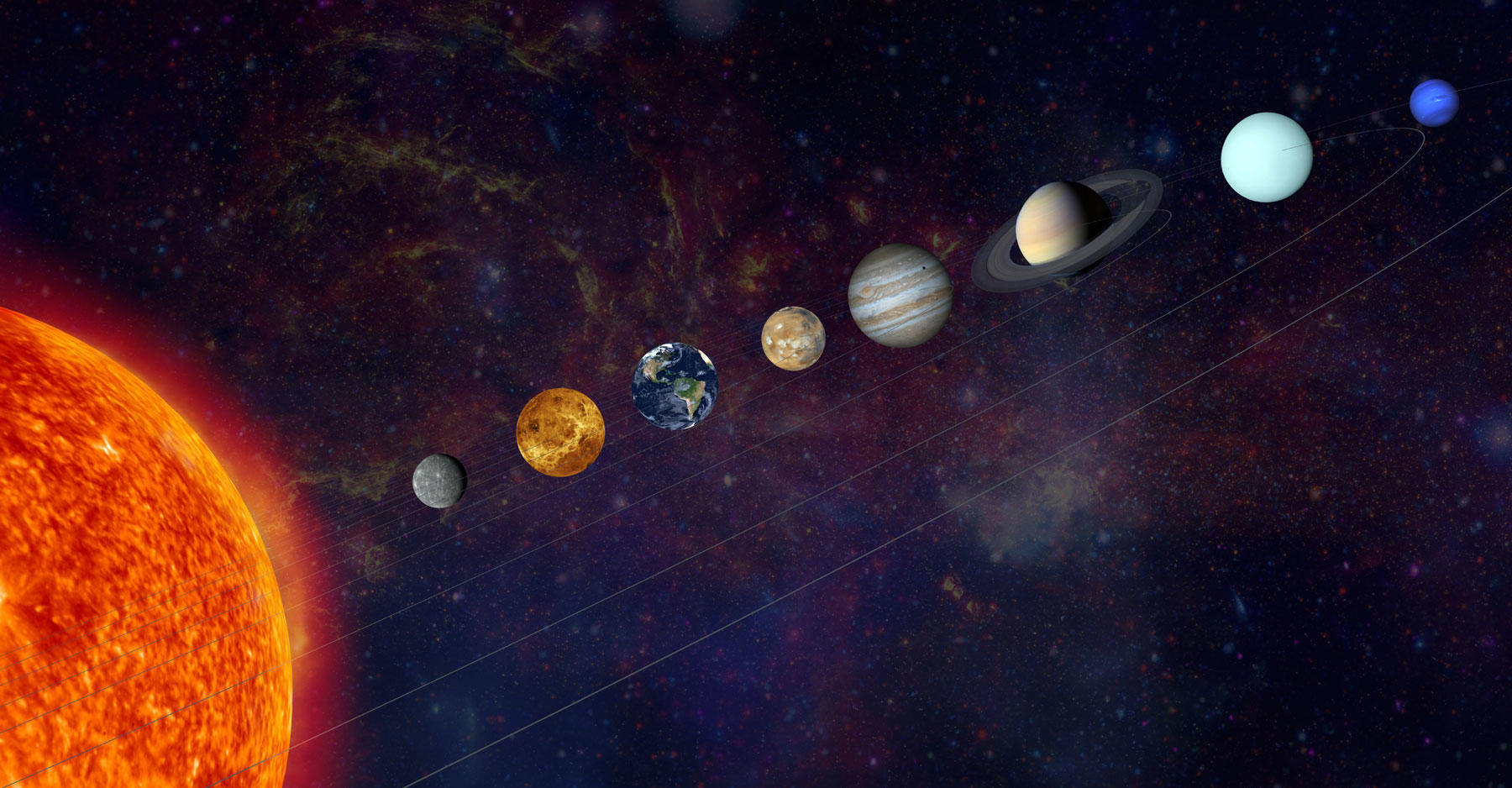
The order of the planets is:
a)
Mars,Venus,Earth,
Mercury,Saturn
Jupiter, Uranus, Neptune
b)
Earth,Venus,Mars
Jupiter, Neptune,
Mercury,Saturn,
Uranus
c)
Mercury,Venus,Earth
Mars,Jupiter,
Saturn,Uranus
Neptune
3.
Which planet is the largest?
a)
Jupiter
b)
Saturn
c)
Uranus
d)
Neptune
4.
Which planet is seventh from the sun?
a)
Saturn
b)
Earth
c)
Venus
d)
Uranus
5.
The largest known volcano in the solar system, Olympus Mons, is located on this planet.
a)
Venus
b)
Mars
c)
Mercury
d)
Earth
6.
Almost Earth’s twin in size and mass, this planet has very thick atmosphere.
a)
Venus
b)
Mars
c)
Mercury
d)
Neptune
7.
This is the only planet in the solar system with oceans of liquid water.
a)
Mercury
b)
Mars
c)
Venus
d)
Earth
8.
Scientists have been able to find no atmosphere around this planet because it has little gravity and is closest to the sun.
a)
Mars
b)
Venus
c)
Mercury
d)
Earth
9.
The surface of this planet appears red due to rusting iron in the rocks.
a)
Mercury
b)
Mars
c)
Pluto
d)
Venus
10.
This gas giant has a large storm in its atmosphere known as The Red Spot
a)
Jupiter
b)
Saturn
c)
Uranus
d)
Neptune
11.
Most likely due to a massive collision, this planet rotates from top to bottom.
a)
Saturn
b)
Venus
c)
Neptune
d)
Uranus
12.
Some scientists believe that this dwarf planet is actually a very large comet caught in a permanent orbit.
a)
Eris
b)
Pluto
c)
Mars
d)
Neptune
13.
This cold, blue planet was discovered by a mathematical prediction.
a)
Neptune
b)
Jupiter
c)
Uranus
d)
Venus
14.
This is the largest planet in the solar system.
a)
Saturn
b)
Jupiter
c)
Uranus
d)
Venus
15.
This is the smallest planet in the solar system
a)
Mercury
b)
Venus
c)
Earth
d)
Mars
16.
Its largest moon is Titan.
a)
Saturn
b)
Jupiter
c)
Neptune
d)
Uranus
17.
True or False
The Earth is the center of the solar system.
a)
True
b)
False
18.
What is a common characteristic of the inner planets?
a)
Large
b)
Gaseous
c)
Rings
d)
Rocky Surface
19.
What is NOT a common characteristic of the outer planets?
a)
Gaseous
b)
Giant
c)
Rings
d)
Smaller than Earth
20.
True or False
The planets are not lined up in a perfectly straight line
a)
True
b)
False
21.
True or False
The planets are all equally distanced from each other.
a)
True
b)
False
22.
Which planet has no atmosphere and looks like our moon?
a)
Mercury
b)
Venus
c)
Earth
d)
Mars
23.
Which planet has a thick atmosphere and is the hottest planet?
a)
Mercury
b)
Venus
c)
Earth
d)
Mars
24.
Which planet rotates to give day/night every 24 hours?
a)
Mercury
b)
Venus
c)
Earth
d)
Mars
25.
What is in between the inner planets and the outer planets?
a)
Asteroid belt
b)
Kuiper belt
c)
Sun
d)
Moon
26.
Planets that are farther from the sun
a)
take more time to orbit
b)
take less time to orbit
27.
Planets that are closer to the sun
a)
take more time to orbit
b)
take less time to orbit
28.
How long does it take the earth to make 1 revolution
a)
One year
b)
One day
c)
One hour
d)
One minute
29.
How long does it take for the earth to make 1 rotation?
a)
One year
b)
One hour
c)
24 hours
d)
One minjute
30.
What causes day and night?
a)
A rotation
b)
A revolution
c)
A season
d)
One day
31.
What model is where the earth is in the middle of our universe?
a)
Heliocentric Model
b)
Geocentric Model
c)
Moon phases
d)
Tidal Phases
32.
What Model is where the sun is the center of the universe?
a)
Geocentric
b)
Heliocentric
c)
Earth's rotations
d)
Earth's planets
33.

Which person popularized the heliocentric model?

a)

Ptolemy

b)

Aristotle

c)

Copernicus

34.

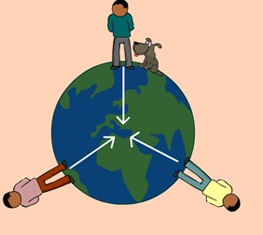
What is weight?

a)

a push or pull on an object

b)

the amount of matter that an object contains

c)

the force of gravity pulling down on an object

35.

What is a force?

a)

the force of gravity pulling down on an object

b)

a push or pull on an object

c)

the amount of matter in an object

36.

Kepler's first law states that the orbits of the planets are in the shape of a/an...

a)

perfect circle

b)

ellipse

c)

spiral

37.
What is gravity?
a)
A force
b)
Energy
c)
A push
d)
All of them
38.
Without gravity we would________. 
a)
Float away
b)
Stay in the ground
c)
Nothing would happen.
d)
I don't know
39.
Some things have A LOT of mass, while other have FEW mass. 
a)
TRUE
b)
FALSE
40.
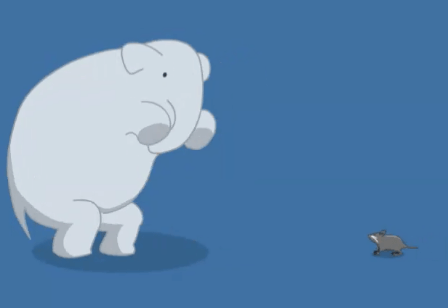
Which object has more mass? 
a)
Ball
b)
Earth
41.
Which object has a GREATER force of gravity?
a)
Ball
b)
Earth
42.
Why a ball falls to the ground?
a)
Earth's force of gravity is GREATER than the ball's, so the ball gets attracted to the ground. 
b)
Earth's force of gravity is LESS than the ball's, so the ball gets attracted to the ground. 
43.
Differences in the moon's and sun's pull on different sides of the Earth cause _________.
a)
gravity
b)
lunar phases
c)
tides
d)
dabbing
44.

What is a Comet?

a)

An icy snowball in space

b)

A big rock that orbits the sun

c)

An icy small ball that orbits the sun and releases gas

d)

A snow ball that orbits around Earth

45.

Do comets create gas?

a)

True

b)

False

46.

Do meteors go through the earth's atmosphere?

a)

Yes

b)

No

47.

What are comets made of?

a)

Pieces of rocks and water

b)

Frozen water

c)

Masses of frozen water, carbon dioxide, carbon monoxide

d)

Masses of water, ice rock

48.
A fairly common type of asteroid, the S-type, contains
a)
Sheet metal
b)
Stone
c)
Ice
49.
What do we call the visible streak of light created by space debris entering Earth's atmosphere?
a)
meteor
b)
meteorite
50.
What do we call an object smaller than a planet but with gravity too weak to form a spherical shape?
a)
asteroid
b)
comet
c)
meteorite
51.
What do we call a sand- to boulder-sized particle of debris in the solar system?
a)
meteorite
b)
asteroid
c)
meteor
d)
meteoroid
52.
If you saw a shooting star and were lucky enough to see where it landed, which object could you possibly pick up from the landing site?
a)
asteroid
b)
Meteor
c)
meteorite
d)
meteroid