
 Worksheets
3 Week Review
Total questions: 52
Worksheet time: 39mins
Which of the following lists Earth's layers in order from outermost to innermost?
inner core, outer core, mantle, crust
mantle, outer core, inner core, crust
crust, mantle, outer core, inner core
Which best describes the mantle?
molten (melted) metal
hot, slow flowing rock
dry land and ocean floor
Which of Earth’s layers is the thickest?
core
crust
mantle

In which layer is the asthenosphere located?
mantle
core
crust
In which layer do convection currents take place?
core
mantle
crust
What makes up the majority of Earth’s core?
iron and nickel
aluminum and silicon
iron and magnesium
What happens to the temperature as you go deeper down inside Earth?
it increases
it decreases
it stays the same
Which layer is the thinnest?
core
mantle
crust
Which layer contains convection currents?
outer core
inner core
mantle
lithosphere
Which layer is broken into giant slabs called tectonic plates?
Inner Core
Outer Core
Mantle
Crust

The movement of the tectonic plates is caused by
the rotation of the Earth.
convection currents in the Asthenosphere
the gravity of the iron-nickel core.
the Moho discontinuity.
A place where two plates slip past each other, moving in opposite directions, is known as a _______
transform boundary
divergent boundary.
convergent boundary.
rift valley.
The land mass where all of the continents were once together in one large continent is called ________________.
Laurasia.
Pangaea.
Eurasia.
Gondwana.
Tectonic plates consist of
continental crust.
mesosphere.
both continental and oceanic crust.
oceanic crust.
The fact that similar fossils are found on both sides of the ocean is evidence of
magnetic reversal.
global positioning.
continental drift.
oceanic drift.
Tectonic plates “float” on
the lithosphere.
the mantle.
the ocean.
the asthenosphere.

The lithosphere is made up of the upper mantle and the (a)

In the box on the right what is this boundary?
Converging
Diverging
Transform

This type of boundary is when two plates move apart.
convergent
transform
divergent
subductive

This is when two plates converge but one slides under the other due to density.
uplift
subduction
trench
none of the above
The Earth's crust is made up of
Oceanic and Continental
Oceanic that is Granitic
Continental that is Basaltic
Continental - continental Crust
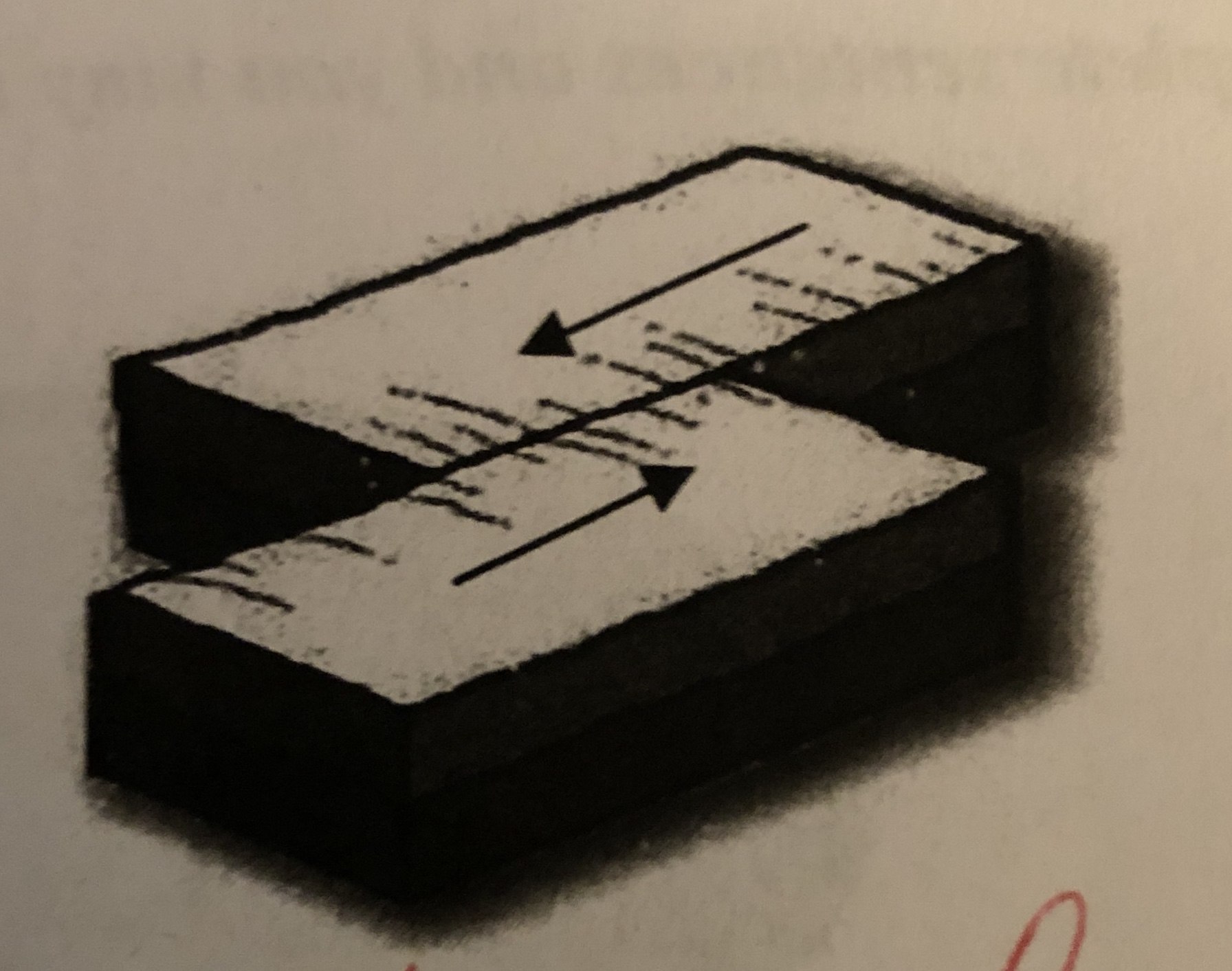
What type of boundary is this?
convergent
divergent
transform
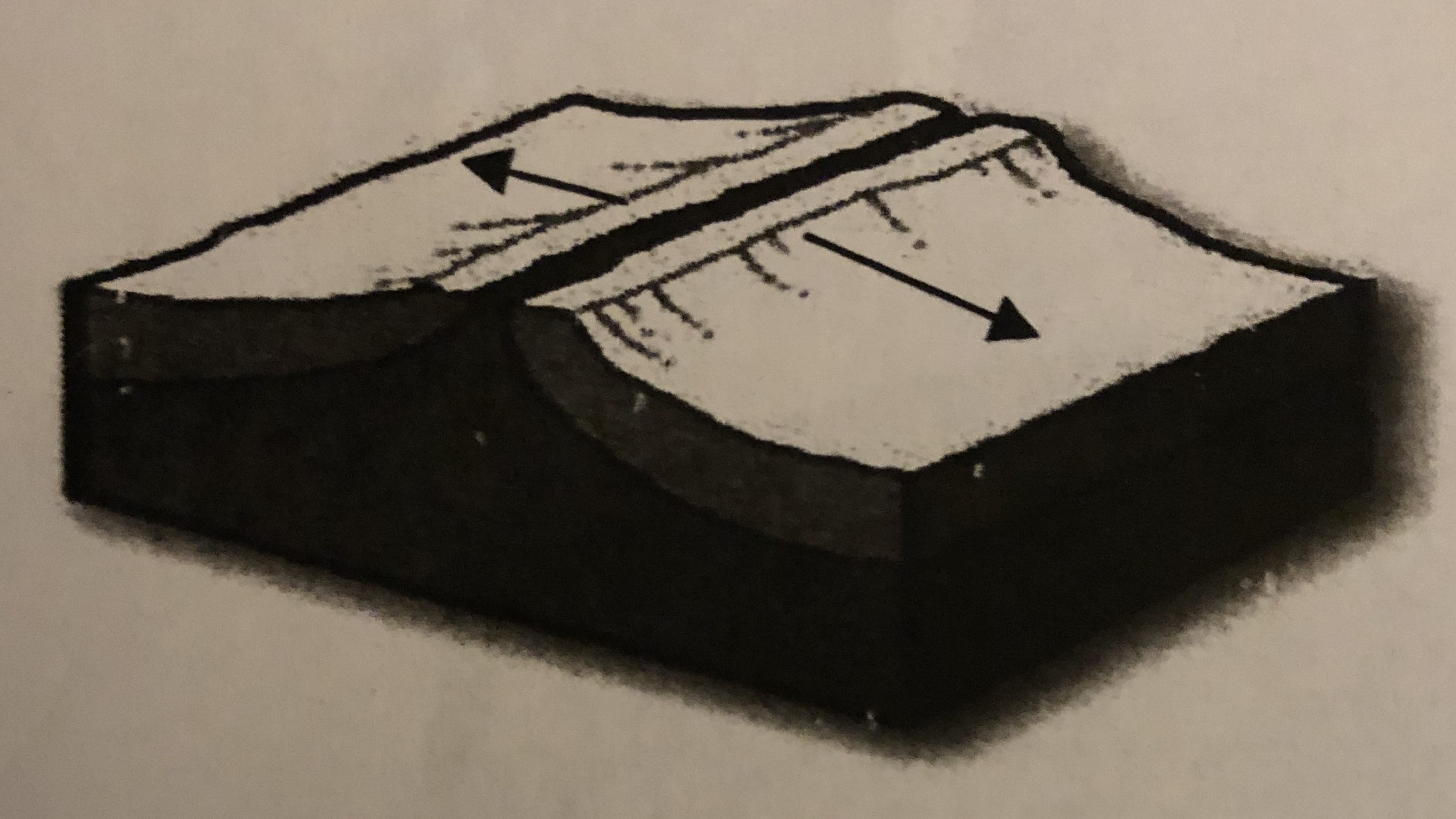
What type of boundary is this?
convergent
divergent
transform
What is a plate boundary where both plates move away from each other?
divergent
plate
convergent
transform
What is the process by which the ocean floor sinks beneath a deep ocean trench and back into the mantle?
continental drift
mid-ocean ridge
faults
subduction
It is known as the solid core.
Aesthenosphere
Outer core
Inner core
Crust
In which layer of the Earth can we find the flowy magma?
Crust
Mantle
Inner Core
Outer Core
This "theory" proposed that the Earth's tectonic plates were once joined together as one big landmass called Pangaea, and eventually separated into their present positions.
Seafloor Spreading Theory
Plate Tectonics Theory
Continental Drift Theory
Pangaea Theory
Where in the mantle are Convection Currents found?
Inner Mantle
Oceanic Crust
Biosphere
Asthenosphere
In which type of tectonic plate boundary do we find plates sliding past each other?
Transform Boundary
Convergent Boundary
Divergent Boundary
Mid-oceanic Boundary
In which type of tectonic plate boundary do we find plates colliding with each other?
Transform Boundary
Divergent Boundary
Convergent Boundary
Mid-Oceanic Boundary


Tectonic Plate movement is caused by ______________.
the rotation of the Earth
ocean tides
convection currents in the mantle
the moon's gravity

The Great Rift Valley in Africa and the Mid-Ocean Ridge were all created by this boundary
Divergent
Convergent
Reform
Transform

Which correctly identifies the geologic process that formed the Himalayan mountains (The World's Tallest Mountains, including Mt. Everest)?
Two continental plates converging
An earthquake in a subduction zone
A tectonic plate moving over a hot plate
Movement at a transform fault boundary

What type of Boundary is this? What event will occur at this boundary?
Transform / Earthquakes
Subduction / Volcano Eruption
Tornado / Rain
Mountain Building / Volcanism
When two continental pates collides with each other they formed ______________?
mid- ocean
mountains
oceans
volcano
A sudden shaking of Earth's surface?
Tsunami
Volcano
Earthquake
A mesosaurus walking by
The pieces that make up Earth's surface?
Jigsaw puzzle
Pattern
Plate boundary
Tectonic Plates
The lithosphere includes the _____ and part of the _____.
core, crust
mantle, core
crust, core
crust, mantle

Which physical layer is represented by the yellow layer?
lithosphere
mesosphere
core
inner core

Which compositional layer is represented by the yellow layer?
inner core
outer core
mantle
crust

