

wayground logo

Free Printable Worksheets

NEW

Font size

S
M
L
XL
Worksheets

World History Ch. 1-4

Total questions: 70

Worksheet time: 42mins

Name
Class
Date
1.
Most early religious traditions can be categorized as -
a)
Monotheistic
b)
Polytheistic
c)
Atheistic
d)
Agnostic
2.
Which of the following aspects did the Harrapan, Shang, and Sumerian civilizations have in common? 
a)
Horse-drawn plows
b)
River-based settlements
c)
Urban centers of over 100,000 people
d)
Pastoral-based economy
3.
What decides where you end up in the caste system in India?
a)
Karma
b)
Good Luck
c)
Bad Luck
d)
Faith
4.
People in the Paleolithic Era were nomads because
a)
they did not know how to build sturdy houses.
b)
they were easily bored and wanted to see the world.
c)
they followed the herds of animals in order to get food to survive
d)
None of these
5.
The Neolithic Revolution refers to the time when early humans-
a)
mastered fire.
b)
developed agriculture.
c)
migrated from Africa.
d)
organized governments
6.
The concept of power in China could be summed up by the concept of 
a)
Nirvana 
b)
Moshka 
c)
Mandate of Heaven 
d)
Democracy 
7.
What two rivers dominated Mesopotamia?
a)
Red River & Rio Grande
b)
Tigris & Yarmouk Rivers
c)
Tigris & Euphrates Rivers
d)
Black & Indus Rivers
8.
What was the first Monotheistic religion to last before 600 C.E.?
a)
Bhuddism
b)
Islam
c)
Judaism
d)
Christianity
9.
Which of the following is credited with being one of the earliest law codes in history?
a)
Magna Carta
b)
Hammurabi's Code
c)
Declaration of Independence
d)
The Ziggurat
10.
Which of the following represents a defining characteristic of an empire?
a)
A state that forms as a democratic republic but is eventually seized and ruled over by a single ruler
b)
A state formed through conquest and maintained through the extraction of resources from conquered states and peoples
c)
A single ethnic group with a single language, religion, and identity
d)
A conglomeration of independent states that form temporary alliances
11.
Which generalization best describes where the first four civilizations developed?
a)
They all emerged on separate continents.
b)
They all grew up along seacoasts.
c)
They all developed in the same climate zone.
d)
They all formed in river valleys.
12.
What does diaspora mean?
a)
Genocide of a people
b)
Dying of a people
c)
Scattering of a people
d)
Coming together of a people
13.
What group is credited with the development of the first writing system?
a)
Mayans
b)
Ottomans
c)
Aztecs
d)
Sumerians
14.
What is the Egyptian form of writing?
a)
Cuneiform
b)
Mandarin
c)
Hieroglyphics
d)
Sumerian
15.
The rapid rise in population is due to a surplus of what?
a)
Land
b)
Food
c)
Housing
d)
Money
16.
What form of writing was used in ancient Sumeria?
a)
Hieroglyphics
b)
Mandarin
c)
Cuneiform
d)
Ancient Symbols
17.
What do you call someone who works as a record keeper (someone who writes things down)?
a)
Priest
b)
Scribe
c)
Merchant
d)
Artisan
18.
In which of the following societies did women enjoy the most freedom and opportunity?
a)
Mesopotamia
b)
Egypt
c)
Hebrews
d)
Assyria
19.
The tribes that, as early as 3000 B.C.E., began to spread their language and agricultural techniques throughout Africa were the
a)
Mali
b)
Persians
c)
Xiongnu
d)
Bantu
20.
Which of the following offers evidence that Paleolithic peoples were shifting from a nomadic way of life to a more settled lifestyle?
a)
Extinction of large mammals
b)
Increase in the size of tools 
c)
Elaborate burial sites 
d)
Global warming
21.
Which of the following shows the relationship between religion and government in the First Civilizations?
a)
Farmers were required to turn over a portion of their crops to support city-dwellers.
b)
The Hebrew Scriptures attributed the act of creation to a single male deity, Yahweh.
c)
The “demotion of the goddess” resulted from the extension of the power of creation and fertility to male gods.
d)
Hammurabi claimed that his law code was inspired by Marduk, the chief god of Babylon.
22.
Which of the following is an example of a way that the rulers in the First Civilizations displayed their power?
a)
Writing poetry
b)
Freeing slaves
c)
Constructing temples
d)
Engaging in farm work
23.
What did legalism include?
a)
Strict rules, harsh consequences, lack of educational services
b)
The belief and following of the Confuscious
c)
Strict rules with few consequences and education for the rich
d)
The belief and following of the Dao, known as "The Way"
24.
King Asoka converted to ____________ after all the carnage (destruction from battle) he witnessed.
a)
Hinduism
b)
Christianity
c)
Buddhism
d)
Islam
25.
Important Indian dynasty that brought about a golden age in the development of the arts, sciences, and religion.
a)
Xia
b)
Shang 
c)
Gupta 
d)
Zhou 
26.
The Mayans were located at what letter on the map?
 (Click to hide text)
a)
A
b)
B
c)
C
27.

____ is the study of the origin of civilizations and how how they develop and change over time.

a)

Archaeology

b)

Artifact

c)

Scholarly

d)

Anthropology

28.
Why is it important to use both primary and secondary resources in historical research?
a)
Primary is false information while secondary is more accurate.
b)
Primary is from the internet while secondary is from magazines.
c)
Primary is just from books while secondary is the actual evidence.
d)
Primary gives you first hand evidence while secondary gives a broader view after the event happened.
29.

____ is the study of material remains to learn about the past.

a)

Conclusion

b)

Archaeology

c)

Anthropology

d)

Artifact

30.

Why were organized central governments so important?

a)

to create social classes

b)

to prevent flooding

c)

to make laws, provide for defense, and allocate food and resources to the people
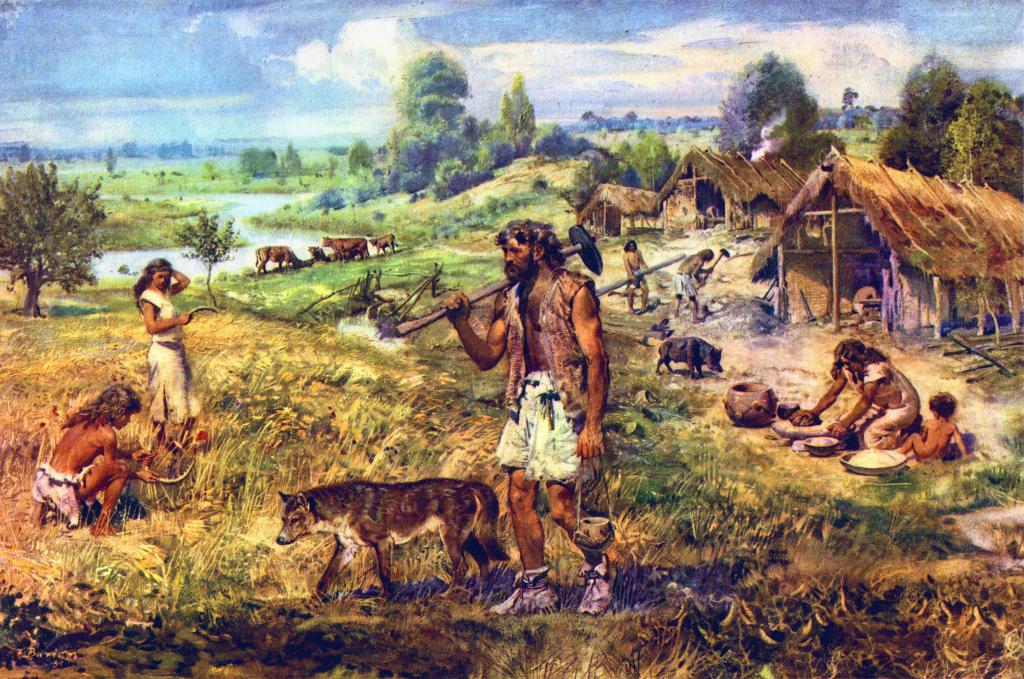
31.
What ancient civilization developed along the Nile River
a)
Mesopotamia
b)
Egypt
c)
India
d)
China
32.
Cultural diffusion is BEST described as...
a)
the spreading of ideas, languages, and customs from one culture to another
b)
sharing music from one culture to another
c)
the spreading of religion from one culture to another
d)
learning a foreign language 
33.

What change marked the beginning of the Neolithic Revolution?

a)

beginning of hunting and gathering

b)

man learned to write

c)

beginning of sedentary farming and the domestication of animals

d)

man built towns and cities

34.
What is divine right?
a)
the idea that God created the monarchy and the monarch is His representative on Earth
b)
kings/ queens who hold all the power within their states' boundaries
35.
The type of hominid that most closely resembles modern humans is...
a)
Australopithecus
b)
Homo Sapiens
c)
Homo Erectus
d)
Neanderthals 
36.
The Paleolithic Age is
a)
New Stone Age
b)
not proven to have existed
c)
usually known as the Primitive Age
d)
the period in which humans used simple stone tools
37.
Six of the most important characteristics of civilizations are
a)
vehicles, use of fire, nomadic lifestyle, hunting and gathering and technology
b)
villages, temples, trade, tools, use of fire, and armies
c)
use of metals, weapons, houses, food, religion, and art
d)
cities, government, religion, social structure, writing and art
38.
The Mesopotamian religion, which identified nearly 3,000 gods and goddesses, can be described as
a)
cuneiform
b)
polytheistic
c)
patriarchal
d)
theocratic
39.

Which date came first?

a)

543 BC

b)

325 AD

c)

21 BC

d)

21 AD

40.
Scientists theorize that different hominids existed over millions of years and changed over time in body and brain size.  Gradually hominids were able to make more advanced tools, shelters, and clothing.
a)
True
b)
False
41.
A main characteristic of civilizations is
a)
writing
b)
social structure
c)
government
d)
all of the above
42.
The land “between the rivers” is known as an area called (the first civilization we studied)
a)
Mesopotamia
b)
Egypt
c)
Jericho
43.
Describe the burial practices of Egyptians?
a)
They used a funeral pyre for the dead.
b)
They carried the dead to a nearby country.
c)
They preserved bodies as mummies.
d)
They were buried in the river.
44.
Why do civilizations develop by rivers?
a)
It is easy to build straw homes.
b)
There is fertile soil for farming.
c)
You can use the seas to travel to other areas.
45.
What is the name of these structures?
a)
ziggurats
b)
pyramids
c)
irrigation
46.

What was the name of the first civilization in the World and Middle East?

a)

Babylon

b)

Egypt

c)

Sumer

47.

One god religions are known as:

a)

Pagan

b)

Polythestic

c)

Divine

d)

Monothestic

48.
The Hittites were the first civilization to carry weapons made of which of the following?
a)
Bronze
b)
Stone
c)
Copper
d)
Iron
49.
Located in what was the ancient city of Nineveh, this library contained which of the following?
a)
10,000 gold staters
b)
30,000 cuneiform tablets
c)
The Hanging Gardens of Babylon
d)
The Ishtar Gate
50.
What is the definition of dynasty?
a)
a family of rulers who rule for a long period of time
b)
a trained warrior of the Japanese aristocracy
c)
a Japanese military leader and ruled on the emperor’s behalf
d)
code of conduct (behavior) of samurai warriors with bravery and loyalty
51.
What is the definition of Buddhism?
a)
a belief system that stresses reincarnation, Nirvana, life is suffering and     freeing oneself from worldly desires
b)
a religion of Japan based on worship/respect for nature and ancestors
c)
a belief system stressing morals, ethics, respect, hard work, and education
d)
a system of departments/agencies that carry out the work of the government
52.
What is the definition of Confucianism?
a)
a belief system that stresses reincarnation, Nirvana, life is suffering and     freeing oneself from worldly desires
b)
a religion of Japan based on worship/respect for nature and ancestors
c)
a belief system stressing morals, ethics, respect, hard work, and education
d)
a system of departments/agencies that carry out the work of the       government
53.
Who was the teacher that valued a solid education in early Chinese history?
a)
Confucius
b)
Prince Shotoku
c)
Genghis Khan
d)
Mr. Yagi
54.
What was the concept/idea of NIRVANA in Buddhism?
a)
the state of desiring nothing
b)
how you treat others will shape the way your life goes
c)
the soul is reborn in a new body after death
d)
that life is suffering
55.
What was the concept/idea of KARMA in Buddhism?
a)
the state of desiring nothing
b)
how you treat others will shape the way your life goes
c)
the soul is reborn in a new body after death
d)
that life is suffering
56.
Who are the three most important gods in Hinduism?
a)
God, Jesus, and the Holy Spirit
b)
Brahma, Vishnu, and Shiva
c)
Siddhartha, Rama, and Buddha
d)
Snap, Crackle, and Pop
57.
Who started Buddhism?
a)
Prince Rama
b)
Vishnu
c)
Siddhartha Gautama
d)
Brahma
58.
One of the longest and most important trade routes is a web of roads known as  what?
a)
The Spider Roads
b)
The Trade Roads
c)
The Silk Roads
d)
The Long Roads
59.
What did the Chinese build to protect them from northern invaders?
a)
a bridge
b)
an irrigation canal 
c)
a river
d)
The Great Wall of China
60.
Who would the people blame if crops did not grow or if disease struck?
a)
the farmers
b)
the mummies
c)
the pharaoh
d)
the dynasty that was in power
61.
Why were tombs filled with art, jewelry, etc.....?
a)
Tombs were museums.
b)
Tombs were private storage for the pharaoh.
c)
Tombs were the safest place in the kingdom.
d)
They believed the dead enjoyed their materials in the afterlife.
62.
Why was the Rosetta Stone so important?
a)
It helped archaeologists decipher Egyptian writing?
b)
It gave clues about building.
c)
It was a book of the dead.
d)
It told how pharaoh's rules.
63.

What innovations did the Olmec create?

a)

Building the first ever pyramids

b)

Creating rubber

c)

Using medicinal herbs to perform heart surgery

d)

Curing rubber from the latex tree

64.

What major artistic accomplishments are the Olmec known for?

a)

Jade baby carvings

b)

17 colossal head statues

c)

Humanistic sculptures

d)

Interpretative dance

65.
Why is Confucianism a philosophy?
a)
It practices meditation.
b)
It believes in Nirvana
c)
It requires respect for elders
d)
It does not include ideas about God or higher powers in the universe
66.
Confucius is credited with stating  the "Golden Rule".  What is that?
a)
what goes around comes around
b)
speak no evil
c)
Honor your elders
d)
treat others as you would like to be treated.
67.
Dynasties would rise and fall.  This is known as the
a)
wheel of reincarnation
b)
Mandate of Heaven
c)
Dynastic Cycle
d)
end of an era
68.
What were two things that these ancient people developed in the Indus River Valley?
a)
sewer system, grid - like streets
b)
written language, temples
c)
roads, irrigation
69.
What was the distinguishing feature of the Homo Erectus?
a)
They could walk upright
b)
They lived until about 1.5 million years ago
c)
Person who thinks
d)
All of the above
70.
Complex society with cities, organized government and a system of writing.
a)
cuneiform
b)
civilization
c)
technology
d)
city-state
