
 Worksheets
Unit 4 Greece
Total questions: 163
Worksheet time: 2hrs 5mins
Which two seas linked Greece to China, India and North Africa?
Black
Aegean
Red
Mediterranean
Greece is located on which two peninsulas?
Floridian
Spartan
Balkans
Peloponnesian
_______ led to the creation of independent Greek city-states rather than a unified empire.
seas
rivers
mountains
deserts
Greek city-states sent people off the peninsula to _____ arable land on the coasts of Persia and Rome.
colonize
conquer
fertalize
trade
Which of the following are major exports for the ancient Greeks?
icecream
olives
grapes
wheat
The Greeks were ___.
monotheistic
polytheistic
The island of Crete was the center of which civilization?
Mycenean
Greek
Persian
Minoan
The Minoans built a great palace at ___.
Troy
Sparta
Athens
Knossos
______ is painting on wet plaster.
Frescoe
Roscoe
mosaic
Pointalism
The Trojan War was between Troy and the _______.
Minoans
Myceneans
Romans
Persians
The Trojan war was fought over control of these two straits.
Bosporous
Dardanelles
Thermopalyae
Black
Who did the Greeks believe authored the Odyssey?
Shakespeare
Herodotus
Pythagorous
Homer
Polis means ___.
state
county
city
country
The following people could participate in the Athenian democracy?
all people born in Athens
free women
free men
slaves
Which of the following is the chronological order of the types of government used in Athens?
democracy, monarchy, aristocracy, tyranny
aristocracy, monarchy, democracy, tyranny
tyranny, aristocracy, monarchy, democracy
monarchy, aristocracy, tyranny, democracy
Which of the following were tyrants?
Draco
Solon
Pericles
Minos
Which of the following means rule by a small group?
monarchy
aristocracy
tyranny
oligarchy
Which women had greater rights in their society?
Athenian women
Spartan women
Persian women
____ had a great army, and _____ had a great navy.
Sparta, Athens
Athens, Sparta
Athens, Athens
Sparta, Sparta
Spartan males trained to be soldiers from the age of __.
2
7
15
18
Slaves in Sparta were called ___.
Helots
Untouchables
Serfs
Plebian
The Peloponnesian League was led by which city-state.
Corinth
Sparta
Thermopylae
Athens
The Delian League was led by which city-state.
Corinth
Sparta
Thermopylae
Athens
Who won the Battle of Marathon?
Athens
Sparta
Persia
Ionia
As a result of the Peloponnesian War, Greece grew stronger.
True
False
The leader during the Golden Age of Greece was __.
Gupta
Pericles
Herodotus
Alexander
Where is the Parthenon located?
Sparta
Athens
Persia
Knossos
Who could vote in the Athenian democracy?
everyone
women and men
non-slaves
citizens
Mark everyone who was a philosopher.
Socrates
Aristotle
Hippocrates
Thucydides
Plato
Mark everyone who was an historian.
Socrates
Herodotus
Hippocrates
Thucydides
Plato
Mark the person who was a doctor.
Socrates
Herodotus
Hippocrates
Thucydides
Plato
Which of the following was the most complex of the Greek columns?
Doric
Ionic
Corinthian
Rome was a part of Alexander's Empire?
True
False
The Hellenistic Age lasted until the rise of the __ Empire.
Greek
Roman
Egyptian
Indian
Who was Alexander's tutor?
Socrates
Plato
Aristotle
Alexander the Great spread Hellenistic culture from Greece to _____.
Macedonia
India
China
Rome
Greece is a(n) _______ because it is surrounded on three sides by water.
island
peninsula
continent
mountain

It was difficult to farm in Ancient Greece.


Greece is on which continent?
Europe
Africa
North America
Asia
Why did the people in ancient Greece set up colonies?
People wanted to see the world
Not enough farmland to grow food
True or False?
The ancient Greeks were excellent sailors.
True
False

Greece's geography, or its land and water, led to ____________ becoming very independent with their own government and laws.
civilizations like India and China
city-states like Athens and Sparta
What was the Mycenaean capital?
Athens
Sparta
Mycenae
Crete
The Minotaur was...
half-man and half-dolphin
half-bird and half man
half-horse and half-man
half-bull and half-man
What animal was revered and celebrated by the Minoans?
Donkey
Goat
Bull
Horse

Knossos was...?
A religious temple.
The largest palace on Crete.
The Greece term for house.
A fishing village on Crete.
What was the name of the capital of the Minoans on Crete?
Knossos
Marathon
Sparta
Mycale
The Minoan civilization is believed to have declined due to (multiple answers)
natural disasters such as earthquakes, volcanic eruptions, and tidal waves
the Trojan War
the minotaur
an invasion by people from mainland Greece

Why are the Mycenaeans often know as the "First Greeks"?
They were the first known civilization in Greece.
They were the first civilization thought to speak Greek.
Archaeologists have determined that they were the first to live in Greece.
Which event happened first chronologically (in order)?
The Mycenaean civilization collapsed.
The Mycenaeans conquered the Minoans.
The Minoans lived and flourished on the island of Crete.
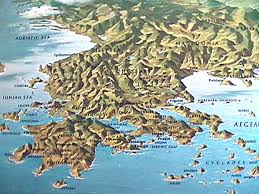


The following information describes which of the Persian Wars: Greeks led Persians into a narrow strait of water and then easily sank many Persian ships (because of their large size) causing the Persians to retreat.
Thermopylae
Salamis
Plataea
Marathon
Who were TWO Persian kings during the Perisan Wars?
King Leonidas
King Darius I
King Xerxes
King Marathon
The Persians came across the __________ Sea to invade Greece.
Pacific
Aegean
Atlantic
Who had more soldiers, the Persia or the Greece?
The Persian Army had many more soldiers.
The Greek Army had many more soldiers.
Two of the most important battles between the Persians and the Greeks were...
the Battle of Marathon and the Battle of Thermopylae.
the Battle of Sitting Bull and the Battle of the Babies.
the Battle of Cats and Dogs and the Battle of Sparta.
True or false, even though the Greek army was much smaller, the Greeks outsmarted the Persians at the Battle of Marathon.
True
False
True or false, the Persians were defeated at the Battle of Marathon but they came back to attack Greece again.
True
False
At the Battle of Thermopylae, Athens and _________ teamed up to defeat the Persian army.
Switzerland
Sparta
Persia
Asia
At the Battle of ___________, the Persian army had to go through a narrow pass near the sea. The Greeks used this to block the Persians from invading.
Grease
Thermopylae
Sparta
Socrates
One of the most famous kings of Sparta was ___________.
King Louis
King Arthur
King Leonidas


The Athenian general who led the Greek navy and devised the plan for the defense of Greece during the third Persian war was
Leonidas
Xerxes
Pheidippides
Themistocles

The 300 Spartans died at what battle?
Palatea
Marathon
Thermopylae
Salamis
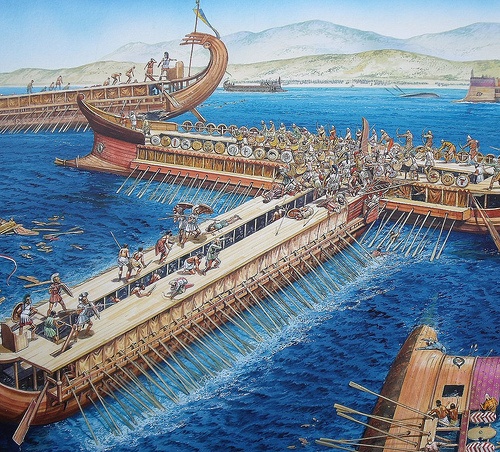
Who were Darius I and Xerxes?
Generals for the army of Sparta
Leaders of the city of Athens
The greatest of the Greek warriors
Emperors of Persia
Kings of Sparta
What was the PRIMARY cause of the Persian Wars?
The Greeks wanted to establish more colonies in Asia Minor.
They fought over control of the trade routes of the Aegean region.
The Greeks refused to allow the Persians to participate in the Olympic games.
The Persians wanted to punish the Greek city-states for supporting Ionia's revolt against the Persians.


How did Pericles improve the Athenian Empire?
He encouraged learning and creativity.
He created a society of powerful warriors.
He conquered the surrounding city-states.
He allowed all people to participate in government.
Why did Pericles rebuild Athens?
Athens was a religious center in Greece.
Athens was in ruins after the Persian War.
Pericles wanted citizens to move to Athens.
Pericles was preparing for an invasion by Sparta.
What contributed to Athens losing the Peloponnesian War?
Athens was overcrowded, and a plague spread through the city.
The death of Pericles led the Spartans to attack Athens directly.
The Spartans successfully broke through the walls around Athens.
The Athenians starved after burning crops to keep them from the Spartans.
What advantage did Sparta have over Athens in the Peloponnesian War?
Sparta had better warriors.
Sparta had a stronger navy.
Sparta was protected by a wall.
Sparta was positioned high on a hill.
What was one effect of the Peloponnesian War?
Sparta allied with Macedonia.
Macedonia invaded Greece.
Athens took over Macedonia.
Macedonia defeated the Greek navy.
What advantage did Sparta have in the Peloponnesian War?
Sparta had a sizable fleet of ships.
Sparta could only be attacked by land.
Sparta was protected by a strong wall.
Sparta was isolated on a distant island.

How did Sparta benefit from its location during the Peloponnesian War?
Sparta had ample coastline for its substantial navy.
Sparta was located inland, protecting it from the Athenian navy.
Sparta was on the Aegean coast, protecting it from a land invasion.
Sparta was located on its own island far away from the members of the Delian League.
The quarrel between which two city-states developed into a conflict called the Peloponnesian War?
Athens and Thebes
Macedonia and Athens
Athens and Sparta
Macedonia and Thebes
Before the Peloponnesian War began, Sparta
was worried that Athens was becoming too powerful.
watched with concern as Athens built its empire.
resented Athenian attempts to push Athenian-style democracy onto other Greek city-states.
All of the above
Sparta and several of its allies came together to form the
Delian League.
Spartan Army.
Peloponnesian League.
The devastating war lasted for more than 25 years and eventually put an end to the _______________ ______________.
Spartan empire.
Athenian empire.
Who was the leader of Athens when the war began?
Pericles
King Leonidas
Alcibiades
While the Spartans were trying to make the Athenians fight, the Athenians would do what?
burn down their farmlands
sail across the Aegean Sea
stay behind the walls they had built
During the second year of the Peloponnesian War, a _________ swept over Athens.
storm
plague
none of the above
Which of the following is a Greek philosopher?
Socrates
Hercules
Homer
True or False: Socrates claimed that he did not have wisdom.
True
False
Which philosopher taught people to ask questions?
Aristotle
Plato
Socrates
Socrates was put to death by . . .
Hanging
Speared
Drinking poison hemlock juice

What was Socrates main belief, or, what did he encourage his students to do?
Question everything
Know everything
Prove everything wrong

Which Greek Philosopher discovered the mathematical formula that describes the relationship between the sides of a right triangle?
Pythagoras
Diogenes
Plato
Socrates
Which greek philosopher believed that illness were not caused by the gods but rather by aspect of the natural world?
Plato
Diogenes
Aristotle
Hippocrates
Which greek philosopher was the student of Plato and the teacher of Alexander the Great?
Pythagoras
Diogenes
Aristotle
Socrates
- Plato - Socrates - Aristotle - Diogenes
Which term best describes the individuals
in this list?
Philosophers
Historians
Mathematicians
Poets
considered the "father of history" and wrote about the Persian Wars
Plato
Herodotus
Thucydides
Pythagoras
He is considered the greatest historian of the ancient world.
Plato
Herodotus
Thucydides
Pythagoras
In the Republic, Plato described his ideal
house
government
city-state
god
Who taught the "golden mean," which said that a person should do nothing in excess?
Plato
Herodotus
Thucydides
Aristotle

Macedonia is __________ of Greece.
north
south
east
west
Alexander's father was:
Philip II
Aristotle
Sophocles
Hammurabi
What is the name of Alexander's largest and wealthiest city in Egypt?
Alexandria
Persia
Babylon
Ionia
What world power did Alexander defeat which resulted in him having the largest empire in the known world?
Greeks
Romans
Persians
China
The mix of Greek, Persian, and other cultures as a result of Alexander's empire is...
Hellenism
Stoicism
Epicureanism
Greekism
What was Alexander's greatest and lasting legacy?
conquering the largest empire in the ancient world in only 13 years
the blending of cultures (Hellenism) that lead to scientific, cultural, and philosophical advancement
defeating the Persian Empire
uniting Greece under one rule

Father of Alexander the Great; changed the way the Greeks fought. Assassinated before he could invade Persia.
Alexander the Great
Phillip II of Macedonia
Pyrrhus of Epirus
Ptolemy

Between 334 and 323 B.C.E. he conquered the Persian Empire, Egypt, reached the Indus Valley, founded many Greek-style cities, and spread Greek culture across the Middle East. Died at 35.
Battle of Gaugamela
Alexander the Great
Phillip II of Macedonia
Pyrrhus of Epirus
Ptolemy
Alexander died in 323 BCE at the age of
32
40
53
65

Who united most of the ancient world into one empire (see the picture above)?
Archimedes
Philip II
Alexander the Great
Plato

What happened in the Pleoponnesian War?
Athens and other city-states conqurered Sparta
Sparta conqured Persia
Greek city-states were weakened by war
Athens and Sparta united to fight the other city-states

What happed to Greece after the war?
Athens conquered Sparta
Athenean culture was destroyed and disappeared
King Philip of Macedonia conquered Greece
Sparta conquered Persia

What is the correct order for these three columns?
Doric, Ionic, Corinthian
Corinthian, Doric, Ionic
Doric, Corinthian, Ionic
Ionic, Corinthian, Doric

Who wrote the Odyssey?
Phidias
Aschylus & Sophocles
Pythagoras
Homer

Who was King Philip's son?
Hammurabi
Homer
Aristotle
Alexander

Hellenistic culture includes
Greek, Indian, Egyptian & Persian influences
influences from China and the Far East
the culture of the ancient Celtics
the culture of the Mayan and Olmec people in Mezo-America

What was the eastern edge of Alexander the Great's Empire?
Macedonia
Athens
India
Egypt

