Worksheets
Prokaryote & Eukaryote Review
Total questions: 28
Worksheet time: 2hrs 20mins
Eukaryotes have a nucleus. True or False?
True
False


Which has ribosomes?
Prokaryote
Eukaryote
both
What allows bacteria to move?
ribosomes
plasmid
cell membrane
flagella
Archaea are which type of cell?
prokaryote
eukaryote
Prokaryotic cells are larger than eukaryotic cells.
Eukaryotic cells do not have nuclei, and prokaryotic cells do have nuclei.
Prokaryotic cells lack membrane-bound organelles, and eukaryotic cells contain membrane-bound organelles.
Eukaryotic cells are simpler than prokaryotic cells.
Includes protists
Prokaryote
Eukaryote
All living things are made up of one or more ____________, which are the smallest unit of life.
Cells
ATP
Glucose
Sugar
Fungi are which type of cell?
prokaryote
eukaryote

Is the following a prokaryote or eukaryote?
prokaryote
eukaryote

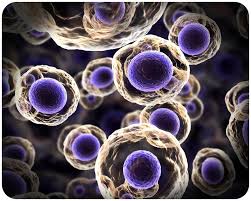
Here are some stained cells. What type of cells are they?
Prokaryote
Eukaryote

Students use a microscope to look for structures present in four different cells. The students placed an X for each structure that was viewed for each cell on the table shown. Which cell that was viewed is most likely a prokaryote?
Cell W
Cell X
Cell Y
Cell Z
What is the function of the ribosome?
make proteins
move the cell
jelly-like substance that holds together the cell
barrier around cell
What is the function of the cell membrane
allows certain things in an out of cell
holds DNA
makes proteins
jelly like substance
What two organelles are NOT in an animal cell?
Cell Membrane and Mitochondria
Nucleus and Ribosomes
Cell Wall and Chloroplasts
Golgi Body and Lysosomes
The tough outer barrier of some cells, holds the shape and protects the cell
Mitochondria
Cell Wall
Nucleus
Ribosomes
Controls what enters and exits ALL cells
Golgi Body
Lysosomes
E.R.
Cell Membrane

Name this organelle
Ribosomes
Vacuole
Nucleus
Chloroplast