wayground logo

Free Printable Worksheets

Font size

S
M
L
XL
Worksheets

polynomials

Total questions: 105

Worksheet time: 12hrs 44mins

Name
Class
Date
1.
Give the correct name for 
2x3+5x
a)
Linear Binomial
b)
Cubic Binomial
c)
Quadratic Trinomial
d)
Linear Trinomial
2.
Find f(0) if f(x) = 5x3 + 2x2 +3x
a)
3
b)
10
c)
-2
d)
0
3.
List all possible rational zeros
f(x) = 3x5-5x2+x+6
a)
1, 2, 3, 6, -1, -2, -3, -6
b)
1/3,2/3,1,2,3,6,-1/3,-2/3,-1,-2,-3,-6
c)
1/3,2/3,1,2,3,6
4.
Find ALL the zeros of the function 
f(x) =  x 2 +2x + 10
a)
-1 + 3i, -1-3i
b)
1 + square root 19, 1- square root 19
c)
2 + 6i , 2 - 6i 
d)
-2+6i, -2-6i
5.
Which of the following is a 5th degree trinomial with a leading coefficient of -2? 
a)
-2x5 + 3x - 1
b)
5x-2 +3x - 1
c)
-2x5 + 3x4 + 2x3 + x2 - 10
d)
2x + 5
6.
This polynomial has a degree of 2.
a)
Cubic
b)
Quadratic
c)
Linear
d)
Binomial
7.
What is the constant in the polynomial x2-2x+5?
a)
1
b)
2
c)
5
d)
0
8.
What is the leading coefficient in the polynomial 3x2-2x+5?
a)
3
b)
2
c)
5
d)
0
9.
What should be the order of the polynomial coefficients if
(3x - 4x3 + 6x4 + 1) / (x + 3)
a)
3   0   -4   6   1
b)
6   -4   3   1   0
c)
6   -4   0   3   1
d)
-6   4   0   -3   -1
10.
Is (x-7) a factor of (x2-5x+14)?
a)
Yes
b)
No
11.
Is (x-4) a factor of (x3 +x2 -16x-16)?
a)
YES
b)
NO
12.
Use the remainder theorem to determine the remainder of (10x4 - 50x3 - 800) ÷(x - 6).
a)
-740
b)
1,360
c)
22,960
d)
no remainder
13.
Is (x-3) a factor of
(x- 3x+ 2x + 2)?
a)
Yes
b)
No
14.
What is the remainder when      a3 - 4 is divided by a+2? 
a)
-2
b)
-6
c)
-12
d)
0
15.
Which binomial is a factor of 
f(x)= x3 + x2 -24x +36?
a)
x + 2
b)
x + 3
c)
x + 6
d)
x + 9
16.
Which binomial is a factor of
f(x)= x3 -6x2 +3x +10?
a)
x + 1
b)
x + 2
c)
x + 5
d)
x + 10
17.
-3x2+x+4=0
How many roots does this equation have?
a)
2
b)
1
c)
0
d)
4
18.
The degree of the polynomial determines the number of roots.
a)
True
b)
False
19.
The largest exponent determines the degree of the polynomial.
a)
True
b)
False
20.
What is the degree of the following polynomial that has 4 real roots and 2 complex roots?
a)
4
b)
2
c)
8
d)
6
21.
How many roots does the above Polynomial have?
a)
4
b)
5
c)
6
d)
7
22.
What is the least degree of the graph of the above polynomial?
a)
3
b)
4
c)
5
d)
Not enough information 
23.
Based on the end behavior of the polynomial, what best describes the leading coefficient?
a)
a negative real number
b)
 a positive real number
c)
an even real number
d)
an odd real number
24.
Based on the end behavior of the polynomial, what is the degree of the polynomial?
a)
a negative real number
b)
a positive real number
c)
an odd real number
d)
an even real number
25.
What is the least degree of the polynomial?
a)
3
b)
2
c)
any odd integer
d)
any even integer
26.
Which point does not represent a zero of a polynomial?
a)
(-2, 0)
b)
(-1, 0)
c)
(0, 4)
d)
(2, 0)
27.
Based on the end behavior, the function is most like which of the following?
a)
constant functions
b)
quadratic functions
c)
cubic functions
d)
linear function
28.
What are the linear terms of the polynomial function?
a)
(x-2)(x-1)(x+1)(x-2)
b)
(x-2)(x-1)(x+1)(x+2)
c)
(x-2)(x-1)(x+1)(x+2)(x-4)
d)
(x-2)(x-1)(x+1)(x+2)(x+4)
29.
Based on the end behavior which option best describes the leading term?
a)
negative coefficient, even degree
b)
negative coefficient, odd degree
c)
negative degree, odd coefficient
d)
negative degree, even coefficient
30.
What are the zeros of the polynomial?
a)
X=5, x=-3(multiplicity of 2)
b)
x=-3, x=5(multiplicity of 2)
c)
x=3, x=-5
d)
x=5
31.
Classify the polynomial by degree.
a)
quartic
b)
quintic
c)
6th degree polynomial 
d)
7th degree polynomial
32.
What is the remainder?
(6x2 + 19x + 13) ÷ (2x + 5)     
a)
0
b)
3
c)
5
d)
-5/2
33.
Write the equation of the polynomial function
zeros: 0, -2, 4
degree: 5   
0 has a multiplicity of 3
a)
f(x) = x3(x-2)(x+4)
b)
f(x) = x3(x+2)(x-4)
c)
f(x) = x2(x-2)(x+4)
d)
f(x) = x2(x+2)(x-4)
34.
Is (x-7) a factor of (x2-5x+14)?
a)
Yes
b)
No
35.
What is the remainder R when the polynomial p(x) is divided by (x-5)?
p(x) = x- 5x+ 2x - 10
a)
0
b)
2x-10
c)
-2x-10
d)
2x+10
36.
Is (x-3) a factor of
(x- 3x+ 2x + 2)?
a)
Yes
b)
No
37.
List all possible rational zeros
f(x) = 3x5-5x2+x+6
a)
1, 2, 3, 6, -1, -2, -3, -6
b)
1/3,2/3,1,2,3,6,-1/3,-2/3,-1,-2,-3,-6
c)
1/3,2/3,1,2,3,6
38.
Let f(x) = 4x^2 -33x -27.  Is k = 9 a zero of the function?
a)
yes
b)
no
39.
What is the end behavior as x → -∞ f(x)→ ?
a)
-∞
b)
40.
What is the degree classification of this polynomial?
x²+4x-8
a)
binomial
b)
trinomial
c)
quadratic
d)
cubic
41.
Which is an example of a cubic binomial?
a)
x³+5
b)
x²+3
c)
x²+5x-6
d)
5x³
42.
a)
4x - 2
b)
4x + 2
c)
4x - 2 + (1/3x - 1)
d)
4x + 2 + (1/3x - 1)
43.
What id the Degree of the Polynomial?
5x3 - 6x + 1
a)
Linear 
b)
Quadratic
c)
Cubic
d)
Quartic
44.
a)
Even Degree
- Leading Coeff.
b)
Even Degree
+ Leading Coeff.
c)
Odd Degree
- Leading Coeff.
d)
Odd Degree
+ Leading Coeff.
45.
a)
Even Degree
- Leading Coeff.
b)
Even Degree
+ Leading Coeff.
c)
Odd Degree
- Leading Coeff.
d)
Odd Degree
+ Leading Coeff.
46.
This function is most likely:
a)
quadratic
b)
cubic 
c)
quartic
d)
linear
47.

The polynomial has...

a)

Odd degree, positive leading coefficient.

b)

Odd degree, negative leading coefficient.

c)

Even degree, positive leading coefficient.

d)

Even degree, negative leading coefficient.

48.
What is the end behavior as x → +∞, f(x)→ ?
a)
-∞
b)
49.
f(x) = (x-4)2(x+1)
a)
Even Degree
- Leading Coeff.
b)
Even Degree
+ Leading Coeff.
c)
Odd Degree
- Leading Coeff.
d)
Odd Degree
+ Leading Coeff.
50.
What is the degree of the function graphed here?
a)
6
b)
4
c)
3
d)
5
51.
The right side of the graph goes ______.
f(x) = -6x4 - 2x2 + 8
a)
up 
b)
down 
52.

Which graph could represent the function f(x) = -x3 - x2 + 5x

a)

a

b)

b

c)

c

d)

d

53.
Identify the degree of the polynomial and the sign of the leading coefficient 
a)
Leading Coefficient Positive
Degree - Even
b)
Leading Coefficient Positive
Degree - Odd
c)
Leading Coefficient Negative
Degree - Even
d)
Leading Coefficient Negative
Degree - Odd
54.
Which function has this end behavior?
a)
-1x4-3x3+3
b)
-2x7+2x4+4
c)
3x8+3x5-4x+7
d)
4x5-4x4+2x3-9
55.
Describe the behavior of the graph on the interval ( -1, 1)
a)
zero
b)
increasing
c)
median
d)
decreasing
56.
Find all rational zeros, one zero has been given.
f(x) = x3-5x2-2x+24;   -2
a)
-2,1,0
b)
-2,-3,-4
c)
4,3,-2
d)
0,0,0
57.
Which of the following is a COMPLETE  list of all possible Rational Zeros?
f(x) = 2x3 + 5x2 - 9x + 5
a)
±1, 5, 1/2, 5/2
b)
±1, 2, 5, 1/2, 5/2
c)
±1, 5
d)
±1, 2, 5, 1/2, 5/2, 2/5
58.
Find all rational zeros, one zero has been given.
f(x) = 2x3+5x2-6x-9;   -3
a)
-1,-3,-3
b)
-1,-3,3/2
c)
3,3,3
d)
-3,2/3,-1
59.
List all the possible rational zeros 
h(x) = x- 5x2+2x+12
a)
1,2,3,4,6,12
b)
1,2,6,12
c)
1,2,3,4,6,12,-1,-2,-3,-4,-6,-12
60.
List all of the possible rational zeros 
p(x) = 3x2+x+7 
a)
-1/3, -7/3, -1, -7, 1/3,7/3,1,7
b)
1/3,7/3,1,7
c)
1, 7, 14, 21
61.
2x3 - 5x2 + 3x + 7 ÷ x - 2
a)
2x3 - x2 + x + 9
b)
2x2 - x + 1
c)
2x2 - x + 1 + 9/x-2
d)
2x2 - 9x - 15 - 23/x-2
62.

(2x3 + 5x2 + 9) ÷ (x + 3)

a)

2x2 - x + 3

b)

2x3 - x2 + 3x

c)

2x2 + 11x + 33 + 108/x+3

d)

2x2 - 5x + 12

63.

(3x3 + 5x - 1) ÷ (x + 1)

a)

3x3 - 3x2 + 8x - 9

b)

3x2 - 3x + 8 - 9/x+1

c)

3x2 + 3x + 8 + 7/x+1

d)

3x3 + 3x2 + 8x + 7

64.

(2x3 - 5x - 7) ÷ (x - 2)

a)

2x3 - 4x2 + 3x - 13

b)

2x3 + 4x2 +3x - 1

c)

2x2 - 4x + 3 - 13/x-2

d)

2x2 + 4x + 3 - 1/x-2

65.
Let f(x) = 4x^2 -33x -27.  Is k = 9 a zero of the function?
a)
yes
b)
no
66.
Let f(x) = 3x^2 - 9x +2.
Is k = -3 a zero of the function?
a)
yes
b)
no
67.
(3x3 + 5x - 1) ÷ (x + 1)
a)
3x3 - 3x2 + 8x - 9
b)
3x2 - 3x + 8 - 9/x+1
c)
3x2 + 3x + 8 + 7/x+1
d)
3x3 + 3x2 + 8x + 7
68.
Use synthetic division:
(2x3 - 5x - 7) ÷ (x - 2)
a)
2x3 - 4x2 + 3x - 13
b)
2x3 + 4x2 +3x - 1
c)
2x2 - 4x + 3 - 13/x-2
d)
2x2 + 4x + 3 - 1/x-2
69.

(3x3 + 5x - 1) ÷ (x + 1)

a)

3x3 - 3x2 + 8x - 9

b)

3x2 - 3x + 8 - 9/(x+1)

c)

3x2 + 3x + 8 + 7/(x+1)

d)

3x3 + 3x2 + 8x + 7

70.
What are the asymptotes?
a)
x=1, x= 2, y =1, y= 2
b)
x= 2, x=-2, y = 1
c)
x=2 y =-1
d)
x=1 y =2, y =-2
71.
What is the horizontal asymptote? 
a)
x = 2
b)
x = 7
c)
y = 2
d)
y = 7
72.
What is the horizontal asymptote of the function given?
a)
y = 2
b)
x = 1
c)
x = 2
d)
y = -1
73.
Where is the removable discontinuity?
a)
x=2
b)
x=2 and x=3
c)
x=-3
d)
x=3
74.
What is/are the vertical asymptote(s)?
a)
x=-2
b)
x=2 and x=3
c)
x=-3
d)
x=3
75.

What is the Vertical Asymptotes?

a)

x= -5

b)

x= 5

c)

x= 6

d)

x= -6

76.
What is the Vertical Asymptotes?
a)
x= -4
b)
x= -4,5
c)
x= -5,5
d)
x= 4
77.
Which asymptotes are determined by looking at the denominator of a function? 
a)
vertical
b)
horizontal
c)
slant
d)
none
78.
a)
None
b)
x = -4
c)
x = 3
d)
x = 4
79.
State the vertical asymptote:  f(x)=(x-2)/(x+5).
a)
x = -2/5
b)
x = -5/2
c)
x = -5
d)
x = 2
80.

Select the graph that show the corresponding vertical & horizontal asymptotes to this function

a)
b)
c)
d)
81.

What's the horizontal asymptote of the function?

a)

y = 0

b)

No horizontal asymptote

c)

y = 2

d)

y = 4

82.

What's the horizontal asymptote of the function?

a)

y = 0

b)

No horizontal asymptote

c)

y = 1

d)

y = 9

83.

What's the horizontal asymptote of the function?

a)

y = 0

b)

No horizontal asymptote

c)

y = 1/2

d)

y = 1

84.

What's the vertical asymptote of the function?

a)

x = -4, x = 1

b)

x = 4, x = -1

c)

x = -4, x = -1

d)

x = 4, x = 1

85.

What is the domain?

a)

(-∞, ∞)

b)

(-∞, -3) υ (-3, ∞)

c)

(-∞, 1) υ (1, ∞)

86.

What is the domain?

a)

(-∞, ∞)

b)

(-∞, 0) U (0, ∞)

c)

(-∞, -3) U (3, ∞)

d)

(-∞, -3) U (-3, 3) U (3, ∞)

87.

What is the domain?

a)

(-∞, ∞)

b)

(-∞, 1) U (1,∞)

c)

(-∞, 2) U(2, ∞)

88.

Find the domain of the rational function f(x) = x / (x2-25)

a)

(- infinity, -5) U (5, infinity)

b)

(-infinity, -5) U (-5, 5) U (5, infinity)

c)

(- infinity, 5) U (5, infinity)

d)

(- infinity, 25) U (25, infinity)

89.

What is the domain of the following function:

f(x)=3/(x+2)

a)

(-∞,-2)U(2,∞)

b)

(-∞,-2)U(-2,∞)

c)

(-∞,2)U(2,∞)

d)

(-∞,∞)

90.
What value(s) make the expression undefined?
a)
x = - 3 and x = 4
b)
x = 3 and x = - 4
c)
x = 3 only
d)
x = - 4 only
91.
Write an equation for a rational function with an x-intercept of (–1, 0), a hole at x = 3, and a VA at   x = 4. 
a)
y= (x-1)(x+3) / (x+4)(x+3)
b)
y= (x-4)(x-3) / (x+1)(x-3)
c)
y= (x+1)(x-3) / (x-4)(x-3)
d)
y= (x+4)(x+3) / (x+1)(x+3)
92.
Write an equation of a rational function that has a V.A. at x = 5, and an x- intercept of (3, 0).
a)
y= (x-3) / (x-5)
b)
y= (x+3) / (x+5)
c)
y= (x+3) / (x-5)
d)
y= (x-3) / (x+5)
93.
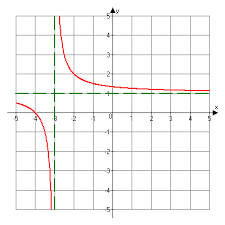
What are the asymptotes?
a)
x = -3        y = 1  
b)
x = 3         y = 1
c)
x = -3        y = -1
d)
x = 3         y = -1
94.

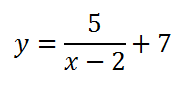
Which is the range of the following?

a)

(−∞, -2) and (-2, +∞)

b)

(−∞, 7) and (7, +∞)

c)

(−∞, -7) and (-7, +∞)

d)

(−∞, 2) and (2, +∞)

95.
Solve the inequality.
2x3+3x2-17x-30<0
a)
(-2.5,-2)U(3,∞)
b)
(-∞,-2.5]U[-2,3]
c)
(-∞,-2.5)U(-2,3)
d)
[-2.5,-2]U[3,∞)
96.
Solve the inequality.
(x-2)(x+3)2(x2+4)≥0
a)
[2,∞)
b)
{-3},[2,∞)
c)
(2,∞)
d)
{ }
97.
Decide if (x-3) is a factor of 3x3+10x2-x-12
a)
Yes, it is a factor
b)
No, it is not a factor
98.
Give the equation of the 4th degree polynomial with zeros: 1 with multiplicity 2 and i. 
a)
x2 - 4x + 4
b)
x3 - 4x2 + 4x +ix2 -4ix + 4i
c)
x4 - 4x3 + 5x2-4x + 4
d)
x4 - 4x3 + 5x2-4x + 4i
99.

#1

(x-3)(x+4)>0

a)

(-∞, -4)U(-4, ∞)

b)

(-4, 3)

c)

(-∞, -4]U[3,∞)

d)

(-∞, -4) U (3, ∞)

100.

#2

(x - 1)(x - 2)(x - 4) ≤0

a)

(-∞, 1)U(2, 4)

b)

(-∞, 1]U[2, 4]

c)

[1, 2]U[4, ∞)

d)

(-1, 4)

101.

#3

(x - 4)(x-2)2(x - 3)2 < 0

a)

(-∞, 2)U(2, 3)U(3, 4)

b)

(-∞, 2]U[2, 3]U[3, 4]

c)

(-∞, 4)

d)

(4, ∞)

102.

#4

x2 - 2x - 15 ≤ 0

a)

(-∞, -3) U (5, ∞)

b)

(-3, 5)

c)

[-3, 5]

d)

(-∞, -3]U[5, ∞)

103.

#5

2x2 - x - 3 ≥ 0

a)

(-∞, ∞)

b)

(-∞, 3/2]

c)

(-∞, -1]U[3/2, ∞)

d)

[-1, 3/2]

104.

#6

x4 - 3x2 - 10 > 0

a)

(-∞, -√5) U (√5, ∞)

b)

(-∞, -√5] U [√5, ∞)

c)

( -√5,√5)

d)

(-∞, -2) U (√5, ∞)

105.

#7

x3 + 2x2 - 4x - 8 > 0 (root x = 2)

a)

(-2, 2) U (2, ∞)

b)

No Solution

c)

[2, ∞)

d)

(2, ∞)