
 Worksheets
Cell Theory, Cell Organelles, Cell Transport Quiz
Total questions: 25
Worksheet time: 17mins
Name
Class
Date
1.
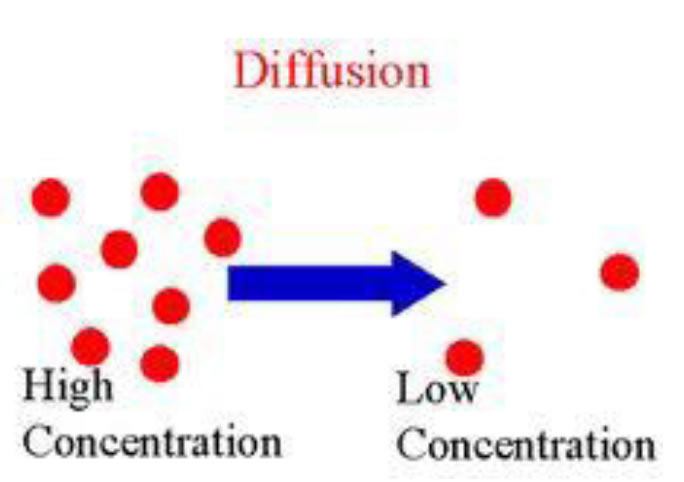
Movement of particles from high to low concentration.
a)
Passive Transport
b)
Active Transport
2.
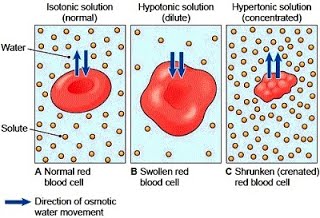
a)
Passive Transport
b)
Active Transport
3.
Osmosis is a form of ______________.
a)
Passive Transport
b)
Active Transport
4.
Endocytosis
a)
Passive Transport
b)
Active Transport
5.
Exocytosis
a)
Passive Transport
b)
Active Transport
6.
Low to High
a)
Passive Transport
b)
Active Transport
7.
The diffusion of WATER across a semi-permeable membrane is
a)
osmosis
b)
diffusion
c)
endocytosis
d)
exocytosis
8.

The cell below is in a _________ solution.
a)
Hypotonic
b)
Hypertonic
c)
Isotonic
9.

The cell below is in a _____________ solution.
a)
Hypertonic
b)
Hypotonic
c)
Isotonic
10.

Which of the following scientists contributed to the cell theory?
a)
Rudolf Virchow, Robert Hooke, Anton van Leuwenhoek
b)
Matthais Schleiden, Theodor Schwann, Rudolf Virchow
c)
Robert Hooke, Theodor Schwann, Anton von Leuwenhoek
d)
Theodor Schwann, Matthais Schleiden, Robert HookeOption 4 (optional)
11.
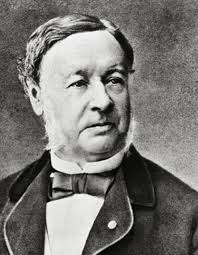
Which of the following scientists concluded that all animals are made of cells?
a)
Rudolf
Virchow
b)
Matthais
Schleiden
c)
Robert
Hooke
d)
Theodor
Schwann
12.

Which of the following scientists was the first to observe pond water and found "wee beasties."
a)
Anton van Leuwenhoek
b)
Matthais Schleiden
c)
Robert Hooke
d)
Theodor Schwann
13.

The invention of the microscope made it possible for people to discover and learn about
a)
Plants
b)
Skin
c)
Animals
d)
Cells
14.

What is one way in which all living things on Earth are alike?
a)
All living things have hair.
b)
All living things are made of cells and come from other cells.
c)
The cells of all living things have chloroplast.
d)
All living things can move.
15.
The ___ is the basic unit of sturucture and function of organisms
a)
atom
b)
cell
c)
matter
d)
all other answers are correct
16.
Who looked at cork and named the cell?
a)
Robert Hooke
b)
Van Leeuwenhoek
c)
Robert Brown
d)
Francesco Redi
17.
What can only be found in plant cells?
a)
Cell membrane
b)
Vacuole
c)
Chloroplast
d)
Mitochondrion
18.

a)
produces ribosomes
b)
contains genetic information
c)
stores food, water, wastes and other materials
19.

a)
found only in plants
b)
contains chlorophyll
c)
produces energy
20.

a)
makes ribosomes
b)
storage for water
c)
breaks down worn out cell parts
21.

a)
contains DNA
b)
digests worn out cell parts
c)
produces energy
22.

a)
where ribosomes are made
b)
packages proteins from ER and distributes them
c)
assembles amino acids into proteins
23.

a)
produces energy a cell needs
b)
where ribosomes are made
c)
packages amino acids and moves them out of the cell
24.

a)
control center of the cell
b)
captures energy from sunlight
c)
found in plant and animal cells
25.

a)
controls what enters and exits the cell
b)
contains chlorophyll
c)
thick and rigid
100 %

