
 Worksheets
LFC-U2 Test Review-Physical Systems
Total questions: 61
Worksheet time: 47mins
Name
Class
Date
1.
What is the cause of rising surface temperatures of the Pacific Ocean, drought in the western United States, and flooding on the Pacific coast of South America?
a)
the Gulf Stream
b)
the Jet Stream
c)
La Nina
d)
El Nino
2.

What is this landform?
a)
lake
b)
peninsula
c)
hills
d)
mountain
3.

What is this landform?
a)
mountain
b)
canyon
c)
coast
d)
cliff
4.
Flood water pounding against a canyon wall and wearing it down
a)
Weathering
b)
Erosion
c)
Deposition
5.

a)
bay
b)
isthmus
c)
cape
d)
glacier
6.

narrow stretch of water joining two larger bodies of water
a)
strait
b)
isthmus
c)
tributary
d)
delta
7.

Polar Bears hunt seals on ice:
a)
Biosphere-Hydrosphere
b)
Biosphere-Atmosphere
c)
Hydrosphere-Atmosphere
d)
Hydrosphere-Geosphere
8.
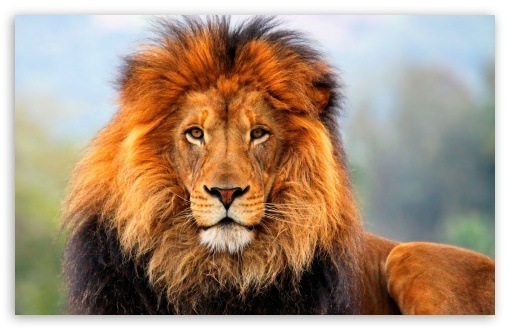
This sphere is composed of all the living things
a)
Hydrosphere
b)
Biosphere
c)
Atmosphere
d)
Geosphere
9.
Wind is part of what sphere of Earth?
a)
Windosphere
b)
Atmosphere
c)
Hydrosphere
d)
Airosphere
10.
Which layer of Earth is made up of tectonic plates?
a)
outer core
b)
inner core
c)
asthenosphere
d)
lithosphere
11.

(_______________)- Water (oceans, lakes, rivers, groundwater, glaciers)
a)
Geosphere
b)
Hydrosphere
c)
Atmosphere
d)
Biosphere
12.

(_______________)- Air (oxygen, nitrogen, water vapor, zone, wind)
a)
Geosphere
b)
Hydrosphere
c)
Atmosphere
d)
Biosphere
13.

(_______________)- Life (plants, animals, insects, humans)
a)
Geosphere
b)
Hydrosphere
c)
Atmosphere
d)
Biosphere
14.
The _________ are windless zones near the equator
a)
doldrums
b)
prevailing westerlies
c)
polar easterlies
d)
trade winds
15.
The type of plate boundary where two plates come together is a .....
a)
Convergent Boundary
b)
Divergent Boundary
c)
Transform Boundary
d)
Plate Boundary
16.
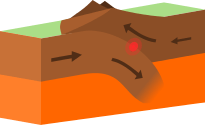
What type of plate boundary is this?
a)
Plate
b)
Divergent
c)
Convergent
d)
Transform
17.
A divergent boundary occurs when plates ....
a)
Pull apart
b)
Come together
c)
Slide past each other
d)
subducting
18.
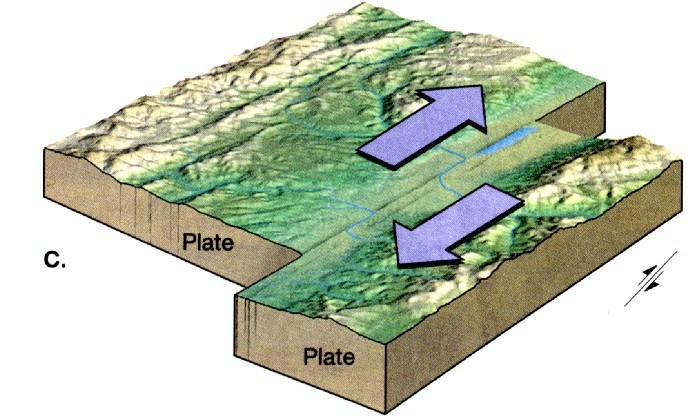
What type of plate boundary is this?
a)
Transform
b)
Convergent
c)
Divergent
d)
Plate
19.
The theory that says Earth's continents once made up an ancient supercontinent, and have been drifting apart ever since, is called the theory of...
a)
Pangea
b)
Plate Tectonics
c)
Natural Selection
d)
Gravity
20.
Oceanic Trenches are formed by _______ plate boundaries
a)
Convergent
b)
Transform
c)
Plate
d)
Divergent
21.
A fault is formed by the movement of a __________ plate boundary
a)
Transform
b)
Convergent
c)
Divergent
22.
Which of the following is NOT a factor that affects weather?
a)
Precipitation
b)
Longitude
c)
Wind
d)
Temperature
23.
What affects climate?
a)
The distance from the equator.
b)
The distance from the planets.
c)
The distance from the moon.
24.
The biggest factor in determining climate is?
a)
elevation
b)
an ocean
c)
latitude
d)
mountain
25.
Which sentence best describes the relationship between elevation and air temperatures?
a)
LOWER elevation = COLDER temperatures
b)
HIGHER elevation = COLDER temperatures
c)
HIGHER elevations = WARMER temperatures
d)
There is no relationship
26.
Which BEST describes why latitudes closest to the equator have warmer climates?
a)
they are at lower elevations
b)
they receive more solar energy
c)
they are nearer to ocean currents
d)
they get more winds that carry energy in the form of heat
27.
Which climate zone do we live in?
a)
Temperate
b)
Tropical
c)
Polar
d)
Savannas
28.
A temperate climate is?
a)
consistently cool
b)
consistently warm
c)
consistently moderate
d)
warm and cool
29.
The temperature of a tropical climate is?
a)
consistently warm
b)
consistently cool
c)
consistently moderate
d)
warm and cool
30.
Due to the orographic effect, the leeward side of mountains
a)
receives heavy rain or snowfall because of prevailing winds.
b)
dry because of the rain shadow.
c)
dry because of prevailing winds.
d)
force clouds to rise, cool, and drop all of their moisture.
31.
the climate factor that deals with the relative location to water
a)
front
b)
El Niño
c)
pressure cells
d)
continentality
32.
either of two times of the year when the sun’s rays shine directly overhead at noon at the furthest points north or south of the equator; either the shortest or longest day of the year
a)
solstice
b)
equinox
c)
eclipse
d)
Tropic of Cancer
33.
each of the two days in a year on which day and night are equal in length
a)
solstice
b)
equinox
c)
eclipse
d)
northern lights
34.
being in or facing the direction FROM which the wind is blowing
a)
windward
b)
leeward
c)
rain shadow
d)
prevailing winds
35.

What causes the seasons to change?
a)
The warming and cooling of Earth's core.
b)
The distance from the sun.
c)
Earth's tilt in relation to the sun.
d)
Earth's rotation on its axis.
36.

What season is it in the Southern Hemisphere when it is fall in the Northern Hemisphere?
a)
winter
b)
spring
c)
summer
d)
fall
37.

Why does the area around the equator stay the same temperature all year?
a)
The equator rotates slower than the poles.
b)
The equator remains the same distance from the sun.
c)
The equator always receives direct sunlight.
d)
The equator has 18 hour days.
38.

Which season is taking place in the Southern Hemisphere in Position 1?
a)
Winter
b)
Spring
c)
Summer
d)
Fall
39.
What is Earth's annual motion around the sun called?
a)
Rotation
b)
Revolution
40.
How long does Earth take to make a complete rotation?
a)
365 days
b)
24 hours
41.
Which seasons have an equal amount of daylight and darkness?
a)
Spring and Fall
b)
Winter and Summer
c)
Winter and Spring
d)
Summer and Fall
42.
Which climate zone experiences 4 seasons?
a)
Polar
b)
Temperate
c)
Tropical
d)
None
43.
The Northern Hemisphere gets __________ sunlight in the winter, which leads to _________ temperatures.
a)
less direct, hotter
b)
less direct, colder
c)
more direct, hotter
d)
more direct, colder
44.
Which biome is characterized by low temperatures and low amounts of rainfall?
a)
tundra
b)
desert
c)
temperate deciduous forest
d)
tropical rain forest
45.
Which biome covers most of the land mass near the Earth's equator?
a)
tundra
b)
desert
c)
grassland
d)
tropical rainforest
46.
Which type of trees is found in a temperate forest?
a)
deciduous
b)
evergreen
c)
ginko
d)
palm
47.
Which major biome is home to cacti, mesquite, white thorn, pack rats, small reptiles, and coyotes?
a)
desert
b)
taiga
c)
tundra
d)
grassland
48.
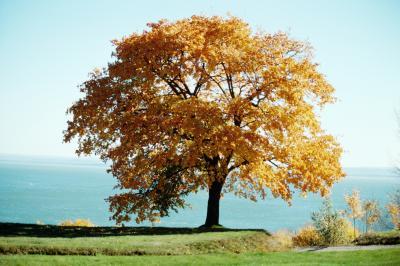
The biome known for trees with broad leaves that fall off the trees in the winter.
a)
Coniferous Forests
b)
Deciduous Forests
c)
Deserts
d)
Tropical Rain Forests
49.
What are the key features of the Tundra?
a)
cold winter, thin acidic soil, evergreen trees
b)
treeless, permafrost, cold dark winters
c)
ong cool summers, short dark winters, migrating animals
d)
many evergreen trees, short moist summers, long snowy winters
50.
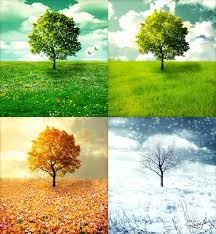
Which biome has 4 seasons?
a)
Taiga
b)
Tundra
c)
Grasslands
d)
Temperate Forest
51.
This area contains over 70 percent of volcanoes and 90 percent of earthquakes in the world.
a)
North American plate
b)
ring of fire
c)
fiery rings
d)
African plate
52.
Critical for the formation of a hurricane?
a)
low latitudes
b)
80 degrees or warmer water
c)
mixture of air and water
d)
All of the above
53.
The process by which water, ice, wind or gravity moves weathered rock and soil from one place to another.
a)
weathering
b)
erosion
c)
deposition
d)
dumptruck
54.
The natural chemical or physical processes that breaks down rock on Earth's surface.
a)
weathering
b)
erosion
c)
deposition
d)
jackhammering
55.
Deltas forming at the mouths of rivers
a)
Weathering
b)
Erosion
c)
Deposition
56.

Which stage does the #3 show in the diagram?
a)
condensation
b)
evaporation
c)
precipitation
d)
run off
57.
Which biome has permanently frozen ground called permafrost?
a)
Tundra
b)
Taiga
c)
Temperate Forest
58.
Deposited material at the end of a river is called?
a)
landform
b)
delta
c)
canyon
59.
Warm ocean currents generally come from
a)
The Arctic Circle
b)
The Antarctic Circle
c)
The Equator
d)
High Latitude Regions
60.
How do warm-water currents affect the coastal areas along which they flow?
a)
Cool the coast
b)
Warm the coast
c)
Cause snow to fall
d)
Cause higher tides
61.
Why would places near the north with the same latitude have very different climates?
a)
One place is near a warm ocean current.
b)
It is not possible
c)
Because of La Nina
d)
Because of El Nino
100 %

