wayground logo

Free Printable Worksheets

NEW

Font size

S
M
L
XL
Worksheets

Biomolecules

Total questions: 51

Worksheet time: 13hrs 45mins

Name
Class
Date
1.
Enzymes are considered to be 
a)
Lipids
b)
Carbohydrate
c)
Protein
d)
Nucleic Acid
2.
What is the purpose  of an enzyme?
a)
give permission for the reaction
b)
raise activation energy
c)
speed up reactions
d)
control how many reactions occur
3.
Where do substrates bind on an enzyme?
a)
voltage-gated channels
b)
surface receptor
c)
calcium channels
d)
active site
4.
What is a substance called if it speeds up a chemical reaction?
a)
reusable
b)
catalyst
c)
specific
d)
fragile
5.
What 3 letters do enzymes typically end in?
a)
-ose
b)
-ase
c)
-ese
d)
-tic
6.
The graph shows how enzymes affect reactions in cells. Which statement best summarizes the information shown in the graph?
a)
Enzymes increase the energy of the reactants.
b)
Enzymes decrease the energy level of the products.
c)
Enzyme decrease the activation energy of the reaction.
d)
Enzymes reverse the direction of the reaction.
7.
Which of the following conclusions can be drawn from this graph?
a)
The optimum pH of the enzyme is 6.6.
b)
The optimum pH of the enzyme is 5.8
c)
The enzyme’s activity increases as pH increases 5.0 to 9.0
d)
The enzyme’s activity is greater around pH of 8.0 .
8.
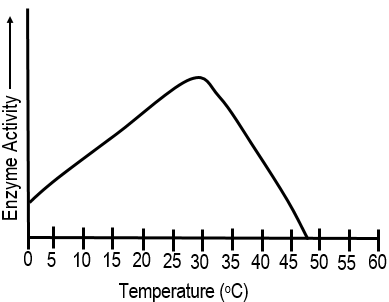
Based on the graph, what is the optimal temperature for this enzyme? 
a)
15oC
b)
40oC
c)
30oC
d)
35oC
9.

What causes your fruit to ripen more slowly in the fridge?

a)

tomatoes need sunlight to ripen

b)

humidity accelerates the ripening process

c)

low temperatures reduce the action of enzymes

d)

enzymes produced by bacteria keep tomatoes from ripening

10.
What percentage of your daily value of sodium does this product provide?
a)
12%
b)
3%   
c)
11%
d)
15%
11.
How many calories would you consume if you ate the entire product? 
a)
50
b)
200
c)
990
d)
110
12.
Which nutrient contributes the most calories to this product?
a)
Carbohydrates
b)
Fats
c)
Proteins  
13.
What does the word organic mean?
a)
has nitrogen
b)
has sulfur
c)
has carbon
d)
has oxygen
14.
Which of the following is NOT a biomolecule?
a)
Water
b)
Nucleic Acid
c)
Protein
d)
Lipid
15.
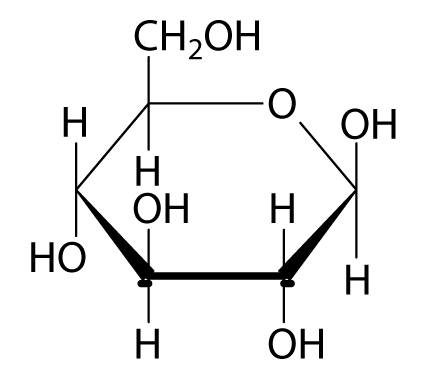
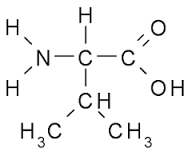
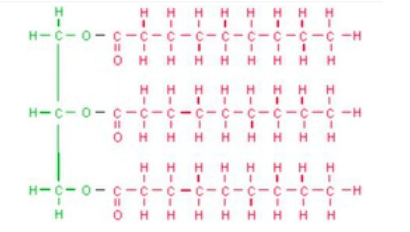
Identify the biomolecule
a)
Carbohydrate
b)
Lipid
c)
Protein
d)
Nucleic Acid
16.
Identify the biomolecule
a)
Lipid
b)
Protein
c)
Carbohydrate
d)
Nucleic Acid
17.
Which biomolecule is the key source of energy?
a)
Lipid
b)
Protein
c)
Carbohydrate
d)
Nucleic Acid
18.
A monomer is ...
a)
a single atom
b)
a building block for polymers
c)
a single element
d)
is an inorganic molecule
19.
What is the monomer for a protein?
a)
Monosaccharide
b)
Triglyceride
c)
Amino Acid
d)
Nucleotide
20.
The more bonds a molecule has, the more....
a)
water is stored
b)
force is stored
c)
energy is stored
d)
oxygen is stored
21.
The process that builds molecules by removing water to bind them together is
a)
Hydrolysis
b)
Protein Synthesis
c)
Dehydration Synthesis
d)
Lysis
22.
What is the functions of lipids?
a)
Quick source of energy
b)
Builds muscles, skin, enzymes
c)
Stores genetic information
d)
Stores energy, insulation, protection
23.
Which of the following is an example of a nucleic acid?
a)
Glucose
b)
Phospholipid
c)
Enzymes
d)
DNA
24.
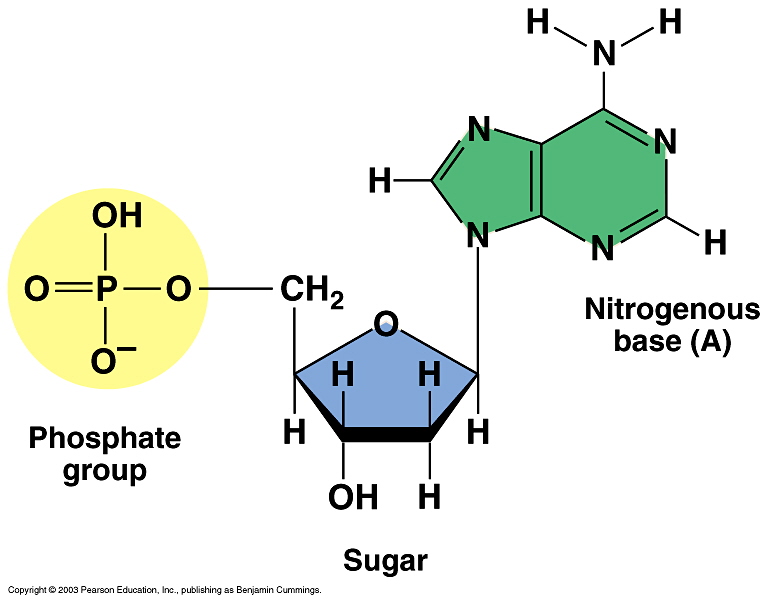
Identify the biomolecule
a)
monosaccharide
b)
disaccharide
c)
polysaccharide
d)
glycogen
25.
Identify the biomolecule
a)
Protein
b)
Lipid
c)
Carbohydrate
d)
Nucleic Acid
26.
What is the function of a nucleic acid?
a)
Stores genetic information
b)
Stores energy
c)
Quick source of energy
d)
Builds structures
27.
The chemical reaction that breaks down a molecule by adding water is
a)
Dehydration Synthesis
b)
Hydrophobia
c)
Hydrolysis
d)
Dehydration
28.
Lipids are made of
a)
monosaccharides
b)
amino acids
c)
glycerol and 3 fatty acids
d)
nucleotides
29.
Nucleotides are monomer for
a)
Nucleic Acids
b)
Proteins
c)
Carbohydrates
d)
Lipids
30.
Which examples are a sources of energy?
a)
Starch, cellulose, glycogen
b)
Valine, Histidine, Cysteine
c)
DNA, RNA
d)
Unsaturated and Saturated Fats
31.
Which biomolecule is a main source of quick energy?
a)
Nucleic Acid
b)
Protein
c)
Lipid
d)
Carbohydrate
32.
What is the function of a nucleic acid?
a)
Stores genetic information
b)
Stores energy
c)
Quick source of energy
d)
Builds structures
33.
Carbon, Hydrogen, Oxygen and Nitrogen are elements in what biomolecule?
a)
Carbohydrate
b)
Lipid
c)
Protein
d)
Nucleic acid
34.
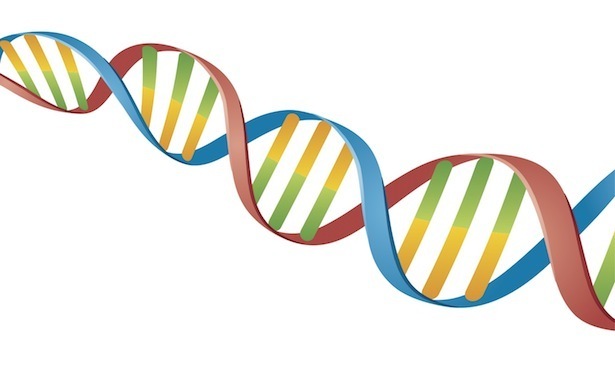
Which biomolecule is this a picture of?
a)
Protein
b)
Nucleic Acid
c)
Lipid
d)
Carbohydrate
35.
What elements are common to all 4 biomolecules?
a)
Carbon, hydrogen, nitrogen
b)
Carbon, Nitrogen, Phosphorus
c)
Carbon, Hydrogen, Oxygen
d)
Carbon, Hydrogen, Phosphorus
36.
A monomer is ...
a)
a single atom
b)
a building block for polymers
c)
a single element
d)
is an inorganic molecule
37.
Steroids are a type of ________.
a)
Nucleic Acid
b)
Lipid
c)
Cholesterol
d)
Protein
38.
 Makes up the plant's cell wall and is fiber in our diets
a)
Starch
b)
Glycogen 
c)
Cellulose
d)
Chitin
39.
Carbohydrates are made up of 
a)
CHO
b)
CHON
c)
CHONS
d)
CHONPS
40.
What suffix is used in the names of most carbohydrates?
a)
-ase
b)
-nic
c)
-ose
d)
-yme
41.
Which is not a chemical element needed to build sugars?
a)
Carbon
b)
Oxygen
c)
Nitrogen
d)
Hydrogen
42.
When something is 'water fearing' it is....
a)
Hydrophobic
b)
Hydrophilic 
c)
Hydroelectric 
d)
Hydrochloric
43.
When something is 'water loving' it is.....
a)
Hydrophobic
b)
Hydrophilic 
c)
Hydroelectric 
d)
Hydroloric
44.
Monosaccharides are monomers of
a)
Carbohydrates
b)
Lipids
c)
Proteins
d)
Nucleic Acids
45.
Is found in the cell membrane as a bilayer. 
a)
lipids
b)
protein
c)
nucleic acid
d)
carbohydrate
46.

Fireflies emit a light produced from luciferase enzymes. Luciferase binds to a chemical called luciferin. The luciferase enzyme speeds up a chemical reaction to release light. Which describes how the luciferase enzyme speeds up the chemical reaction?

a)

luciferase increases the amount of time the light is visble

b)

luciferase decreases the amount of energy required for the reaction to start

c)

luciferase increases the number of sites on luciferin that must bind to oxygen

d)

luciferase decreases the temperature of the environment inside the body of the firefly

47.

What bonds amino acids together to form proteins?

a)

peptide bonds

b)

polysaccharide bonds

c)

lipid bonds

d)

hydrogen bonds

48.

What is the energy molecule for all living cells?

a)

ADP

b)

ATP

c)

Protein

d)

Sugars

49.

How does ATP provide energy for the cell?

a)

The bond between the first and second phosphate is broken to release energy.

b)

The bond between the adenine and the sugar is broken to release energy.

c)

The bond between the sugar and phosphates are broken and release energy.

d)

The bond between the second and third phosphate are broken to release energy.

50.

What happens if Enzyme 3 is denatured?

a)

galactose 1 will increase

b)

glucose 1 will increase

c)

galactose will decrease

d)

galactose 1 will decrease

51.

What happens if Enzyme 2 is denatured?

a)

lactose increases

b)

galactose increases

c)

galactose 1 increases

d)

glucose 1 increases