wayground logo

Free Printable Worksheets

NEW

Font size

S
M
L
XL
Worksheets

Ancient Civilization Review

Total questions: 56

Worksheet time: 9mins
Name
Class
Date
1.
Who became the first Emperor of China by uniting warring kingdoms?
a)
Wudi
b)
Shi Huangdi
c)
Confucius
d)
Han
2.
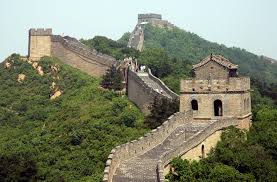
What is the purpose of the structure pictured here?
a)
It is a temple
b)
To protect China's northern border
c)
To protect China's Southern border
d)
To protect China from India 
3.
What is the name for the system of rise and fall of Chinese ruling families?
a)
Dynastic Cycle
b)
Mandate of Heaven
c)
Dynastic Change
d)
Mandate of Dynasties
4.
____ is fine, windblown yellow soil
a)
Loess
b)
Clan
c)
Oracle Bone
d)
Yangzi
5.
How did the Silk Road effect China?
a)
China became wealthy
b)
China ended farmed
c)
China started a war
d)
China stopped trading
6.
Chinese farmers built this with stone and sand; pilled rubble in order to keep out invaders
a)
rudder
b)
Great Wall
c)
Huang He
d)
ideograph
7.
A symbol in a writing system based on pictures
a)
ideograph
b)
pictograph
c)
bureaucracy
d)
currency
8.
Trade route that stretched from western China to southern Asia
a)
filial piety
b)
Silk Road
c)
Great Wall
d)
Anyang
9.

Which of the following were traded on the Silk Road?

a)

Spices

b)

Religion

c)

Fabric

d)

All of the above

10.
Early civilizations like Mesopotamia, Egypt, India and China have one thing in common.....
a)
each civilization flourished despite harsh desert conditions
b)
we know little about them due to catastrophic natural disasters
c)
they were founded along rivers and fertile valleys
d)
their coastal locations allowed them to trade with the Roman Empire
11.
What is the central idea of Daoism
a)
Duty to community
b)
Living in harmony with nature
c)
Enforcing laws with harsh punishments
d)
Humans are naturally evil
12.
Confucius a very famous ____________, in Ancient China
a)
emperor
b)
philosopher
c)
army leader
d)
god
13.
Line of rulers from the same family
a)
Legalism
b)
long Chinese line
c)
filial piety
d)
dynasty
14.
What is contribution from the Ancient Chinese?
a)
wheelbarrow
b)
fireworks
c)
gunpowder
d)
All of them
15.
What is a dynasty?
a)
a collection of queens
b)
a collection of kingdoms
c)
series of rulers from different families
d)
series of rulers from the same family
16.
The worship of many gods.
a)
monotheism
b)
irrigation
c)
polytheism
d)
epic
17.
Pharaoh means
a)
great king
b)
great house
c)
great family
d)
great friend
18.
Who would write and record information?
a)
slaves
b)
scribes
c)
farmers
d)
craftspeople
19.
Egyptian writing system
a)
papyrus
b)
alaphabet
c)
cuneiform
d)
heiroglyphics
20.
Where is the most fertile soil in Egypt?
a)
Nile Delta
b)
desert
c)
far south
d)
cataracts
21.
What is papyrus?
a)
mud used in building
b)
plant from which paper is made
c)
rock used to make tools
d)
animal skin
22.
Rich soil carried and mixed with water is 
a)
pebbles
b)
silt
c)
dust
d)
clouds
23.
Why was the Rosetta Stone so important?
a)
It helped archaeologists decipher Egyptian writing?
b)
It gave clues about building.
c)
It was a book of the dead.
d)
It told how pharaoh's rules.
24.
Who is at the top of the Egyptian social hierarchy?
a)
slaves
b)
pharaoh
c)
scribe
d)
merchant
25.
Which of the following locations was most favorable for growing crops and raising livestock?
a)
desert
b)
peninsula
c)
river valley
d)
archipelago
26.
What is the Fertile Crescent?
a)
a large arch of rich farmland in Mesopotamia 
b)
a way of dividing society by rank and class
c)
a political unit consisting of a city and surrounding countryside
d)
a way of accomplishing a task by assigning a job to an individual 
27.

A means of supplying land with water.

a)

Agriculture

b)

Irrigation

c)

Climate

d)

Resource

28.

The average weather conditions at a particular place.

a)

Agriculture

b)

Trade

c)

Civilization

d)

Climate

29.
Which of the following best describes Mesopotamian religion?
a)
polytheism
b)
irrigation
c)
monotheism
d)
domestication
30.

A large territory in which several groups of people are ruled by a single leader or government.

a)

Civilization

b)

Dynasty

c)

Empire

d)

Culture

31.

A person who makes money by selling goods.

a)

Scribe

b)

Merchant

c)

Myth

d)

Ziggurat

32.

To tame a wild animal to be useful to humans.

a)

Agriculure

b)

Capability

c)

Domesticate

d)

Migrate

33.

A group in society that is ranked by factors such as wealth, property and rights.

a)

Social Class

b)

Civilization

c)

Dynasty

d)

NNomad

34.
What are the earliest known written collection of laws called?
a)
Mesopotamian Laws
b)
Code of Babylon
c)
Hammurabi's Code
d)
Sumerian Code of Law
35.

A person who writes.

a)

Merchant

b)

Scribe

c)

Empire

d)

Ziggurat

36.

A family or group that rules for several generations.

a)

Empire

b)

Civilization

c)

Dynasty

d)

Social Class

37.
What was a long- lasting achievement of the Phoenicians?
a)
alphabet
b)
ziggurat
c)
pictographs
d)
architecture
38.

A society marked by developed arts, sciences, government and social structure.

a)

Empire

b)

Ziggurat

c)

Culture

d)

Civilization

39.

The business of farming; growing crops and raising animals.

a)

agriculture

b)

irrigation

c)

resource

d)

trade

40.
What is a political unit consisting of an urban area and the surrounding rural countryside called?
a)
city-state
b)
stylus
c)
ziggurat
d)
empire
41.
"the land between the rivers"
a)
Mesopotamia
b)
Sumer
c)
Fertile Crescent
d)
Hanging Gardens of Babylon
42.
this refers to having too much food or other resources
a)
surplus
b)
trade
c)
barter
d)
drought
43.
What is a ziggurat?
a)
a Jewish house of worship
b)
a pyramid-shaped tower found in Sumerian cities 
c)
a wheeled, horse-drawn battle car
d)
the Sumerian writing system 
44.
the process of buying, selling, or exchanging goods or services
a)
surplus
b)
trade
c)
barter
d)
drought
45.
The Nile River flows through two important regions in Egypt called
a)
Mesopotamia
b)
Upper and Lower Egypt
c)
Eastern and Western Egypt
d)
Nubia and Cairo
46.
Which of the following beliefs was  central to Egyptian religion?
a)
the afterlife
b)
the pyramids
c)
the pharaohs
d)
the heavens
47.
Describe the burial practices of Egyptians?
a)
They used a funeral pyre for the dead.
b)
They carried the dead to a nearby country.
c)
They preserved bodies as mummies.
d)
They were buried in the river.
48.
Why were tombs filled with art, jewelry, etc.....?
a)
Tombs were museums.
b)
Tombs were private storage for the pharaoh.
c)
Tombs were the safest place in the kingdom.
d)
They believed the dead enjoyed their materials in the afterlife.
49.
Pyramids are 
a)
warehouses to store food surplus
b)
temples where people are allowed to come and pray
c)
tombs with 2 rectangle-shaped sides
d)
tombs with 4 triangle-shaped sides that meet in a point at the top
50.
Who would write and record information?
a)
slaves
b)
scribes
c)
farmers
d)
craftspeople
51.
Egyptian writing system
a)
papyrus
b)
alaphabet
c)
cuneiform
d)
heiroglyphics
52.
Which way did the Nile flow?
a)
North to South
b)
South to North
c)
East to West
d)
West to East
53.
Steep river rapids, almost impossible to sail by boat
a)
delta
b)
canal
c)
dam
d)
cataracts
54.

Ancient Egyptians believed their king was ___________________

a)

a normal person

b)

a representative of the gods

c)

a god

d)

a cat that came back to life

55.
The Nile River is the _____________ river in the world.
a)
widest
b)
shortest
c)
fastest
d)
longest
56.

Why are the social classes of ancient Egypt described by the shape of a pyramid?

a)

Triangle represented the 3 season

b)

Most people at bottom, fewest people at the top

c)

Scientists like pyramids

d)

Pharaohs had pyramids built