wayground logo

Free Printable Worksheets

NEW

Font size

S
M
L
XL
Worksheets

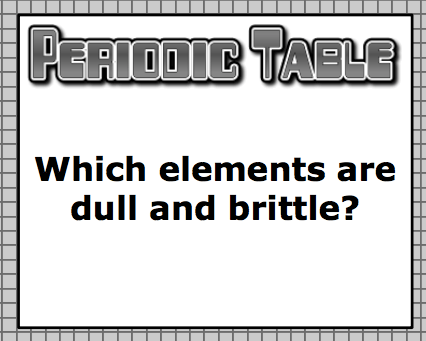
Periodic Table Test Review

Total questions: 60

Worksheet time: 2hrs 6mins
Name
Class
Date
1.
a)

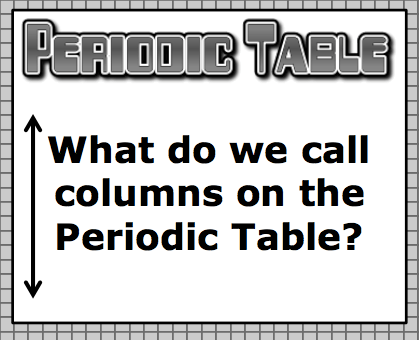
Periods

b)

Groups

2.
a)
Periods
b)
Groups
3.
a)
energy levels
b)
valence electrons
c)
protons
d)
neutrons
4.
a)
energy levels
b)
valence electrons
c)
protons
d)
neutrons
5.
a)
Same group
b)
Same period
6.
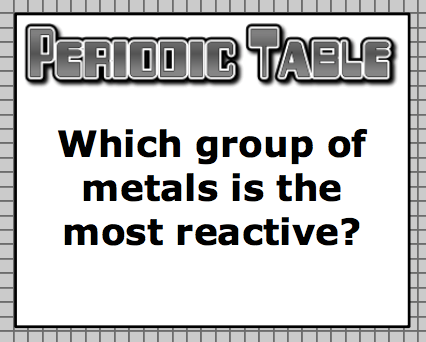
a)
Group 1
b)
Group 17
c)
Group 2
d)
Group 18
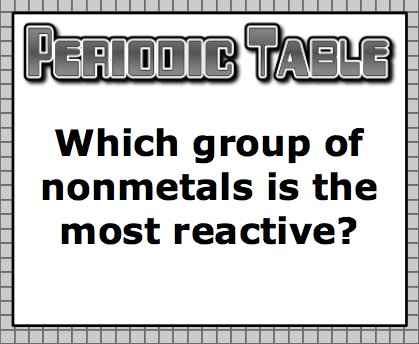
7.
a)
Group 1
b)
Group 17
c)
Group 18
d)
Group 2
8.
a)
Group 1
b)
Group 17
c)
Group 18
d)
Group 2
9.
a)
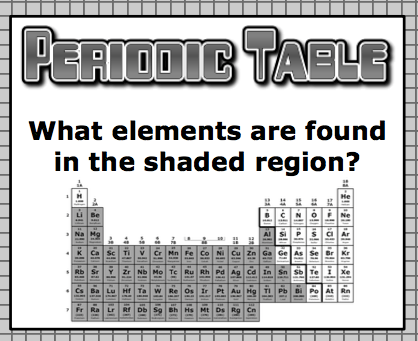
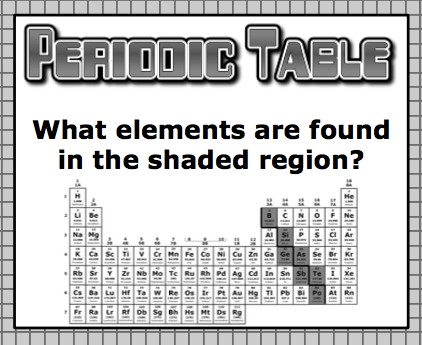
Metals
b)
Nonmetals
c)
Metalloids
10.
a)
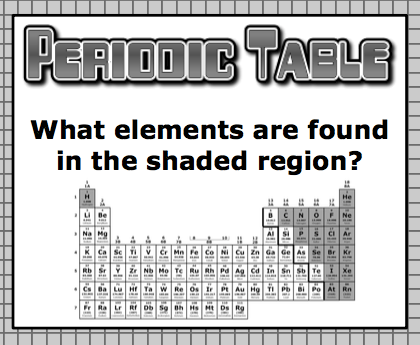
Metals
b)
Nonmetals
c)
Metalloids
11.
a)
Metals
b)
Nonmetals
c)
Metalloids
12.

Element X belongs to group 2? What is the family name of this element

a)

Alkali metal

b)

Alkaline earth metal

c)

Halogens

d)

Noble gases

13.

Element Y belongs to group 1? What is its family name?

a)

Alkaline earth metal

b)

Alkali metal

c)

halogens

d)

Noble gases

14.

Family name for elements that belong to group 18

a)

Noble gases

b)

Alkali metals

c)

Alkaline earth metals

d)

Halogens

15.

family name for elements that belong to group 17

a)

Halogens

b)

Noble gases

c)

Alkali metals

d)

Alkaline earth metals

16.
The periodic table is organized by increasing
a)
atomic number
b)
atomic mass
c)
neutrons
d)
electrons
17.
There are more _______ on the periodic table
a)
metals
b)
nonmetals
c)
metalloids
18.
This line separates metals from nonmetals
a)
Family 2
b)
zigzag line
c)
Period 2
19.
There are ___ families on the periodic table
a)
16
b)
15
c)
17
d)
18
20.
There are _____ periods
a)
1
b)
5
c)
7
d)
9
21.
The number at the bottom of each square on the periodic table is the ...
a)
atomic number
b)
atomic mass
c)
chemical symbol
d)
element name
22.
a)
2
b)
8
c)
3
d)
13
23.
Which particle identifies/names an atom?
a)
Neutron
b)
electron
c)
Proton
d)
Nucleus
24.
The noble gases have how many valence electrons?
a)
1
b)
2
c)
7
d)
8
25.

The Alkali Metals have how many valence electrons?

a)

1

b)

2

c)

7

d)

8

26.

What are valence electrons?

a)

electrons on the first shell/ energy level always

b)

nucleus

c)

the outermost shell/energy level

d)

the number of electrons on the outermost shell/energy level

27.
a)
2
b)
3
c)
5
28.

How many electrons does boron have?

a)

3

b)

4

c)

5

d)

6

29.
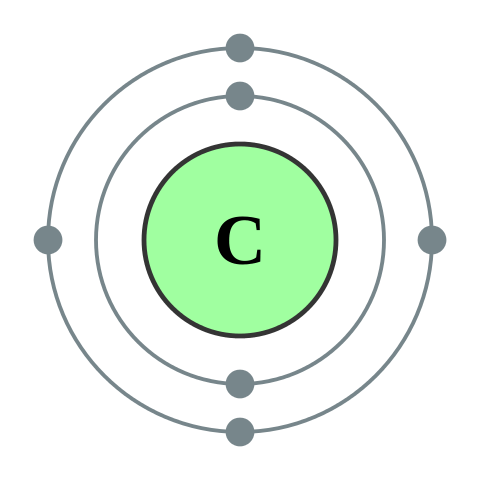
How many valence electrons and energy levels does this atom have?
a)
6 VE and 2 EL
b)
4 VE and 1 EL
c)
4 VE and 2 EL
d)
2 VE and 1 EL
30.
How many valence electrons do atoms in group 16 have?
a)
4
b)
5
c)
6
d)
7
31.
What group number has 2 valence electrons for each atom?
a)
group 1
b)
group 2
c)
group 10
d)
group 12
32.
How many electrons can the 1st electron shell hold?
a)
2
b)
3
c)
8
d)
18
33.
How many electrons can the 2nd electron shell hold?
a)
2
b)
3
c)
8
d)
18
34.
How many electrons can the 3rd electron shell hold?
a)
2
b)
3
c)
8
d)
18
35.
Valence electrons are the...
a)
Innermost electrons
b)
Middle electrons
c)
Outermost electrons
d)
Any electrons
36.

How many valence electrons does carbon have?

a)

4

b)

5

c)

6

d)

7

37.

How many valence electrons does neon have?

a)

7

b)

8

c)

9

d)

10

38.
Valence electrons are the only electrons to...
a)
get destroyed
b)
bond
c)
collide
d)
run away
39.
atoms bond so that they have 8 valence electrons
a)
octet rule
b)
conservation of mass
c)
valence law
d)
catalyst
40.
An atom becomes an ion by...
a)
gaining or losing valence electrons
b)
sharing valence electrons with another atom
c)
gaining or losing protons from its nucleus
d)
merging its nucleus with another atom
41.

Which energy shell do we look to determine the valence electrons?

a)

The closest to nucleus that has electrons

b)

The farthest from the nucleus that has electrons

c)

Always the 3rd shell

d)

All 3 shells

42.

The fact that this car is red represents what kind of property?

a)

Physical

b)

Chemical

43.

Gasoline is flammable, meaning it has the ability to catch fire. This is an example of a

a)

Physical Property

b)

Chemical Property

44.

If an element is a gas at room temperature, it is most likely a

a)

Metalliod

b)

Nonmetal

c)

Metal

d)

Semimetal

45.

What element is the most dense?

a)

iron

b)

sellenium

c)

osmium

d)

uranium

46.
What does malleable mean?
a)
able to be shaped
b)
will break easily
c)
can be used for wire
d)
is shiny
47.
The transition elements are in groups ________.
a)
1-12
b)
3-13
c)
3-12
d)
3-5
48.

How many protons, electrons and neutrons does carbon have?

a)

P=12, E=6, N=6

b)

P=6, E=7, N=7

c)

P=6, E=6, N=6

d)

P=12, E=6, N=7

49.

The octet rule states that...

a)

To become stable, elements will form 8 compounds

b)

To become stable, elements will gain 8 protons

c)

To become stable, elements will bond with 8 other elements in one compound

d)

To become stable, elements will make bonds so they have 8 valence electrons

50.

What are the two most reactive groups on the periodic table?

a)

Boron Group and Transitions Metals

b)

Alkali Metals and Halogens

c)

Noble Gases and Alkaline Earth Metals

d)

Oxygen Group and Carbon Group

51.

In general, density of elements on the periodic table...

a)

Is the highest in the middle of the table

b)

Is highest on the outsides of the table

c)

Increases as you go from left to right

d)

Decreases as you go from left to right

52.

Determine the density of a substance with a mass of 6g and a volume of 3 cm^3

a)

6 g/cm^3

b)

2 g/cm^3

c)

1 g/cm^3

d)

3 g/cm^3

53.

What does an element's row/period tell us?

a)

It's density

b)

It's number of valence electrons

c)

It's number of energy shells

d)

It's reactivity

54.

Density is a __________ property?

a)

Physical

b)

Chemical

55.
If a material can easily be drawn into the shape of a wire, it is ___________.
a)
Ductile
b)
Magnetic
c)
Malleable
d)
Reactive
56.
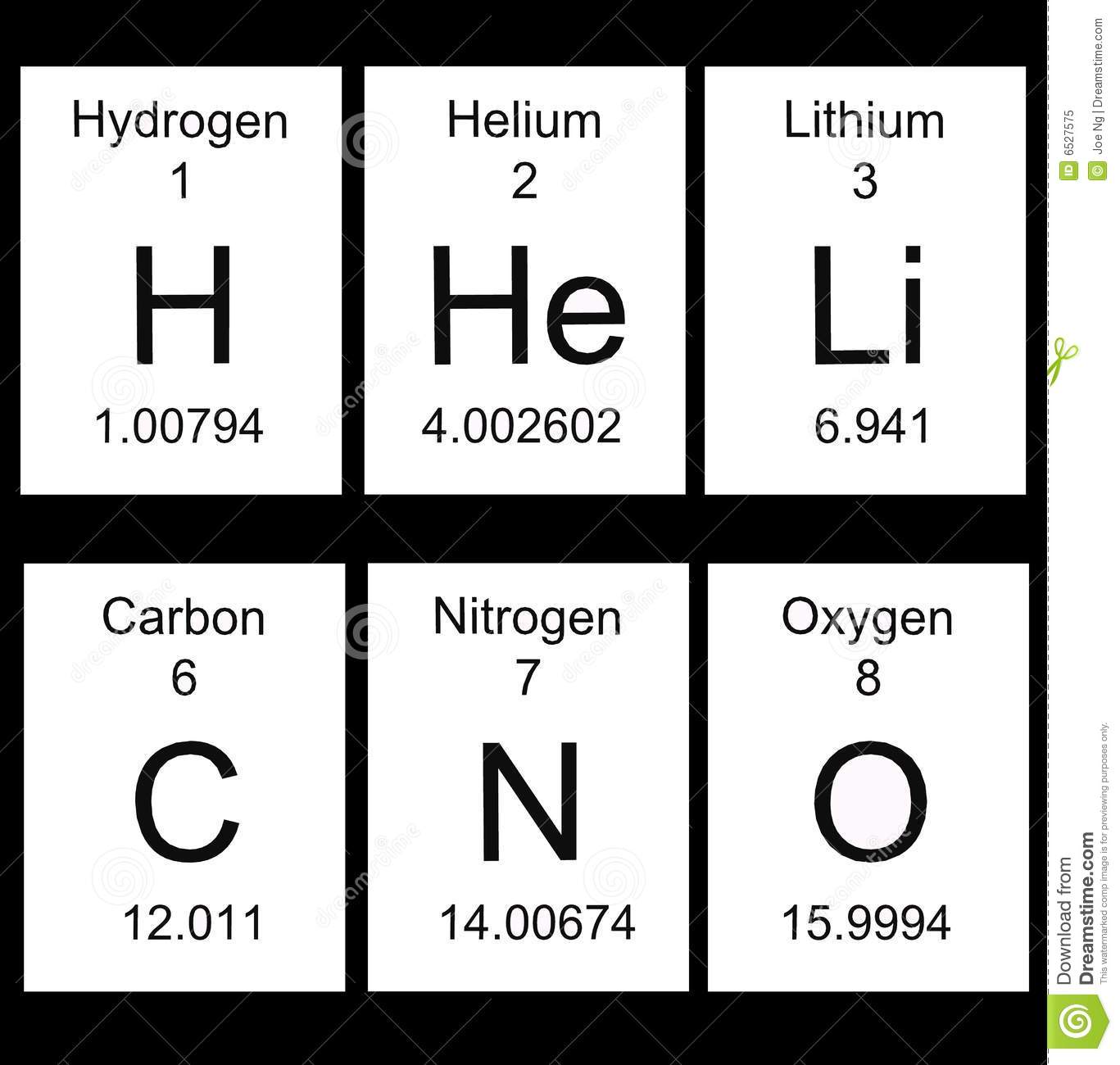
In the picture for Hydrogen, what does the 1.00794 stand for?
a)
chemical symbol
b)
atomic number
c)
atomic mass
d)
number of electrons
57.
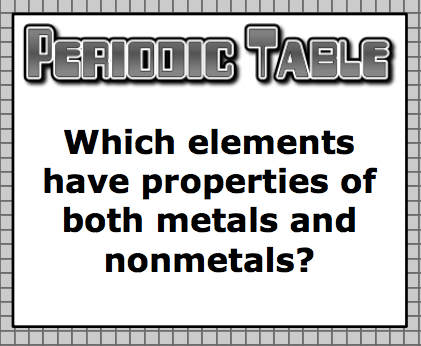
Elements which are considered semiconductors are _____________.
a)
metals
b)
nonmetals
c)
metalloids
d)
nonexistent
58.
a)
Metals
b)
Nonmetals
c)
Metalloids
59.
a)
Metals
b)
Nonmetals
c)
Metalloids
60.
Which group of the periodic table is composed of inert (not reactive) gases?
a)
alkali metals
b)
alkaline earth metals
c)
halogens
d)
noble gases