Wayground logo

Free Printable Worksheets

Font size

S
M
L
XL
Worksheets

Chemistry Part 1

Total questions: 36

Worksheet time: 25mins

Name
Class
Date
1.
Boiling point,melting point, and density are some of an element's
a)
pure properties
b)
physical properties
c)
chemical properties
2.

An element's ability to react with fire

a)
physical property
b)
melting point
c)
chemical property
3.
When two or more elements join together chemically,
a)
a mixture is formed
b)
nothing is formed
c)
a compound is formed
4.
This picture represents which of the following?
a)
Element
b)
Compound
c)
Mixture
5.
This picture represents which of the following?
a)
element
b)
compound
c)
mixture
6.
This picture represents which of the following?
a)
element
b)
compound
c)
mixture
7.
This picture represents which of the following?
a)
element
b)
compound
c)
mixture
8.
What is salad?
a)
element
b)
compound
c)
mixture
9.
Which of the following represents an element?
a)
H2O
b)
H2
c)
NaCl
d)
CaCO3
10.

The smallest particle of matter

a)

element

b)

mixture

c)

compound

d)

atom

e)

molecule

11.

Two or more atoms that are joined together by a chemical bond

a)

atom

b)

molecule

c)

mass

d)

mixture

12.

identify the model

a)

element

b)

compound

c)

mixture of element

d)

mixture of compounds

e)

mixture of elements and compounds

13.

identify the model

a)

element

b)

compound

c)

mixture of elements

d)

mixture of compounds

e)

mixture of elements and compounds

14.

identify the model

a)

diatomic molecule

b)

compound

c)

mixture of elements

d)

mixture of compounds

e)

mixture of elements and compounds

15.

Which of the following is also known as a semi-conductor?

a)

metal

b)

nonmetal

c)

metalloid

d)

none of the above

16.

Which of the following are found INSIDE the nucleus of an atom? CHOOSE ALL THAT APPLY

a)

Protons

b)

Electrons

c)

Neutrons

17.

An arrangement of elements showing the repeating pattern of their properties called the ___________

a)

Bohr's Model

b)

Periodic Table

c)

Atomic Theory

d)

Wall of Elements

18.

Which of the following is NOT an example of a solution?

a)
b)
c)
d)
19.
Which of the following is a physical characteristic of a metal?
a)
texture
b)
malleable
c)
brittle
d)
semi-conductor
20.
Which of the following is a physical characteristic of a nonmetal?
a)
texture
b)
malleable
c)
brittle
d)
semi-conductor
21.
An element has properties of BOTH metals and nonmetals. WHERE would it be found in the periodic table? 
a)
To the right 
b)
To the left 
c)
on the zig zag line
22.
If a student observes a silvery solid that is malleable, good conductor, and ductile it is a...
a)
nonmetal 
b)
metal 
c)
metalloid
23.
What does luster mean?
a)
Breaks into pieces
b)
can be hammered into thin sheets
c)
No shine
d)
reflects light, shiny 
24.
What does brittle mean?
a)
Breaks into pieces
b)
can be hammered into thin sheets
c)
No shine
d)
reflects light shiny 
25.
Look at the periodic table that is provided. Where would metals be located? 
a)
to the left of the table in blue
b)
to the right of the table in pink
c)
in the zigzag line in yellow
26.
Look at the periodic table that is provided. Where would nonmetals be located? 
a)
to the left of the table in blue
b)
to the right of the table in pink
c)
in the zigzag line in yellow
27.

metals are

a)

good conductors of heat and electricity

b)

poor conductors of heat and electricity

c)

conductors of heat and electricity at a lesser level

28.

I don't have a charge and I do contribute to an atom's mass, therefore I must be a ....

a)

Neutron

b)

Proton

c)

Electron

d)

Subatomic particle

29.
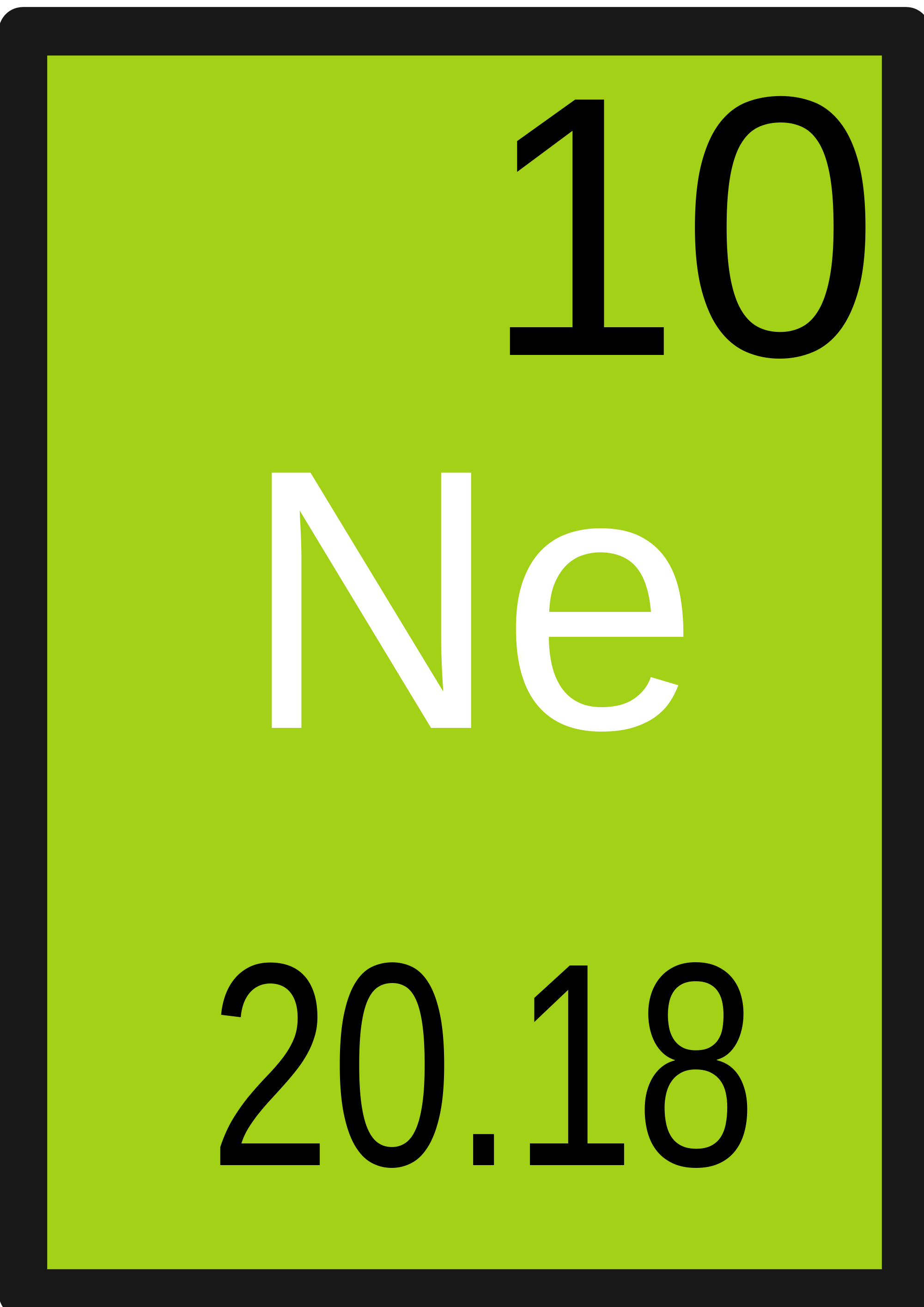
What is the atomic mass of Neon?
a)
10
b)
20.18
c)
10.18
d)
30.18
30.
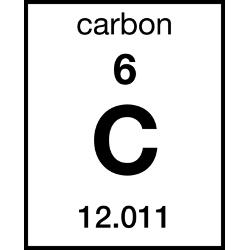
What does the 6 represent above the C
a)
Symbol 
b)
Name 
c)
Mass Number 
d)
Atomic Number 
31.
An element is defined by its number of 
a)
protons
b)
electrons
c)
neutrons
d)
protons + electrons
32.
Where are electrons of an atom found?
a)
Nucleus
b)
Electron Cloud
c)
Some are in the nucleus and some in the electron cloud.
d)
They are moving everywhere.
33.
Particles in an atom's nucleus that are neutral and have no charge are 
a)
megatrons. 
b)
electrons.
c)
neutrons.
d)
protons. 
34.
A negatively charged particle that moves around the nucleus is a(n)
a)
proton
b)
neutron
c)
electron
d)
quark
35.
Each column in the periodic table is called a 
a)
period
b)

group/ family

c)
cluster
d)
unit
36.
A horizontal row of elements in the periodic table.
a)
column
b)

group/ family

c)
period