wayground logo

Free Printable Worksheets

NEW

Font size

S
M
L
XL
Worksheets

Unit 1 Review

Total questions: 45

Worksheet time: 36mins

Name
Class
Date
1.
The amount of space something takes up
a)
density
b)
volume
c)
mass
d)
matter
2.

All matter is made up of tiny building blocks called:

a)

mass

b)

atoms

c)

cells

d)

legos

3.

Atoms of a particular "type" are known as:

a)

Cells

b)

Elements

c)

Molecules

d)

Compounds

4.

Does the following represent an "Atom" or a "Molecule"?

Cu

a)

atom

b)

molecule containing all the same element

c)

molecule containing different elements

5.

Does the following represent an "Atom" or a "Molecule"?

C6H12O6

a)

atom

b)

molecule containing all the same element

c)

molecule containing different elements

6.

Does the following represent an "Atom" or a "Molecule"?

S8

a)

atom

b)

molecule containing all the same element

c)

molecule containing different elements

7.

Does the following represent an "Atom" or a "Molecule"?

FeO

a)

atom

b)

molecule containing all the same element

c)

molecule containing different elements

8.

Does the following represent an "Atom" or a "Molecule"?

Cl2

a)

atom

b)

molecule containing all the same element

c)

molecule containing different elements

9.

Does the following represent an "Atom" or a "Molecule"?

Al

a)

atom

b)

molecule containing all the same element

c)

molecule containing different elements

10.

More than one atom chemically bonded together is referred to as:

a)

a compound

b)

a molecule

c)

a gas

d)

the Periodic Table

11.

In this class, "particles" can refer to:

a)

atoms only

b)

molecules only

c)

both atoms and molecules

12.

Which of the following is a chemical property of water?

a)

is nonflammable

b)

Boils at 100 oC

c)

Is liquid at room temperature

d)

Has a density of 1 gm/mL

13.

Physical properties are

a)

properties that can be observed or measured without changing the identity of the substance

b)

properties that describe how a substance may change into a completely different substance

14.

What is an example of a Chemical change?

a)

Melting ice cube

b)

Evaporation of liquid water

c)

Salt dissolving in water

d)

A yellow precipitate forms when two clear liquids are mixed.

15.
Is freezing a physical or chemical change?
a)
Physical 
b)
chemical
16.

Over time, a piece of metal appeared to be covered in rust. Which best describes the change to the metal?

a)

It was a chemical change, because rust is a new substance with a different composition than the original metal.

b)

It was a chemical change, because the new atoms that didn't exist before were created.

c)

It was a physical change, because rust can be removed from the metal.
17.
Which is a chemical property?
a)
Mass
b)
Reactivity with acids
c)
Boiling Point
d)
Color
18.
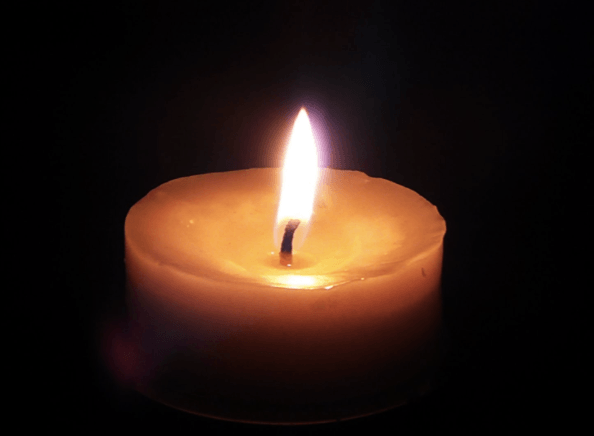
Is a burning candle a physical or chemical change?
a)
Physical
b)
Chemical
19.
Is melting iron a physical or chemical change?
a)
Physical
b)
Chemical
20.
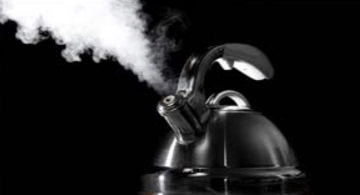
Is generating steam a physical or chemical change?
a)
Physical
b)
Chemical
21.

When baking soda and vinegar mix it creates carbon dioxide bubbles. Is this a chemical or physical change?

a)

Physical

b)

Chemical

22.

If you need to run a test and there is a chance your actions might change the chemical composition, you are testing a __ property.

a)

physical

b)

chemical

23.

A precipitate forms when:

a)

a liquid freezes into a solid

b)

two liquids dissolve in one another to form a solution

c)

a solid forms when two liquids are mixed

d)

a substance undergoes a phase change

24.

The yellow "stuff" is referred to as:

a)

a solution

b)

a precipitate

c)

an atom

d)

energy

25.
Two or more substances mingled together, but not chemically combined are known as a
a)
residue
b)
solution
c)
distillate
d)
mixture
26.
Making a mixture results in ___________________ only.
a)
chemical reactions
b)
separate parts
c)
physical changes
d)
two subtances
27.
Which one of the following is NOT a mixture?
a)
Sugar
b)
Paint
c)
Crude oil
d)
Air
28.
Mixtures are separated through ___________changes.
a)
mixture
b)
compound
c)
physical
29.
The things in a mixture always retain their........
a)
smell properties 
b)
physical and chemical properties 
c)
shape 
d)
color 
30.
These are mixtures that are the same throughout. 
a)
homogeneous mixtures 
b)
heterogeneous mixtures 
c)
mixed mixtures 
31.
These are mixtures that are not the same throughout. 
a)
homogeneous mixtures 
b)
heterogeneous mixtures 
c)
solutions 
d)
water 
32.

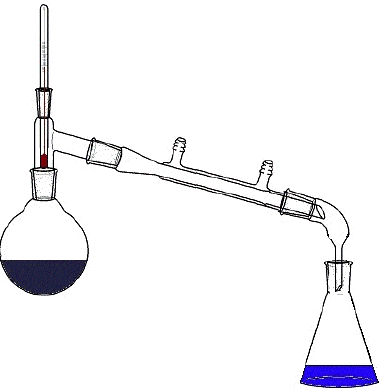
Look at the apparatus setup. It CANNOT be used to separate which of the following mixtures? 

a)
Marble chips from oil 
b)
Alcohol and water
c)
Chalk from sugar solution
d)
Sand and sea water
33.
Which mixture could you separate by adding water and then pouring through a coffee filter?
a)
sand and salt, because the salt would dissolve and the sand would not
b)
baking soda and salt, because they both dissolve
c)
sugar and salt, because they both dissolve
d)
iron fillings and sand, because neither one dissolves
34.
Which of the following is not a compound?
a)
HCl
b)
Cl
c)
NaCl
d)
CO2
35.

What is H2SO4 made up of?

a)

2 hydrogen, 1 sulfur, 4 oxygen

b)

1 hydrogen, 2 sulfur, 4 oxygen

c)

2 hydrogen & 4 sodium

d)

1 hydrogen & 6 sodium

36.
Which one of the following techniques would best be used to separate soil and water?
a)
Decanting
b)
distillation
c)
Filtration
d)
Chromatography
37.
Sodium chloride can be separated from rock salt by first adding water to the mixture to dissolve the sodium chloride. The separation then takes place in two stages:
a)
evaporation followed by filtration
b)
 distillation followed by decanting
c)
filtration followed by evaporation
d)
filtration followed by decanting
38.
Water and alcohol are easily separated by distillation because of their
a)
 different melting points
b)
different colours
c)
different densities
d)
different boiling points
39.
Making a mixture results in ___________________ only.
a)
chemical reactions
b)
separate parts
c)
physical changes
d)
two subtances
40.
How would you separate a mixture of sand and salt? 
a)
Mix them with water and let the water evaporate
b)
Mix them with water, pour the mixture through a sieve, then let the water evaporate
c)
Heat the sand and salt mixture for 5 minutes, then let it cool
d)
I would not do any of these because none of these options would work
41.
Look at the apparatus setup. It cannot be used to separate which of the following mixtures? 
a)
Marble chips from oil 
b)
Alcohol and water
c)
Chalk from sugar solution
d)
Sand and sea water
42.

True or False: The different components of mixtures are not bonded (connected) to one another.

a)

true

b)

false

43.

Which color represents the SOLVENT of this homogeneous mixture?

a)

green

b)

orange

44.

The two components of this mixture are not the same size nor evenly blended. This is a:

a)

homogeneous mixture

b)

solution

c)

heterogeneous mixture

45.

This mixture consists of ___ different substances.

a)

2

b)

3

c)

4

d)

5