wayground logo

Free Printable Worksheets

NEW

Font size

S
M
L
XL
Worksheets

Genetics

Total questions: 41

Worksheet time: 27mins

Name
Class
Date
1.
Which of the following is the correct order of organization in living things from most basic (simple) to most complex?
a)
a.  Organism, cell, tissue, organ, organ system
b)
a.  Organ system, organ, tissue, cell, organism
c)
a.  Cell, tissue, organ, organ system, organism
d)
a.  Cell, organ, tissue, organ, organism, organ system
2.
 A white cat had a litter of kittens that were orange, grey, and black and white spotted. Is this the result of sexual or asexual reproduction? And how would you characterize the offspring listed above?
a)
Sexual reproduction with uniform offspring
b)
Asexual reproduction with diverse offspring
c)
Sexual reproduction with diverse offspring
d)
Asexual reproduction with uniform offspring
3.
Offspring are genetically identical to the one parent.
Is this the result of sexual or asexual reproduction?
And how would you characterize the offspring listed above?
a)
Asexual reproduction with uniform offspring
b)
Sexual reproduction with diverse offspring
c)
Asexual reproduction with diverse offspring
d)
Sexual reproduction with uniform offspring
4.
Which characteristic did Malek most likely inherit from his parents?
a)
his ability to read fast
b)
his need to wear glasses
c)
his ability to speak English
d)
his need to count using his fingers
5.
Which characteristic is inherited?
a)
hair color
b)
sleeping late
c)
enjoying hiking
d)
loving to read
6.
Which trait does a puppy inherit from its parents?
a)
fur color and pattern
b)
obedience to commands
c)
food brand preference
d)
affection for a specific home
7.
Sexual reproduction requires _____ parents and asexual reproduction requires ___ parents
a)
1,1
b)
2,2
c)
2,1
d)
1,2 
8.
Creates the greatest diversity, & therefore the ability to survive changing environments is
a)
sexual reproduction
b)
asexual reproduction
c)
cloning
d)
fragmentation
9.
Which of the following describes the main advantages of sexual reproduction
a)
requires lots of time/energy
b)
no new gene combos can arise 
c)
diversity
d)
looks identical to the parent
10.

Organsims that reproduce asexually generally have offspring that are ___

a)

unicellular

b)

multicelluar

c)

Genetically varied

d)

Genetically identical

11.

DNA is located...

a)

In the Vacuole

b)

On the chromosome located inside the nucleus

c)

In the cell wall

d)

In the cytoplasm

12.

Heredity is defined as

a)

The passing of genetic information from parent to diverse offspring

b)

The trading of genetic information from parent to uniform offspring

c)

The linking of genetic information

d)

None of the above

13.

What is the difference between a cell and a tissue?

a)

cell is basic unit of life; tissue is group of cells that work as one

b)

cell is group of tissues; tissue is basic unit of life

c)

cell is basic unit of life; tissue is groups of different cells

d)

cell is group of organs; tissue is group of different types of cells

14.
a)

budding

b)

binary fission

c)

vegetative propogation

d)

regeneration

15.
A hydra reproduces when an outgrowth, or bud, forms and continues to develop until if falls off of the parent. This is an example of:
a)
Binary Fission
b)
Sporulation
c)
Budding
d)
Vegetative Propagation
16.
What parts of the chromosomes code for traits?
a)
Genes
b)
Deoxyribonucleic Acid
c)
Chromosomes
d)
Nucleus
17.

What does heredity mean?

a)

DNA being passed down from one generation to the next.

b)

Passing down learned characteristics to your offspring.

c)

Leaving money in a will to your children

d)

all DNA is kept in the nucleus

18.

Humans have 46 chromosomes they each received..

a)

20 from their father and 26 from their mother

b)

all 46 chromosomes from their father

c)

23 from their mother and 23 from their father

d)

all 46 chromosomes from their mother
19.
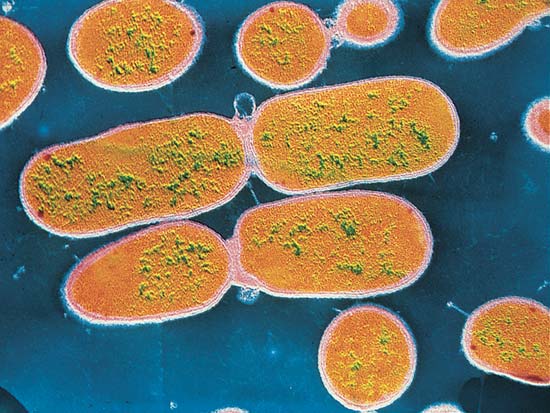
Prokaryotes (bacteria) reproduce asexually via -
a)
spore formation
b)
bud creation
c)
vegetative propagation
d)
binary fission
20.
If two organisms reproduce sexually, then their offspring will exhibit a genetic makeup that is -
a)
identical to only one parent
b)
identical to all of its siblings
c)
a unique combination of traits
d)
the recessive traits of each parent
21.
The offspring from asexually reproduced organisms are?
a)
Different than their parents
b)
Identical to parents
c)
Like a combination from both parents
d)
A different species
22.
 A group of cells that have similar functions? Examples are nervous, epithelial, muscle and connective
a)
cells
b)
tissues
c)
organs
d)
atoms
23.
A group of tissues that perform a similar function is called_____. (Examples include the heart, lungs or stomach)
a)
cells
b)
tissues
c)
organs
d)
organ system
24.
When many organ systems work together it can form...
a)
organ
b)
cells
c)
organ system
d)
organism 
25.
Which is an example of a learned characteristic?
a)
color of a dog's fur
b)
color blindness of a person
c)
the ability of a mouse to run a maze
d)
a person's ability to roll their tongue
26.
The alleles are  TT.   
a)
Homozygous
b)
Heterozygous
27.
The pre-fix HETERO means
a)
Same 
b)
Different
28.
The pre fix- HOMO means
a)
Same 
b)
Different
29.
Tt
a)
Homozygous 
b)
Heterozygous
30.
this is an example of....
a)
Homozygous 
b)
Heterozygous 
31.
this is an example of...
a)
Homozygous
b)
Heterozygous
32.
The physical characteristics of an organism.  (What you can see.)
a)
Genotype 
b)
Phenotype
33.
What is Read on the genes (letters) 
a)
Genotype
b)
Phenotype
34.
blue eyes is an example of...
a)
Genotype
b)
Phenotype
35.
Two parents are crossed and the offspring display the alleles Hh.  This is an example of 
a)
Genotype
b)
Phenotype
36.
Seeing an attached earlobe is an example of...
a)
Phenotype
b)
Genotype
37.
A individual who has two of the same alleles is said to be
a)
Homozygous
b)
Homologous
c)
Heterozygous
d)
Heteromologous
38.
Dominant alleles are represented by a:
a)
Male gene
b)
lowercase letter
c)
recessive trait
d)
capital letter
39.
Dominant or Recessive?
r
a)
Dominant
b)
Recessive
40.
Alternative forms of a gene are called
a)
Alleles
b)
Homozygous
c)
DNA
d)
Genetics
41.
Dominant or Recessive?
T
a)
Dominant
b)
Recessive