wayground logo

Free Printable Worksheets

Font size

S
M
L
XL
Worksheets

1st Nine Weeks Review - Block 1

Total questions: 88

Worksheet time: 1hrs 9mins

Name
Class
Date
1.

Which is state 12?

a)

Texas

b)

Louisiana

c)

Florida

d)

Oklahoma

2.

Which is state 42?

a)

Maine

b)

Maryland

c)

New Hampshire

d)

Connecticut

3.

Which is question 22?

a)

Louisiana

b)

Arkansas

c)

Mississippi

d)

Alabama

4.

Which is state 38?

a)

Pennsylvania

b)

Ohio

c)

West Virginia

d)

New York

5.

Which is the PINK region?

a)

West

b)

Midwest

c)

Southeast

d)

Southwest

e)

Northeast

6.

Which is the BLUE region?

a)

West

b)

Midwest

c)

Southeast

d)

Southwest

e)

Northeast

7.
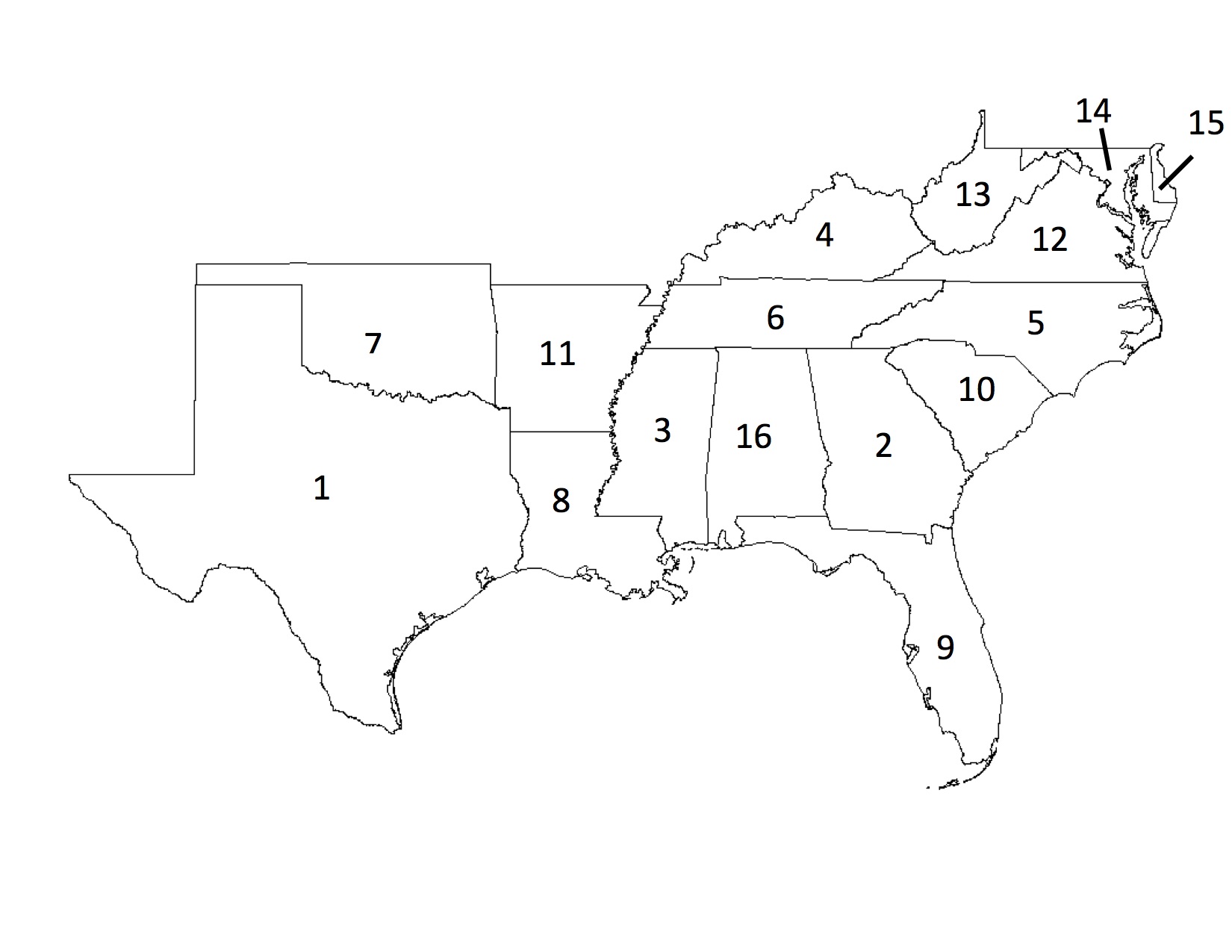
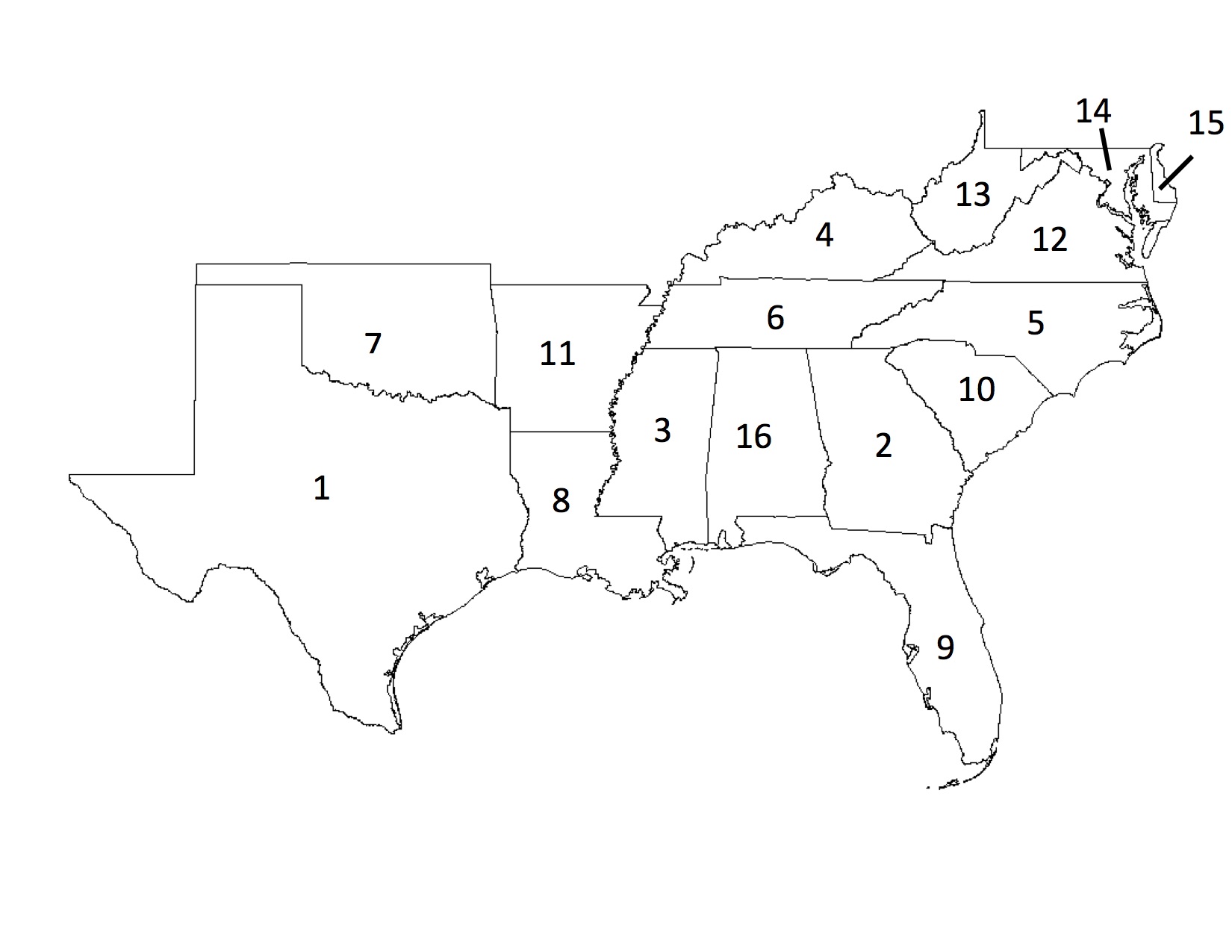
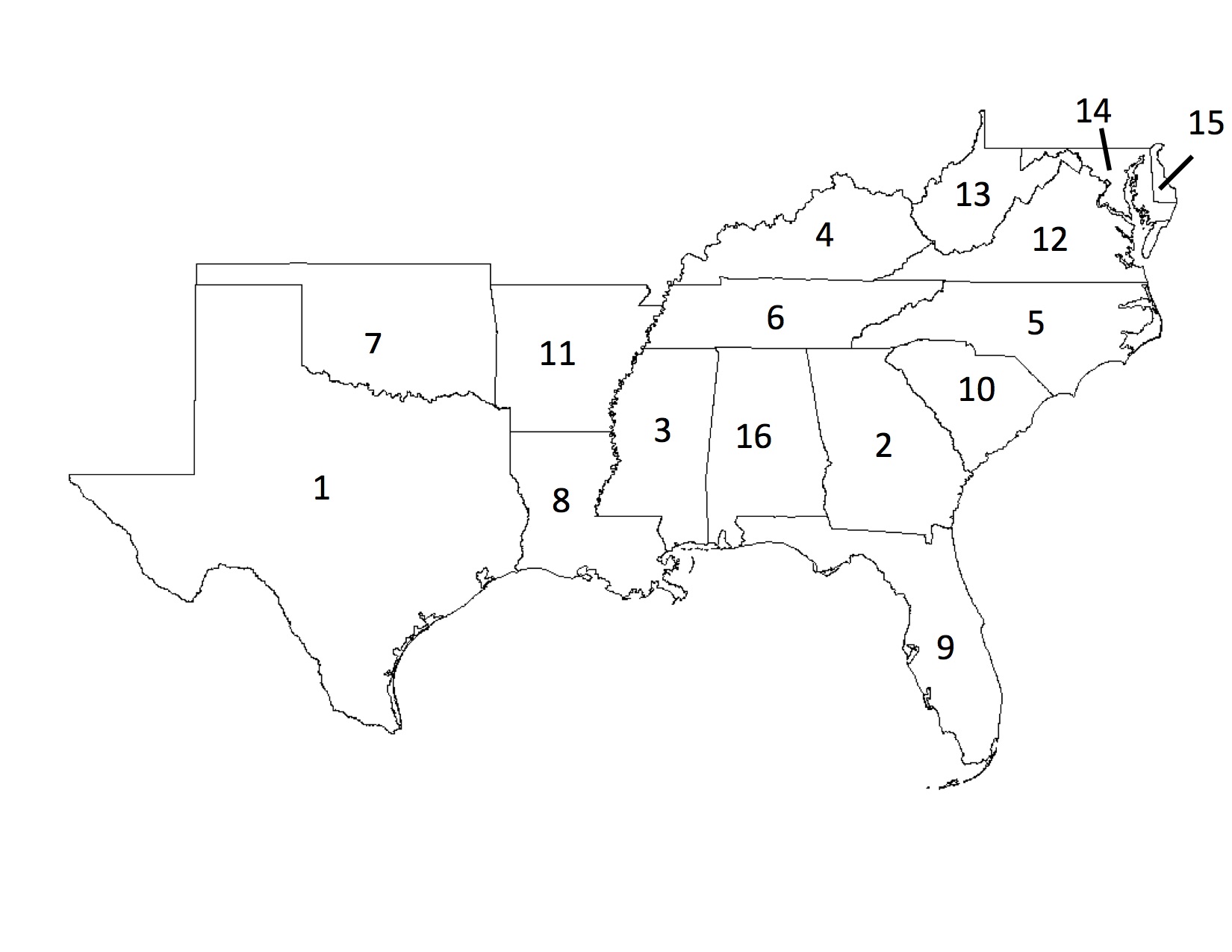
What state is #3
a)
Mississippi
b)
Louisiana
c)
Arkansas
d)
Alabama
8.
What state is #4
a)
Kentucky
b)
West Virginia
c)
Tennessee
d)
North Carolina
9.
What state is #5
a)
North Carolina
b)
South Carolina
c)
Virginia
d)
Georgia
10.
What state is #6
a)
Tennessee
b)
Kentucky
c)
Oklahoma
d)
Maryland
11.
Identify #1
a)
Vermont
b)
Maine
c)
Boston
d)
New Jersey
12.
Identify #5
a)

New York

b)
Maine
c)
Massachusetts
d)
New Hampshsire
13.
Identify #4
a)
Vermont
b)
Maine
c)
Massachusetts
d)
New Hampshsire
14.
List an obstacle that settlers faced traveling west.
a)
mountains
b)
crossing rivers
c)
the great plains
d)
all of the above
15.
What was the effect of the Transcontinental Railroad?
a)
Became a more efficient form of transportation for settlers
b)
Increased trade between the east and west and boosted the economy
c)
Polluted the air and the natural environment
d)
All of the above
16.
I am an Exoduster and I chose to move west in hopes of finally owning land. I was also trying to escape the KKK.
a)
European Immigrants
b)
Asian Immigrants
c)
Mexican Americans
d)
African Americans
17.
I just moved to America, but I'm too poor to travel to the West. Instead, I will start a family here in the city. People don't like me because I wasn't born in the United States.
a)
Asian Immigrants
b)
European Immigrants
c)
Mexican Americans
d)
African Americans
18.
I just moved to America in search of gold. Instead, I took a job working on the Transcontinental Railroad. I am paid less than white workers, even though I am a hard worker.
a)
African American
b)
European Immigrant
c)
Mexican American
d)
Asian Immigrant
19.
What did the westward expansion offer for former slaves?
a)
food
b)
wealth
c)
land
d)
a new beginning and freedom
20.
Which of the following inventions made communication over long distances possible in the 1800s?
a)
Steamboat
b)
Steam Locomotive
c)
Telephone
d)
Telegraph
21.
Which of the following inventions from the early 1800s made the transportation of raw materials and goods over land much faster and easier?
a)
Steamboat
b)
Steam Locomotive
c)
Bus
d)
Car
22.

Settlers on the prairie that had to cut through thick grass or sod

a)

sodbusters

b)

homesteaders

c)

irrigation

23.

What new technology helped farmers plant their crops more easily?

a)

the steel plow

b)

barbed wire

24.

Why did homesteaders want to live near the railroad?

a)

to make it easy to transport their crops to market

b)

to take vacations in the open space in the West

25.
The amendment that freed all slaves. 
a)
12th
b)
13th
c)
14th
d)
15th
26.
What gave settlers 160 acres of land in exchange for the settlers "improving" their new land?
a)
Homestead Act
b)
Dawes Act
c)
Morril Act
d)
Reconstruction Act
27.
How did people move west?
a)
Horse and Wagon
b)
Railroad
c)
Steamship
d)
all of the above
28.
As settlers moved onto the Great Plains in the 1800s, they needed to build shelters. One way that many settlers met this need was by building sod houses. Why did many settlers build houses made out of sod?
a)
Sod houses would typically last longer than houses made out of other materials.
b)
Sod houses cost little to build because sod was widely available.
c)
Sod houses were more fashionable than other types of buildings
d)
Sod houses were better suited for cold weather than other buildings.
29.
What act gave 160 acres to any family who would linve on the land and farm it for 5 years?
a)
The Homestead Promise
b)
The Homestead Neighborhood
c)
The Homestead Act of 1862
d)
The Homestead farmland
30.
What amendment abolished slavery?
a)
13th
b)
14th
c)
15th
d)
16th
31.
The 14th Amendment of the United States Constitution...
a)
Gave African Americans citizenship
b)
Gave African Americans the right to vote
c)
Freed the slaves
d)
Gave landowners the right to sharecrop
32.
During Reconstruction the South was under Military rule
a)
True
b)
False
33.
The 15th Amendment of the United States Constitution...
a)
Gave African Americans the right to own businesses
b)
Freed the Slaves
c)
Gave African Americans the right to vote
d)
Forced African Americans back into slavery
34.
Which of the following was not a goal of Reconstruction?
a)
Reunite the North and the South
b)
Rebuild the South
c)
Develop the system of sharecropping
d)
Determine what to do with African Americans
35.
What problem did many farmers have under the sharecropping system?        
a)
They were forced to grow cash crops instead of food.
b)
 They often were trapped in a cycle or circle of debt.
c)
 Many sharecroppers were forced to buy goods on credit. 
d)
   All choices are true.
36.
Northerners who went south after the Civil War to make large profits from the destruction in the south were called
a)
Scalawags
b)
Ku Klux Klan
c)
Carpetbaggers
d)
Sharecroppers
37.
Laws passed by southern states soon after the Compromise of 1877.  These laws legalized segregation whites and blacks to use separate facilities. 
a)
Jim Crow Laws
b)
Black Codes
c)
Freedman's Bureau
d)
Reconstruction
38.
These were laws that made it illegal for African Americans to live or work in certain areas and allowed whites to arrest African Americans who were not working.  Once arrested they would be forced to work for white landowners. 
a)
Freedman's Bureau
b)
Reconstruction
c)
Black Codes
d)
Jim Crow Laws
39.
The process of rebuilding the South after the Civil War. 
a)
Reconstruction
b)
Freedman's Bureau
c)
Black Codes
d)
Jim Crow Laws
40.
The organization put in place after the Civil War to provide food, clothing, health care and education in the South was known as:
a)
The Civil Rights Committee
b)
The Freedmen's Bureau
c)
The Welfare Committee
d)
The Salvation Army
41.
The President that Congress tried to impeach during Reconstruction was:
a)
Andrew Johnson
b)
Abraham Lincoln
c)
Ulysses S. Grant
d)
Richard Nixon
42.
After an electoral dispute, it was agreed that Rutherford B. Hayes would become President if he ended Reconstruction.  This is often referred to as:
a)
Radical Election
b)
Compromise of 1877
c)
The corrupt bargain
d)
Illegal compromise
43.
In 1866, a group formed in the South to fight against the rising influence of African Americans in the South. Members of this group often turned to violence and intimidation, What was the name of this controversial group?
a)
Sons of the Confederacy
b)
Neo-Nazis
c)
Ku Klux Klan
d)
Black Separatists
44.
During Reconstruction, most former Confederate states
a)
were placed under military rule for a time
b)
were readmitted into the Union, but only after promising to end slavery within 10 years
c)
given full representation in Congress without issue
d)
supported the immediate end of slavery throughout the U.S.
45.
founded the NAACP
a)
W.E.B. DuBois
b)
Booker T. Washington
c)
Stephen Douglas
d)
Harriet Beecher Stoew
46.
Which activist believed that African-Americans should quietly accept social segregation while receiving vocational training and working hard?
a)
Booker T. Washington
b)
W.E.B. DuBois
c)
John Hope
d)
Alonzo Herndon
47.
The school that Booker started was called the...
a)
Hampton Institute
b)
Tuskegee Institute
48.
This African-American demanded full political, civil, and social rights to his people, so he started the NAACP
a)
Booker T. Washington
b)
W.E.B. DuBois
c)
Abraham Lincoln
d)
Frederick Douglass
49.
Who founded the Tuskegee Institute? 
a)
W.E.B. Du Bois
b)
Rosa Parks
c)
Martin Luther King, Jr.
d)
Booker T. Washington
50.
Which of the following believed in full political, civil, and social rights for African Americans?
a)
William Lloyd Douglas
b)
W.E.B. Du Bois
c)
George Washington     
d)
Booker T. Washington
51.
Which person accepted social separation and believed racial equality could be achieved through vocational education?
a)
 Booker T. Washington
b)
Martin Luther King, Jr. 
c)
. W.E.B. Du Bois                              
d)
William Lloyd Douglas
52.
What did Southern States, like South Carolina, still depend on for their economy after the Civil War?
a)
Foreign investment
b)
Scalawag Labor
c)
Agriculture
d)
Manufacturing
53.
When farmers rented land in exchange for crops, this was known as ___________________.
a)
carpetbagging
b)
segregation
c)
sharecropping
d)
crop sharing 
54.
The Black Codes were
a)
a coded language African Americans used  
b)
laws that told people what they could wear 
c)
laws that restricted African American rights 
d)
curfew laws for African Americans 
55.
A Northerner who moved to the South to take advantage of the poverty is called a...
a)
Radical Republican
b)
Freedman
c)
Scalawag
d)
Carpetbagger
56.
Why were the 13th, 14th, and 15th amendments added to the Constitution?
a)
To provide equal rights to African American citizens.
b)
To legalize discrimination and segregation.
c)
To provide equal rights to White citizens.
d)
To help African Americans pay their poll taxes. 
57.
Southerners who supported Reconstruction were known as
a)
Scalawags
b)
Carpetbaggers
c)
Dust Busters
d)
Squashbucklers
58.
Which group of voters helped Ulysses S. Grant become President the most?
a)
African Americans
b)
Scalwags
c)
Carpetbaggers
d)
Confederates
59.

Who opposed slavery and secession but couldn't fight against his home state of Virginia? Commander of Confederate Forces.

a)

Jefferson Davis

b)

Abraham Lincoln

c)

Robert E. Lee

d)

Ulysses S. Grant

60.

Who was United States General during the Civil War?

a)

Jefferson Davis

b)

Abraham Lincoln

c)

Robert E. Lee

d)

Ulysses S. Grant

61.
Frederick Douglass was a known abolitionist. What is an abolitionist? 
a)
a person who wanted to end slavery.
b)
a person who wanted to help endangered animals.
c)
a person who fought for women's rights.
d)
a presidential candidate.
62.
Choose the best answer to complete the following sentence:   Frederick Douglass is one of the most important figures in America's struggle for....
a)
equal pay for slaves.
b)
books about slavery.
c)
 racial equality and civil rights.
d)
peaceful protests.
63.
Who was the Confederate general?
a)
Robert E. Lee
b)
Ulysses S. Grant
c)
Abraham Lincoln
d)
George Washington
64.

What was the Gettysburg address?

a)

143 Gettysburg Avenue

b)

A short speech given by president Lincoln at the Gettysburg battle field

c)

A time when the two generals met in Pennsylvania

d)

A song sung at the Appomattox Courthouse surrender

65.

What did the Emancipation Proclamation do?

a)

Made slavery legal in the south

b)

Set all slaves free

c)

Gave settlers land in the west

d)

Outlawed slavery in the Constitution

66.
Abraham Lincoln's plan for Reconstruction was known as:
a)
Wade-Davis Bill
b)
14th Amendment
c)
Ten Percent Plan
d)
Radical Republican Reunification
67.

Reconstruction lasted about

a)

1 year

b)

10 years

c)

50 years

d)

100 years

68.

Vocational has to do with

a)

Civil Rights

b)

Servitude

c)

Job Training

d)

Segregation

69.

Who was President of the Union during the Civil War?

a)

Jefferson Davis

b)

Abraham Lincoln

c)

Robert E. Lee

d)

Ulysses S. Grant

70.
Which group of people were most affected by the passing of the 14th Amendment?
a)
Plantation owners
b)
White Politicians
c)
African Americans
d)
Immigrants
71.
"I'm looking to buy up your plantations and influence your government for my own personal gain of wealth and power."
Which group of people does the picture above make reference to during the Reconstruction Era?
a)
Northern Politicians
b)
Carpetbaggers
c)
Southern Military Leaders
d)
Freed African Americans
72.
Frederick Douglass fought for the adoption of constitutional amendments that guaranteed--
a)
rights to bear arms
b)
voting rights
c)
freedom of speech
d)
freedom of religion
73.
Robert E. Lee was the president of --
a)
the University of Virginia
b)
the College of William and Mary
c)
Harvard College
d)
Washington College
74.
"The Union must and shall be preserved" is a quote that may have been made by --
a)
Frederick Douglass
b)
Robert E. Lee
c)
Ulysses S. Grant
d)
Abraham Lincoln
75.
Lincoln believed --
a)
the South should form its own country and separate from the Union
b)
Preservation of the Union was more important than punishing the South
c)
Charity should be given to the North for their trouble fighting the Civil War
d)
It was important to preserve the Union and punish the South
76.
Which is a belief of both Abraham Lincoln and Robert E. Lee about the direction the South should take after the Civil War?
a)
The South should accept punishment for the war
b)
The South should reconcile with the North
c)
The South should accept discrimination policies
d)
The South should continue to fight the North
77.
What was the result of passing the 15th Amendment during reconstruction?
a)
Rights were taken away from plantation owners
b)
African American rights increased
c)
Women received equal rights
d)
Expanded rights for First Americans
78.
How can the provisions stated in the 13th, 14th, and 15th amendments best be summarized?
a)
Protection is only provided for male citizens under the law 
b)
Protection is guaranteed for all citizens under the law
c)
Protection is only provided for certain ethnic groups under the law
d)
Protection is not guaranteed to enslaved citizens under the law
79.
The constitutional amendments that were adopted during Reconstruction --
a)
provided political and legal rights for African Americans
b)
increased the rights of southern soldiers
c)
limited the number of years in a presidential term
d)
allowed federal money to be spent on building construction
80.
1) The Emancipation Proclamation is written
2) Voting Rights for African Americans
3) Civil War ends
4) Freedom for enslaved Americans
Which event happened last?
a)
1
b)
2
c)
3
d)
4
81.
"No state shall make or enforce any law which shall abridge the privileges . . . of citizens . . . nor shall any state deprive any person of life, liberty, or property, without due process of law . . ."
The excerpt above is taken from the --
a)
13th Amendment
b)
14th Amendment
c)
15th Amendment
d)
19th Amendment
82.
What racist organization came about in the South during Reconstruction?
a)
Klu Klux Klan
b)
White Supremacy 
c)
American Freedom Party
d)
National Alliance
83.
Which Reconstruction leader below became president of Washington College in  Lexington Virginia?
a)
Robert E Lee
b)
Abraham Lincoln
c)
Frederick Douglass
d)
Nat Turner
84.
Describe the climate of the Great Plains
a)
Low Rainfall, Erosion, Dust storms
b)
Low Snowfall, Mountains, Forested
c)
Highly Forested, High Rainfall, Humid
d)
Arid, Dry, Hot
85.
Sharecroppers had little chance of making a profit and getting ahead.
a)
True
b)
False
86.
Segregation  means .......
a)
separation based on race
b)
separation based on gender
c)
coming together 
d)
get rid of
87.
System of farming where plantation owners would lend former slaves a place to live in exchange for farming crops
a)
Sharecropping
b)
Freedmen's Bureua
c)
Jim Crow Laws
d)
Slavery
88.
Groups like the Ku Klux Klan that formed during Reconstruction helped freed slaves and worked to protect their rights.
a)
True
b)
False