
 Worksheets
Don't talk about the weather
Total questions: 13
Worksheet time: 3hrs 15mins
Name
Class
Date
1.
What is the term for rising water vapor meeting colder air and turning back into water?
a)
condensation
b)
evaporation
c)
precipitation
d)
runoff
2.
In which atmosphere layer does weather occur?
a)
troposphere
b)
stratosphere
c)
mesosphere
d)
thermosphere
3.
___________is the result of the weight of a column of air pushing on an area.
a)
air pressure
b)
density
c)
volume
d)
none of the above
4.
____________ are connected lines of equal pressure.
a)
Isobars
b)
Isopleths
c)
Isotherms
d)
Isochrons
5.
This is when the rotation of the Earth deflects the direction of the wind.
a)
convergent effect
b)
marginal effect
c)
Coriolis effect
d)
Mariolis effect
6.
At the equator the air is usually ________.
a)
rising
b)
sinking
7.
_______ pressure systems are characterized by cloudy, rainy weather.
a)
High
b)
Low
8.

Why does warm air rise?
a)
Warm air is more dense than cooler air.
b)
Warm air has more pressure than cooler air.
c)
Warm air is less dense than cooler air.
d)
Warm air has a higher dew point than cooler air.
9.
The strength of a sea breeze depends on
a)
the heat of the day
b)
the difference between the temperature of the sea and the land
c)
the wind speed
d)
the amount of precipitation that day
10.
The term "greenhouse effect" describes
a)
occupational diseases of florists
b)
the trapping of heat energy in the troposphere by certain gaseous molecules
c)
the trapping of heat energy in the stratosphere by nitrogen
d)
efforts by the White House to support environmental legislation
11.
The main human activity that releases greenhouse gases is
a)
using bottled water
b)
burning fossil fuels
c)
texting on cellphones
d)
eating meat
12.
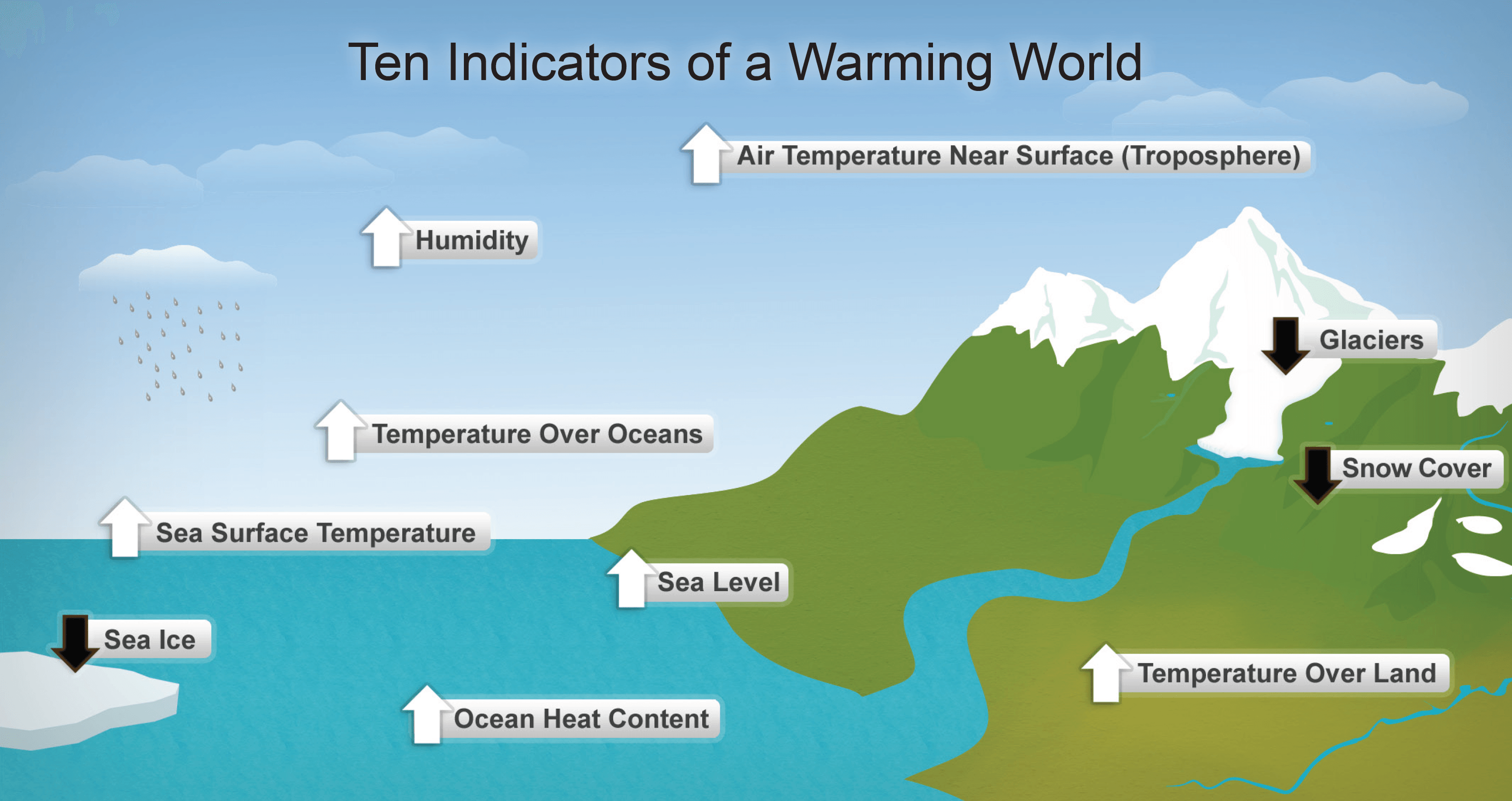
The greenhouse gas having the greatest role in human-caused global warming is
a)
methane
b)
carbon dioxide
c)
CFCs (chlorofluorocarbons)
d)
ozone
13.
Trade winds move towards the ____.
a)
Polar regions
b)
Western Hemisphere
c)
Humid subtropical climates
d)
Equator
100 %

