
 Worksheets
W.E.D
Total questions: 37
Worksheet time: 35mins
Name
Class
Date
1.
The natural chemical or physical processes that breaks down rock on Earth's surface.
a)
weathering
b)
erosion
c)
deposition
d)
jackhammering
2.
The process by which water, ice, wind or gravity moves weathered rock and soil from one place to another.
a)
weathering
b)
erosion
c)
deposition
d)
dumptruck
3.
This type of weathering occurs when rock is physically broken down into smaller pieces of rock.
a)
mechanical weathering
b)
chemical weathering
c)
erosion weathering
d)
deposition
4.
This type of weathering occurs when rocks weaken then break down due to chemical changes in the composition of the rock.
a)
mechanical weathering
b)
chemical weathering
c)
erosion weathering
d)
deposition
5.
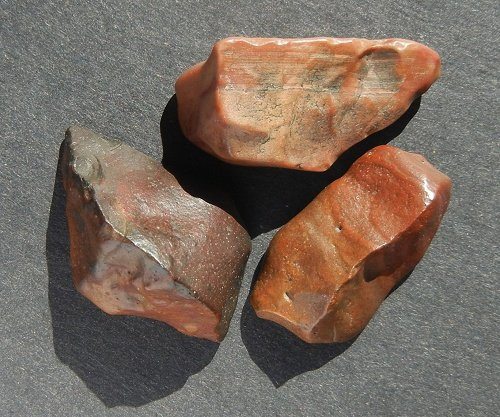
These rocks were made smooth by wind blowing smaller rock particles across their surface. This is an example of:
a)
ice wedging
b)
chemical weathering
c)
acid rain
d)
abrasion
6.

These rocks were broken apart from the continuous freeze/thaw of water in the cracks of the rocks. This is an example of:
a)
ice wedging
b)
acid rain
c)
permeability
d)
abrasion
7.

This rock may chemically weather easily because is has many spaces or holes in it that allow water to seep through it, meaning it is:
a)
permeable
b)
abrasive
c)
erosion
d)
unchangable
8.
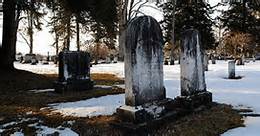
These gravestones have slowly broken down and turned a blackish color due to the action of:
a)
ice wedging
b)
abrasion
c)
acid rain
d)
mechanical weathering
9.
How might a weathered mountain appear different than an unweathered mountain?
a)
Weathered mountain would be taller.
b)
Weathered mountain would be rounder and less jagged.
c)
Weathered mountain would be more jagged and less rounded.
d)
Weathered mountain would have no trees.
10.
How is mechanical weathering different from chemical weathering?
a)
Chemical weathering happens over much shorter time frame than mechanical weathering.
b)
Chemical weathering changes the chemical composition of rocks; mechanical weathering does not.
c)
Chemical weathering occurs only in tropical climates; mechanical weathering occurs only in cool climates.
d)
Chemical weathering occurs only in the mountains; mechanical weathering occurs only on flat land.
11.
Weeds growing into the cracks in a sidewalk and the sidewalk begins to crumble is an example of:
a)
mechanical weathering
b)
chemical weathering
12.
Potholes forming in the road after a cold winter is an example of:
a)
mechanical weathering
b)
chemical weathering
13.
A metal statue slowly turning green after years of being outside is an example of:
a)
mechanical weathering
b)
chemical weathering
14.
Rocks along a riverbed that are smoothed from continuously moving water and sediment rubbing against them is an example of:
a)
mechanical weathering
b)
chemical weathering
15.
The formation of stalactites and stalagmites in a cave as water mixed with carbon dioxide creates carbonic acid, which dissolves away the limestone, is an example of:
a)
mechanical weathering
b)
chemical weathering
16.
A piece of sandstone changing color (from brown to rusty red) from exposure to water and air is an example of:
a)
mechanical weathering
b)
chemical weathering
17.
The formation of large cracks in the face of a mountain from ice wedging is an example of:
a)
mechanical weathering
b)
chemical weathering
18.
Acid rain wearing away the face of a marble gravestone or statue is an example of?
a)
mechanical weathering
b)
chemical weathering
19.
Select the answer that shows the order of events a rock goes through.
a)
erosion, weathering, deposition
b)
weathering, erosion, deposition
c)
deposition, weathering erosion
d)
erosion, deposition, weathering
20.
How are canyons formed?
a)
Wind blows sand into high piles, which form the canyon walls.
b)
Rivers erode soil and rock over time, leaving behind canyon walls.
c)
Gravity causes rocks to fall from mountain sides onto valley floors.
d)
Ice freezes and thaws in cracks of rocks, and the cracks become canyons.
21.

A cliff formed near the ocean. Which statement best describes how this cliff formed?
a)
Warm air melted the rock.
b)
Sun rays evaporated the rock.
c)
Ocean waves washed away rock.
d)
Plant roots pushed away the rock.
22.
Weathering causes rocks and minerals to break into smaller pieces. Which event is the best example of weathering?
a)
a raindrop splashing in a lake
b)
a snowball rolling down a mountain
c)
a tree root growing into the crack of a rock
23.
Sarah does the investigation described below using a model to study how rivers erode earth materials.
· She pours 600 mL of sand onto a plate.
· She pours 150 mL of water onto the pile of sand.
· She measures how much of the sand washes off the edge of the plate.
· She notices that less sand washes off the plate when she pours water slowly than when she pours it faster.
How is the model similar to real rivers eroding earth materials?
· She pours 600 mL of sand onto a plate.
· She pours 150 mL of water onto the pile of sand.
· She measures how much of the sand washes off the edge of the plate.
· She notices that less sand washes off the plate when she pours water slowly than when she pours it faster.
How is the model similar to real rivers eroding earth materials?
a)
The model shows that faster-moving
water makes sand stick to the bottom of a river.
b)
The model shows that slower-moving
water makes sand float to the top of a river.
c)
The model shows that slower-moving water
erodes less earth materials than faster-moving water.
d)
The model shows that faster-moving
water erodes less earth materials than slower-moving water.
24.
Which of the following actions causes the deposition of sand at a delta?
a)
river water slowing as it enters the ocean
b)
salt water & fresh water mixing together
c)
ocean waves transporting sand toward land
d)
ocean water slowing as it reaches the coast
25.
When would a river form a delta?
a)
when the river meanders across a plain
b)
when the river leaves the mountains
c)
when it is in the mountain
d)
when it enters the ocean
26.
Sediment deposited as fast-flowing river reaches a flatter area of land is
a)
river dleta
b)
floodplain
c)
alluvial fan
d)
oxbow lake
27.
What is groundwater?
a)
any form of liquid water
b)
water that is not moving
c)
water on Earth's surface
d)
water below Earth's surface
28.
What would be expected to remove the most sand from a barrier island during a storm?
a)
waves depositing debris on a island
b)
currents moving sand along the island
c)
large waves crashing across the island
d)
strong winds blowing across the island
29.
What is the place where land and a body of water meet?
a)
delta
b)
shoreline
c)
groundwater
d)
alluvial fan
30.
Which landform is formed because of the erosion of groundwater?
a)
valley
b)
canyon
c)
channel
d)
cavern
31.
What causes a valley to form first?
a)
earthquake
b)
running water
c)
landslide
d)
erosion by wind
32.
What would a beach look like that has been affected by storms and rough waves?
a)
there's a sea stack
b)
the beach is rocky
c)
there were sandbars
d)
the beach was sandy
33.

the process by which layers or sheets of rock gradually break off
a)
exfoliation
b)
abrasion
c)
erosion
d)
deposition
34.

the process of wearing down by friction - like sand blasting
a)
exfoliation
b)
abrasion
c)
erosion
d)
deposition
35.

the part of the erosion process in which sediment travels to a new location and is laid down or dropped off
a)
chemical weathering
b)
mechanical weathering
c)
erosion
d)
deposition
36.

oxidation produces rust on some rocks containing iron
a)
chemical weathering
b)
mechanical weathering
c)
erosion
d)
deposition
37.

fossil fuels react with water producing acid rain that wears minerals away in the rock
a)
chemical weathering
b)
mechanical weathering
c)
erosion
d)
deposition
100 %

