
 Worksheets
Global 10.1-10.2
Total questions: 60
Worksheet time: 48mins
Name
Class
Date
1.
What ancient empire did the Ottomans end?
a)
China
b)
Arab
c)
Byzantine
d)
none are true
2.
The Ottoman Empire was ruled from ___________________.
a)
The Atlantic.
b)
Russia.
c)
Istanbul, formerly Constantinople.
d)
The Mediterranean.
3.
What religion did the Ottoman Empire help spread throughout their empire?
a)
Islam
b)
Christianity
c)
Shintoism
d)
Buddhism
4.
____ were an elite guard of Ottoman soldiers.
a)
janissaries
b)
ulema
c)
pashas
d)
sinans
5.
Nicknamed 'the Magnificent' or 'the Lawgiver', he was the leader of the Ottoman Empire from 1520-1566
a)
Mehmed the Conqueror
b)
Muhammad II
c)
Mustafa IV
d)
Suleyman I
6.
Whoever controlled the Byzantine Empire controlled what?
a)
all the gold available
b)
new inventions and ideas
c)
trade between Europe and Asia
d)
Islam
7.

Which of the following helped the Ottomans grow into such a long-lasting dynasty?
a)
single family rule and highly centralized government
b)
fear and intimidation
c)
no religious freedoms for non-Muslims
d)
executed all of their political rivals
8.

Where is the Mughal Empire?
a)
A
b)
B
c)
C
d)
D
9.
He was the ruler of the Mughal Empire during its best period.
a)
Akbar
b)
Aurangzeb
c)
Chandra Gupta
d)
Shah Jahan
10.
Akbar created unity through much of India (the Mughal Empire) by
a)
Forcing conquered people to convert to Islam.
b)
Allowing local governors complete freedom to rule their regions.
c)
Stationing military units at strategic points throughout the empire.
d)
Abolishing taxes on non-Muslims.
11.
Due to its diverse population, the Ottomans were known for
a)
Forcing its subjects to convert to Islam
b)
Creating harsh laws against Christians and Jews
c)
Allowing many non-muslims into the government
d)
Allowing religious practice for all, at a price
12.

What country is highlighted on this map?
a)
China
b)
Korea
c)
India
d)
Japan
13.
Japanese warriors that lived by a strict code of ethics and duty
a)
Samurai
b)
Daimyo
c)
Shogun
d)
Confucian
14.
The Tokugawa Shogunate was a type of:
a)
commercial partnership
b)
military government
c)
religious authority
d)
cultural institution
15.
Who completed the process of unifying Japan?
a)
Matsuo Basho
b)
Oda Nobunaga
c)
Toyugawa Ieyasu
d)
Tokugawa Hideyoshi
16.
What religion did Tokugawa ban from Japan?
a)
Buddhism
b)
Chrisitianity
c)
Hinduism
d)
Doaism
17.
Dynasty known for extreme isolationism and anti-foreign sentiments, Enforced loyalty of daimyo to shogun, Strict social hierarchy, Eventual development of capitalism and wealthy merchant class, Development of new forms of art (kabuki, woodblock prints), New inferior roles for women
a)
Tokugawa Shogunate
b)
Kangxi
c)
Daimyo
d)
Samurai
18.
These type of societies had hierarchic structures based on military support and land ownership.
a)
Feudal
b)
Democratic
c)
Empires
d)
Monarchies
19.
Gunpowder was first developed by this country, which enable the Ottoman Empire to expand into Western Asia, Northern Africa and Europe.
a)
Korea
b)
Japan
c)
India
d)
China
20.
After the end of the revolution, the leaders of the revolution were executed and a military dictator restored order.
a)
American Revolution
b)
French Revolution
c)
Haitian Revolution
d)
Latin American Revolutions
21.
After the revolution, this country became the second republic in the New World, after the United States.
a)
American Revolution
b)
French Revolution
c)
Haitian Revolution
d)
Latin American Revolutions
22.
Although the same elites remained in power after the revolution was over, establishing stable government proved difficult. Life for the non-elites did not improve much due to the revolution.
a)
American Revolution
b)
French Revolution
c)
Haitian Revolution
d)
Latin American Revolutions
23.
Inspired by the revolution in the mother country, slaves rose up in this colony and overthrew their masters.
a)
American Revolution
b)
French Revolution
c)
Haitian Revolution
d)
Latin American Revolutions
24.
This revolution was a revolt against the king not in a colony but in the mother country.
a)
American Revolution
b)
French Revolution
c)
Haitian Revolution
d)
Latin American Revolutions
25.
This revolution was led by upper-class Creole elites (for example Simon Bolivar).
a)
American Revolution
b)
French Revolution
c)
Haitian Revolution
d)
Latin American Revolutions
26.
This was the first place Enlightenment ideas were tried on a large scale.
a)
American Revolution
b)
French Revolution
c)
Haitian Revolution
d)
Latin American Revolutions
27.
Which is not a cause of the French Revolution
a)
Napoleon
b)
Famine and crop failure
c)
High taxes to pay for previous wars
d)
a weak king, a spending queen
28.
What kind of government did France have after the Reign of Terror?
a)
Constitutional Monarchy
b)
Theocracy
c)
Emperor
d)
Congressional Republic
29.
What was the Reign of Terror
a)
During the French Revolution, peasants killed the nobility
b)
The serfs were killed by soldiers at the Bastille
c)
The Russian royal family was killed
d)
Soldiers killed protesters in Russian
30.
The First Estate was made up of this group.
a)
clergy
b)
common people
c)
nobles
d)
kings and queens
31.
The Second Estate was made up of the these people.
a)
clergy
b)
common people
c)
priests
d)
nobles
32.
The National Assembly proclaimed this new constitution?
a)
Napoleonic Code
b)
Versailles Treatise
c)
Declaration of Rights of Man and Citizen
d)
Tennis Court Oath
33.
Galileo was tried for heresy because he argued
a)
That heaven did not exist
b)
That Earth revolved around the sun
c)
Against the law of gravity
d)
That the sun revolved around the Earth
34.
According to Copernicus, the sun
a)
Revolved around the earth
b)
Was the center of the Universe
c)
Was the biggest star
d)
Had many moons
35.
During the Scientific Revolution the heliocentric view of the universe was first proposed by __.
a)
Ptolemy
b)
Francis Bacon
c)
Isaac Newton
d)
Nicolaus Copernicus
36.
In France: what was one of the leading causes that they went to war?
a)
Lack of food
b)
Wanted democracy
c)
Wanted independence
d)
Lack of jobs
37.
Enlightened thinkers based their philosophical beliefs on what two things?
a)
power and privilege
b)
money and fame
c)
good looks and charm
d)
reason and logic
38.
The Scientific Revolution can best be described as:
a)
A period when scientists embraced the teachings of the Church
b)
The time when the Catholic Church empathized most with scientists
c)
period when scientists began to question the old teachings of the Church
d)
Scientific property invented by astrophysicists to explain the rotation of the Earth
39.
Sir Isaac Newton is associated with the Laws of:
a)
Electricity
b)
Motion and gravity
c)
Human biology
d)
Astronomy
40.
Which of the following best explains the effect of the Scientific Revolution on traditional religious beliefs?
a)
People now looked to religion to explain the world around them.
b)
People now looked to their kings to explain the world around them.
c)
People used reason and logic to explain the world
d)
Momney makes the world go round
41.
The Enlightenment is
a)
a time of rebirth
b)
a time when science ruled
c)
a time with people used reason and logic to explain the world
d)
a time when technology ruled
42.

Enlightenment philosopher who did not agree with censorship.
a)
Voltaire
b)
Denis Diderot
c)
Mary Wollstonecraft
d)
Adam Smith
43.

Enlightenment philosopher who believed men and women should be equal
a)
Voltaire
b)
Denis Diderot
c)
Mary Wollstonecraft
d)
Adam Smith
44.

Enlightenment philosopher who edited the Encyclopedia to help educate the public.
a)
Voltaire
b)
Denis Diderot
c)
Mary Wollstonecraft
d)
Adam Smith
45.

Enlightenment philosopher who believed people had natural rights of life, liberty, and property.
a)
John Locke
b)
Montesquieu
c)
Rousseau
d)
Voltaire
46.

Enlightenment philosopher who believed to limit government, that it should be divided into separate branches that shared power.
a)
John Locke
b)
Montesquieu
c)
Rousseau
d)
Voltaire
47.
Enlightenment philosopher who believed to limit government, that it should be divided into separate branches that shared power.
a)
John Locke
b)
Montesquieu
c)
Rousseau
d)
Voltaire
48.

Enlightenment philosopher who believed people were born good, but society corrupted them.
a)
John Locke
b)
Montesquieu
c)
Rousseau
d)
Voltaire
49.
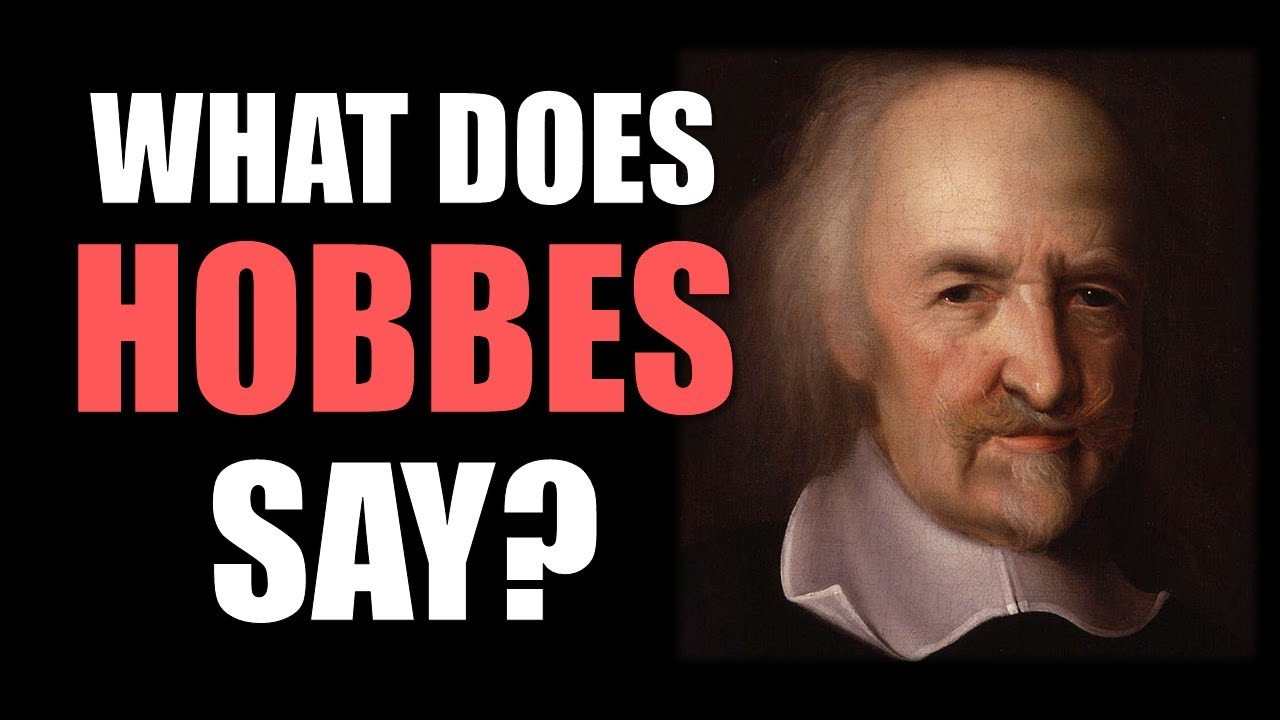
How did Hobbes view human nature?
a)
We are inquisitive and industrious.
b)
We are naturally selfish and quick to fight.
c)
We are naturally altruistic and usually willing to compromise.
d)
We are born a 'blank slate', and we develop differently according to our life's experiences..
50.
What is another name for the Enlightenment?
a)
The Age of Reason
b)
The Age of Great Philosophers
c)
The Age of Religion
d)
The Age of Revolution
51.
Which Enlightenment philosopher argued that people have the right to abolish their government and create a new one?
a)
Montesquire
b)
Locke
c)
Voltaire
d)
Rousseau
52.
The ability of one branch of government to limit the power of the other is called ___.
a)
a natural law
b)
checks and balances
c)
a social contract
d)
laissez-faire
53.
Who is known as the "Iron Chancellor"?
a)
Mazzini
b)
Bismarck
c)
Cavour
d)
Geribaldi
54.
Who formed a group of volunteers known as the Red Shirts to conquer Italy?
a)
Emmanuel II
b)
Cavour
c)
Bismarck
d)
Garibaldi
55.
What is the term for having strong loyalty and devotion to a region or country?
a)
Anarchism
b)
Treason
c)
Countryism
d)
Nationalism
56.
Who was one of the first people to work toward a united Italy?
a)
Mazzini
b)
William I
c)
Bismarck
d)
Nicholas II
57.
Who said German unification would be achieved through "blood and iron"?
a)
Otto Von BIsmarck
b)
Giuseppe Mazzini
c)
Giuseppe Garibaldi
d)
Victor Emmanuel
58.
what was NOT a purpose of the Congress of Vienna 1815?
a)
to place former monarchs back on their thrones
b)
create a balance of power in Europe after Napoleon's defeat
c)
to place liberals in power across Europe
d)
to suppress democratic movements across Europe
59.
During this time period what nation had to lose land/power for Germany and Italy to become unified?
a)
Russia
b)
Ottoman Empire
c)
The Austrian Empire
d)
England
60.
Which of the following was known as "The Sick Man of Europe"?
a)
Russia
b)
England
c)
Ottoman Empire
d)
Austria-Hungary
100 %

