wayground logo

Free Printable Worksheets

NEW

Font size

S
M
L
XL
Worksheets

Water and Air

Total questions: 74

Worksheet time: 49mins

Name
Class
Date
1.
This act  was created by the US Environmental Protection Agency to authorize the National Ambient Air Quality Standards (NAAQS) to assist in the creations of law to protect the environment. This act was also established to handle problems such as acid rain, ground-level ozone, and air toxics.
a)
Clean Air Act
b)
Clean Water Act
c)
Energy Policy Act
d)
Department of Energy
2.
This is the federal organization that ensures that all Americans are protected against specific hazards to the environment and human health where they learn, work and live.
a)
Department of Energy
b)
Nuclear Regulatory Commission
c)
Environmental Protection Agency
d)
Energy Policy Act
3.
Which act protects fish, shellfish, and wildlife in rivers, lakes, streams and oceans?
a)
Pollution Prevention Act
b)
Energy Independence and Security Act
c)
Energy Policy Act
d)
Clean Water Act
4.
The containment, cleanup, or remediation of abandoned toxic waste sites is governed by a program known as ______________.
a)
Superfund
b)
Superclean
c)
Superdump
d)
Federal Toxic Act
5.
According to federal law, companies that produce hazardous waste must track and account for the waste from its creation  ________________.
a)
until they pass it along to someone else
b)
until its eventual disposal
c)
until the company closes
d)
until no one is paying attention
6.
—Integrated waste management arranges all of the strategies of dealing with municipal solid waste in order, from top-to-bottom, with the goal of minimizing what ends up in a landfill.  The first step in waste management is _____________.
a)
incineration
b)
reuse
c)
recycling
d)
reduction
7.
_____________ is the process of reclaiming raw materials and reusing them to create new products.
a)
Reducing
b)
Repurposing
c)
Recycling
d)
Composting
8.
A(n) _______________ is specially designed to safely hold municipal solid waste, construction debris, and some types of agricultural and industrial waste.
a)
 sanitary landfill
b)
open dump
c)
waste pit
d)
dumpster
9.
What can you recycle at school?
a)
Paper
b)
Plastic
c)
Aluminum
d)
All of these
10.
What returns most organic waste to a food web?
a)
decomposers
b)
insects
c)
predators
d)
photosynthesis
11.
What you buy can influence what is manufactured and how it is made.
a)
True
b)
False
12.
Which of these waste types is the most harmful to the environment?
a)
paper
b)
plastic
c)
food scraps
d)
metal
13.
When you throw something "away", where does it end up?
a)
Outer space
b)
Landfills
c)
My trashcan is a magical trash-disappearing portal
d)
Who cares?
14.

What did CERCLA do?

a)

create a tax on chemical and petroleum industries that would be used to clean up abandoned and uncontrolled waste sites

b)

created a tax on oil transportation to help clean up oil spills

c)

made companies create emergency clean up plans

d)

made companies identify who was responsible for toxic waste ad require that company to clean up the wast within 5 years.

15.

Which of the following is an example of point source pollution?

a)

runoff on land

b)

a factory smokestack

c)

atmospheric deposition

d)

sewer seepage

16.

What is the definition of non point source pollution?

a)

pollution that results from multiple sources

b)

pollution that results from only one source

c)

pollution that you cannot point at

d)

pollution that you can point at

17.

What was the goal of the clean water act?

a)

make all natural surface water fit for fishing and swimming

b)

require boats to have a double hull to prevent pollution

c)

protect marine sanctuaries

d)

prohibit dumping of pollution in ocean

18.
Which is an effect of chlorine in water?
a)
kills the microorganisms
b)
improves the taste
c)
aerates the water
19.
Which word means "safe to drink?"
a)
Hardness
b)
Potable
c)
Clear
d)
Turbidity
20.
The United States legislation that empowers the EPA to establish maximum contaminant levels in drinking water is
a)
The Clean Water Act
b)
The Safe Drinking Water Act
c)
The Clean Air Act
d)
The Superfund Act
21.
Bacteria are beneficial to wastewater treatment because
a)
they naturally break down organic matter
b)
they help solid material to settle out of the wastewater
c)
the nutrients produced are beneficial to the treated water
d)
they aren't beneficial
22.
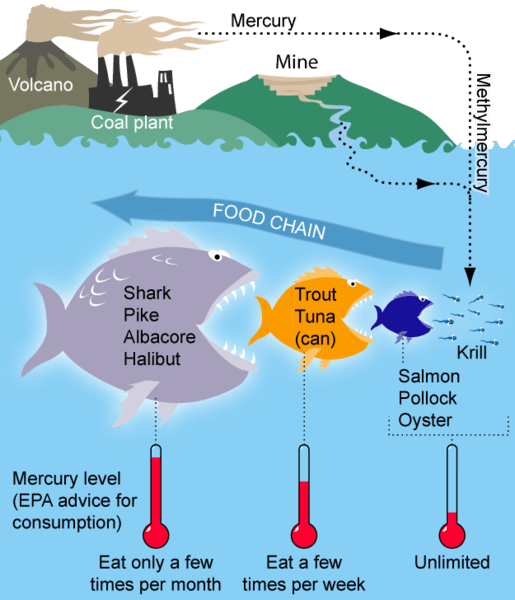
______________________ is the buildup of pollutants at higher levels of the food chain.
a)
porosity
b)
water pollution
c)
wastewater
d)
biomagnification
23.
If Biological Oxygen Demand is high, then DO will
a)
decrease
b)
increase
c)
be produced
d)
be constant
24.

The disadvantage of desalination water is that...

a)

It is expensive and produces briny wastewater

b)

It can be used in areas with little freshwater

c)

It produces water that is not safe to drink.

d)

It is not a real thing.

25.

In industrial water use, what is most of it used for?

a)

Toilets

b)

Cooling power plants

c)

Making goods

d)

Waste disposal

26.
The correct order of the waste treatment process is
a)
Filtration, Settling Tank, Clarifying Tanks, Aeration Tank, Secondary Clarifying, Disinfection
b)
Filtration, Settling Tank, Aeration Tank, Secondary Clarifying, Clarifying Tank
c)
Aeration Tank, Clarifying, Settling Tank, Disinfection, Settling Tank
d)
Disinfection, Clarifying, Settling Tank, Second Filtration, Settling Tank
27.
The natural process of eutrophication is accelerated when you add
a)
phosphorus and nitrogen
b)
nitrate and oxygen
c)
plant nutrients and dish detergent
28.
Dead zones, such as the one in the Gulf of Mexico that exists off the coast of Louisiana, are characterized by all of the following EXCEPT
a)
a reduced number of shellfish
b)
fish die-off events
c)
low nitrogen concentrations
d)
low oxygen concentrations in the water
29.
Deforestation causes eroded soil runoff to increase the turbidity in nearby water reservoirs. If you were standing at a dock over a lake and could see the bottom of the lake, what can you say about the turbidity of the water?
a)
The turbidity is low
b)
The turbidity is high
c)
The turbidity is at 50%
d)
The turbidity doesn't apply to water clarity
30.
Water with high turbidity 
a)
is cloudy and hard to see through
b)
is clear
31.

Acid rain is attributed to pollutants from fossil fuel consumption. The main pollutants that make acid rain include:

a)

carbon dioxide

b)

ozone

c)

sulfur dioxide and nitrogen oxide

d)

lead

32.
What is the relationship between the amount of available dissolved oxygen and level of water quality?
a)
There is more dissolved oxygen in the water when the water quality is high
b)
There is more dissolved oxygen in the water when the water quality is low
c)
There is little dissolved oxygen in the water when the water quality is high
d)
There is more dissolved oxygen in the water when the temperature of the water is warm.
33.
Why does the amount of toxin change at each level?
a)
Toxins get stronger every time
b)
There is more air pollution than water pollution, so the eagle gets the most toxins.
c)
Bigger animals need more energy, so they eat more organisms. The more contaminated organisms they eat, the more toxins they get.
d)
Since the bottom of the food chain get directly exposed to pollution, they have the most toxins.
34.

How does plastic trash cause marine life and sea birds to starve?

a)

They mistake plastic for food, which clogs their stomachs and doesn't leave any room for real food.

b)

Plastic takes up space in the water so marine animals have no place to live.

c)

The plastic in the ocean is so dense that the marine life cannot find food easily.

d)

Plastic doesn't cause marine life or sea bird to starve: they're smart enough to know the difference between plastic and food.

35.

Which of the following is a non-point source of water pollution?

a)

Effluent from a sewage treatment plant

b)

BP refiner in Indiana discharging ammonia in a river.

c)

Runoff of pesticides from regional farms into the Illinois River.

d)

Hot water discharges from a nuclear power plant.

36.

What is it called when a persistent pollutant (like mercury or PCBs) builds up in the tissues of an organism as they continue to eat something that contains the pollutant?

a)

Negative Feedback Loop

b)

Biomagnification

c)

Tragedy of the Commons

d)

Bioaccumulation

e)

Positive Feedback Loop

37.
What do we call the land area that supplies water to a river system?
a)
runoff
b)
recharge
c)
watershed
d)
valley
38.
What is the top of the water-filled spaces in the ground called?
a)
Groundwater
b)
Reservoir
c)
Water Table
d)
Well
39.

Human wastewater entering into bodies of water such as rivers or lakes can be dangerous because

I. it causes a drop in the biological oxygen demand.

II. it can lead to cultural eutrophication.

III. the wastewater can carry pathogens.

a)

I only

b)

II only

c)

III only

d)

II and III

e)

I, II, and III

40.

Which of the following is an example of a secondary air pollutant?

a)

nitrogen dioxide

b)

sulfur dioxide

c)

tropospheric ozone

d)

carbon monoxide

41.

Lining coal ash landfills and wetting down dirt roads at construction sites are ways to control the emission of which type of pollutant?

a)

sulfur dioxide

b)

lead

c)

carbon monoxide

d)

particulate matter

42.
What is a primary pollutant? 
a)
pollutant that is put directly into air by human activities
b)
pollutants that react with other primary pollutants
43.
The ozone layer protects us from
a)
UV rays
b)
CFCs
c)
Increased atmospheric heat
d)
Decreased atmospheric heat
44.
____________________ are pollutants released into the air.
a)
Emissions
b)
Ozone molecules
c)
Hazardous wastes
d)
Acid rains
45.
Dust, ash and pollen are examples of this air pollutant
a)
Lead
b)
Ground-level ozone
c)
Particulate matter
d)
Nitrogen oxides
46.
A colorless, odorless gas that decreases the blood's ability to carry oxygen.  Can cause faintness, death.
a)
Nitrogen oxides
b)
Ground-level ozone
c)
Carbon monoxide
d)
Sulfur dioxide
47.
The chemical formula for ozone?
a)
0
b)
02
c)
03
d)
OZn
48.
Which of the following correctly lists the 6 “criteria” air pollutants as specified under the Clean Air Act?
a)
Pb, SO2, NOX, CO, PM, and tropospheric O3
b)
Tropospheric O3, SO2, NOX, PM, Pb, and CO2
c)
SO4, NOX, CO, PM, Pb, and tropospheric O3
d)
SO2, NOX, CO, Hg, PM, and tropospheric O3
49.
What happens to air pressure as you move upward into the atmosphere?
a)
increases
b)
decreases
c)
stays the same
50.
Density of air is greater ________.
a)
at the top of the mountain
b)
at the bottom of the mountain
c)
at the center of the mountain
51.

What is the cause of rising surface temperatures of the Pacific Ocean, drought in Indonesia, and flooding on the Pacific coast of South America?

a)

the Gulf Stream

b)

the Jet Stream

c)

La Nina

d)

El Nino

52.
How could La Niña affect weather during the summer in North Carolina?
a)
It could decrease wind.
b)
It could increase rainfall. 
c)
It could decrease rainfall. 
53.
Fast flowing river of air in atmosphere
a)
Warm Air
b)
Cool Air
c)
Jet Stream
d)
El Nino
54.
El Nino occurs when the tropical ocean waters are warmer in which ocean?
a)
Atlantic
b)
Indian
c)
Pacific
d)
Arctic
55.
ENSO stands for
a)
Eh! Not So Observant
b)
En Niño Southern Oscillation
c)
El Niño Salinity Observation
d)
El Niño Southwestern Oscars
56.
One consequence of El Niño is _______ in Southeast Asia.
a)
stronger Trade Winds
b)
flooding
c)
strong winter storms
d)
drought
57.
What two factors are primarily used to describe climate?
a)
temperature and density
b)
temperature and precipitation
c)
precipitation and density
d)
winds and humidity
58.
Upwelling occurs as the _______________ blow warm surface water away from the coast.
a)
Prevailing Westerlies
b)
Equatorial Winds
c)
Trade Winds
d)
Tropical Winds
59.
THE ATMOSPHERE LAYER WHERE WE FIND THE OZONE LAYER
a)
STRATOSPHERE
b)
TROPOSPHERE
c)
EXOSPHERE
d)
TERMOSPHERE
60.
THE POLLUTING MOLECULE IN THE PICTURE IS
a)
WATER
b)
OZONE
c)
ACID RAIN
d)
CFC
61.
In terms of incoming solar radiation (insolation), which is the correct order?
a)
troposphere, stratosphere, mesosphere, thermosphere
b)
thermosphere, mesosphere, stratosphere, troposphere
c)
mesosphere, thermosphere, troposphere, stratosphere
d)
stratosphere, troposphere, thermosphere, mesosphere
62.
Temperature inversions occur
a)
when surface temperatures are higher than overlying layers of air.
b)
when there is good air drainage and ventilation of the surface air.
c)
when surface temperatures are lower than warmer overlying air.
d)
during episodes of reduced air pollution.
63.
What is the main reason it is warmer at the equator than the poles?
a)
the equator is closer to the sun
b)
the equator gets more days of sunshine
c)
the equator has longer days
d)
the equator gets more direct solar radiation
64.
What has the highest albedo?
a)
the oceans
b)
 glacial ice
c)
the ground
d)
roads
65.
Albedo can best be described as...
a)
the temperature at the equator
b)
the amount of solar radiation absorbed
c)
the amount of solar radiation reflected
d)
the air pressure during El Nino
66.
Winds on the surface of Earth do not move in a straight line because ______.
a)
the earth revolves around the Sun
b)
the earth spins and causes the Coriolis effect
c)
the air moves from low pressure to high pressure
d)
the winds do not move
67.
The _____ are tubes of wind that circulates between the equator and 30 degrees latitude.
a)
Horse latitudes
b)
Polar easterlies
c)
Hadley Cells
d)
Westerlies
68.
What are most tsunamis caused by?
a)
Tornados
b)
Divergent boundaries
c)
Meteors
d)
Earthquakes
69.
Which weather cell is between 60 degrees latitude and the poles?
a)
Hadley cell
b)
Polar cell
c)
Ferrel cell
d)
 ITCZ
70.
What is the main cause of a surface current?
a)
Wind
b)
Rain
c)
Salinity
d)
Density
71.

Which of the can be described as "water that comes from washing machines, kitchen sinks, dishwashers after use; it NOT suitable for drinking; can be used for irrigation of non-edible vegetation?"

a)

raw water

b)

reclaimed water

c)

black water

d)

grey water

72.
What is the term for an land above an aquifer.
a)
river system
b)
recharge zone
c)
aquifer
d)
watershed
73.
Boiling water and collecting steam to isolate fresh water from salt water is best known as... 
a)
water purification
b)
water pollution
c)
groundwater recharging
d)
desalination
74.
Groundwater is contain in rock formations called __________.
a)
reservoirs
b)
tanks
c)
pools
d)
aquifers